
Pythonidae
Irian Python
HarmlessApodora papuana
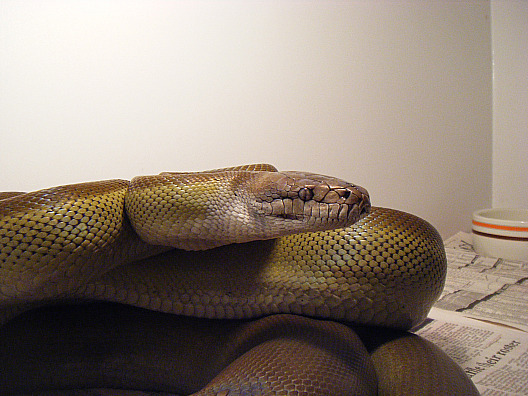
The Irian Python (Apodora papuana) is a non-venomous snake in the Pythonidae family, recorded in 2 countries.
- Family
- Pythonidae
About the Irian Python
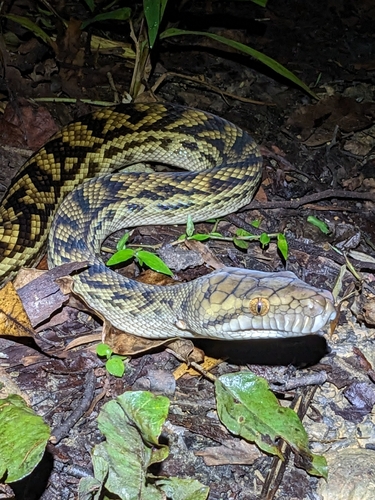
Apodora papuana is a species of python, commonly known as the Papuan python, Irian python or Papuan olive python. It is found in New Guinea. It is the only species in the genus Apodora. No subspecies are currently recognized.
Description
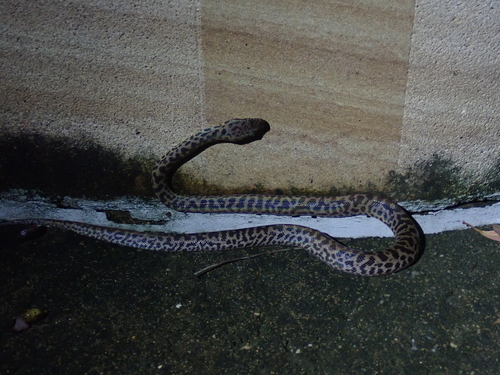
The Papuan python is a large snake, with adults growing to an average length of 4 meters (13 ft) and some specimens growing to lengths of over 5 meters (16 ft). However, they are not nearly as heavy-bodied as most other pythons, typically weighing only about 22.5 kilograms (50 lb). The available information about the species size is limited. They are noted for having the ability to change color, though the exact mechanism and reasons for it are not completely understood. The color is reputed to change when the snake is agitated. They can vary from black to a mustard yellow, but are normally an olive green in appearance when young and dark olive when older, with the sides and underside distinctly lighter.
Distribution and habitat
Papuan pythons are found in most of New Guinea, from Misool to Fergusson Island. The type locality given is "Ramoi Nova Guinea austro-occidentiali" (Ramoi, near Sorong, Irian Jaya, Indonesia).
Behavior
The Papuan python is largely terrestrial and mostly nocturnal. Despite their size and impressive strength, they are relatively inoffensive animals and are not prone to bite even if handled.
Feeding
Their diet consists primarily of smaller mammals, but they are also known to be partly ophiophagous.
Captivity
The Papuan python is not commonly available in the exotic pet trade, and when they are available they command high prices. They are a relatively hardy species that adapts well to captivity, readily feeding in commercially available rats. Captive breeding has been done.
Adapted from Wikipedia, available under CC BY-SA.
Frequently asked: Irian Python
- Is the Irian Python venomous?
- No. The Irian Python (Apodora papuana) is non-venomous and is not considered dangerous to humans. Like most snakes, it will retreat rather than bite when given the chance.
- Is the Irian Python poisonous?
- Snakes are venomous, not poisonous. "Poisonous" means harmful to eat or touch; "venomous" means injecting toxins through a bite. The Irian Python is neither poisonous nor venomous.
- Is the Irian Python dangerous?
- The Irian Python is not dangerous to humans. It has no medically significant venom and bites only defensively if cornered or handled.
- Where does the Irian Python live?
- The Irian Python has verified records in 2 countries, including Indonesia, Papua New Guinea. See the distribution section below for its full range.
- What does the Irian Python eat?
- Their diet consists primarily of smaller mammals, but they are also known to be partly ophiophagous.
Where it is found
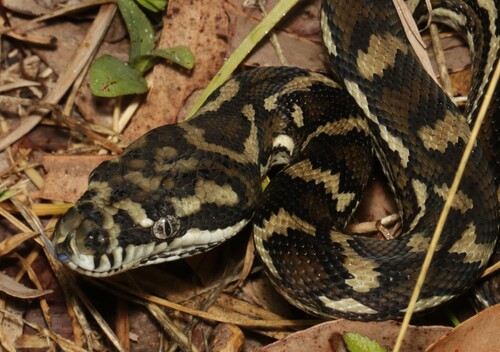
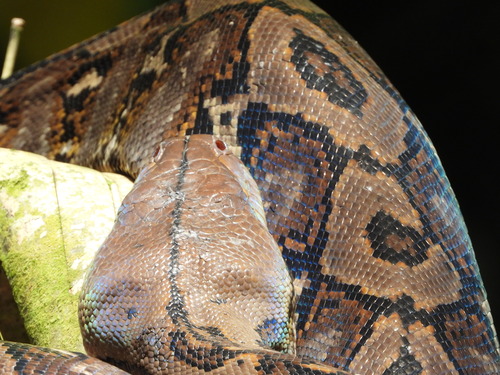
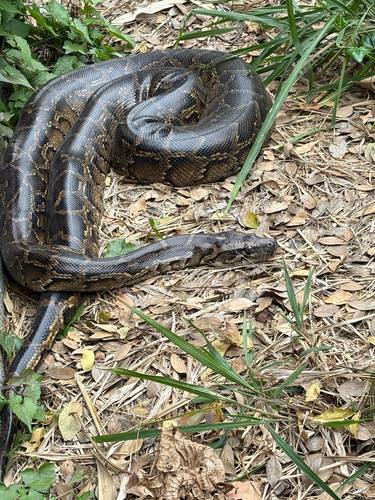
More Pythonidae snakes
Classification
How scientists group this snake, from the broadest category down to the exact species. Each step narrows to its closest relatives.
- OrderThe broad group of scaled reptiles: all snakes and lizards
- Squamata
- FamilyA group of related snakes that share key traits
- Pythonidae
- GenusA close-knit group of very similar species
- Apodora
- SpeciesThis exact snake, named in the two-part scientific name
- Apodora papuana
Keep learning
- What to Do If You Find a SnakeFound a snake at home or on a trail? Here is how to stay calm, give it space, identify it safely, and know when to call a professional.
- Venomous vs Nonvenomous: How to Tell the DifferenceThe folk rules for telling venomous snakes apart, where each one fails, and why location-based identification beats guessing by sight.
- What Is a Snake? Anatomy and the BasicsA clear overview of what makes a snake a snake: limbless body plan, anatomy, evolution from lizards, species diversity, and why they are ectothermic.
- How to Keep Snakes Out of Your Yard and HomeA practical guide to keeping snakes out of your yard and home using habitat changes that work, plus what to skip and what to do if one shows up.
Distribution from GBIF & iNaturalist. Venom status per CDC. Background: Wikipedia. Informational only. Never handle a snake to identify it.