
Genus · Pythonidae
Apodora
The genus Apodora contains a single species. It is not considered dangerous to humans.
About Papuan python
A single giant New Guinea python that stands alone in its own genus.
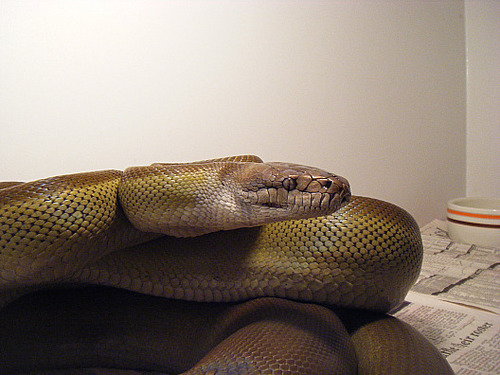
Apodora is a genus in the python family, Pythonidae, that contains a single recognized species: the Papuan python, Apodora papuana, also called the Irian python. Like all pythons, it is a nonvenomous constrictor that kills prey by coiling and suffocation rather than by injecting toxins. It was once grouped with the larger Liasis pythons of the region, but it is now placed in its own genus, which is why you will sometimes still see it listed under that older name in older books.
The Papuan python is native to the island of New Guinea, spanning both the Indonesian western half and Papua New Guinea in the east. It is a large, heavy-bodied snake that can reach roughly 4 to 5 meters in length, making it one of the bigger pythons in its range. It is known for a body color that can shift somewhat between olive, brown, and darker tones, and it lives in a mix of forest, grassland, and wetter lowland habitats. In general terms, you recognize it as a thick, long python with the heat-sensing lip pits typical of the family.
As a python, it is not venomous and poses no chemical danger, but a snake of this size is still powerful and a large individual can deliver a serious bite and constrict, so wild ones should not be handled. It feeds on mammals and other reptiles, including other snakes, and like other pythons it reproduces by laying eggs, with the female coiling around the clutch to protect and warm it during incubation. If anyone is bitten by a large constrictor and the wound is deep or will not stop bleeding, treat it as a medical issue and contact local emergency services or US Poison Control at 1-800-222-1222.
Apodora belongs to the Pythonidae family (Pythons). Old-World egg-laying constrictors, including the longest snakes on Earth. Large and heavy-bodied with blotched or banded patterns, smooth scales, and heat-sensing pits along the lips. No rattle or fangs.
Danger: Non-venomous. Only the very largest species could be a physical danger, and bites are defensive, not venomous.
All species (1)
Keep learning
- What Is a Snake? Anatomy and the BasicsA clear overview of what makes a snake a snake: limbless body plan, anatomy, evolution from lizards, species diversity, and why they are ectothermic.
- How Snakes Move, Hunt, and EatHow snakes move without legs, hunt as ambushers or active foragers, kill by constriction or venom, and swallow prey wider than their head.
- What Do Snakes Eat?All snakes are carnivores. Learn what snakes eat, how diet changes with size and age, how often they feed, and how they hunt and swallow prey.
- Venomous vs Nonvenomous: How to Tell the DifferenceThe folk rules for telling venomous snakes apart, where each one fails, and why location-based identification beats guessing by sight.