
Pseudoxyrhophiidae
Common Slug-eater
HarmlessDuberria lutrix
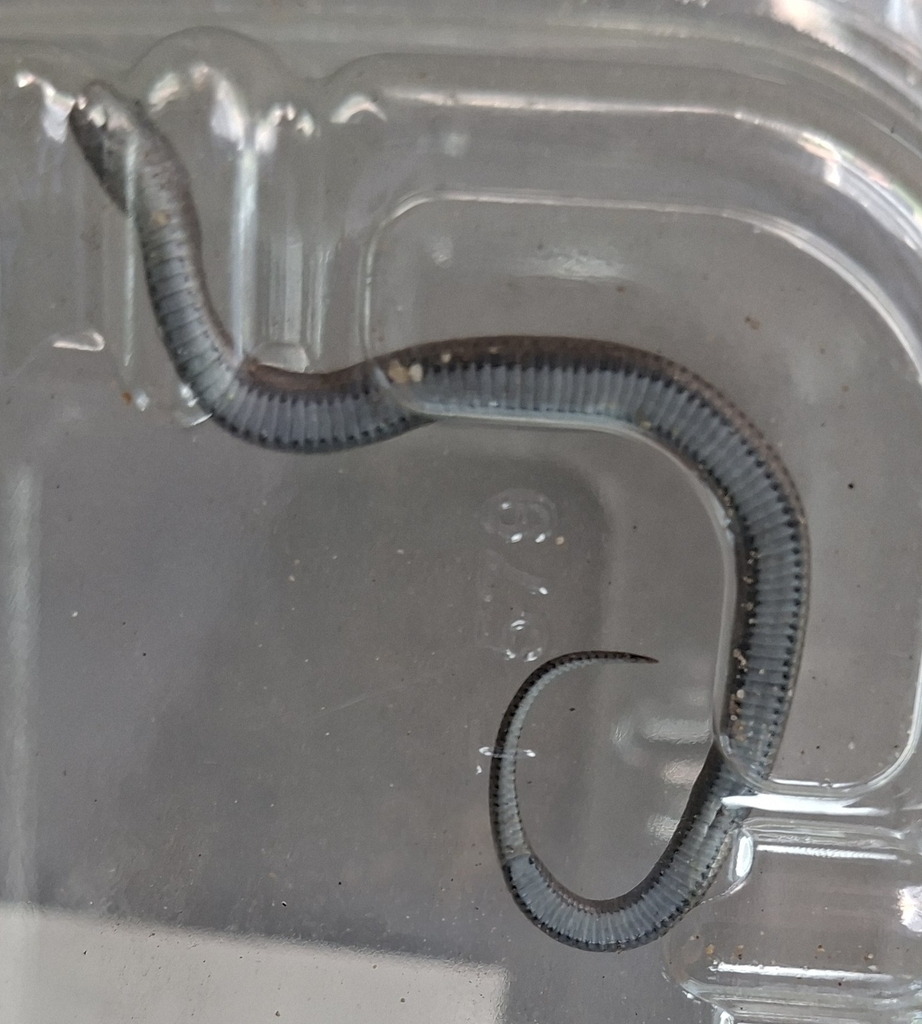
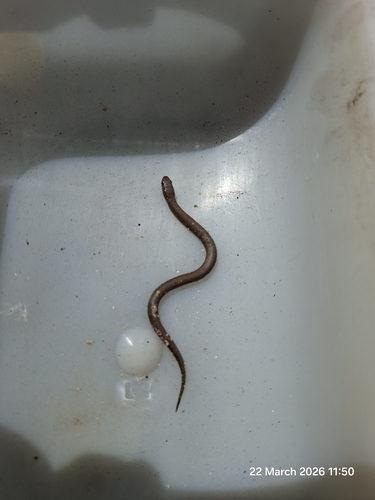
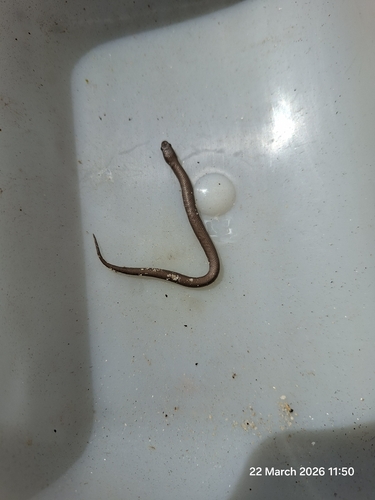
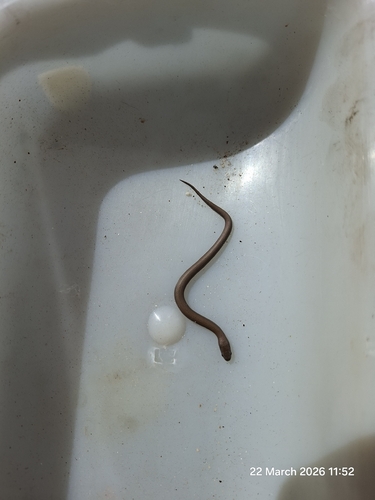
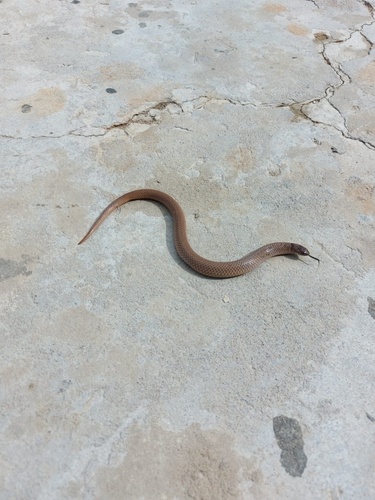
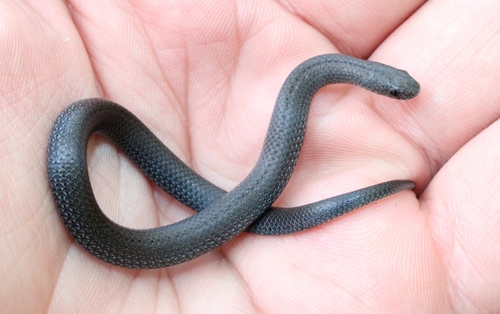
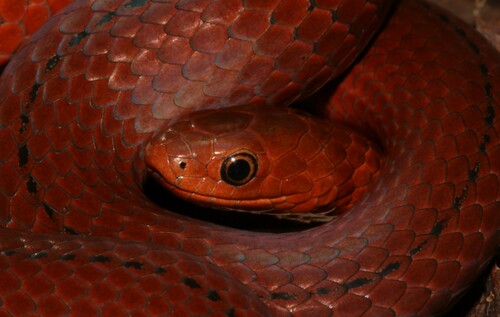
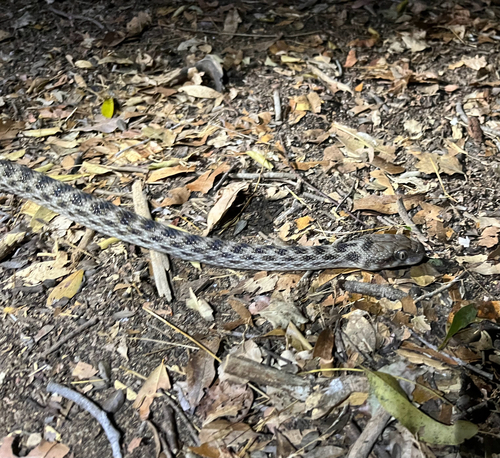
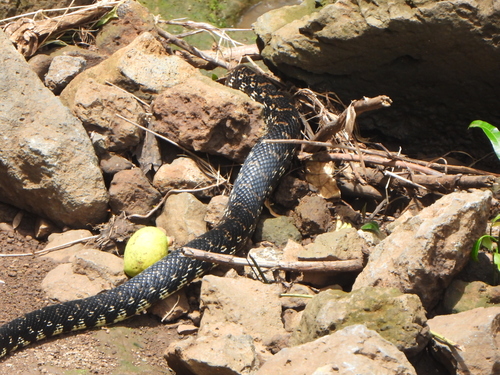
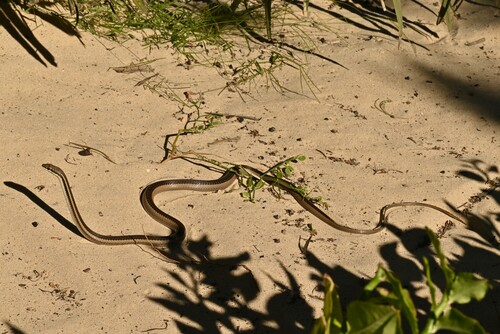
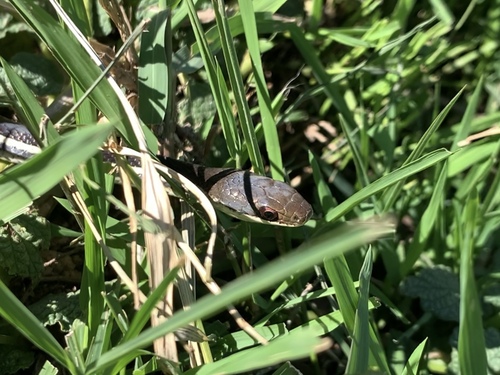
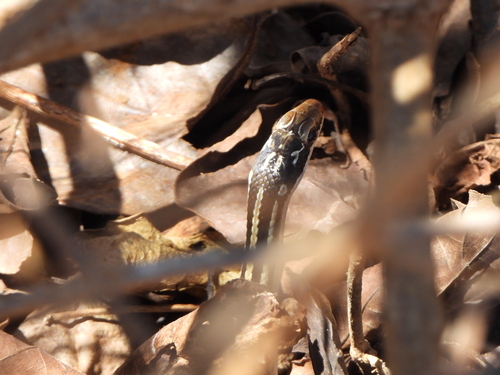
4 photographs of the Common Slug-eater. © William Keenan.
The Common Slug-eater (Duberria lutrix) is a non-venomous snake in the Pseudoxyrhophiidae family, recorded in 13 countries.
- Family
- Pseudoxyrhophiidae
About the Common Slug-eater
Duberria lutrix, or the common slug eater, is a small, ovoviviparous, molluscivorous, non-venomous snake, which is endemic to Africa.
Description
Adults can be up to thirty to forty cm (approximately twelve to sixteen inches).
The common slug eater's colour can vary, but they typically have an olive green to brown or russet back, grey flanks, a yellowish or cream belly, and a black, more or less complete, vertebral stripe.
Geographic range
This species is found in Burundi, Democratic Republic of the Congo, Eswatini, Ethiopia, Kenya, Mozambique, Rwanda, South Africa, Tanzania, Uganda, and Zimbabwe.
Subspecies
Six subspecies are recognized, including the nominotypical subspecies.
Duberria lutrix abyssinica (Boulenger, 1894)
Duberria lutrix atriventris Sternfeld, 1912
Duberria lutrix basilewskyi Skelton-Bourgeois, 1961
Duberria lutrix currylindahli Laurent, 1956
Duberria lutrix lutrix (Linnaeus, 1758)
Duberria lutrix rhodesiana Broadley, 1958
Diet
As the name implies, the common slug eater is a specialised predator and feeds on snails and slugs, mostly finding its prey through chemoreception, using its tongue. It swallows its prey quickly before too much defensive mucus is produced, extracting snails from their shells through the shell opening, or by smashing the shell against a rock while grasping the soft body in its jaws.
Breeding
The common slug eater usually gives birth to litters of three to twelve young. However, broods from large females may consist of as many as 22 newborns, each measuring 8 to 11 cm (3.1 to 4.3 in). The total combined weight of the young may exceed the weight of the female after giving birth. Birthing season is January and February (late summer in southern Africa).
Captivity
The snake is a popular pet, which feeds and breeds readily, and because of the nature of its prey item, it is easy to keep.
Defense
When alarmed, the snake secretes a noxious substance from glands near the base of the tail and rolls up into a defensive spiral with the head in the middle, leading to the Afrikaans common name tabakrolletjie ("tobacco roll").
Adapted from Wikipedia, available under CC BY-SA.
Frequently asked: Common Slug-eater
- Is the Common Slug-eater venomous?
- No. The Common Slug-eater (Duberria lutrix) is non-venomous and is not considered dangerous to humans. Like most snakes, it will retreat rather than bite when given the chance.
- Is the Common Slug-eater poisonous?
- Snakes are venomous, not poisonous. "Poisonous" means harmful to eat or touch; "venomous" means injecting toxins through a bite. The Common Slug-eater is neither poisonous nor venomous.
- Is the Common Slug-eater dangerous?
- The Common Slug-eater is not dangerous to humans. It has no medically significant venom and bites only defensively if cornered or handled.
- Where does the Common Slug-eater live?
- The Common Slug-eater has verified records in 13 countries, including South Africa, Tanzania, United Republic of, Kenya. See the distribution section below for its full range.
- What does the Common Slug-eater eat?
- As the name implies, the common slug eater is a specialised predator and feeds on snails and slugs, mostly finding its prey through chemoreception, using its tongue. It swallows its prey quickly before too much defensive mucus is produced, extracting snails from their shells through the shell opening, or by smashing the shell against a rock while grasping the soft body in its jaws.
Where it is found
More Pseudoxyrhophiidae snakes
 Spotted Slug-eaterDuberria variegata
 Zimbabwean Slug-EaterDuberria rhodesiana
 Shire Slug-eaterDuberria shirana
 Common Madagascar Cat SnakeMadagascarophis colubrinus
 Giant Madagascan Hognose SnakeLeioheterodon madagascariensis
 Bernier's Striped SnakeDromicodryas bernieri
 Lateral Water SnakeThamnosophis lateralis
 Four-striped SnakeDromicodryas quadrilineatus
Classification
How scientists group this snake, from the broadest category down to the exact species. Each step narrows to its closest relatives.
- OrderThe broad group of scaled reptiles: all snakes and lizards
- Squamata
- FamilyA group of related snakes that share key traits
- Pseudoxyrhophiidae
- GenusA close-knit group of very similar species
- Duberria
- SpeciesThis exact snake, named in the two-part scientific name
- Duberria lutrix
Keep learning
- What to Do If You Find a SnakeFound a snake at home or on a trail? Here is how to stay calm, give it space, identify it safely, and know when to call a professional.
- Venomous vs Nonvenomous: How to Tell the DifferenceThe folk rules for telling venomous snakes apart, where each one fails, and why location-based identification beats guessing by sight.
- What Is a Snake? Anatomy and the BasicsA clear overview of what makes a snake a snake: limbless body plan, anatomy, evolution from lizards, species diversity, and why they are ectothermic.
- How to Keep Snakes Out of Your Yard and HomeA practical guide to keeping snakes out of your yard and home using habitat changes that work, plus what to skip and what to do if one shows up.
Distribution from GBIF & iNaturalist. Venom status per CDC. Background: Wikipedia. Informational only. Never handle a snake to identify it.