
Elapidae
Chinese Sea Krait
VenomousLaticauda semifasciata
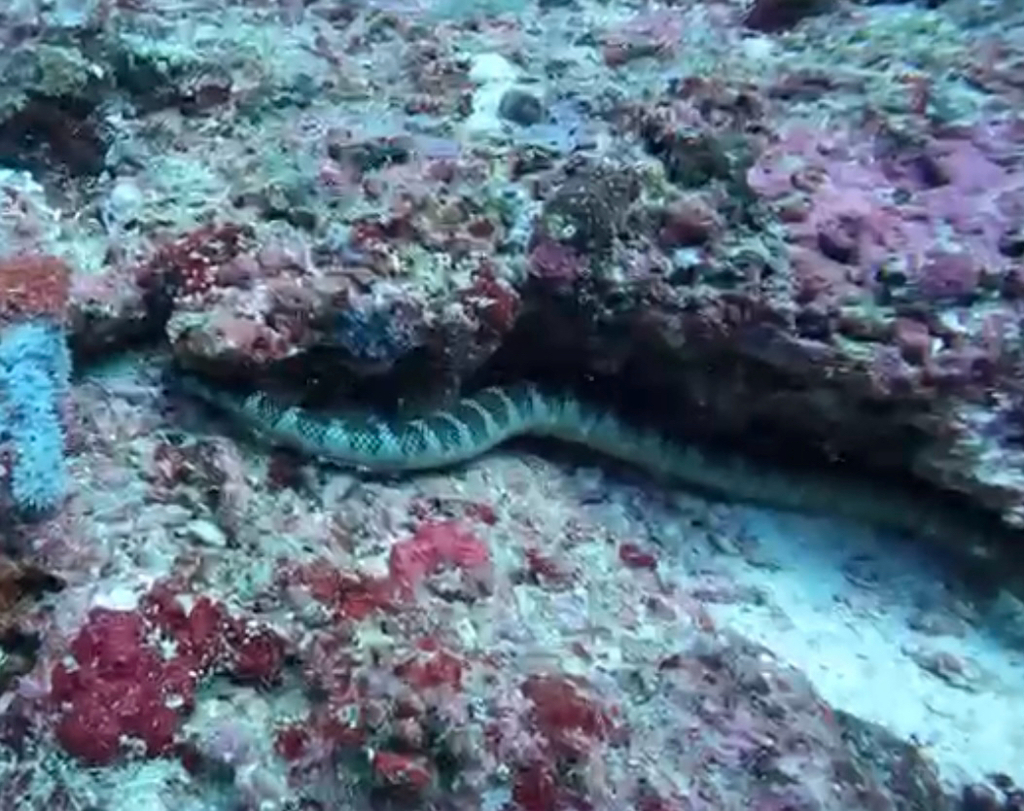
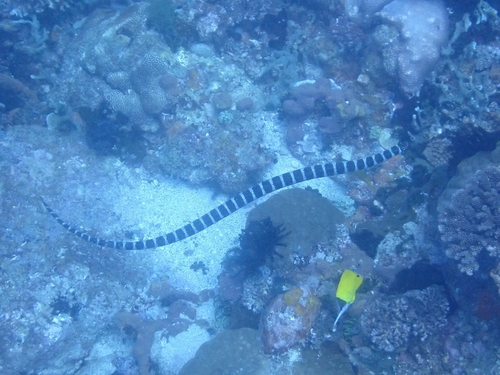
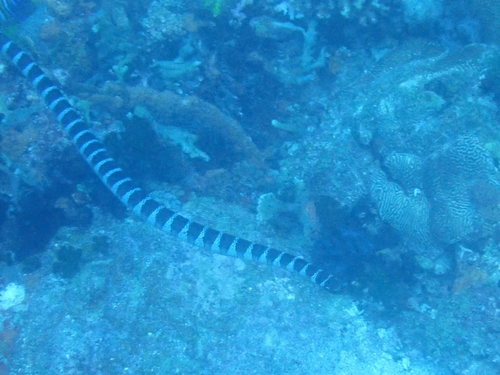
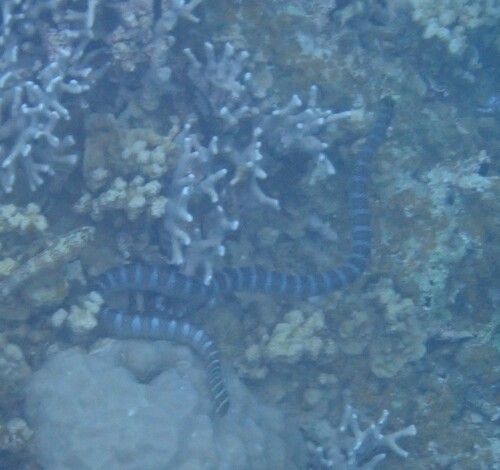
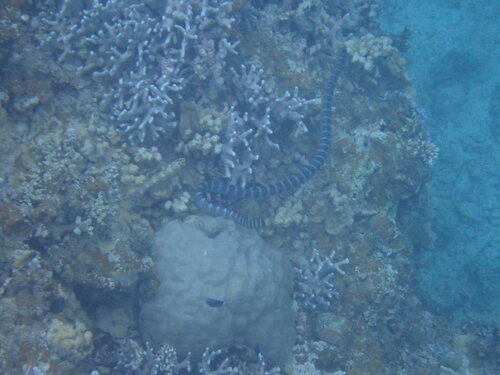
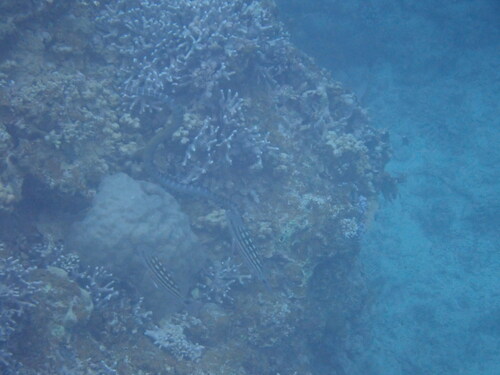
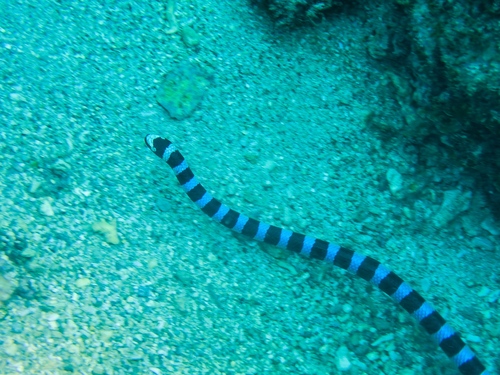
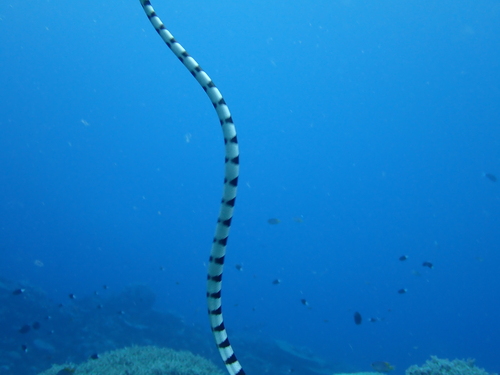
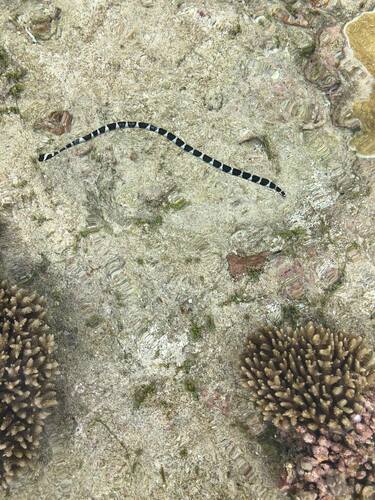
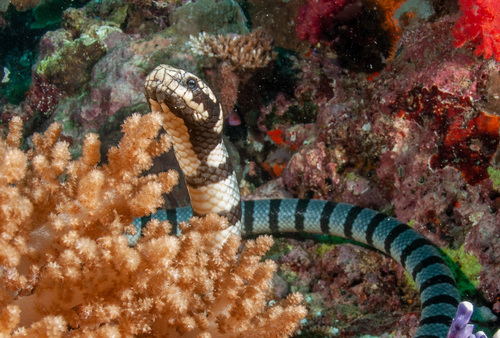
6 photographs of the Chinese Sea Krait. © Olly Morgan.
The Chinese Sea Krait (Laticauda semifasciata) is a venomous snake in the Elapidae family, recorded in 8 countries.
If you are bitten
This is a venomous snake. Treat any bite as a medical emergency: stay calm, keep the bitten limb still and roughly level with the heart, remove rings and tight clothing, and get to emergency care immediately. Do not apply a tourniquet, cut the wound, apply ice, or try to suck out venom. Call your local emergency number or poison center.
- Family
- Elapidae
- Danger
- high
About the Chinese Sea Krait
The black-banded sea krait (Laticauda semifasciata), also known commonly as the Chinese sea snake or erabu, is a largely amphibious species of extremely venomous marine reptile in the subfamily Laticaudinae, family Elapidae (cobras, mambas, coralsnakes and their kin). It is found in much of the western Pacific Ocean and some of the Sea of Japan. In Japan, it is known as erabu umi hebi (ja:エラブウミヘビ, 'erabu sea snake'); in Okinawa, it is known simply as irabu.
This sea krait frequents coral reef habitats, where it can explore tight spaces for prey, as it has a short head, thick trunk, and no easily discernible neck. The tail is simply extended skin, spread wide like a fin, and unsupported by any bony projections from the vertebral column. The stomach is comparatively wide. Massing together near the shore, it breeds between narrow cracks in the reef and in caves. It is a nocturnal snake, rarely seen during the day. It breathes air; so it breaks the surface at least once every six hours.
Too slow to pursue prey in open water, black-banded sea kraits hunt primarily by exploring the small spaces within coral reefs, in an effort to find hidden fish or other appropriately-sized animals. This meticulous scouring of the narrow nooks and crannies within a reef is similar to the hunting behaviors of some of the sea krait's main prey choices, such as the moray eel. Additionally, the black-banded sea krait has been observed foraging in mutually beneficial 'alliances' with bluefin trevally; the sea krait will scour the reef for potential prey as waiting groups of trevally watch, ready to pick-off any smaller, unwanted fish or crustaceans that are inadvertently flushed from the coral. Additionally, this group hunting behavior has been observed to occur with other black-banded sea kraits. The bite is highly venomous and paralyzes the prey. Females lay their eggs on land.
Distribution
The black-banded sea krait can be found in the warm waters of the western Pacific Ocean. Its typical distribution range includes China, Indonesia, Japan, Philippines, and Taiwan. However, researchers have recently found L. semifasciata in the waters surrounding southern South Korea. Its dispersion northward from its typical distribution range is attributed to climate change which has caused deterioration of its habitat.
Development
Males and females of the black-banded sea krait reach sexual maturity at snout-vent lengths of 70 and 80 cm (28 and 31 in), respectively. Females lay 3–7 eggs that hatch after 4–5 months. L. semifasciata can reach a total length (including tail) of 170 cm (67 in).
Interaction with humans
Black-banded sea krait venom is reportedly ten times stronger than that of a cobra; however, as with the vast majority of venomous snake species, the black-banded sea krait generally does not aggressively strike at humans unless it is cornered or threatened (or otherwise maliciously provoked), preferring to conserve its energy and venom supplies for hunting purposes, reacting defensively only as a very last resort.
Adapted from Wikipedia, available under CC BY-SA.
Local and regional names
The Chinese Sea Krait is known by these names across the regions where it lives:
- Chinese
- 半环扁尾海蛇, 半環扁尾海蛇, 闊帶青斑海蛇
- Czech
- vlnožil velký
- English
- Chinese Sea Snake, black-banded sea krait
- French
- Erabu, Plature semi-annelé, Serpent de mer de Chine, Tricot rayé asiatique
- German
- Halbgebänderter Plattschwanz
- Italian
- Krait di mare cinese, Krait di mare fasciato, Serpente di mare cinese, Serpente di mare fasciato
- Japanese
- エラブウミヘビ
- Korean
- 넓은띠큰바다뱀
- Polish
- wiosłogon prążkowany
- Russian
- Большой морской крайт, Большой плоскохвост, Морской крайт
Frequently asked: Chinese Sea Krait
- Is the Chinese Sea Krait venomous?
- Yes. The Chinese Sea Krait (Laticauda semifasciata) is venomous and belongs to the Elapidae family (cobra, mamba, coral or sea snake). Its bite is considered high risk to people. Treat any bite as a medical emergency.
- Is the Chinese Sea Krait poisonous?
- Snakes are venomous, not poisonous. "Poisonous" means harmful to eat or touch; "venomous" means injecting toxins through a bite. The Chinese Sea Krait is venomous, delivering venom through a bite.
- Is the Chinese Sea Krait dangerous?
- This is a venomous snake. Treat any bite as a medical emergency: stay calm, keep the bitten limb still and roughly level with the heart, remove rings and tight clothing, and get to emergency care immediately. Do not apply a tourniquet, cut the wound, apply ice, or try to suck out venom. Call your local emergency number or poison center.
- Where does the Chinese Sea Krait live?
- The Chinese Sea Krait has verified records in 8 countries, including Japan, Chinese Taipei, Philippines. See the distribution section below for its full range.
If you are bitten by the Chinese Sea Krait
Do
- Get away from the snake and stay calm. Most bites worsen when people panic or try again to handle the snake.
- Call 911 or Poison Control (1-800-222-1222) right away. Antivenom works best when given early.
- Note the time of the bite and, from a safe distance, the snake's color and pattern, a phone photo is enough. Do not chase it.
- Keep the bitten limb still and at roughly heart level. Sit or lie down and limit movement.
- Remove rings, watches, and tight clothing near the bite before swelling starts.
- Gently wash the bite with soap and water and cover it with a clean, dry dressing.
Do not
- Do not cut the wound or try to suck out the venom.
- Do not apply a tourniquet or ice.
- Do not drink alcohol or caffeine.
- Do not take aspirin or ibuprofen, they can worsen bleeding. Acetaminophen is safer for pain.
- Do not try to catch or kill the snake. A dead snake can still bite by reflex.
First-aid guidance adapted from the U.S. Centers for Disease Control and Prevention (CDC NIOSH), Venomous Snakes. Educational only; always follow the instructions of emergency responders.
Where it is found
More Elapidae snakes
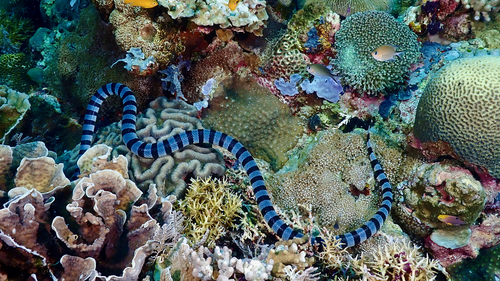 Yellow-lipped Sea KraitLaticauda colubrina
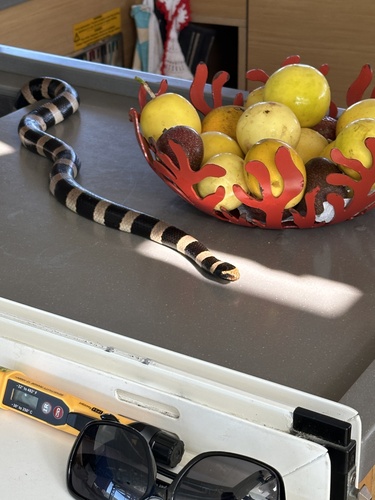 New Caledonian Sea KraitLaticauda saintgironsi
 Blue-lipped Sea KraitLaticauda laticaudata
 Dwarf Sea KraitLaticauda frontalis
 Katuali Sea KraitLaticauda schistorhynchus
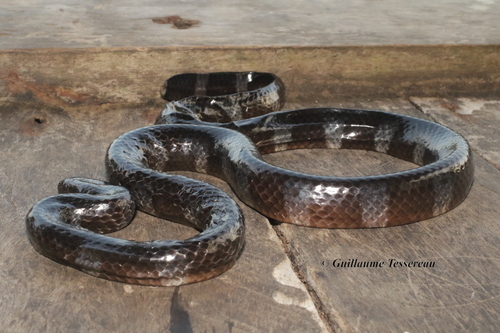 Rennell Island Sea KraitLaticauda crockeri
 Flat-tailed Sea KraitLaticauda guineai
 Red-bellied Black SnakePseudechis porphyriacus
Classification
How scientists group this snake, from the broadest category down to the exact species. Each step narrows to its closest relatives.
Keep learning
- Are Snakes Dangerous? The Real Risk, in PerspectiveMost snakes are harmless and avoid people. Here is the honest picture of snakebite risk worldwide and how to lower your own.
- Snakebite First Aid: What to Do (and What Never to Do)A clear, CDC-based guide to snakebite first aid: the steps that help, the popular myths that hurt, and how to tell a serious bite from a minor one.
- Venomous vs Nonvenomous: How to Tell the DifferenceThe folk rules for telling venomous snakes apart, where each one fails, and why location-based identification beats guessing by sight.
- What to Do If You Find a SnakeFound a snake at home or on a trail? Here is how to stay calm, give it space, identify it safely, and know when to call a professional.
Distribution from GBIF & iNaturalist. Venom status per CDC. Background: Wikipedia. Informational only. Never handle a snake to identify it.