
Genus · Elapidae
Types of kraits
8 species make up the genus Laticauda, the snakes commonly called kraits. All of them are venomous.
About sea kraits
Sea kraits are banded, semi-aquatic elapids that hunt eels in the ocean but return to land to rest, digest, and lay their eggs.
Laticauda is a genus of sea kraits in the family Elapidae, the same front-fanged family that includes cobras, mambas, and the fully marine true sea snakes. Our database holds 8 species, including the Yellow-lipped Sea Krait, the New Caledonian Sea Krait, the Blue-lipped Sea Krait, and the Chinese Sea Krait. Unlike the true sea snakes, which spend their whole lives at sea, sea kraits are amphibious: they forage underwater but must come ashore to rest, shed, and reproduce, which makes them a distinct evolutionary line within the family.
These snakes live in the warm coastal waters of the tropical Indo-Pacific, from the eastern Indian Ocean across Southeast Asia to the islands of the western Pacific. They favor coral reefs, rocky shorelines, mangroves, and small islands, where the water is shallow and warm and there are crevices and beaches to haul out on. Their dependence on land means they are most often encountered near the shore rather than in the open sea.
Sea kraits are usually easy to recognize by their bold pattern of dark bands ringing a paler body, often blue-grey or bluish with black bands. The most useful field clue is the tail: it is flattened into a vertical paddle that works like an oar for swimming, while the body stays more rounded than that of true sea snakes. Many species also have distinctive lip coloring, which is why common names point to yellow lips or blue lips. They have valved nostrils and the ability to hold their breath for long dives.
Like other elapids, sea kraits are venomous and have fixed front fangs. Their venom is potent and primarily affects the nervous system, and they are not rear-fanged or harmless. In practice they are generally docile and reluctant to bite, and bites on people are uncommon because the snakes are not aggressive toward humans. That low bite rate is a fact about their behavior, not a reason to handle one. Never pick up or handle a wild sea krait or any wild venomous snake, and if a bite occurs, treat it as a medical emergency: contact local emergency services right away, or in the US call Poison Control at 1-800-222-1222.
Ecologically, sea kraits are specialist hunters that feed mainly on eels, probing reef crevices and burrows to find them, with some species also taking other small fish. After a successful hunt they return to land to digest, and they come ashore to mate and to lay eggs, which is unusual among marine snakes since the true sea snakes give live birth at sea. This split life between water and land shapes everything about them, from where they are found to how they breed.
Laticauda belongs to the Elapidae family (Cobras, mambas, coral & sea snakes). Front-fanged venomous snakes, many with potent neurotoxic venom. Usually slender with a head barely wider than the neck and fixed front fangs (not the folding fangs of vipers). Coral snakes are boldly ringed; sea snakes have a flattened, paddle-like tail.
Danger: All elapids are venomous and the family is responsible for a large share of fatal snakebites worldwide. Many are shy, but bites can be life-threatening. Treat any bite as a medical emergency.
All species (8)
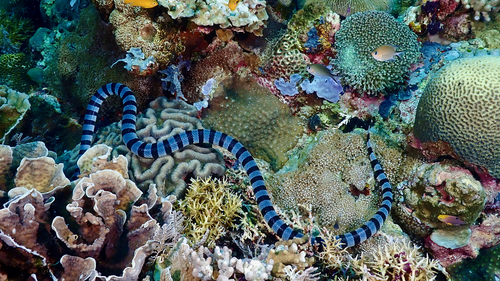 Yellow-lipped Sea KraitLaticauda colubrinaVenomous
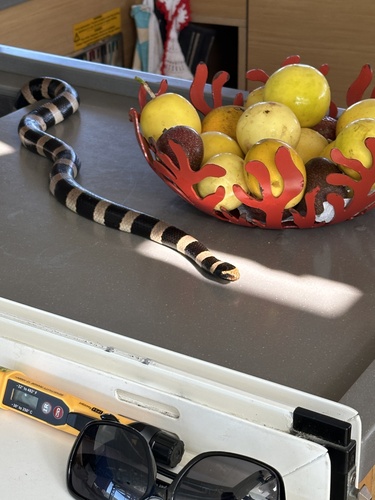 New Caledonian Sea KraitLaticauda saintgironsiVenomous
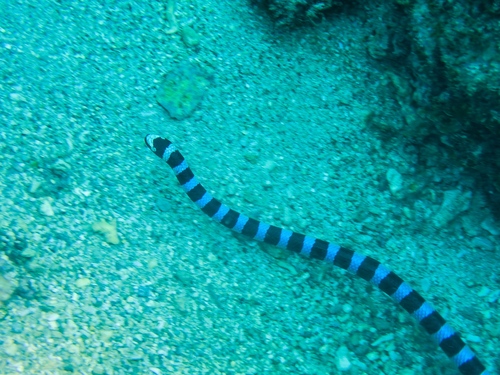 Blue-lipped Sea KraitLaticauda laticaudataVenomous
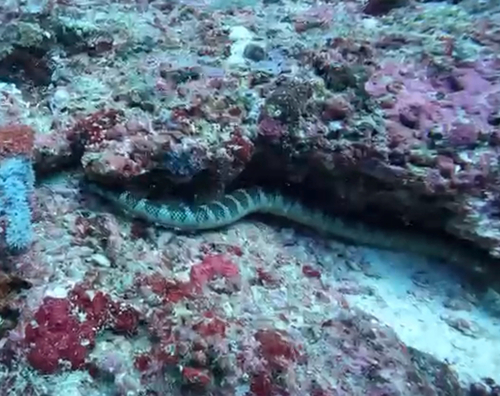 Chinese Sea KraitLaticauda semifasciataVenomous
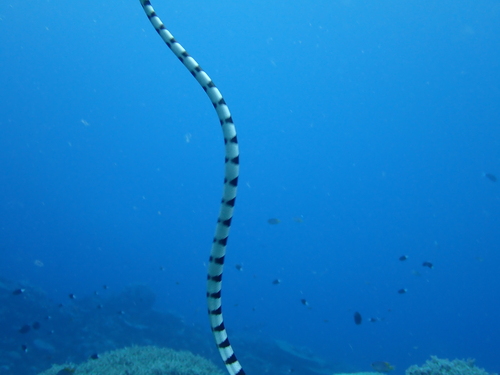 Dwarf Sea KraitLaticauda frontalisVenomous
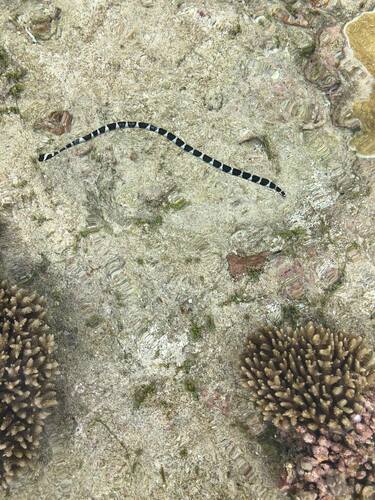 Katuali Sea KraitLaticauda schistorhynchusVenomous
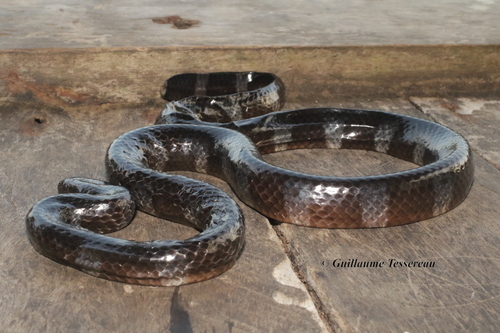 Rennell Island Sea KraitLaticauda crockeriVenomous
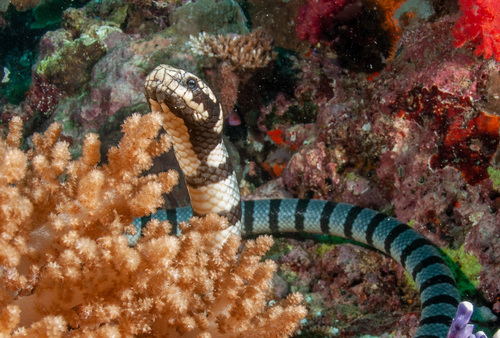 Flat-tailed Sea KraitLaticauda guineaiVenomous
Keep learning
- Venomous vs Nonvenomous: How to Tell the DifferenceThe folk rules for telling venomous snakes apart, where each one fails, and why location-based identification beats guessing by sight.
- Are Snakes Dangerous? The Real Risk, in PerspectiveMost snakes are harmless and avoid people. Here is the honest picture of snakebite risk worldwide and how to lower your own.
- Snake Venom Explained: How It Works and WhyWhat snake venom actually is, why it evolved, the main venom types, fang delivery, how antivenom works, and why ranking the most venomous snake is hard.
- How Snakes Move, Hunt, and EatHow snakes move without legs, hunt as ambushers or active foragers, kill by constriction or venom, and swallow prey wider than their head.