
Pythonidae
Black-headed Python
HarmlessAspidites melanocephalus
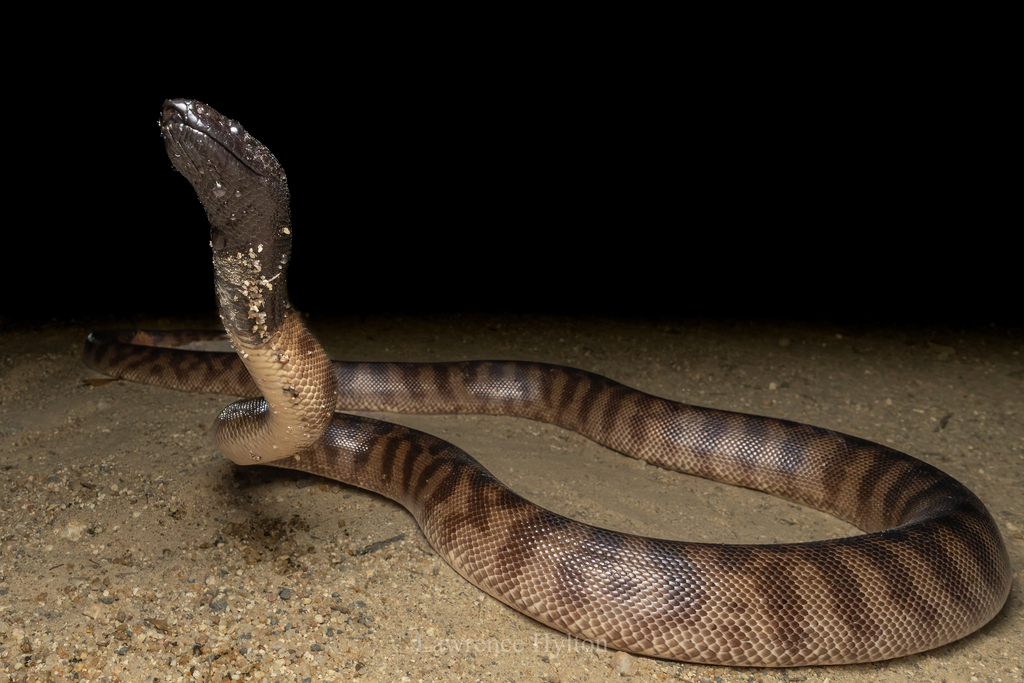
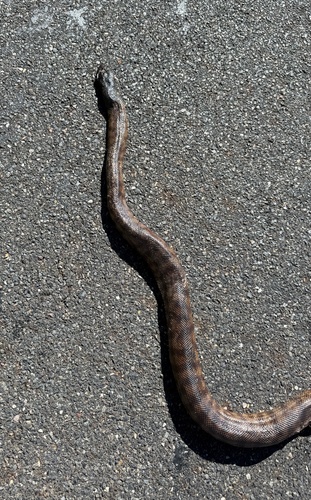
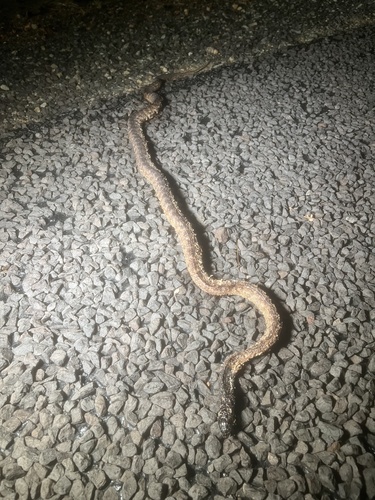
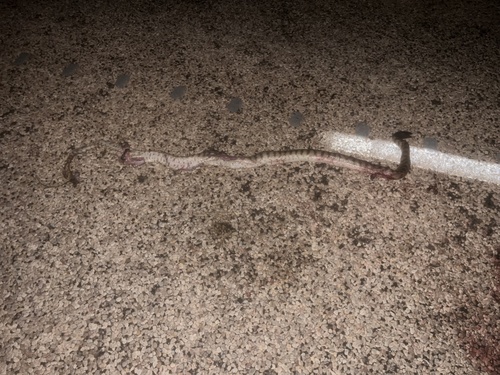
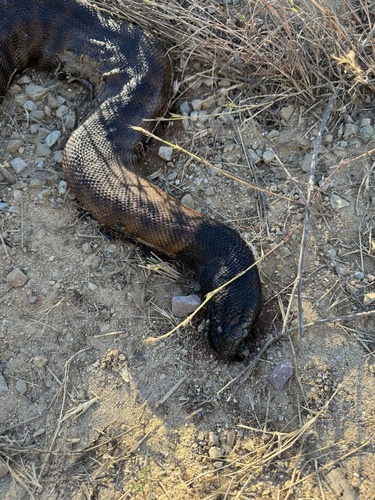
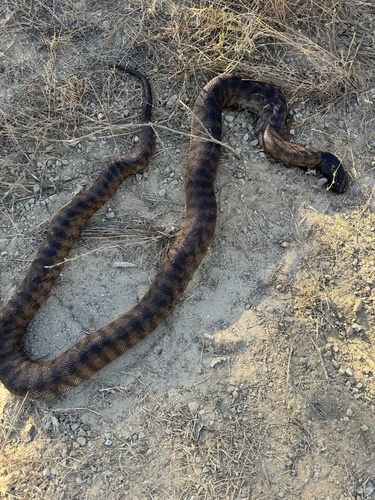
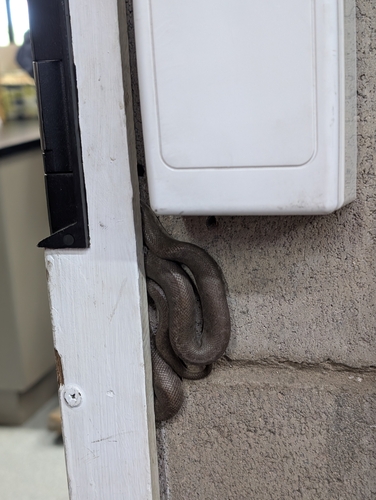
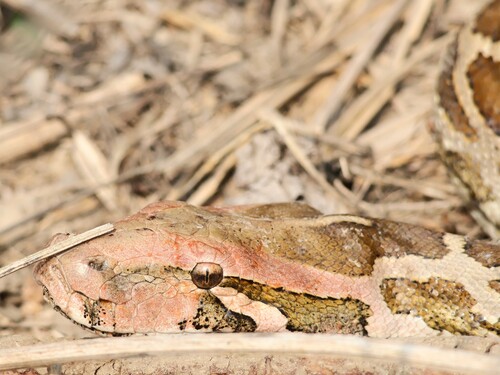
6 photographs of the Black-headed Python. © Lawrence Hylton.
The Black-headed Python (Aspidites melanocephalus) is a non-venomous snake in the Pythonidae family, recorded in 2 countries.
- Family
- Pythonidae
About the Black-headed Python
The black-headed python (Aspidites melanocephalus) is a species of snake in the family Pythonidae (the python family). The species is endemic to Australia. There are no subspecies that are recognized as being valid.
Description
Adults of A. melanocephalus typically grow to 1.5–2 m (4.9–6.6 ft) in length (including tail), but can grow to a maximum length of 3.5 m (11 ft). The body is muscular with a flattened profile, while the tail tapers to a thin point.
The top of the head is covered by large symmetrical scales. The dorsal scales, which are smooth and glossy, number 50-65 rows at midbody, while 315-355 ventral scales occur. The tail has 60-75 mainly single subcaudal scales and the anal scale is single. The posterior subcaudals tend to be divided, often irregularly.
The color pattern consists of shades of black, dark grey, brown, gold, and cream arranged in a banded or brindled pattern. The belly is light-colored, flecked with darker spots. The head is shiny black that also extends down the neck and throat for several inches.
Distribution and habitat
The species A. melanocephalus is found in Australia, in the northern half of the country, excluding the very arid regions. The type locality given is "Port Denison Bowen", Queensland, Australia. It occurs in humid tropical to semiarid conditions.
Behavior
A. melanocephalus is terrestrial and is often found amongst rocks and loose debris. If disturbed, it hisses loudly, but is unlikely to bite unless hunting prey. It sometimes strikes with a closed mouth, but generally can be handled easily. It is a strong swimmer, but is almost never found in water. It is not venomous.
Feeding
The diet of A. melanocephalus consists mainly of reptiles, including snakes, but it will eat mammals and some birds if available. Skinks are the primary prey of the black-headed python. Other important prey include geckos, bearded dragons, legless lizards and the perentie, the largest monitor lizard native to Australia, as well as other black-headed pythons. When ingesting large prey, it positions one or two coils just ahead of its distended mouth and by constriction makes the task of swallowing easier.
Reproduction
A. melanocephalus is oviparous. Adult females lay five to 10 eggs per clutch. The females stay coiled about the eggs and incubate them until they hatch, which is usually after 2–3 months. The young take small prey as soon as two days after hatching. Immature individuals are vulnerable to predation. Adults have no natural predators other than dingos and humans.
Captivity
Due to its docile nature and striking color pattern, A. melanocephalus has become very desirable as an exotic pet. It is bred in captivity and can be relatively easily obtained, but does command a high price. As it can be a muscular snake and reaches a fairly substantial size, prospective owners should consider a suitable enclosure, as well as temperature and feeding requirements.
In human culture
Adapted from Wikipedia, available under CC BY-SA.
Frequently asked: Black-headed Python
- Is the Black-headed Python venomous?
- No. The Black-headed Python (Aspidites melanocephalus) is non-venomous and is not considered dangerous to humans. Like most snakes, it will retreat rather than bite when given the chance.
- Is the Black-headed Python poisonous?
- Snakes are venomous, not poisonous. "Poisonous" means harmful to eat or touch; "venomous" means injecting toxins through a bite. The Black-headed Python is neither poisonous nor venomous.
- Is the Black-headed Python dangerous?
- The Black-headed Python is not dangerous to humans. It has no medically significant venom and bites only defensively if cornered or handled.
- Where does the Black-headed Python live?
- The Black-headed Python has verified records in 2 countries, including Australia, United States of America. See the distribution section below for its full range.
- What does the Black-headed Python eat?
- The diet of A. melanocephalus consists mainly of reptiles, including snakes, but it will eat mammals and some birds if available. Skinks are the primary prey of the black-headed python. Other important prey include geckos, bearded dragons, legless lizards and the perentie, the largest monitor lizard native to Australia, as well as other black-headed pythons. When ingesting large prey, it positions one or two coils just ahead of its distended mouth and by constriction makes the task of swallowing easier.
Where it is found
More Pythonidae snakes
Classification
How scientists group this snake, from the broadest category down to the exact species. Each step narrows to its closest relatives.
- OrderThe broad group of scaled reptiles: all snakes and lizards
- Squamata
- FamilyA group of related snakes that share key traits
- Pythonidae
- GenusA close-knit group of very similar species
- Aspidites
- SpeciesThis exact snake, named in the two-part scientific name
- Aspidites melanocephalus
Keep learning
- What to Do If You Find a SnakeFound a snake at home or on a trail? Here is how to stay calm, give it space, identify it safely, and know when to call a professional.
- Venomous vs Nonvenomous: How to Tell the DifferenceThe folk rules for telling venomous snakes apart, where each one fails, and why location-based identification beats guessing by sight.
- What Is a Snake? Anatomy and the BasicsA clear overview of what makes a snake a snake: limbless body plan, anatomy, evolution from lizards, species diversity, and why they are ectothermic.
- How to Keep Snakes Out of Your Yard and HomeA practical guide to keeping snakes out of your yard and home using habitat changes that work, plus what to skip and what to do if one shows up.
Distribution from GBIF & iNaturalist. Venom status per CDC. Background: Wikipedia. Informational only. Never handle a snake to identify it.