
Elapidae
Ashe's Spitting Cobra
VenomousNaja ashei
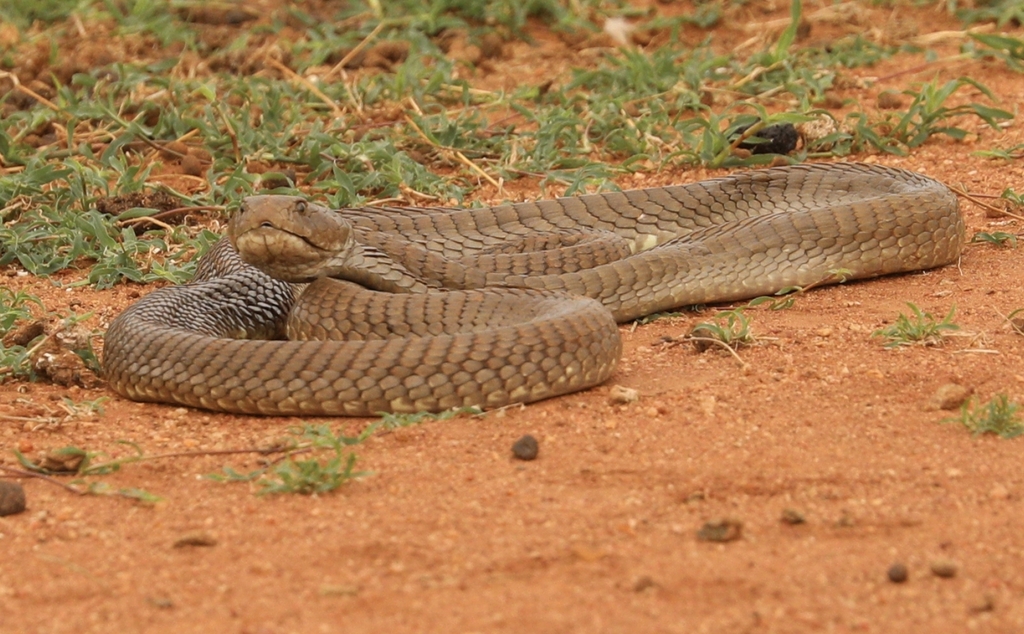
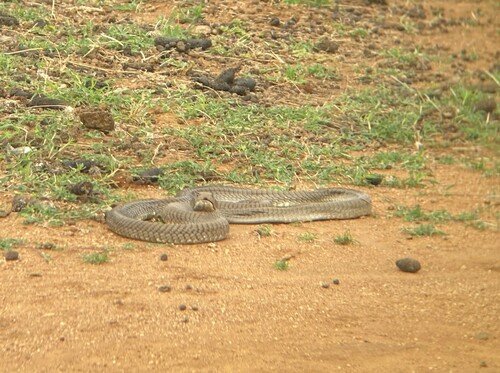
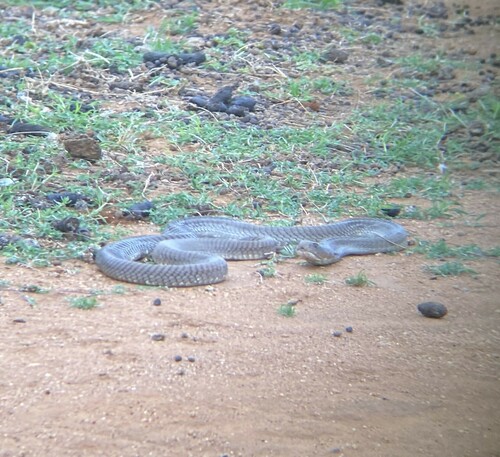
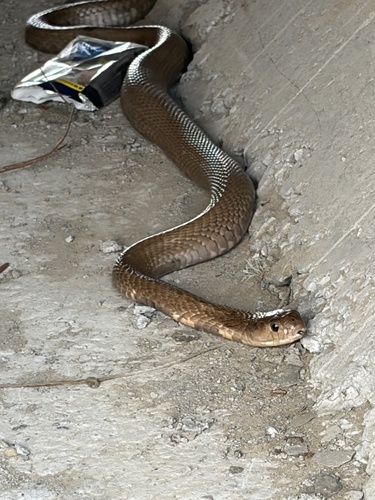
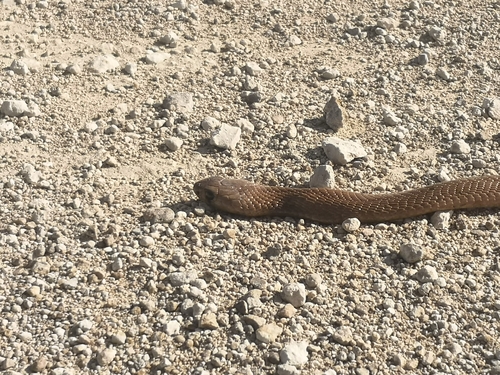
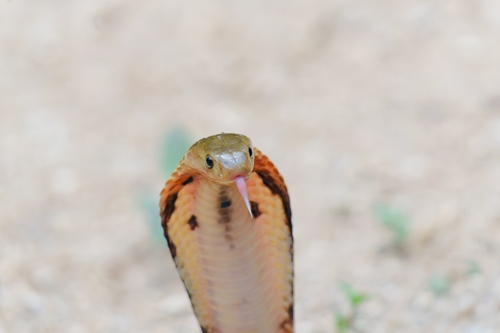
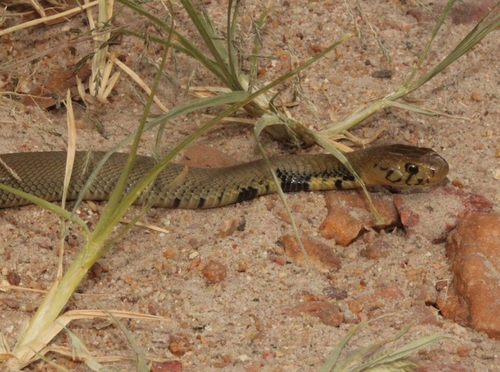
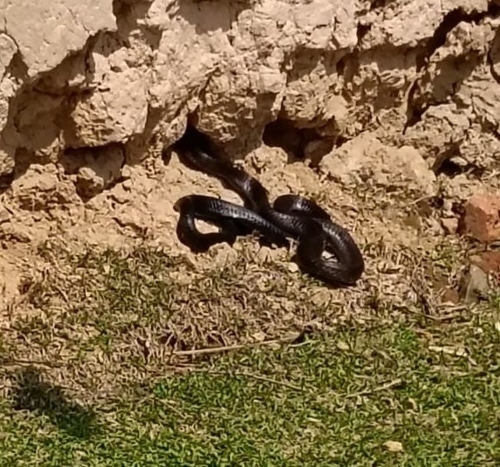
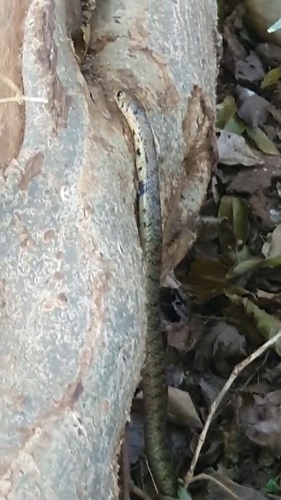
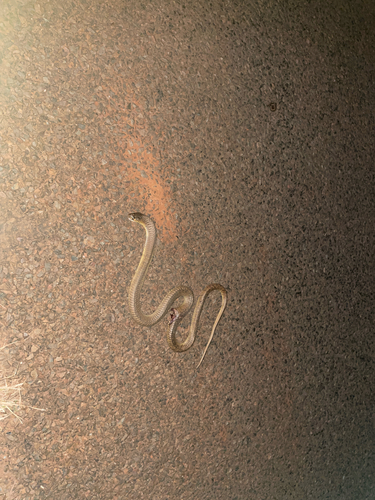
3 photographs of the Ashe's Spitting Cobra. © rasenior.
The Ashe's Spitting Cobra (Naja ashei) is a venomous snake in the Elapidae family, recorded in 6 countries.
If you are bitten
This is a venomous snake. Treat any bite as a medical emergency: stay calm, keep the bitten limb still and roughly level with the heart, remove rings and tight clothing, and get to emergency care immediately. Do not apply a tourniquet, cut the wound, apply ice, or try to suck out venom. Call your local emergency number or poison center.
- Family
- Elapidae
- Danger
- high
About the Ashe's Spitting Cobra
Naja ashei, commonly known as Ashe's spitting cobra or the giant spitting cobra, is a species of venomous snake in the family Elapidae. The species is native to Africa. It is the world's largest species of spitting cobra.
Etymology and taxonomy
The generic name, Naja, is a Latinisation of the Sanskrit word nāgá (नाग), meaning "serpent". The specific epithet, ashei, honors the late James Ashe, who founded the Bio-Ken Snake Farm and was one of the first experts to suggest N. ashei was a new species. Its differences from other spitting cobras were recognized in the 1960s, but it was initially regarded by most as merely a brown-coloured form of the black-necked spitting cobra (N. nigricollis). Thus, N. ashei was only classified as a distinct species in 2007, by Wolfgang Wüster (Bangor University, Wales) and Donald Broadley (Biodiversity Foundation for Africa). Royjan Taylor (Director of the Bio-Ken Snake Farm in Watamu, Kenya) was instrumental in providing specimens, among them the holotype.
The giant spitting cobra is most closely related to the Mozambique spitting cobra (N. mossambica), which with this species forms a sister taxon to N. nigricollis.
Description
Naja ashei, the largest spitting cobra, averages around 1.3–2.0 m (4.3–6.6 ft) in total length (including tail). The largest specimen of this species to date, caught in Kenya, was 2.7 m (8.9 ft) in total length. Some N. nigricollis may also reach such sizes, but this is very exceptional, whereas on the Kenyan coast, specimens of N. ashei of more than 2 m (6.6 ft) are not uncommon.
This Naja species is very heavily built with a big head. It's a very defensive spitting cobra that doesn't hesitate to spit when it feels cornered. It may also spit in copious amounts for hours without running out of venom immediately to spit. Its colour varies in different shades of brown from light grey through pale mustard to dark brown. It is pale in colour along the belly, sometimes with slight speckling or blotches, with a dark brown throat band. It has 17 to 25 midbody dorsal scale rows, 176 to 219 ventrals, and 51 to 69 subcaudals, with an entire anal scale across the vent.
Distribution and habitat
The giant spitting cobra is found in eastern and northeastern Africa, in the dry lowlands of northern and eastern Kenya and similar habitats in northeastern Uganda, southern Ethiopia and southern Somalia.
Venom
The venom of N. ashei is very similar in composition to that of other spitting cobras, including the black-necked spitting cobra (N. nigricollis) and the red spitting cobra (N. pallida), which are both found in the same areas. It consists of postsynaptic neurotoxins and cytotoxins. However, N. ashei is capable of injecting a much larger volume of venom in a single bite compared to the others. A single specimen milked at Bio-Ken Snake Farm in 2004 produced a wet venom yield of 6.2 ml, weighed 7.1 g and contained nearly 3 g of toxins.
Adapted from Wikipedia, available under CC BY-SA.
Local and regional names
The Ashe's Spitting Cobra is known by these names across the regions where it lives:
- Chinese
- 阿氏射毒眼鏡蛇
- German
- Ashe-Speikobra, Ashes Speikobra
- Italian
- Cobra sputatore di Ashe, Cobra sputatore gigante
- Russian
- Большая коричневая плюющаяся кобра
Frequently asked: Ashe's Spitting Cobra
- Is the Ashe's Spitting Cobra venomous?
- Yes. The Ashe's Spitting Cobra (Naja ashei) is venomous and belongs to the Elapidae family (cobra, mamba, coral or sea snake). Its bite is considered high risk to people. Treat any bite as a medical emergency.
- Is the Ashe's Spitting Cobra poisonous?
- Snakes are venomous, not poisonous. "Poisonous" means harmful to eat or touch; "venomous" means injecting toxins through a bite. The Ashe's Spitting Cobra is venomous, delivering venom through a bite.
- Is the Ashe's Spitting Cobra dangerous?
- This is a venomous snake. Treat any bite as a medical emergency: stay calm, keep the bitten limb still and roughly level with the heart, remove rings and tight clothing, and get to emergency care immediately. Do not apply a tourniquet, cut the wound, apply ice, or try to suck out venom. Call your local emergency number or poison center.
- Where does the Ashe's Spitting Cobra live?
- The Ashe's Spitting Cobra has verified records in 6 countries, including Kenya, Ethiopia, Uganda. See the distribution section below for its full range.
- Why is it called the Ashe's Spitting Cobra?
- The generic name, Naja, is a Latinisation of the Sanskrit word nāgá (नाग), meaning "serpent". The specific epithet, ashei, honors the late James Ashe, who founded the Bio-Ken Snake Farm and was one of the first experts to suggest N. ashei was a new species. Its differences from other spitting cobras were recognized in the 1960s, but it was initially regarded by most as merely a brown-coloured form of the black-necked spitting cobra (N. nigricollis). Thus, N.
If you are bitten by the Ashe's Spitting Cobra
Do
- Get away from the snake and stay calm. Most bites worsen when people panic or try again to handle the snake.
- Call 911 or Poison Control (1-800-222-1222) right away. Antivenom works best when given early.
- Note the time of the bite and, from a safe distance, the snake's color and pattern, a phone photo is enough. Do not chase it.
- Keep the bitten limb still and at roughly heart level. Sit or lie down and limit movement.
- Remove rings, watches, and tight clothing near the bite before swelling starts.
- Gently wash the bite with soap and water and cover it with a clean, dry dressing.
Do not
- Do not cut the wound or try to suck out the venom.
- Do not apply a tourniquet or ice.
- Do not drink alcohol or caffeine.
- Do not take aspirin or ibuprofen, they can worsen bleeding. Acetaminophen is safer for pain.
- Do not try to catch or kill the snake. A dead snake can still bite by reflex.
First-aid guidance adapted from the U.S. Centers for Disease Control and Prevention (CDC NIOSH), Venomous Snakes. Educational only; always follow the instructions of emergency responders.
Where it is found
More Elapidae snakes
Classification
How scientists group this snake, from the broadest category down to the exact species. Each step narrows to its closest relatives.
Keep learning
- Are Snakes Dangerous? The Real Risk, in PerspectiveMost snakes are harmless and avoid people. Here is the honest picture of snakebite risk worldwide and how to lower your own.
- Snakebite First Aid: What to Do (and What Never to Do)A clear, CDC-based guide to snakebite first aid: the steps that help, the popular myths that hurt, and how to tell a serious bite from a minor one.
- Venomous vs Nonvenomous: How to Tell the DifferenceThe folk rules for telling venomous snakes apart, where each one fails, and why location-based identification beats guessing by sight.
- What to Do If You Find a SnakeFound a snake at home or on a trail? Here is how to stay calm, give it space, identify it safely, and know when to call a professional.
Distribution from GBIF & iNaturalist. Venom status per CDC. Background: Wikipedia. Informational only. Never handle a snake to identify it.