
Colubridae
Trans-pecos Ratsnake
HarmlessBogertophis subocularis
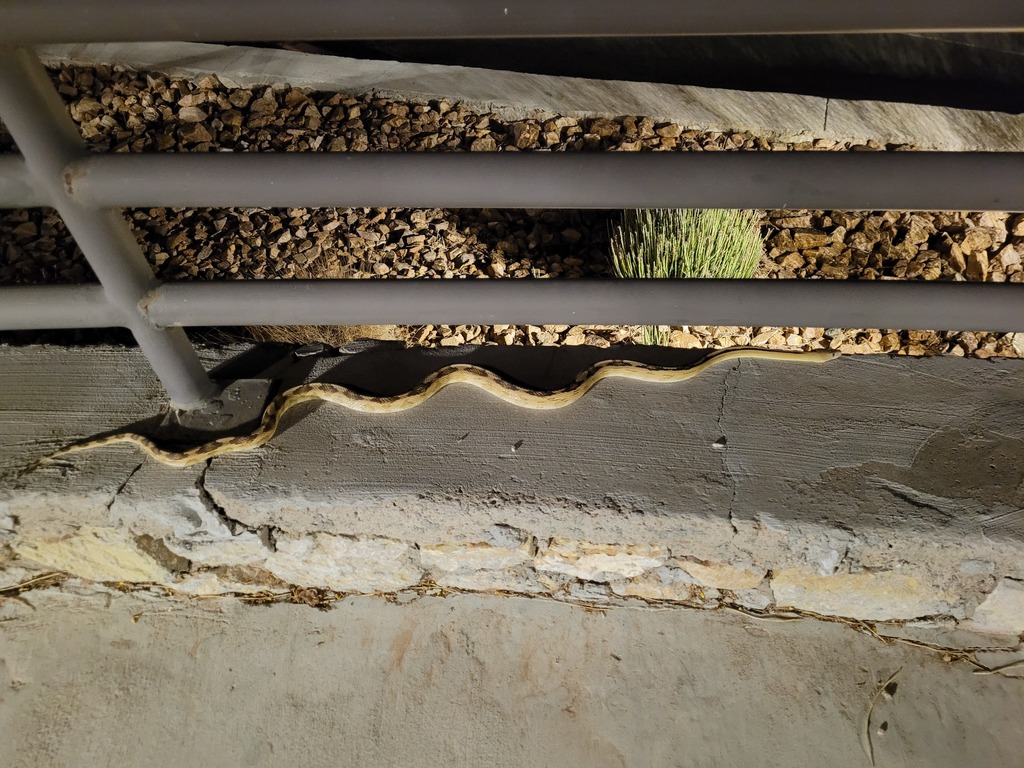
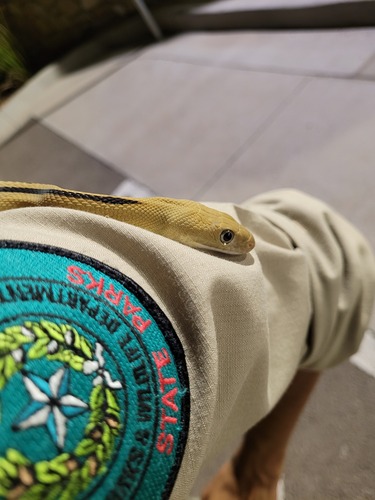
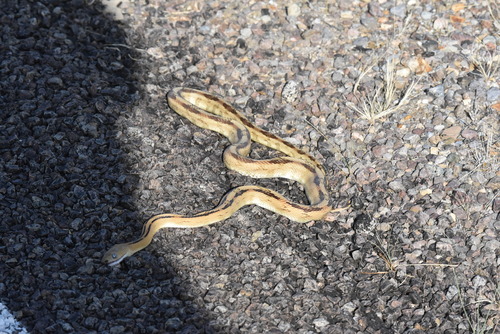
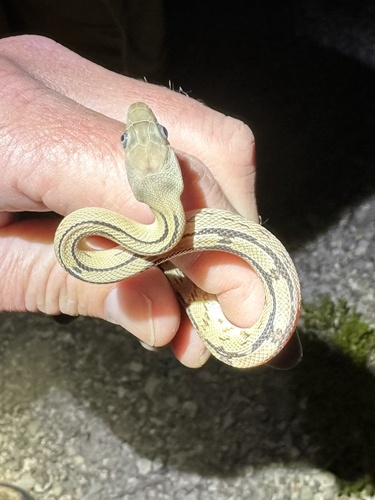
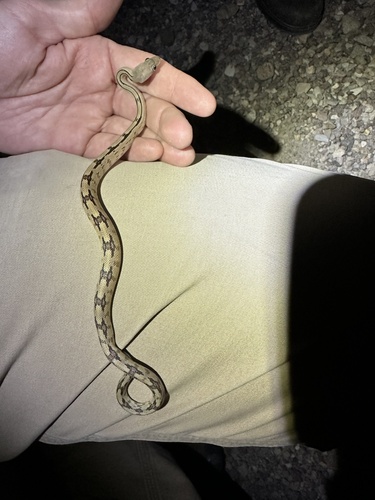
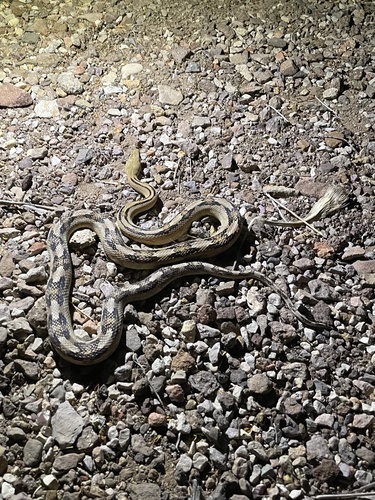
6 photographs of the Trans-pecos Ratsnake. © highsinger.
The Trans-pecos Ratsnake (Bogertophis subocularis) is a non-venomous snake in the Colubridae family, recorded in 2 countries.
- Family
- Colubridae
About the Trans-pecos Ratsnake
The Trans-Pecos rat snake or Davis Mountain rat snake (Bogertophis subocularis), is a species of medium to large, nonvenomous rat snake in the family Colubridae. Bogertophis subocularis is endemic to the Chihuahuan Desert.
Geographic range
The Trans-Pecos rat snake is found in the Mexican states of Chihuahua, Coahuila, Durango, and Nuevo León, and its range extends northward into Texas and New Mexico in the United States.
Description
B. subocularis has a row of small scales (suboculars) between the lower border of the eye and the upper labials. Coloration is yellow to tan dorsally with a series of black, or dark brown, H-shaped markings. The eye is large and prominent, light-colored with a contrasting round black pupil. The tongue is pink. The dorsal scales are in 31-35 rows at midbody. The ventrals number 260-277; the subcaudals number 69-79.
Adults are usually 36-54 inches (90–137 cm) in total length (including tail). The record total length is 66 inches (168 cm).
Habitat
The Trans-Pecos rat snake's habitat consists of desert flats and brushy slopes, and rocky outcrops where it dens.
Diet
B. subocularis feeds on small vertebrates.
Behavior
A nocturnal species, B. subocularis is uncommon and rarely seen in the wild, save on warm summer nights during the breeding season. Nicknamed "suboc" by enthusiasts, it is nonaggressive when approached, even passive, and is easily raised in captivity.
Sexual dimorphism
B. subocularis exhibits sexual dimorphism. Females are larger than males as adults. Adult males reach between 3.5 and 4.5 feet (1.1-1.4 m) in total length (including tail); whereas females grow up to 5.5 feet (1.7 m).
Reproduction
The breeding season for B. subocularis runs through May and June, while egg-laying begins in July and ends by September. At nearly three months, their incubation period is lengthy for a snake, at the end of which a clutch of anywhere from three to 11 snakes, each 28–33 cm (11–13 in) in total length, hatch. As they are hatched during winter, the hatchlings may remain hidden underground for several months before venturing outside.
Adapted from Wikipedia, available under CC BY-SA.
Frequently asked: Trans-pecos Ratsnake
- Is the Trans-pecos Ratsnake venomous?
- No. The Trans-pecos Ratsnake (Bogertophis subocularis) is non-venomous and is not considered dangerous to humans. Like most snakes, it will retreat rather than bite when given the chance.
- Is the Trans-pecos Ratsnake poisonous?
- Snakes are venomous, not poisonous. "Poisonous" means harmful to eat or touch; "venomous" means injecting toxins through a bite. The Trans-pecos Ratsnake is neither poisonous nor venomous.
- Is the Trans-pecos Ratsnake dangerous?
- The Trans-pecos Ratsnake is not dangerous to humans. It has no medically significant venom and bites only defensively if cornered or handled.
- Where does the Trans-pecos Ratsnake live?
- The Trans-pecos Ratsnake has verified records in 2 countries, including United States of America, Mexico. See the distribution section below for its full range.
- What does the Trans-pecos Ratsnake eat?
- B. subocularis feeds on small vertebrates.
Where it is found
By U.S. state
More Colubridae snakes
 Baja California RatsnakeBogertophis rosaliae
 Common Garter SnakeThamnophis sirtalis
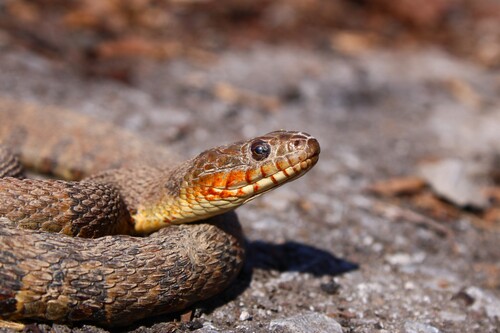 Common WatersnakeNerodia sipedon
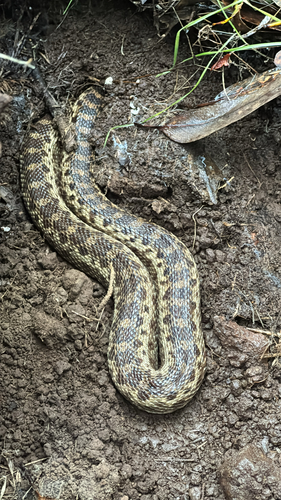 Gopher SnakePituophis catenifer
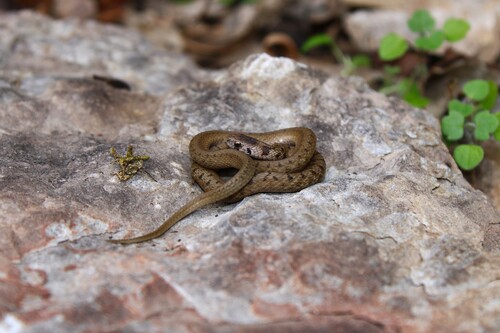 DeKay's BrownsnakeStoreria dekayi
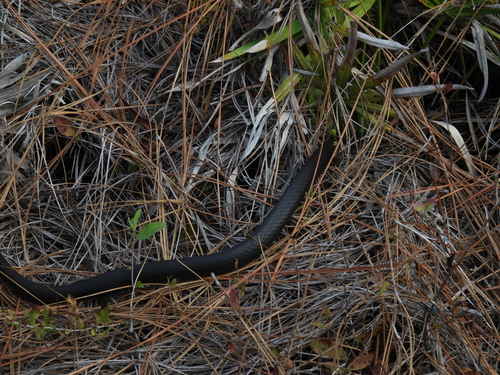 North American RacerColuber constrictor
 Ring-necked SnakeDiadophis punctatus
 Western Terrestrial Garter SnakeThamnophis elegans
Classification
How scientists group this snake, from the broadest category down to the exact species. Each step narrows to its closest relatives.
- OrderThe broad group of scaled reptiles: all snakes and lizards
- Squamata
- FamilyA group of related snakes that share key traits
- Colubridae
- GenusA close-knit group of very similar species
- Bogertophis
- SpeciesThis exact snake, named in the two-part scientific name
- Bogertophis subocularis
Keep learning
- What to Do If You Find a SnakeFound a snake at home or on a trail? Here is how to stay calm, give it space, identify it safely, and know when to call a professional.
- Venomous vs Nonvenomous: How to Tell the DifferenceThe folk rules for telling venomous snakes apart, where each one fails, and why location-based identification beats guessing by sight.
- What Is a Snake? Anatomy and the BasicsA clear overview of what makes a snake a snake: limbless body plan, anatomy, evolution from lizards, species diversity, and why they are ectothermic.
- How to Keep Snakes Out of Your Yard and HomeA practical guide to keeping snakes out of your yard and home using habitat changes that work, plus what to skip and what to do if one shows up.
Distribution from GBIF & iNaturalist. Venom status per CDC. Background: Wikipedia. Informational only. Never handle a snake to identify it.