
Genus · Colubridae
Types of ratsnakes
2 species make up the genus Bogertophis, the snakes commonly called ratsnakes. None are considered dangerous to humans.
About ratsnakes
Bogertophis is a small genus of slender, big-eyed New World ratsnakes from the deserts of the American Southwest and Baja California.
Bogertophis is a genus in the family Colubridae, the largest snake family, which holds most of the world's harmless to mildly venomous species. The genus contains just two recognized species, the Trans-Pecos ratsnake (Bogertophis subocularis) and the Baja California ratsnake (Bogertophis rosaliae). Both were once grouped with the larger ratsnake genus and were later separated into their own genus, named after the herpetologist Charles M. Bogert. They are arid-land specialists, which sets them apart from the woodland and farmland ratsnakes most people picture.
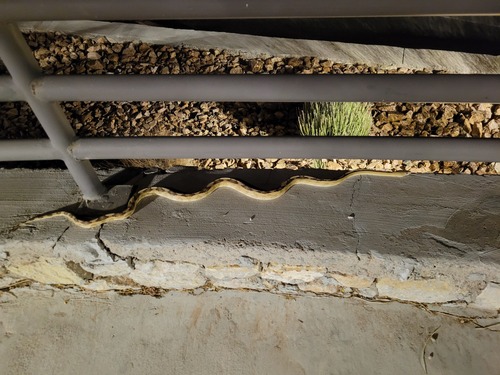
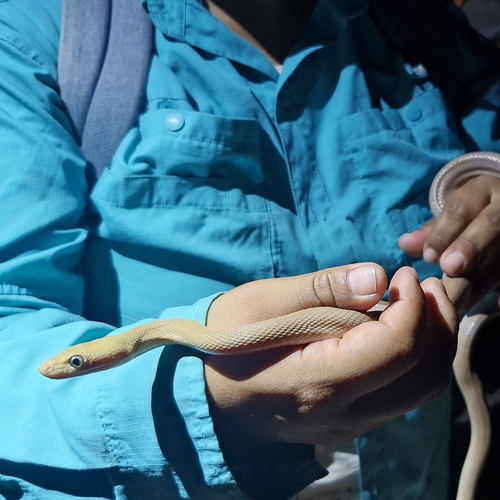
These are medium-sized, slender snakes with notably large eyes, a feature tied to their nocturnal habits in hot, dry country. The Trans-Pecos ratsnake ranges across the Chihuahuan Desert region of west Texas, southern New Mexico, and northern Mexico, where it favors rocky desert, canyons, and scrub. The Baja California ratsnake occupies the Baja peninsula and far southern California in similarly dry, rocky terrain. In general terms, members are recognized by their slim build, broad head, prominent eyes, and a body that is patterned in the Trans-Pecos species (tan with H-shaped dark blotches) or fairly plain in the Baja species. Like other colubrids, they are active hunters rather than ambush predators.
Both species are harmless to people. They are non-venomous constrictors that subdue prey such as rodents, bats, lizards, and birds by coiling, and they reproduce by laying eggs as is typical for ratsnakes. They pose no medical danger, though any snake can bite defensively and a wild bite should be cleaned and watched for infection. If you are ever unsure whether a snake is venomous, do not handle it; leave it alone and, for any bite you are worried about, contact emergency services or US Poison Control at 1-800-222-1222.
Bogertophis belongs to the Colubridae family (Colubrids). The largest snake family, and the one most snakes you meet belong to. Typically round pupils, a head only slightly wider than the neck, and no heat-sensing facial pit or rattle. Scales may be smooth and glossy or keeled and matte depending on the species.
Danger: Almost all colubrids are harmless. A small number are rear-fanged with medically significant venom, the boomslang and the twig (vine) snakes of Africa being the dangerous exceptions. Most colubrids will flee or bluff rather than bite.
All species (2)
Keep learning
- What Is a Snake? Anatomy and the BasicsA clear overview of what makes a snake a snake: limbless body plan, anatomy, evolution from lizards, species diversity, and why they are ectothermic.
- How Snakes Move, Hunt, and EatHow snakes move without legs, hunt as ambushers or active foragers, kill by constriction or venom, and swallow prey wider than their head.
- What Do Snakes Eat?All snakes are carnivores. Learn what snakes eat, how diet changes with size and age, how often they feed, and how they hunt and swallow prey.
- Venomous vs Nonvenomous: How to Tell the DifferenceThe folk rules for telling venomous snakes apart, where each one fails, and why location-based identification beats guessing by sight.