
Colubridae
Striped Bronzeback
HarmlessDendrelaphis caudolineatus
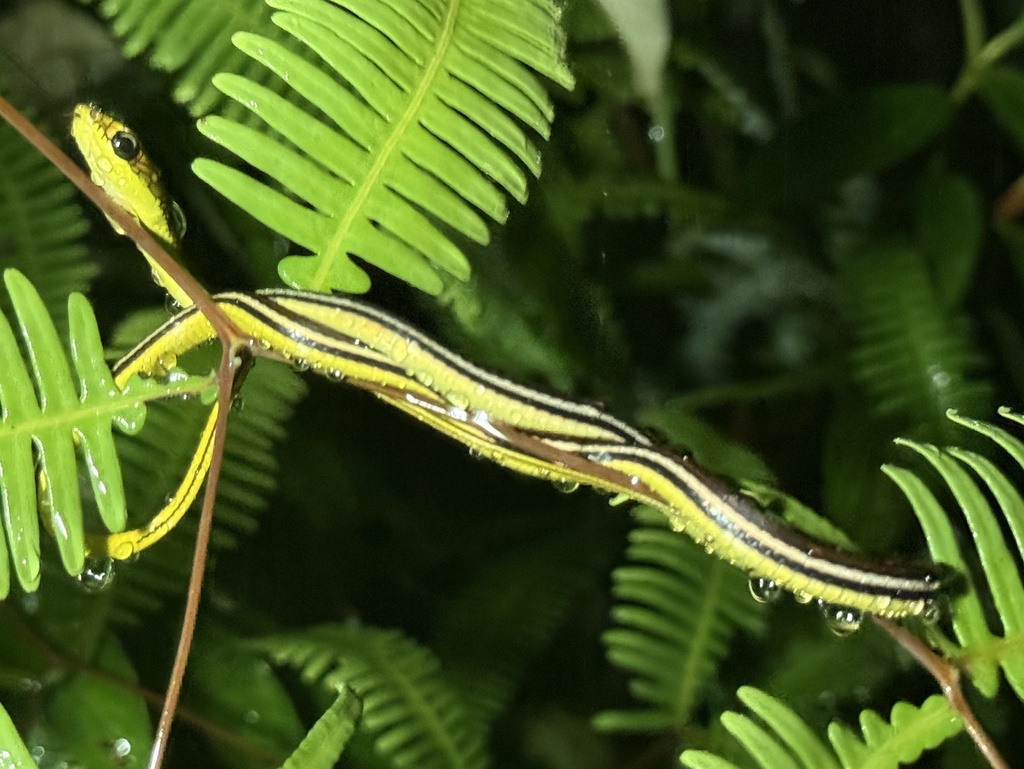
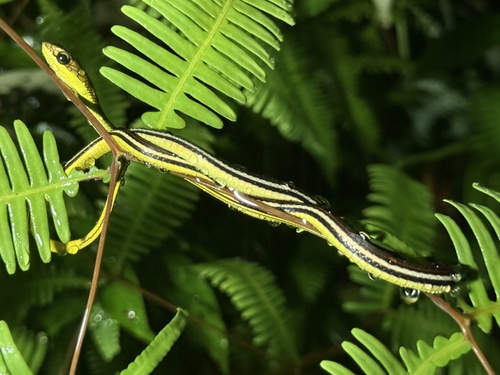
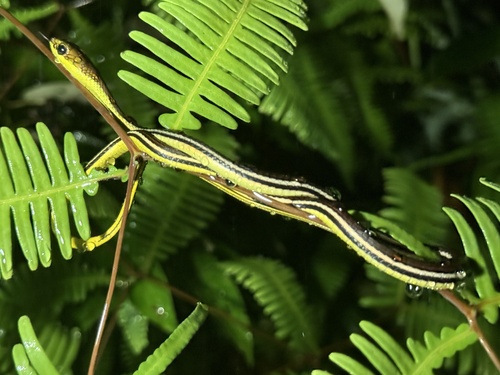
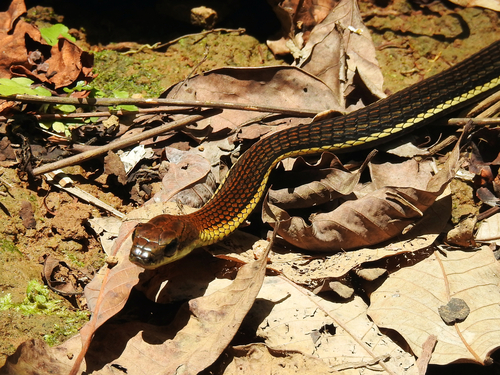
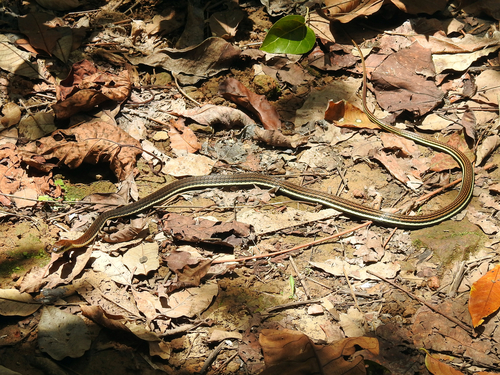
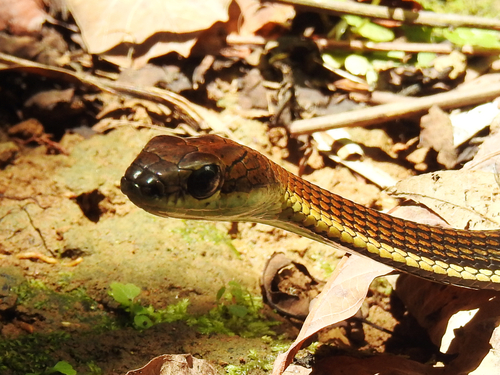
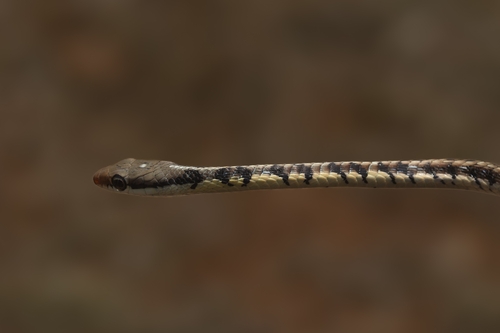
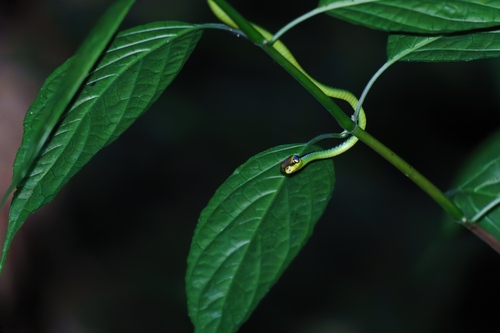
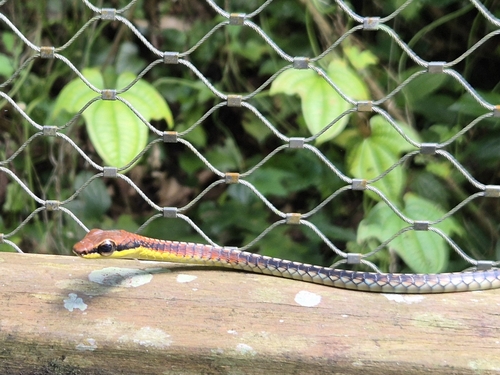
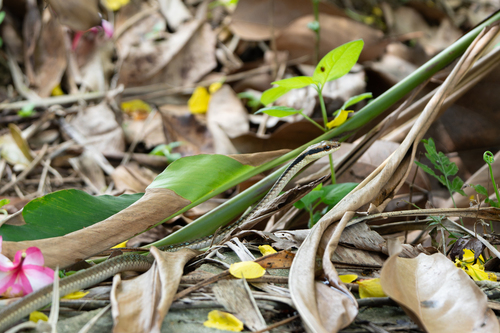
6 photographs of the Striped Bronzeback. © John Witton.
The Striped Bronzeback (Dendrelaphis caudolineatus) is a non-venomous snake in the Colubridae family, recorded in 9 countries.
- Family
- Colubridae
About the Striped Bronzeback
Dendrelaphis caudolineatus, commonly known as the striped bronzeback or grey bronzeback, is a species of colubrid snake found in Southeast Asia.
Etymology
When John Edward Gray first scientifically described the species in 1834, he did not provide the origin of the scientific name caudolineatus. However, in Latin "cauda" means tail and "linea" mean line, possibly referencing the longitudinal lines reaching from head to tail.
Taxonomy
Dendrelaphis caudolineatus belongs to the genus Dendrelaphis, which contains 48 other described species. Prior to a 2012 study, several other species of Dendrelaphis were previously considered to be members of Dendrelaphis caudolineatus, but are now considered to be separate species: D. flavescens, D. terrificus, D. philippinensis, and D. levitoni.
Dendrelaphis is one of five genera belonging to the vine snake subfamily Ahaetuliinae, of which Dendrelaphis is most closely related to Chrysopelea, as shown in the cladogram below:
Distribution
Dendrelaphis caudolineatus is found in Malaysia, Thailand, Indonesia, Brunei, and Singapore.
Habitat
It is found in a wide variety of forested habitats, commonly seen in trees and bushes, most often near swamps and streams. It can be found in gardens and cultivated areas. It is widespread, and one of the most commonly seen snakes in its range.
Description
Dendrelaphis caudolineatus is a rather small and thin snake, it can reach a length of 180 centimeters but is usually closer to 140 cm. The males are usually thinner than females but are more colorful, ranging from a reddish shade or bright chestnut brown, to a shiny bronze color. The females are usually dull-colored, and more stout-bodied than the males. It is also observed that females of this species tend to be less active than the males.
Behavior
The snake is diurnal and fully arboreal, and has oviparous reproduction, laying clutches of five to eight eggs. It feeds mainly on lizards and tree frogs.
Pet trade
It is commonly sold as a pet in the legal pet trade, with the exception of Thailand, where it is illegal to export snakes.
Adapted from Wikipedia, available under CC BY-SA.
Frequently asked: Striped Bronzeback
- Is the Striped Bronzeback venomous?
- No. The Striped Bronzeback (Dendrelaphis caudolineatus) is non-venomous and is not considered dangerous to humans. Like most snakes, it will retreat rather than bite when given the chance.
- Is the Striped Bronzeback poisonous?
- Snakes are venomous, not poisonous. "Poisonous" means harmful to eat or touch; "venomous" means injecting toxins through a bite. The Striped Bronzeback is neither poisonous nor venomous.
- Is the Striped Bronzeback dangerous?
- The Striped Bronzeback is not dangerous to humans. It has no medically significant venom and bites only defensively if cornered or handled.
- Where does the Striped Bronzeback live?
- The Striped Bronzeback has verified records in 9 countries, including Malaysia, Indonesia, Philippines. See the distribution section below for its full range.
- Why is it called the Striped Bronzeback?
- When John Edward Gray first scientifically described the species in 1834, he did not provide the origin of the scientific name caudolineatus. However, in Latin "cauda" means tail and "linea" mean line, possibly referencing the longitudinal lines reaching from head to tail.
Where it is found
More Colubridae snakes
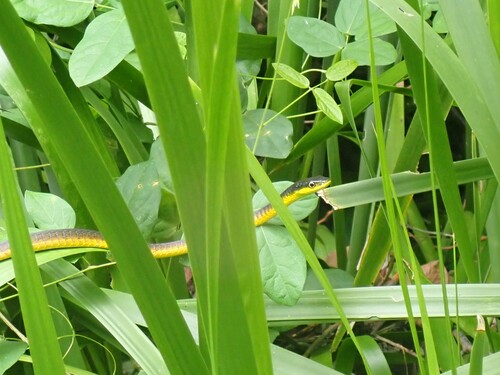 Common Tree SnakeDendrelaphis punctulatus
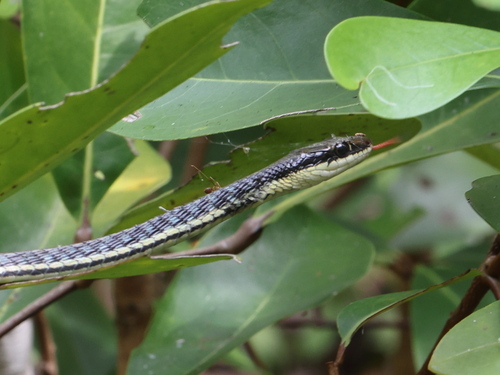 Painted BronzebackDendrelaphis pictus
 Common Bronzeback Tree SnakeDendrelaphis tristis
 Elegant BronzebackDendrelaphis formosus
 Kopstein's BronzebackDendrelaphis kopsteini
 Vietnamese BronzebackDendrelaphis ngansonensis
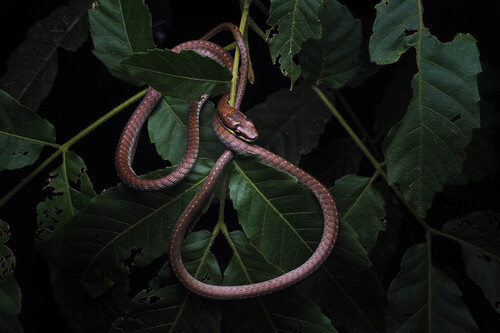 Northern Tree SnakeDendrelaphis calligaster
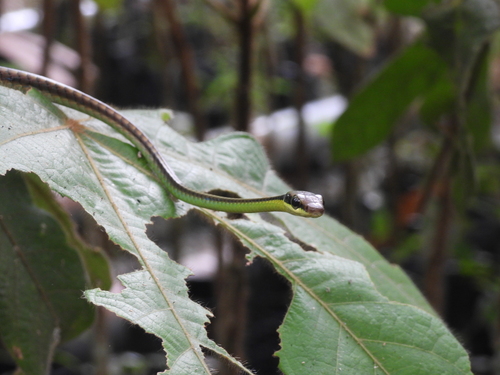 Blue BronzebackDendrelaphis cyanochloris
Classification
How scientists group this snake, from the broadest category down to the exact species. Each step narrows to its closest relatives.
- OrderThe broad group of scaled reptiles: all snakes and lizards
- Squamata
- FamilyA group of related snakes that share key traits
- Colubridae
- GenusA close-knit group of very similar species
- Dendrelaphis
- SpeciesThis exact snake, named in the two-part scientific name
- Dendrelaphis caudolineatus
Keep learning
- What to Do If You Find a SnakeFound a snake at home or on a trail? Here is how to stay calm, give it space, identify it safely, and know when to call a professional.
- Venomous vs Nonvenomous: How to Tell the DifferenceThe folk rules for telling venomous snakes apart, where each one fails, and why location-based identification beats guessing by sight.
- What Is a Snake? Anatomy and the BasicsA clear overview of what makes a snake a snake: limbless body plan, anatomy, evolution from lizards, species diversity, and why they are ectothermic.
- How to Keep Snakes Out of Your Yard and HomeA practical guide to keeping snakes out of your yard and home using habitat changes that work, plus what to skip and what to do if one shows up.
Distribution from GBIF & iNaturalist. Venom status per CDC. Background: Wikipedia. Informational only. Never handle a snake to identify it.