
Genus · Colubridae
Types of bronzebacks
40+ species make up the genus Dendrelaphis, the snakes commonly called bronzebacks. None are considered dangerous to humans.
About bronzebacks and Asian tree snakes
Slim, fast, big-eyed tree snakes that race through the canopy across South and Southeast Asia.
Dendrelaphis is a genus of slender, day-active tree snakes in the family Colubridae, the largest and most diverse snake family. Like most colubrids they lack the front-fixed venom-delivering fangs of vipers and elapids, and their body plan is built for speed and climbing rather than for subduing large prey. The genus is commonly known by the English names bronzeback or Asian tree snake, after the warm bronze or coppery sheen many species show along the spine. With dozens of recognized species, including the four in this database, Dendrelaphis is one of the more species-rich groups of arboreal colubrids in the Old World tropics.
These snakes range widely across South Asia, Southeast Asia, southern China, the Indonesian archipelago, the Philippines, New Guinea, and into northern and eastern Australia. They favor warm, vegetated habitats: rainforest, secondary forest, plantations, mangroves, parks, and gardens. Because they tolerate disturbed and suburban settings, they are among the tree snakes people encounter most often near homes, often spotted gliding along fences, hedges, and rooftops in the daytime.
Recognizing a Dendrelaphis is easier as a group than to species. They are long and whip-thin with a distinctly slender neck, a narrow head set off from the body, and notably large round eyes with round pupils, all signs of a visual, diurnal hunter. The body is typically smooth and somewhat compressed side to side, often with a bronze, olive, brown, or greenish dorsal color, frequently a pale or yellowish flank stripe, and a dark line running through the eye. When alarmed or threatened, many species inflate the neck and forebody to reveal vivid blue, white, or black skin between the scales, a startling display that is bluff rather than threat. Exact pattern and color vary by species, so close identification of members such as the Common Tree Snake, Painted Bronzeback, Common Bronzeback Tree Snake, and Striped Bronzeback relies on scale counts and locality.
On the safety question, Dendrelaphis are generally regarded as harmless to people and are not considered dangerously venomous. They are rear-fanged colubrids, meaning any mild salivary toxins are delivered by enlarged teeth at the back of the jaw rather than by hollow front fangs, and they are not equipped to deliver a medically significant bite to humans. They are fast and prone to flee, and an inflated neck display is meant to scare off a predator, not to attack. Even so, no wild snake should be handled. A bite from any wild snake can cause injury or infection, identification mistakes happen, and individual reactions vary. If a bite occurs or the species is uncertain, do not attempt to handle the animal and seek medical guidance, contacting US Poison Control at 1-800-222-1222 or local emergency services.
Ecologically, these are active visual predators that hunt by day, using keen eyesight to chase down lizards, especially geckos and skinks, along with frogs and the occasional small bird, nestling, or other small vertebrate. They move quickly through branches and shrubs and can cross open ground when needed. Like most colubrids in the genus they are egg layers, depositing small clutches of elongate eggs in sheltered, humid spots such as leaf litter, tree hollows, or rotting wood. Their habit of living alongside people, combined with their alert daytime activity, makes bronzebacks a familiar and largely beneficial presence that helps keep gecko and insect-prey lizard numbers in check.
Dendrelaphis belongs to the Colubridae family (Colubrids). The largest snake family, and the one most snakes you meet belong to. Typically round pupils, a head only slightly wider than the neck, and no heat-sensing facial pit or rattle. Scales may be smooth and glossy or keeled and matte depending on the species.
Danger: Almost all colubrids are harmless. A small number are rear-fanged with medically significant venom, the boomslang and the twig (vine) snakes of Africa being the dangerous exceptions. Most colubrids will flee or bluff rather than bite.
All species (46)
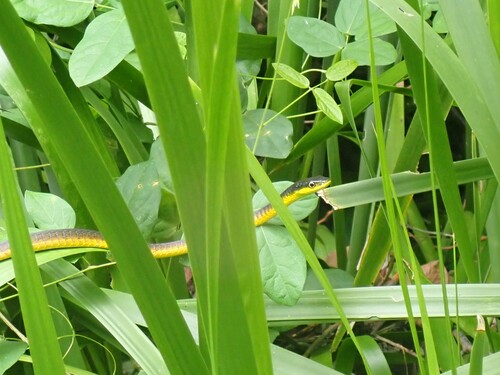 Common Tree SnakeDendrelaphis punctulatusHarmless
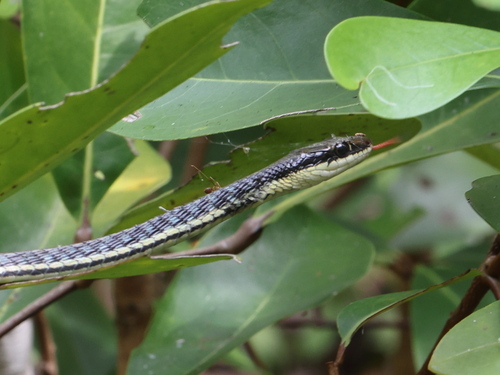 Painted BronzebackDendrelaphis pictusHarmless
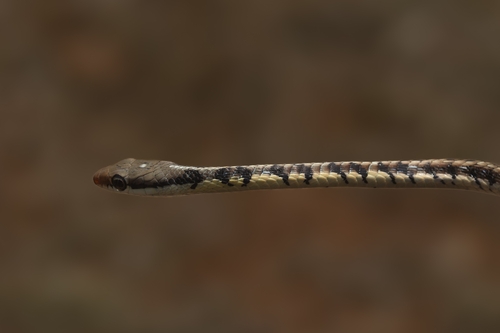 Common Bronzeback Tree SnakeDendrelaphis tristisHarmless
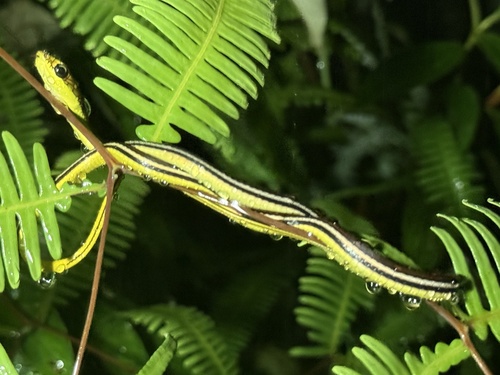 Striped BronzebackDendrelaphis caudolineatusHarmless
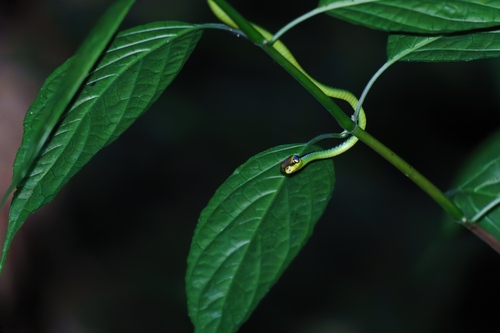 Elegant BronzebackDendrelaphis formosusHarmless
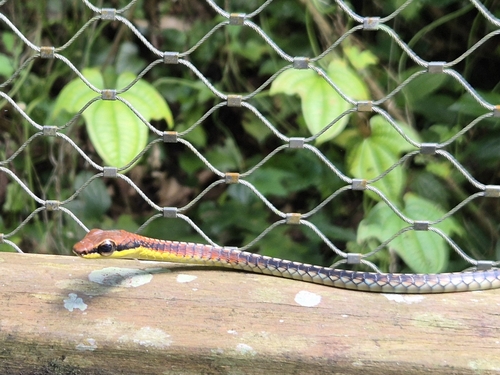 Kopstein's BronzebackDendrelaphis kopsteiniHarmless
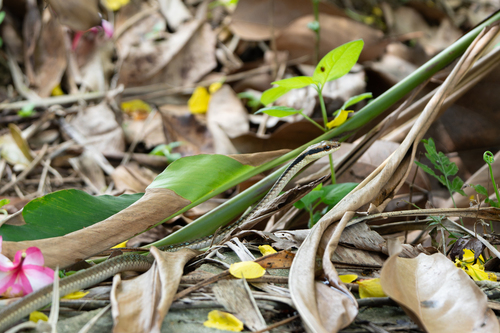 Vietnamese BronzebackDendrelaphis ngansonensisHarmless
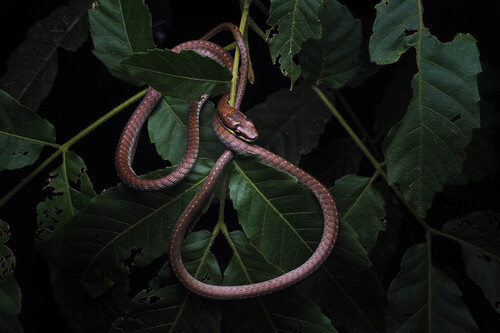 Northern Tree SnakeDendrelaphis calligasterHarmless
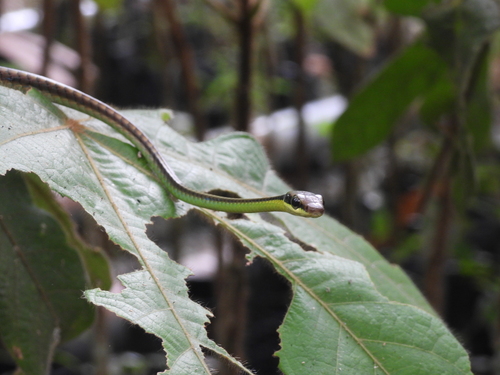 Blue BronzebackDendrelaphis cyanochlorisHarmless
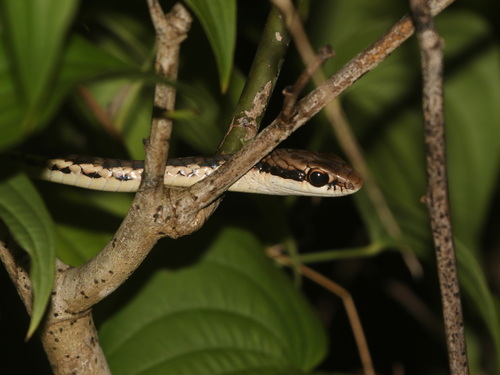 Mountain BronzebackDendrelaphis subocularisHarmless
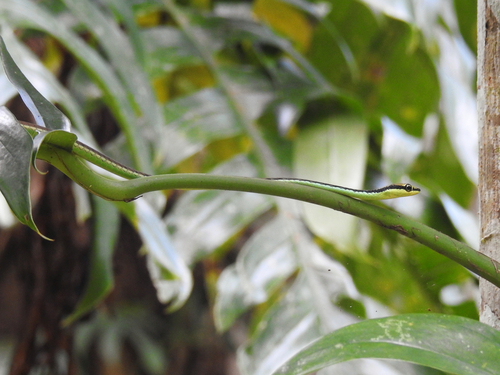 Maren's BronzebackDendrelaphis marenaeHarmless
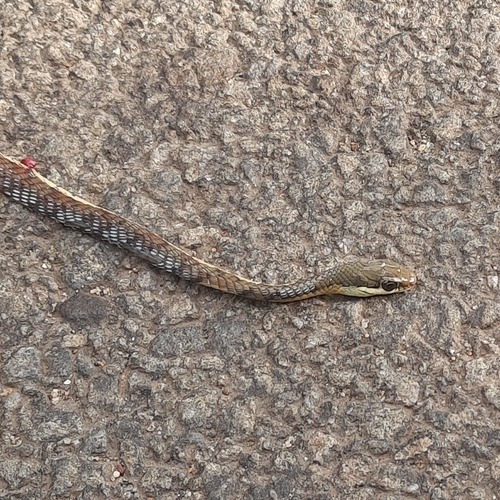 Karnataka BronzebackDendrelaphis chairecacosHarmless
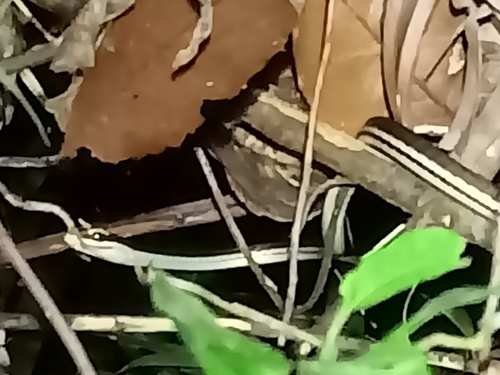 Eastern bronzeback tree snakeDendrelaphis proarchosHarmless
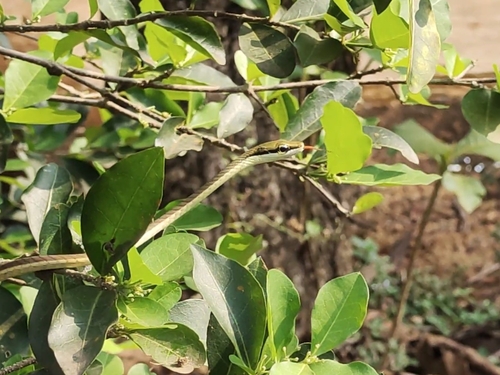 Giri's BronzebackDendrelaphis giriiHarmless
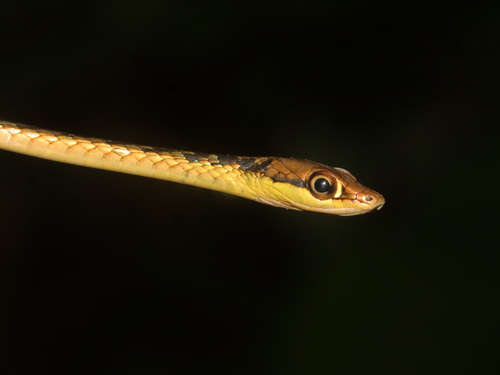 Haas's BronzebackDendrelaphis haasiHarmless
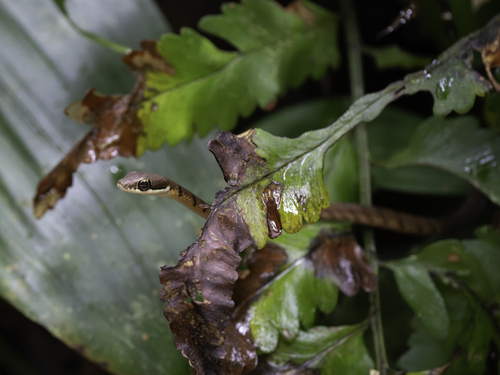 Stripe-Tailed BronzebackDendrelaphis caudolineolatusHarmless
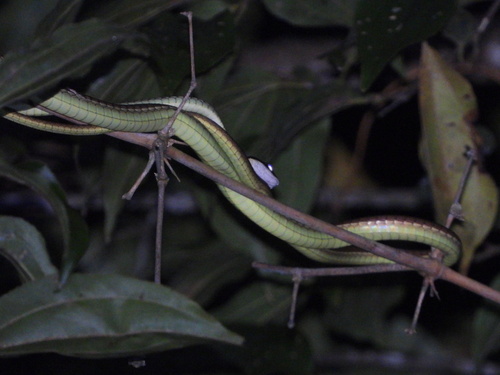 Lesser Sundas bronzebackDendrelaphis inornatusHarmless
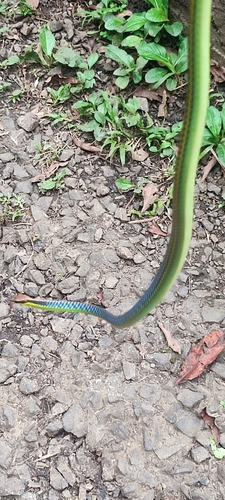 Underwood's BronzebackDendrelaphis underwoodiHarmless
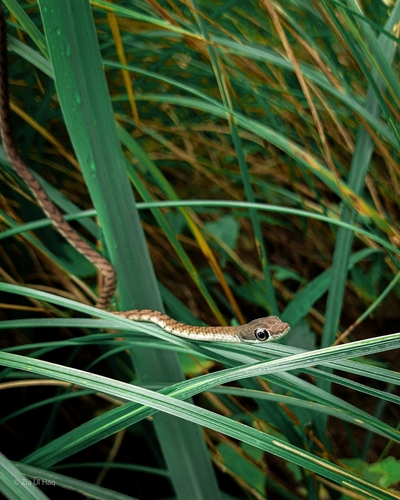 Large-eyed bronzebackDendrelaphis grandoculisHarmless
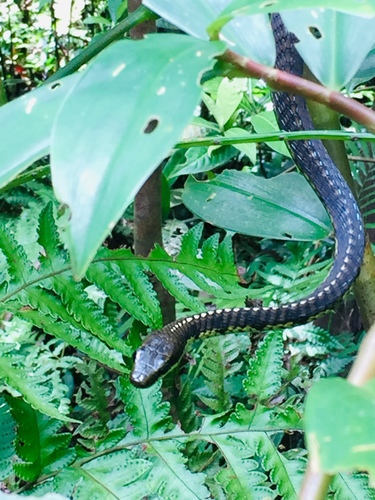 Schokar's bronzebackDendrelaphis schokariHarmless
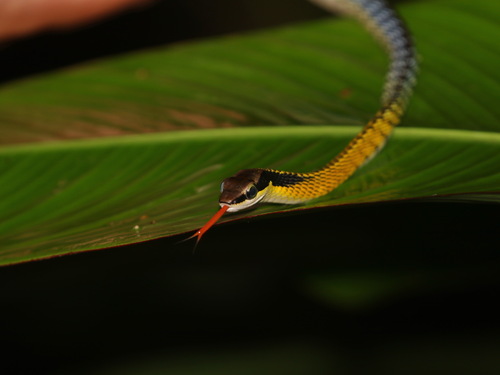 Banded BronzebackDendrelaphis striatusHarmless
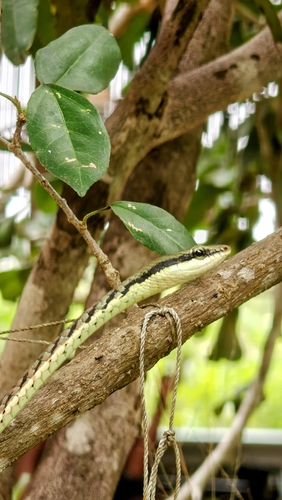 Boulenger's BronzebackDendrelaphis bifrenalisHarmless
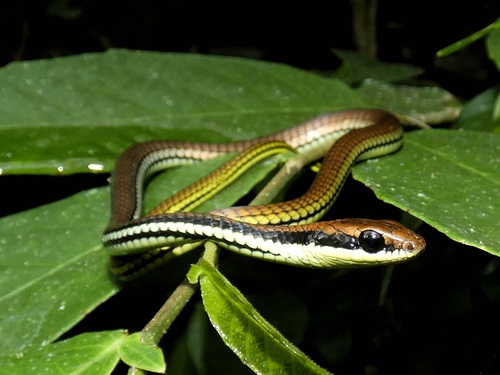 Philippines BronzebackDendrelaphis philippinensisHarmless
 Andaman BronzebackDendrelaphis andamanensisHarmless
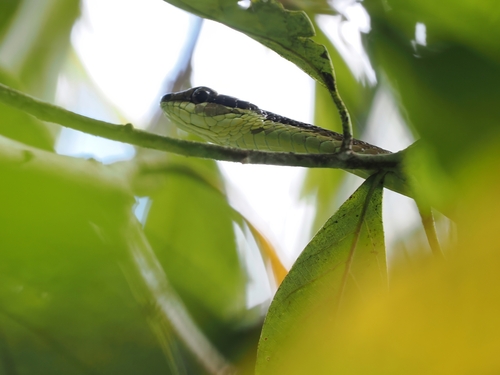 Vogel's BronzebackDendrelaphis vogeliHarmless
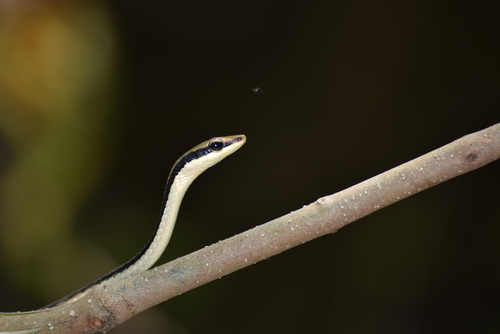 Ashok's BronzebackDendrelaphis ashokiHarmless
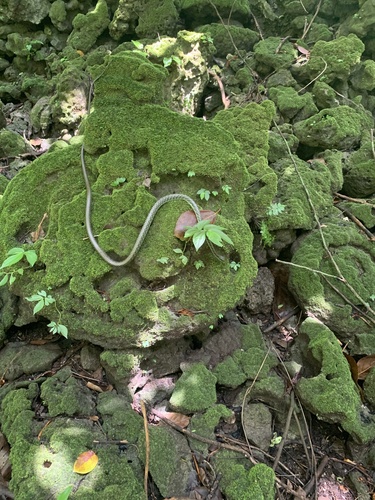 Palau Tree SnakeDendrelaphis striolatusHarmless
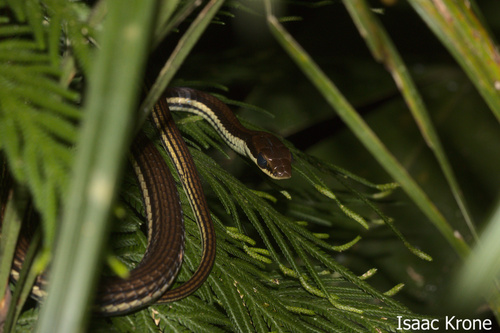 Terrific BronzebackDendrelaphis terrificusHarmless
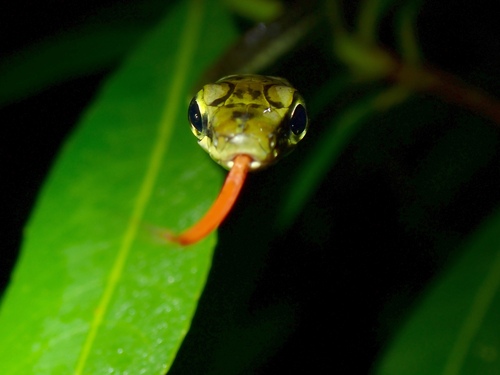 Wickramasinghes' BronzebackDendrelaphis wickrorumHarmless
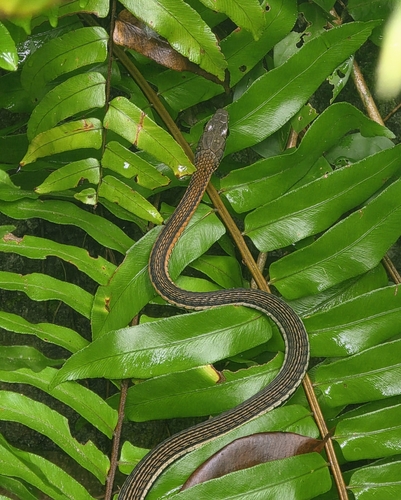 Palawan bronzebackDendrelaphis levitoniHarmless
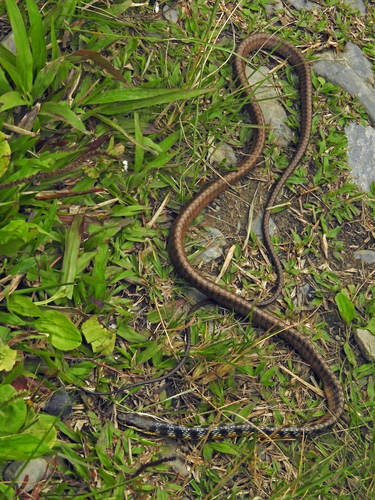 New Guinea BronzebackDendrelaphis lineolatusHarmless
 Sawtooth-necked BronzebackDendrelaphis nigroserratusHarmless
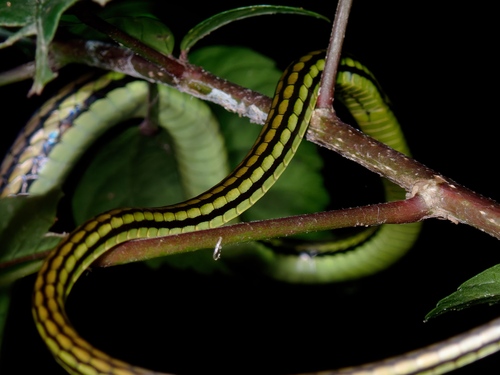 Luzon BronzebackDendrelaphis luzonensisHarmless
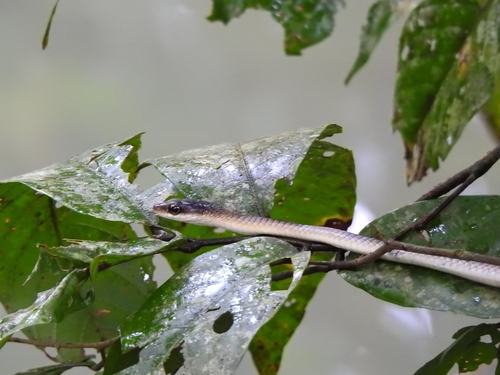 Big-eyed Tree SnakeDendrelaphis macropsHarmless
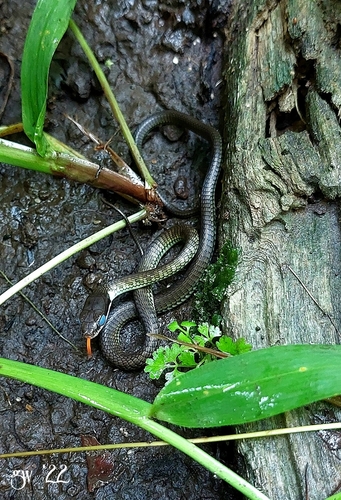 Striped BronzebackDendrelaphis modestusHarmless
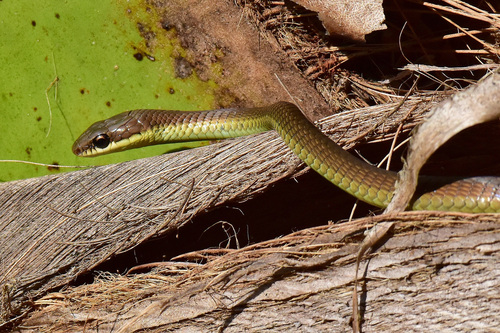 Negros BronzebackDendrelaphis fuliginosusHarmless
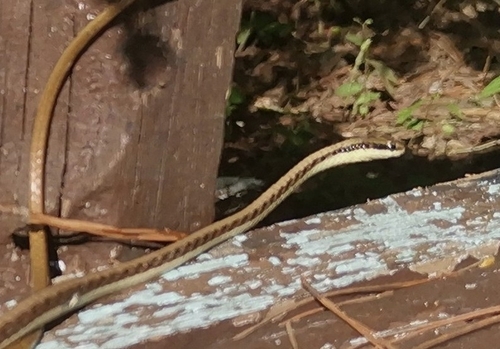 Southern Burmese BronzebackDendrelaphis walliHarmless
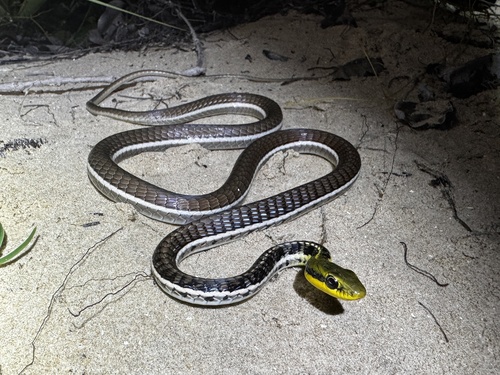 Binh’s Bronzeback SnakeDendrelaphis binhiHarmless
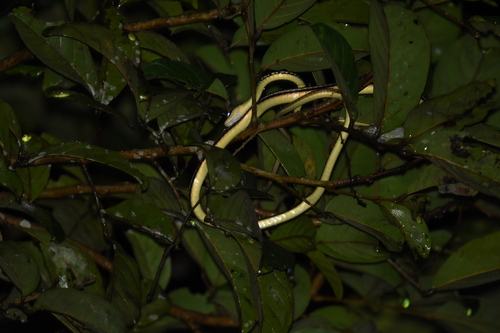 Moluccan Painted BronzebackDendrelaphis grismeriHarmless
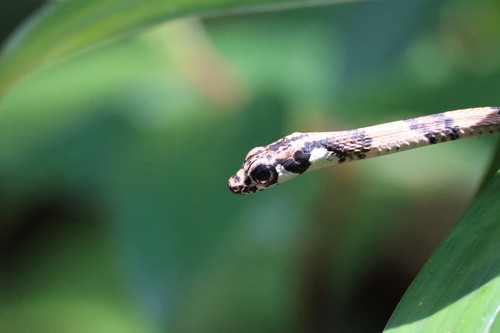 Sinharaja Tree SnakeDendrelaphis effrenisHarmless
 Tiwar's BronzebackDendrelaphis humayuniHarmless
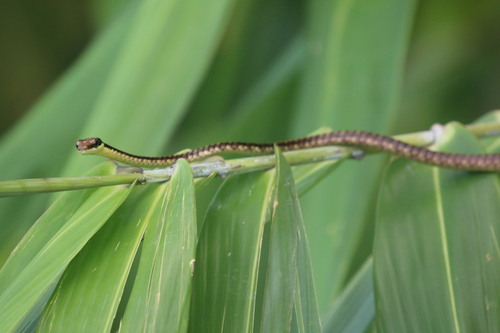 Gore's bronzebackDendrelaphis biloreatusHarmless
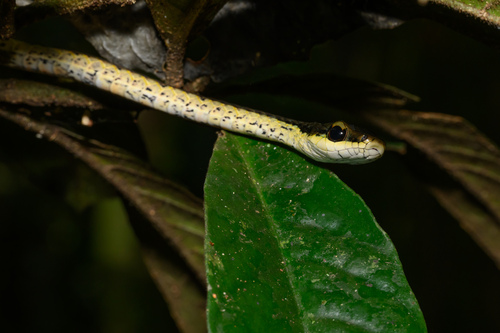 Montane treesnakeDendrelaphis gastrostictusHarmless
 Papuan treesnakeDendrelaphis papuensisHarmless
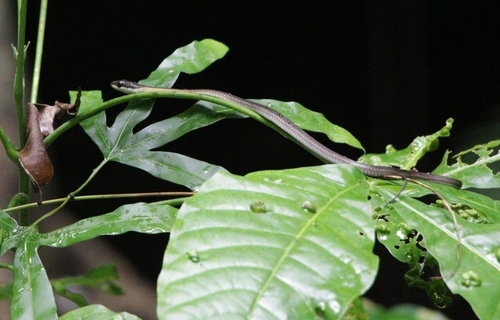 Sulu bronzebackDendrelaphis flavescensHarmless
- No photoDendrelaphis thasuniHarmless
Keep learning
- What Is a Snake? Anatomy and the BasicsA clear overview of what makes a snake a snake: limbless body plan, anatomy, evolution from lizards, species diversity, and why they are ectothermic.
- How Snakes Move, Hunt, and EatHow snakes move without legs, hunt as ambushers or active foragers, kill by constriction or venom, and swallow prey wider than their head.
- What Do Snakes Eat?All snakes are carnivores. Learn what snakes eat, how diet changes with size and age, how often they feed, and how they hunt and swallow prey.
- Venomous vs Nonvenomous: How to Tell the DifferenceThe folk rules for telling venomous snakes apart, where each one fails, and why location-based identification beats guessing by sight.