
Coral snake
Southern Coralsnake
VenomousMicrurus frontalis
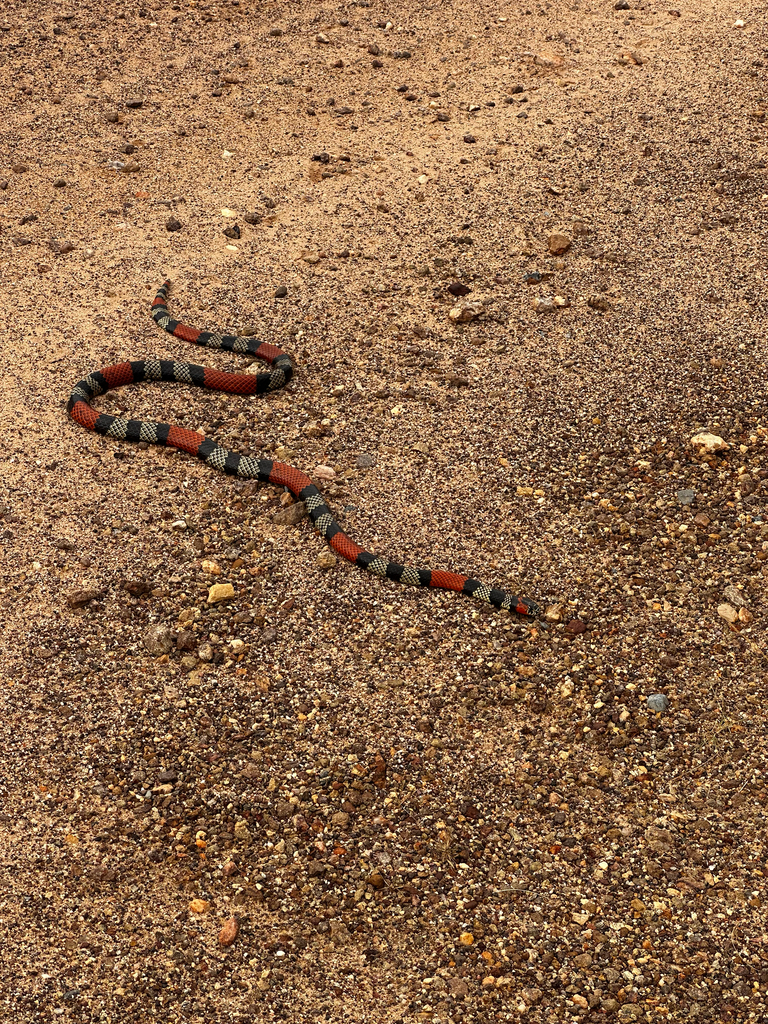
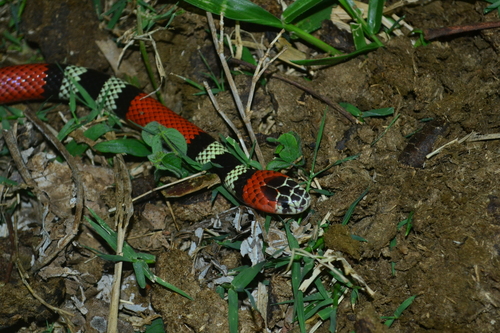
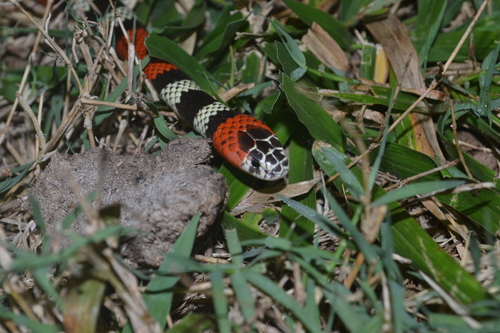
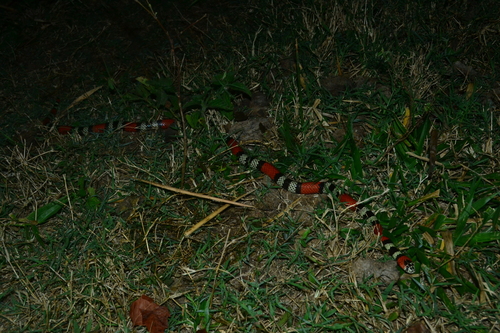
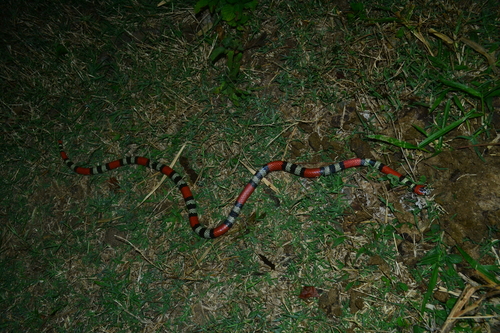
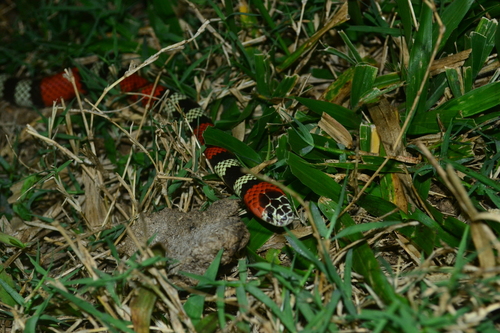
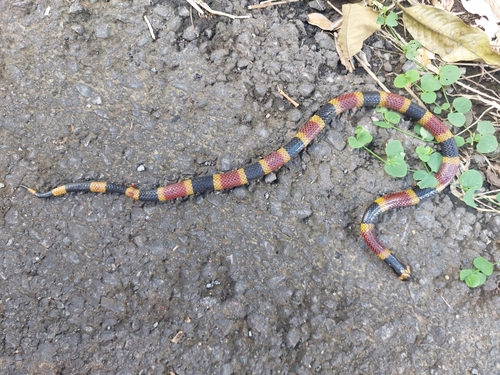
6 photographs of the Southern Coralsnake. © Roland Kays.
The Southern Coralsnake (Micrurus frontalis) is a venomous snake in the Elapidae family, recorded in 6 countries.
If you are bitten
Coral snake venom is neurotoxic and symptoms can be delayed for many hours. Treat any suspected coral snake bite as a medical emergency and go to an emergency room even if you feel fine — antivenom may be needed. Keep calm and still. Call Poison Control at 1-800-222-1222 or 911 in the US, or your local emergency number. (Source: CDC.)
- Also called
- Coral snake
- Family
- Elapidae
- Size
- Slender, usually 1.5–3 ft.
- Habitat
- Pine and hardwood forests with sandy, well-drained soils.
- Behavior
- Secretive and semi-burrowing; reluctant to bite but venom is neurotoxic.
- Identify
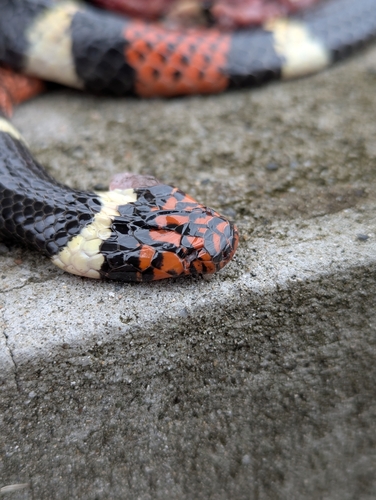
- Rings of red, yellow, and black where red touches yellow; small rounded head and round pupils.
- Danger
- high (delayed)
About the Southern Coralsnake
Micrurus frontalis, also known as the southern coral snake or short-tailed coral snake, is a species of highly venomous coral snake in the family Elapidae. It is found in South America.
Description
This species grows on average to 75 cm in length, with a maximum of 164 cm already reported. The color of the head varies, with a gray pigment on the top of the snout. The body pattern consists of very wide red bands that are separated by a series of 10–15 narrower black triads with 3 blacks separated by narrow white bands. The dorsal scales are red, with black tips of dark appearance. The tail has two complete triads.
It is a nocturnal, terrestrial and fossorial snake, which digs loose soil or litter, has been one of the main accident-causing corals in Southeast South America, although it is not relatively aggressive towards humans, it has Oviparous reproduction, although eggs / clutch has not been reported.
Distribution and habitat
Micrurus frontalis is found in south-central Brazil, Paraguay, and northern Argentina. It mainly lives in humid forests, tropical and subtropical deciduous forests, savannas, sandy and rocky areas, in secondary vegetation such as pastures and agricultural land, close to marshes and streams, it inhabits lowlands, from sea level to an elevation of 700 m.
Diet
It feeds on lizards and other snakes (including blind snakes). Cannibalism has been reported in this species.
Venom
Like all elapids in Brazil, Micrurus frontalis has post-synaptic neurotoxins (except for Micrurus corallinus) that bind to terminal motor acetylcholine receptors, the toxin is composed of low molecular weight polypeptides, which are rapidly absorbed by the body after inoculation and symptoms can appear in minutes, the toxin acts peripherally, blocking neuromuscular transmission. Muscle paralysis is a consequence of the action of the toxin with the neurotransmitter by the nicotinic receptor on the end plate.
At the site of the bite, edema and paresthesias occur, the initial systemic symptoms of most coral accidents, include eyelid ptosis and diplopia, which are followed by facial muscle paralysis, visual impairment, anisocoria, dysarthria, dysphagia, salivation and generalized loss of muscle strength, in severe cases, life-threatening respiratory arrest occurs, with patients requiring artificial ventilation. The median lethal dose is 22 μg for mice weighing 4–29 grams, and 0.69 mg/kg. The estimates of average yield range between 10 and 30 mg (dry weight), depending on the source.
Adapted from Wikipedia, available under CC BY-SA.
Local and regional names
The Southern Coralsnake is known by these names across the regions where it lives:
- Chinese
- 南部珊瑚蛇
- English
- Brazilian giant coralsnake, Cerrado coralsnake, Short-tailed coral snake, Southern Coral Snake, Southern Coral-snake
- German
- Südliche Korallenotter
- Italian
- Serpente corallo meridionale
- Portuguese
- Boipinima, Cobra coral do cerrado, Cobra-Coral, Cobra-Coral-do-Sul, Cobra-Corá, Cobra-coral brasileira gigante, Cobra-coral do Cerrado, Coral, Coral-Verdadeira, Coral-de-Cara-Preta
- Russian
- Кобровый аспид
- Spanish
- coral del sur
Frequently asked: Southern Coralsnake
- Is the Southern Coralsnake venomous?
- Yes. The Southern Coralsnake (Micrurus frontalis) is venomous and belongs to the Elapidae family (coral snake). Its bite is considered high (delayed) risk to people. Treat any bite as a medical emergency.
- Is the Southern Coralsnake poisonous?
- Snakes are venomous, not poisonous. "Poisonous" means harmful to eat or touch; "venomous" means injecting toxins through a bite. The Southern Coralsnake is venomous, delivering venom through a bite.
- Is the Southern Coralsnake dangerous?
- Coral snake venom is neurotoxic and symptoms can be delayed for many hours. Treat any suspected coral snake bite as a medical emergency and go to an emergency room even if you feel fine — antivenom may be needed. Keep calm and still. Call Poison Control at 1-800-222-1222 or 911 in the US, or your local emergency number. (Source: CDC.)
- Where does the Southern Coralsnake live?
- The Southern Coralsnake has verified records in 6 countries, including Brazil, Paraguay, Argentina. See the distribution section below for its full range.
- How do I identify the Southern Coralsnake?
- Rings of red, yellow, and black where red touches yellow; small rounded head and round pupils.
- How big does the Southern Coralsnake get?
- Slender, usually 1.5–3 ft.
- What does the Southern Coralsnake eat?
- It feeds on lizards and other snakes (including blind snakes). Cannibalism has been reported in this species.
If you are bitten by the Southern Coralsnake
Do
- Get away from the snake and stay calm. Most bites worsen when people panic or try again to handle the snake.
- Call 911 or Poison Control (1-800-222-1222) right away. Antivenom works best when given early.
- Note the time of the bite and, from a safe distance, the snake's color and pattern, a phone photo is enough. Do not chase it.
- Keep the bitten limb still and at roughly heart level. Sit or lie down and limit movement.
- Remove rings, watches, and tight clothing near the bite before swelling starts.
- Gently wash the bite with soap and water and cover it with a clean, dry dressing.
Do not
- Do not cut the wound or try to suck out the venom.
- Do not apply a tourniquet or ice.
- Do not drink alcohol or caffeine.
- Do not take aspirin or ibuprofen, they can worsen bleeding. Acetaminophen is safer for pain.
- Do not try to catch or kill the snake. A dead snake can still bite by reflex.
First-aid guidance adapted from the U.S. Centers for Disease Control and Prevention (CDC NIOSH), Venomous Snakes. Educational only; always follow the instructions of emergency responders.
Where it is found
More Elapidae snakes
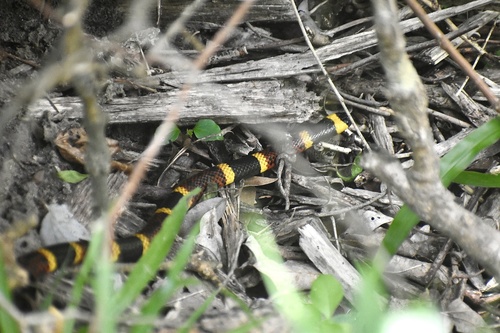 Texas CoralsnakeMicrurus tener
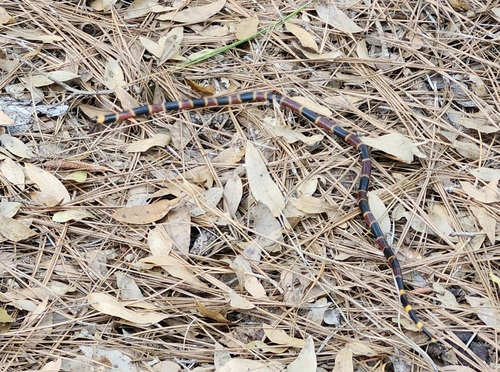 Eastern CoralsnakeMicrurus fulvius
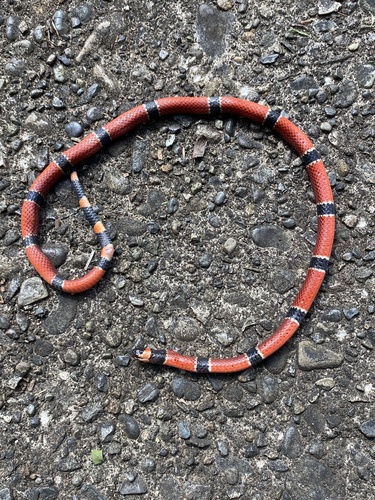 Central American CoralsnakeMicrurus nigrocinctus
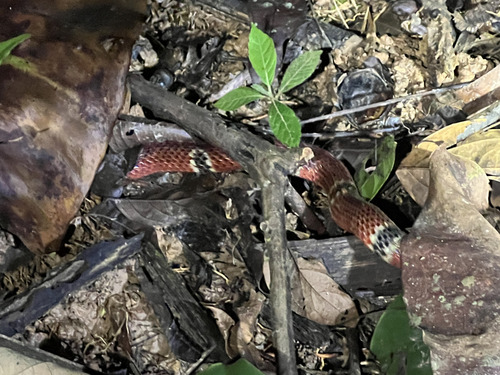 Variable CoralsnakeMicrurus diastema
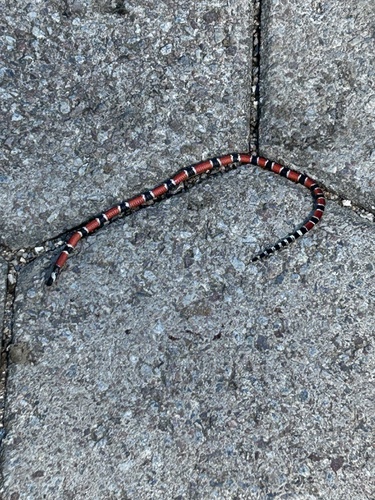 Painted CoralsnakeMicrurus corallinus
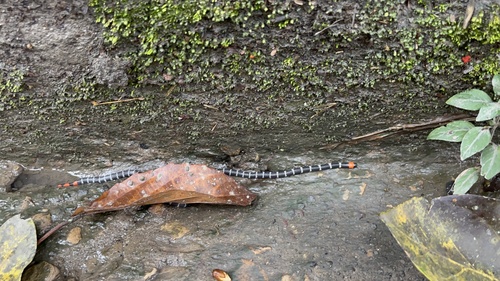 Redtail CoralsnakeMicrurus mipartitus
 Costa Rican CoralsnakeMicrurus mosquitensis
 Aquatic CoralsnakeMicrurus surinamensis
Classification
How scientists group this snake, from the broadest category down to the exact species. Each step narrows to its closest relatives.
Keep learning
- Are Snakes Dangerous? The Real Risk, in PerspectiveMost snakes are harmless and avoid people. Here is the honest picture of snakebite risk worldwide and how to lower your own.
- Snakebite First Aid: What to Do (and What Never to Do)A clear, CDC-based guide to snakebite first aid: the steps that help, the popular myths that hurt, and how to tell a serious bite from a minor one.
- Venomous vs Nonvenomous: How to Tell the DifferenceThe folk rules for telling venomous snakes apart, where each one fails, and why location-based identification beats guessing by sight.
- What to Do If You Find a SnakeFound a snake at home or on a trail? Here is how to stay calm, give it space, identify it safely, and know when to call a professional.
Distribution from GBIF & iNaturalist. Venom status per CDC. Background: Wikipedia. Informational only. Never handle a snake to identify it.