
Mud / Rainbow snake
Rainbow Snake
HarmlessFarancia erytrogramma
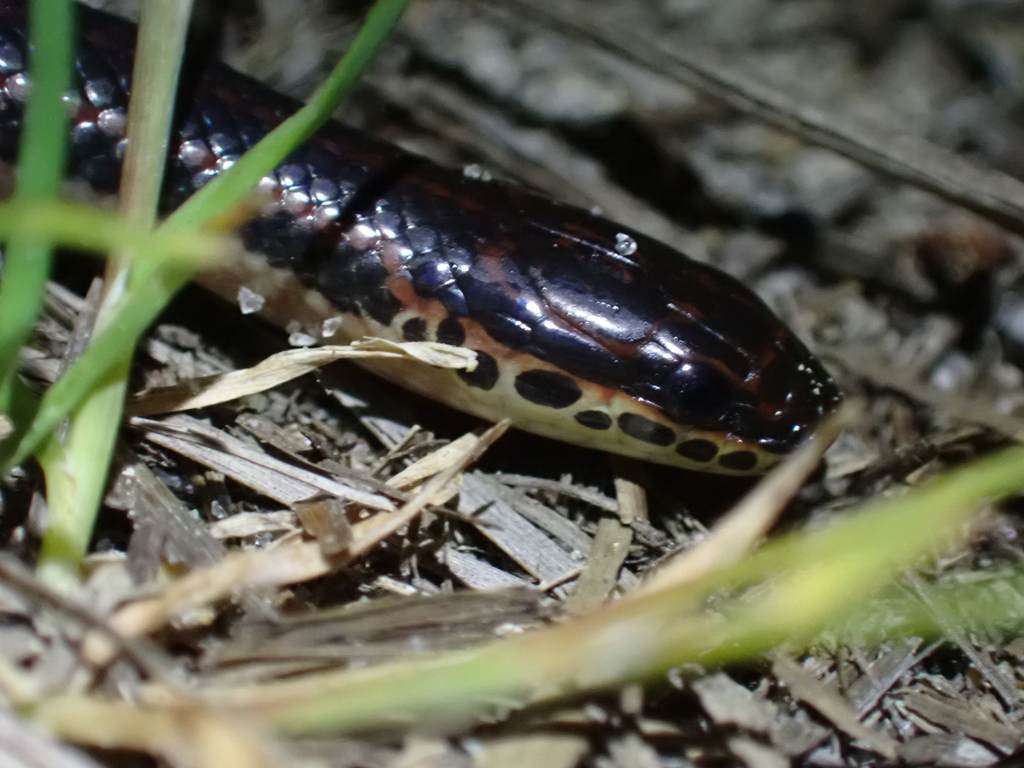
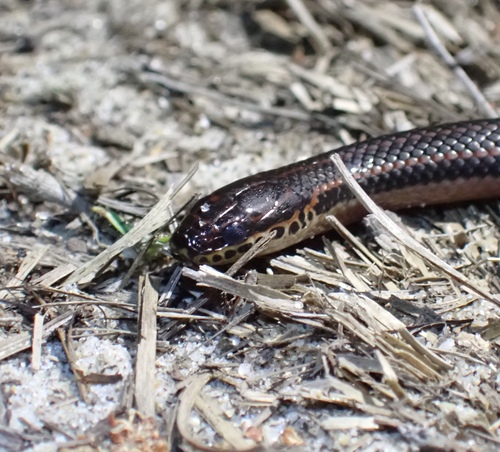
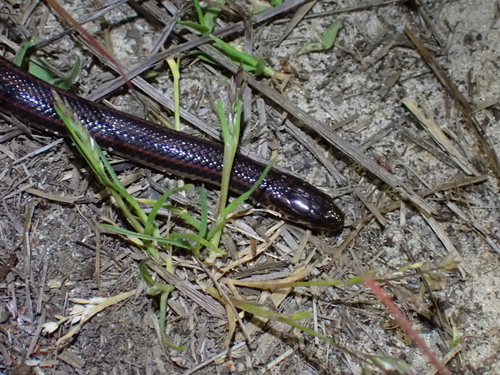
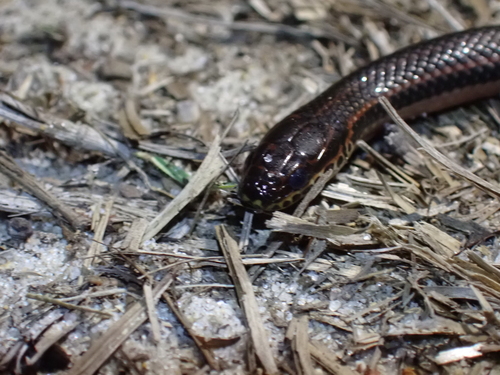
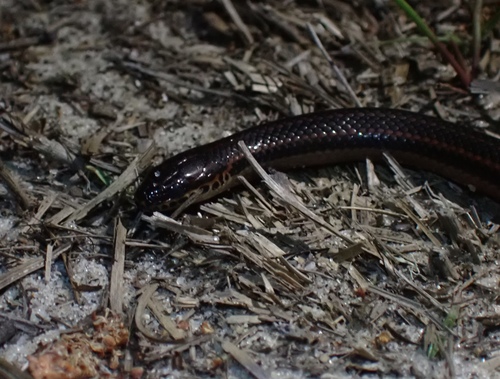
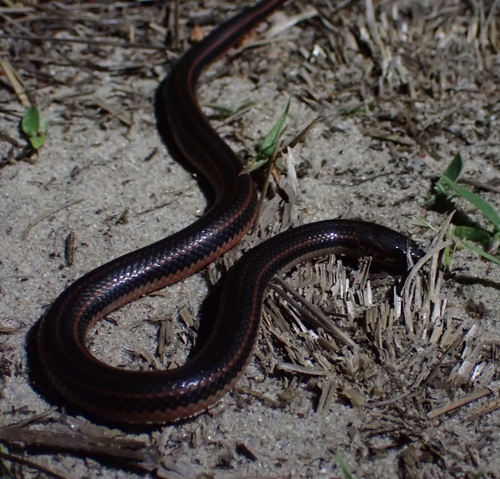
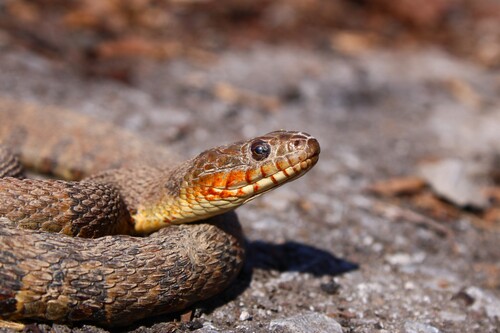
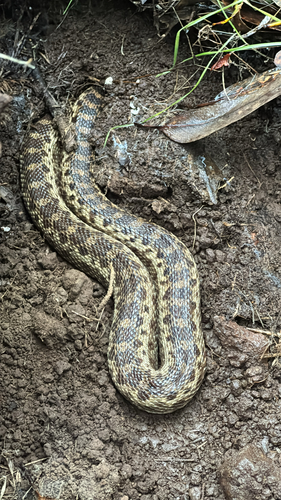
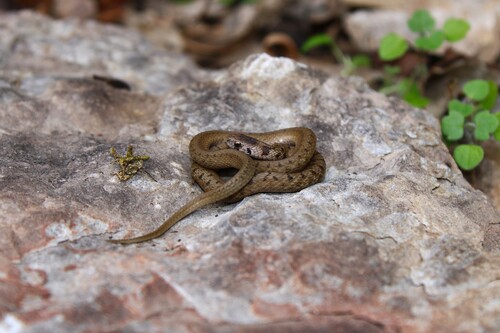
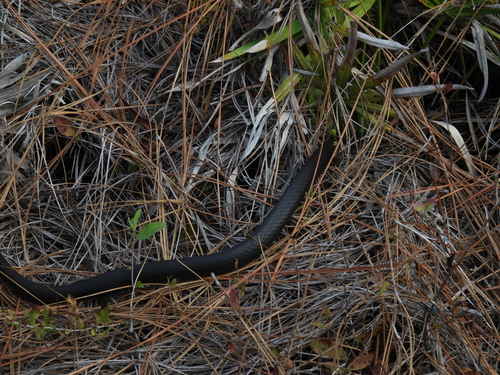
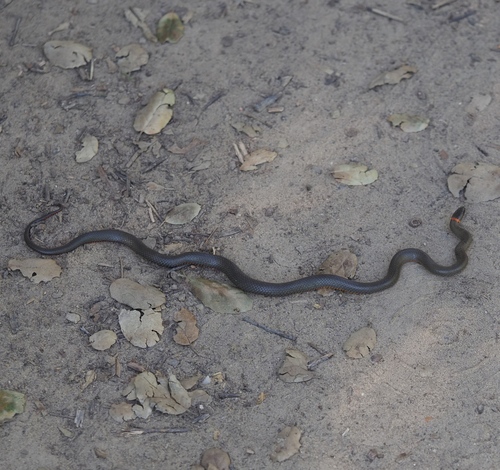
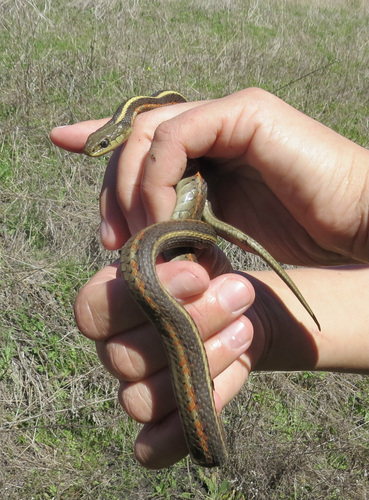
6 photographs of the Rainbow Snake. © harrier.
The Rainbow Snake (Farancia erytrogramma) is a non-venomous snake in the Colubridae family, recorded in 3 countries.
- Also called
- Mud / Rainbow snake
- Family
- Colubridae
- Size
- Large and aquatic, 3–5+ ft.
- Habitat
- Swamps, blackwater rivers, and marshes.
- Behavior
- Highly aquatic and secretive; harmless.
- Identify
- Glossy, smooth body — mud snakes are black with red bars; rainbow snakes have red stripes.
About the Rainbow Snake
Farancia erytrogramma (also known commonly as the rainbow snake, and less frequently as the eel moccasin) is a species of large, nonvenomous, highly amphibious colubrid snake, endemic to the coastal plains of the southeastern United States. Two subspecies are recognized as being valid, one of which has been declared extinct.
Common names
Other common names for F. erytrogramma include horn snake, red-lined snake, red-lined horned snake, red-sided snake, sand hog, sand snake, and striped wampum.
Description
Dorsally, rainbow snakes have smooth, glossy bluish-black back scales, with three red stripes. They have short tails, with a spiny tip which they sometimes use as a probe. Adults may show yellow coloration along the sides and on the head.
They usually grow to a total length (including tail) of 36-48 inches (91–122 cm), although some specimens have been recorded up to 66 inches (168 cm) in total length. Females are larger than males.
Behavior
Rainbow snakes are rarely seen due to their secretive habits. They spend most of their lives in the water, hiding in aquatic vegetation or other forms of cover. They are strong swimmers, and also know how to burrow into mud and sand. Rainbow snakes are not aggressive when captured, and do not bite their captors.
In New Kent County, Virginia, they are abundant in sandy fields near the Chickahominy River, and great numbers are turned up by plows in the spring.
Diet
Rainbow snakes subsist mainly on eels, but also prey on fish, earthworms, small frogs, tadpoles, and salamanders. They eat their prey alive, usually swallowing them head first.
Reproduction
Adult female rainbow snakes usually lay their eggs in July, leaving them underground in sandy soil. A clutch consists of around 20 eggs on average, but large females may lay over 50. The young are hatched in late summer or fall.
Habitat
Rainbow snakes are found in aquatic habitats ranging from cypress swamps and marshes to blackwater creeks, slow-moving streams, and sandy coastal plain.
Geographic range
F. erytrogramma is found from southern Maryland to southeastern Louisiana, including eastern Virginia, southeastern North Carolina, South Carolina, Georgia, northern Florida, Alabama and Mississippi. A small population once inhabited the Lake Okeechobee region of southern Florida, but was declared extinct on October 5, 2011. One was seen at the Ocala National Forest, in Marion County, in early 2020, with the sighting being confirmed by the National Museum of Florida as the first in 50 years at the site.
Subspecies
There are two recognized subspecies of F. erytrogramma:
Farancia erytrogramma erytrogramma (Palisot de Beauvois, 1802) – Common rainbow snake
†Farancia erytrogramma seminola (Neill, 1964) – Southern Florida rainbow snake; declared extinct (October 5, 2011)
Adapted from Wikipedia, available under CC BY-SA.
Frequently asked: Rainbow Snake
- Is the Rainbow Snake venomous?
- No. The Rainbow Snake (Farancia erytrogramma) is non-venomous and is not considered dangerous to humans. Like most snakes, it will retreat rather than bite when given the chance.
- Is the Rainbow Snake poisonous?
- Snakes are venomous, not poisonous. "Poisonous" means harmful to eat or touch; "venomous" means injecting toxins through a bite. The Rainbow Snake is neither poisonous nor venomous.
- Is the Rainbow Snake dangerous?
- The Rainbow Snake is not dangerous to humans. It has no medically significant venom and bites only defensively if cornered or handled.
- Where does the Rainbow Snake live?
- The Rainbow Snake has verified records in 3 countries, including United States of America, Mexico, Suriname. See the distribution section below for its full range.
- How do I identify the Rainbow Snake?
- Glossy, smooth body — mud snakes are black with red bars; rainbow snakes have red stripes.
- How big does the Rainbow Snake get?
- Large and aquatic, 3–5+ ft.
- What does the Rainbow Snake eat?
- Rainbow snakes subsist mainly on eels, but also prey on fish, earthworms, small frogs, tadpoles, and salamanders. They eat their prey alive, usually swallowing them head first.
- Why is it called the Rainbow Snake?
- Other common names for F. erytrogramma include horn snake, red-lined snake, red-lined horned snake, red-sided snake, sand hog, sand snake, and striped wampum.
Where it is found
More Colubridae snakes
Classification
How scientists group this snake, from the broadest category down to the exact species. Each step narrows to its closest relatives.
- OrderThe broad group of scaled reptiles: all snakes and lizards
- Squamata
- FamilyA group of related snakes that share key traits
- Colubridae
- GenusA close-knit group of very similar species
- Farancia
- SpeciesThis exact snake, named in the two-part scientific name
- Farancia erytrogramma
Keep learning
- What to Do If You Find a SnakeFound a snake at home or on a trail? Here is how to stay calm, give it space, identify it safely, and know when to call a professional.
- Venomous vs Nonvenomous: How to Tell the DifferenceThe folk rules for telling venomous snakes apart, where each one fails, and why location-based identification beats guessing by sight.
- What Is a Snake? Anatomy and the BasicsA clear overview of what makes a snake a snake: limbless body plan, anatomy, evolution from lizards, species diversity, and why they are ectothermic.
- How to Keep Snakes Out of Your Yard and HomeA practical guide to keeping snakes out of your yard and home using habitat changes that work, plus what to skip and what to do if one shows up.
Distribution from GBIF & iNaturalist. Venom status per CDC. Background: Wikipedia. Informational only. Never handle a snake to identify it.