
Hognose snake
Plains Hognose Snake
HarmlessHeterodon nasicus
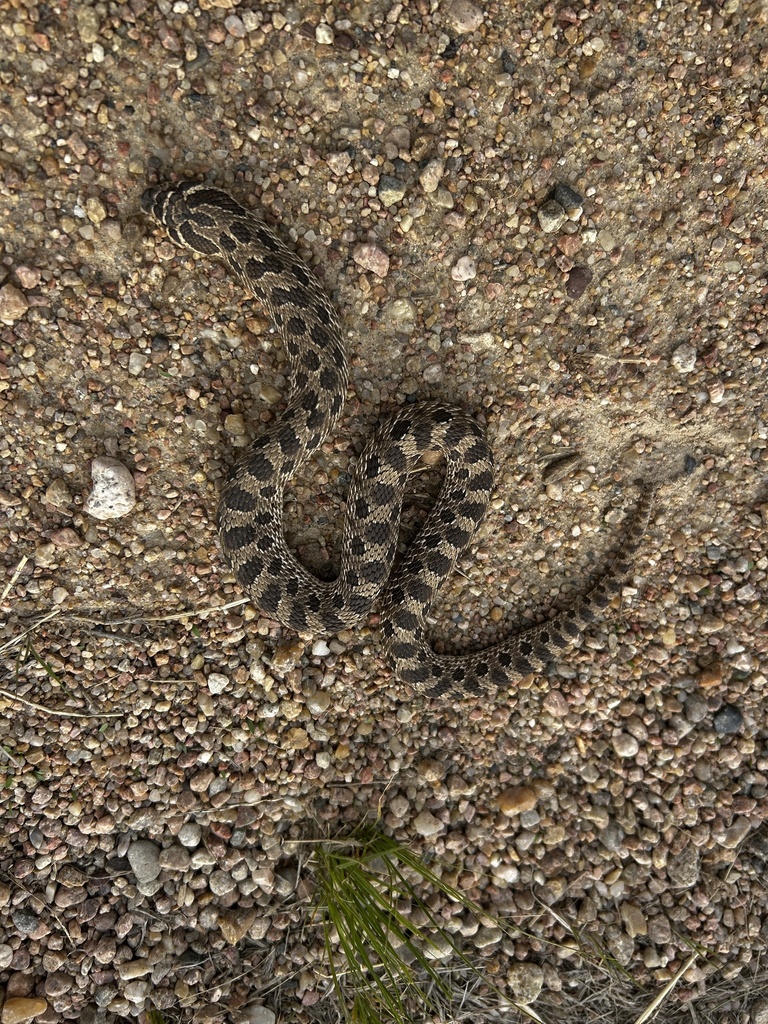
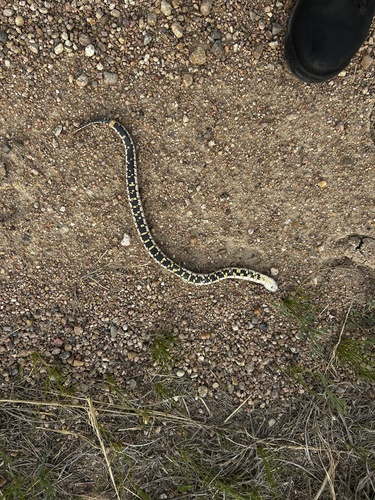
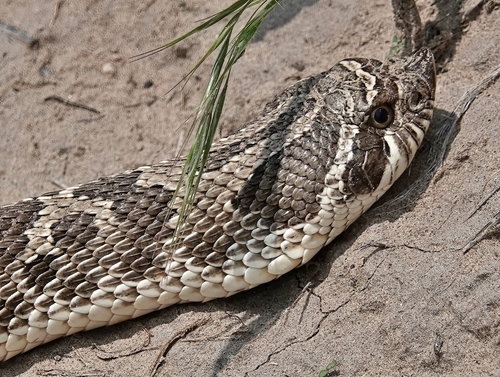
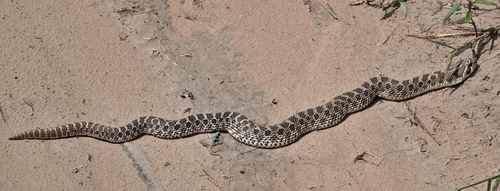
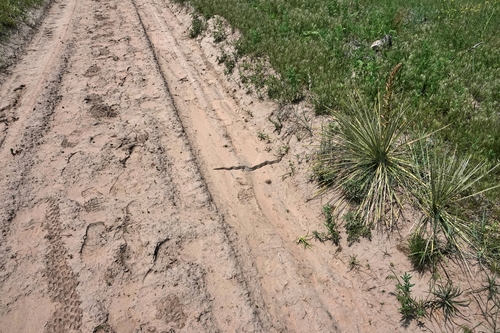
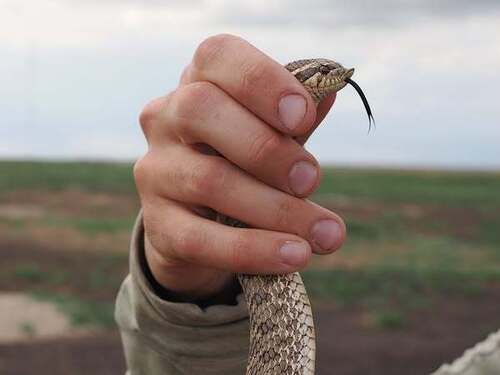
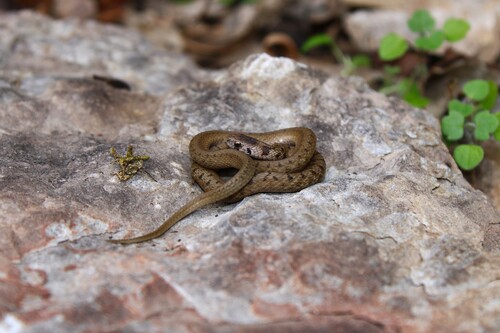
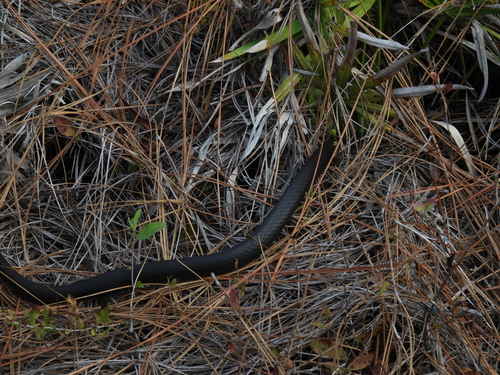
6 photographs of the Plains Hognose Snake. © A.Yantzie.
The Plains Hognose Snake (Heterodon nasicus) is a non-venomous snake in the Colubridae family, recorded in 3 countries.
- Also called
- Hognose snake
- Family
- Colubridae
- Size
- Stout, 1.5–3 ft.
- Habitat
- Sandy soils, fields, and open woodlands.
- Behavior
- Famous bluffers: flatten the neck like a cobra, hiss loudly, then play dead. Rear-fanged but harmless to people.
- Identify
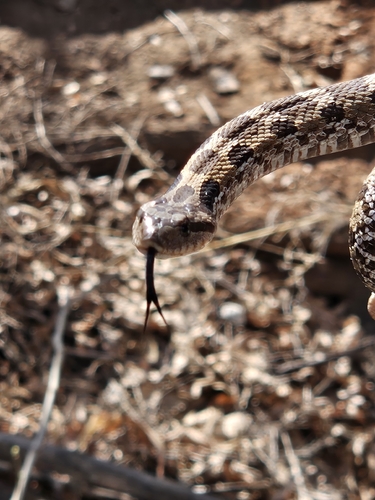
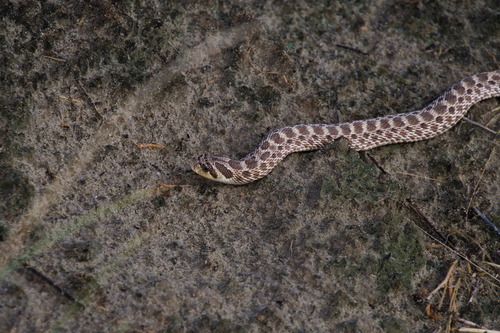
- Sharply upturned, shovel-like snout and a stout, blotched body.
About the Plains Hognose Snake
The western hognose snake (Heterodon nasicus) is a species of snake in the family Colubridae. The species is endemic to North America. There are three subspecies that are recognized as being valid, including the nominotypical subspecies.
Etymology
The specific name, nasicus, is derived from the Latin nasus ("nose"), a reference to the snake's upturned snout.
The dusky hognose's subspecific name, gloydi, is in honor of American herpetologist Howard K. Gloyd (1902–1978).
The Mexican hognose's subspecific (or specific) name, kennerlyi, is in honor of American naturalist Caleb Burwell Rowan Kennerly.
Common names
Common names for Heterodon nasicus include blow snake, bluffer, plains hognose snake, prairie hognose snake, spoonbill snake, spreadhead snake, Texas hognose snake, Texas rooter, and western hognose snake.
Taxonomy
Some authors elevate the subspecies Heterodon nasicus kennerlyi, also known as the Mexican hognose snake, to species level. Those same authors have subsumed H. n. gloydi into H. nasicus so that there are only two species (H. nasicus and H. kennerlyi) and no subspecies.
Description
The western hognose snake is a relatively small, stout-bodied snake. Its color and pattern is highly variable between subspecies, although most specimens appear much like rattlesnakes to the untrained eye, which appears to be Batesian mimicry. Males are considerably smaller than females, with adults rarely exceeding a total length (tail included) of 40–50 cm (15–20 inches). This snake gets its common name, "hognose", from the modified rostral (nose) scale that is formed in an upturned manner, providing a very "hog-like" look. Additionally, this adaptation makes this snake an adept burrower.
The species is not dangerous to humans, as no deaths or systemic effects from the extremely rare bite from this rear-fanged snake have been recorded. Although bites may uncommonly be medically significant, the species is not regarded as venomous. In the capture and incapacitation of prey the modified saliva is released from Duvernoy's Glands and travels down a groove in the snake's fang.
In captivity, the species has been bred into more than 50 different "designer" color morphs.
Distribution and habitat
The western hognose snake occurs from southern Canada throughout the United States to northern Mexico. It frequents areas with sandy or gravelly soils, including prairies, river floodplains, scrub and grasslands, semi-deserts, and some semiagricultural areas. It has been found at elevations of up to 2,500 m (8,200 feet).
Ecology
Behavior
The western hognose snake is primarily diurnal. It is typically a docile snake (though known to be highly defensive in some individuals). If threatened (or perceiving a threat), it may flatten its neck (much like a cobra), hiss, and make 'mock' or 'bluff' strikes if harassed, which are strikes made at an intruder but with the snakes' mouth closed. Subsequently, even when further harassed, western hognose snakes virtually never bite as a self defense mechanism, but will instead usually resort to playing dead.
Adapted from Wikipedia, available under CC BY-SA.
Frequently asked: Plains Hognose Snake
- Is the Plains Hognose Snake venomous?
- No. The Plains Hognose Snake (Heterodon nasicus) is non-venomous and is not considered dangerous to humans. Like most snakes, it will retreat rather than bite when given the chance.
- Is the Plains Hognose Snake poisonous?
- Snakes are venomous, not poisonous. "Poisonous" means harmful to eat or touch; "venomous" means injecting toxins through a bite. The Plains Hognose Snake is neither poisonous nor venomous.
- Is the Plains Hognose Snake dangerous?
- The Plains Hognose Snake is not dangerous to humans. It has no medically significant venom and bites only defensively if cornered or handled.
- Where does the Plains Hognose Snake live?
- The Plains Hognose Snake has verified records in 3 countries, including United States of America, Canada, Mexico. See the distribution section below for its full range.
- How do I identify the Plains Hognose Snake?
- Sharply upturned, shovel-like snout and a stout, blotched body.
- How big does the Plains Hognose Snake get?
- Stout, 1.5–3 ft.
- What does the Plains Hognose Snake eat?
- In the wild, the western hognose snake feeds predominately on amphibians, such as large and medium-sized tree frogs, as well as small or medium-sized toads and small lizards. There have been accounts of Heterodon nasicus eating the occasional rodent in the wild as well. Not being a true constrictor, Heterodon bites and chews, driving the rear fangs into the prey as a way of introducing the saliva to help break down the toxins from toads. There have been many cases of hognose snakes in captivity that will not eat for about two to three-and-a-half months, from the months January to mid March.
- Why is it called the Plains Hognose Snake?
- The specific name, nasicus, is derived from the Latin nasus ("nose"), a reference to the snake's upturned snout. The dusky hognose's subspecific name, gloydi, is in honor of American herpetologist Howard K. Gloyd (1902–1978). The Mexican hognose's subspecific (or specific) name, kennerlyi, is in honor of American naturalist Caleb Burwell Rowan Kennerly.
Where it is found
More Colubridae snakes
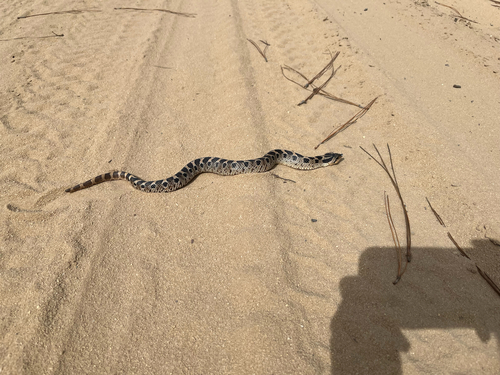
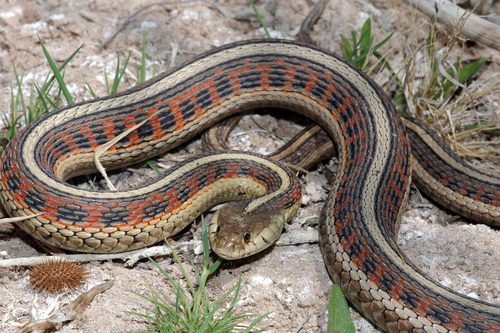
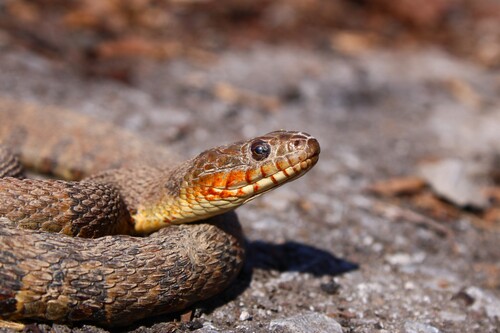
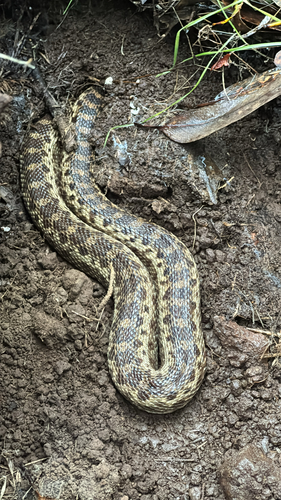
Classification
How scientists group this snake, from the broadest category down to the exact species. Each step narrows to its closest relatives.
- OrderThe broad group of scaled reptiles: all snakes and lizards
- Squamata
- FamilyA group of related snakes that share key traits
- Colubridae
- GenusA close-knit group of very similar species
- Heterodon
- SpeciesThis exact snake, named in the two-part scientific name
- Heterodon nasicus
Keep learning
- What to Do If You Find a SnakeFound a snake at home or on a trail? Here is how to stay calm, give it space, identify it safely, and know when to call a professional.
- Venomous vs Nonvenomous: How to Tell the DifferenceThe folk rules for telling venomous snakes apart, where each one fails, and why location-based identification beats guessing by sight.
- What Is a Snake? Anatomy and the BasicsA clear overview of what makes a snake a snake: limbless body plan, anatomy, evolution from lizards, species diversity, and why they are ectothermic.
- How to Keep Snakes Out of Your Yard and HomeA practical guide to keeping snakes out of your yard and home using habitat changes that work, plus what to skip and what to do if one shows up.
Distribution from GBIF & iNaturalist. Venom status per CDC. Background: Wikipedia. Informational only. Never handle a snake to identify it.