
Hognose snake
Eastern Hognose Snake
HarmlessHeterodon platirhinos
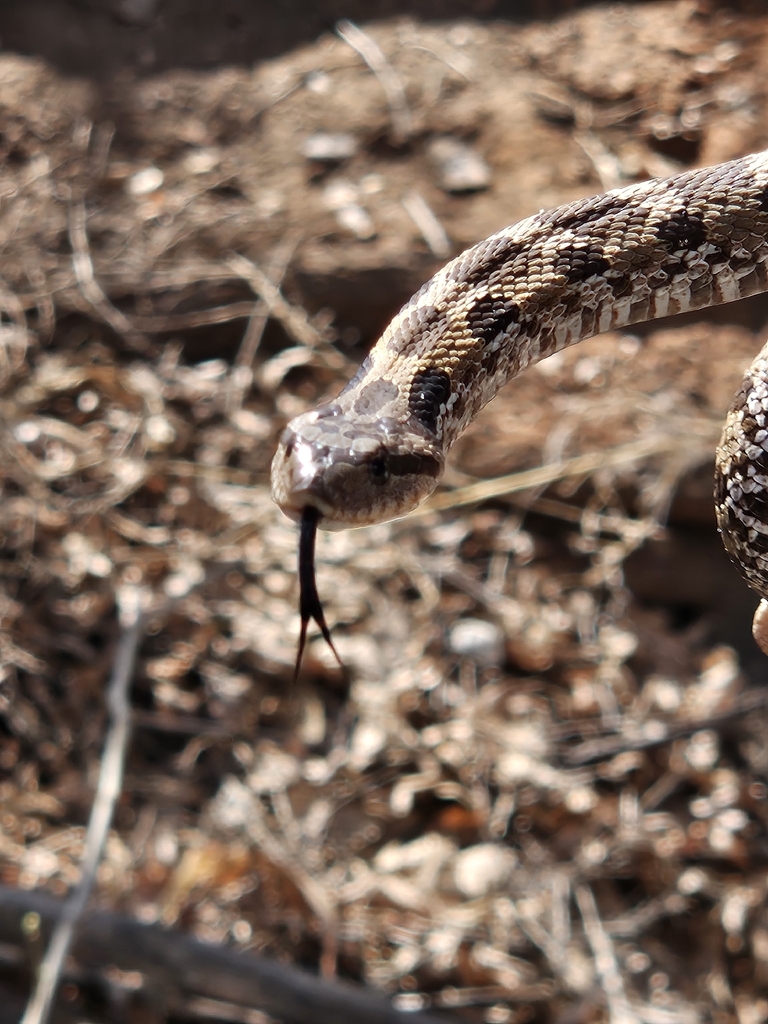
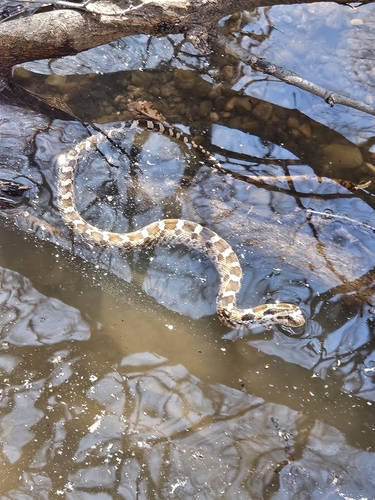
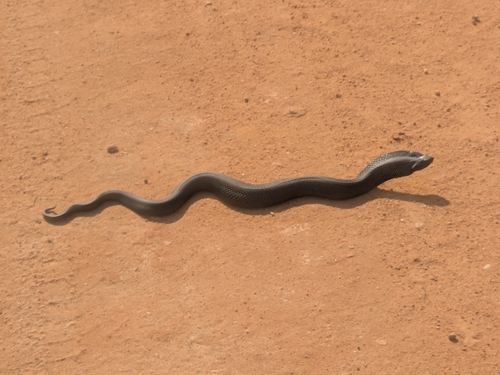
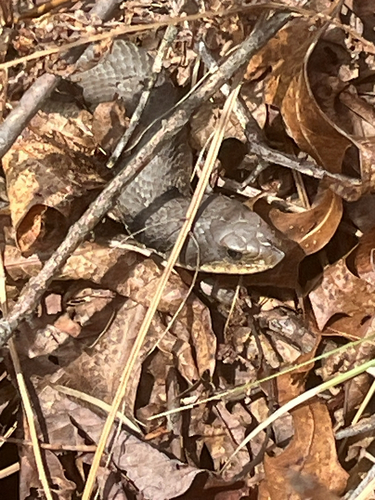
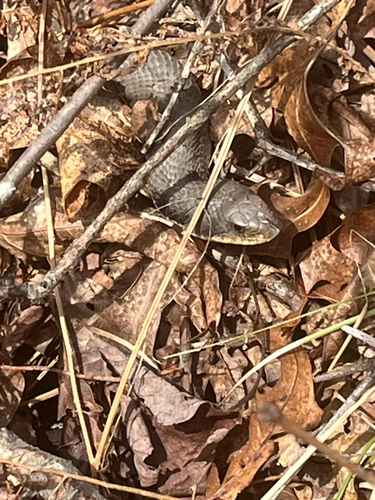
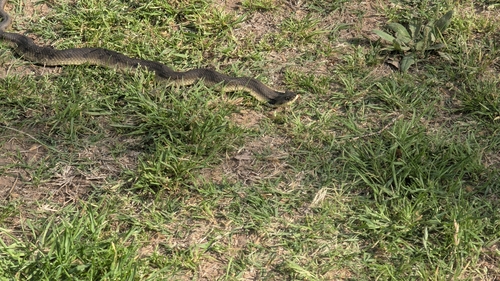
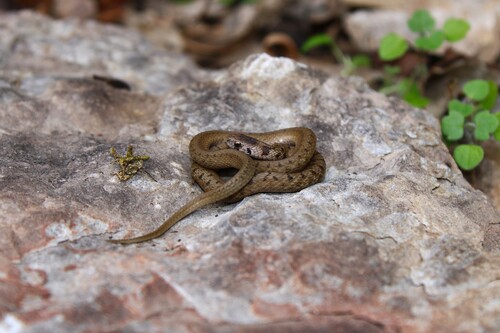
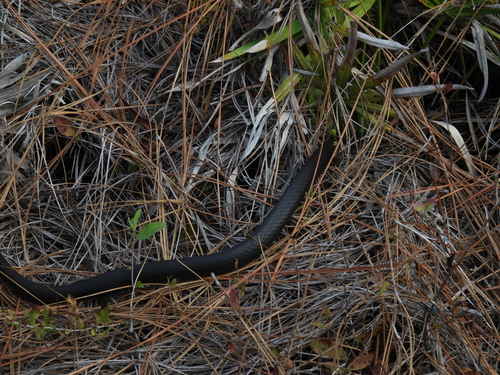
6 photographs of the Eastern Hognose Snake. © willingarden.
The Eastern Hognose Snake (Heterodon platirhinos) is a non-venomous snake in the Colubridae family, recorded in 3 countries.
- Also called
- Hognose snake
- Family
- Colubridae
- Size
- Stout, 1.5–3 ft.
- Habitat
- Sandy soils, fields, and open woodlands.
- Behavior
- Famous bluffers: flatten the neck like a cobra, hiss loudly, then play dead. Rear-fanged but harmless to people.
- Identify
- Sharply upturned, shovel-like snout and a stout, blotched body.
About the Eastern Hognose Snake
The eastern hog-nosed snake (Heterodon platirhinos), is a species of mildly venomous rear-fanged snake in the family Colubridae. The venom is specifically adapted to amphibian prey and is harmless to humans. Some people may have an allergic reaction, though, so experience local swelling and other symptoms. The species is endemic to North America. There are no subspecies that are recognized as being valid. This species prefers habitats with sandy soils and a combination of grass fields and forest edges. They come in many different colorations and have the identifiable upturned "snout". They can be found in captivity, but are a relatively difficult species to keep due to a specialized diet of toads. As with other Heterodon species, they have a distinctive threat reaction of first bluffing by striking with a closed mouth and then pretending to die if this fails to deter the threat.
Geographic range
H. platirhinos has a wide geographical range from the central United States to the East Coast. In the northern parts of the range, it can be found in southern Ontario, southern New Hampshire, Minnesota, Wisconsin, and Massachusetts. Farther west, the snake can be found in Texas and Kansas. The southern part of the range then extends into southern Florida. Populations start to dwindle as the species reaches the northern range.
Habitat
H. platirhinos prefers upland sandy pine forests, old fields, and forest edges. Like most of the genus Heterodon, the it prefers dry conditions with loose soil for burrowing. These loose soils are preferable habitat components for nesting and egg laying. Barrier beach and dune ecosystems appear to contain some of the highest densities of H. platirhinos because of abundant prey (primarily anurans from the genera Anaxyrus). At the northern end of its range, it has been found to prefer developed lands as its desired habitat followed by mixed forests dominated by hemlock trees, pitch pines, or oaks. In Canada, the average home range size is about 40 hectares. Their habitats include southeastern and midwestern woodlands, tall-grassland prairies, and grassy or cultivated fields along woodland edges. Its habitat range tends to increase with grass and leaf litter.
Description and etymology
The generic name Heterodon is derived from the Greek words heteros meaning "different" and odon meaning "tooth". The specific name platirhinos is derived from the Greek words platys meaning "broad or flat" and rhinos meaning "snout". This species of snake is described as being quite stout-bodied. The color pattern of this snake is extremely variable, from red, green, or orange to brown, gray, or black, or any combination thereof depending on locality. Dorsally, it can be blotched, checkered, or patternless. The belly tends to be a solid gray, yellow, or cream-colored. In this species, the underside of the tail is lighter than the belly. Its most distinguishing feature is the upturned snout, used for digging in sandy soils. The average adult of H. platirhinos measures 71 cm (28 in) in total length (including tail), with females being larger than males. The maximum recorded total length is 116 cm (46 in).
Behavior
Adapted from Wikipedia, available under CC BY-SA.
Frequently asked: Eastern Hognose Snake
- Is the Eastern Hognose Snake venomous?
- No. The Eastern Hognose Snake (Heterodon platirhinos) is non-venomous and is not considered dangerous to humans. Like most snakes, it will retreat rather than bite when given the chance.
- Is the Eastern Hognose Snake poisonous?
- Snakes are venomous, not poisonous. "Poisonous" means harmful to eat or touch; "venomous" means injecting toxins through a bite. The Eastern Hognose Snake is neither poisonous nor venomous.
- Is the Eastern Hognose Snake dangerous?
- The Eastern Hognose Snake is not dangerous to humans. It has no medically significant venom and bites only defensively if cornered or handled.
- Where does the Eastern Hognose Snake live?
- The Eastern Hognose Snake has verified records in 3 countries, including United States of America, Canada, Martinique. See the distribution section below for its full range.
- How do I identify the Eastern Hognose Snake?
- Sharply upturned, shovel-like snout and a stout, blotched body.
- How big does the Eastern Hognose Snake get?
- Stout, 1.5–3 ft.
- What does the Eastern Hognose Snake eat?
- The eastern hognose snake feeds extensively on amphibians and has a particular fondness for toads. This snake has resistance to the toxins toads secrete. This immunity is thought to come from enlarged adrenal glands, which secrete large amounts of hormones to counteract the toads' powerful skin poisons. At the rear of each upper jaw, it has enlarged teeth, which are neither hollow nor grooved, with which it punctures and deflates toads to be able to swallow them whole. It also consumes other amphibians, such as frogs and salamanders. Like all other snakes, it eats its prey whole.
- Why is it called the Eastern Hognose Snake?
- The generic name Heterodon is derived from the Greek words heteros meaning "different" and odon meaning "tooth". The specific name platirhinos is derived from the Greek words platys meaning "broad or flat" and rhinos meaning "snout". This species of snake is described as being quite stout-bodied. The color pattern of this snake is extremely variable, from red, green, or orange to brown, gray, or black, or any combination thereof depending on locality. Dorsally, it can be blotched, checkered, or patternless. The belly tends to be a solid gray, yellow, or cream-colored.
Where it is found
By U.S. state
More Colubridae snakes
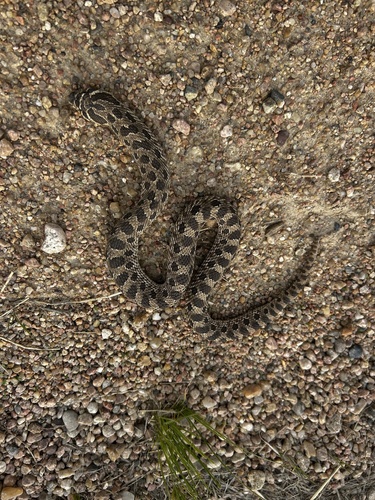
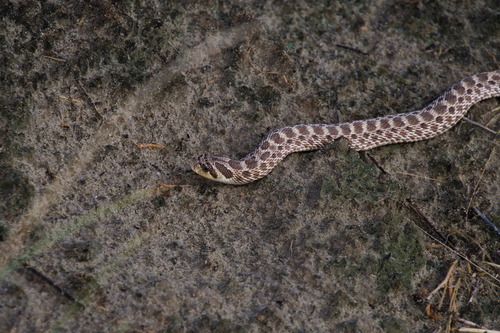
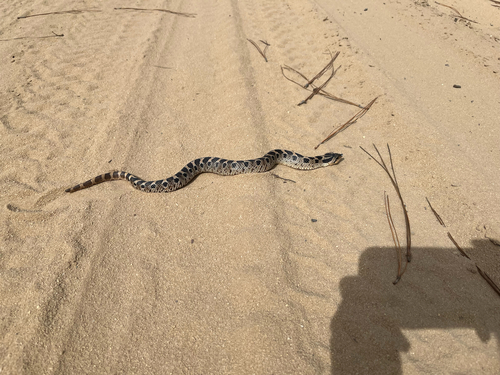
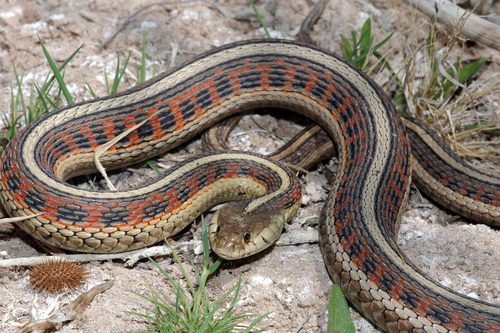
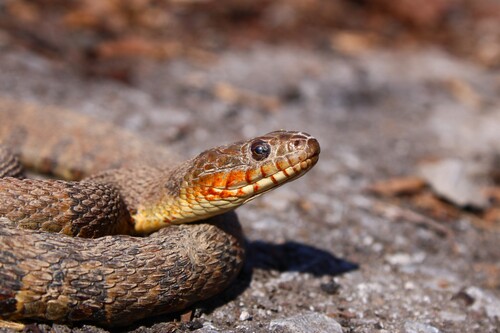
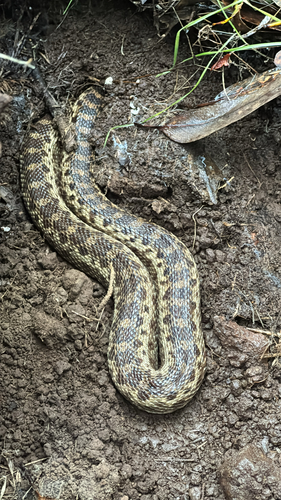
Classification
How scientists group this snake, from the broadest category down to the exact species. Each step narrows to its closest relatives.
- OrderThe broad group of scaled reptiles: all snakes and lizards
- Squamata
- FamilyA group of related snakes that share key traits
- Colubridae
- GenusA close-knit group of very similar species
- Heterodon
- SpeciesThis exact snake, named in the two-part scientific name
- Heterodon platirhinos
Keep learning
- What to Do If You Find a SnakeFound a snake at home or on a trail? Here is how to stay calm, give it space, identify it safely, and know when to call a professional.
- Venomous vs Nonvenomous: How to Tell the DifferenceThe folk rules for telling venomous snakes apart, where each one fails, and why location-based identification beats guessing by sight.
- What Is a Snake? Anatomy and the BasicsA clear overview of what makes a snake a snake: limbless body plan, anatomy, evolution from lizards, species diversity, and why they are ectothermic.
- How to Keep Snakes Out of Your Yard and HomeA practical guide to keeping snakes out of your yard and home using habitat changes that work, plus what to skip and what to do if one shows up.
Distribution from GBIF & iNaturalist. Venom status per CDC. Background: Wikipedia. Informational only. Never handle a snake to identify it.