
Hognose snake
Southern Hognose Snake
HarmlessHeterodon simus
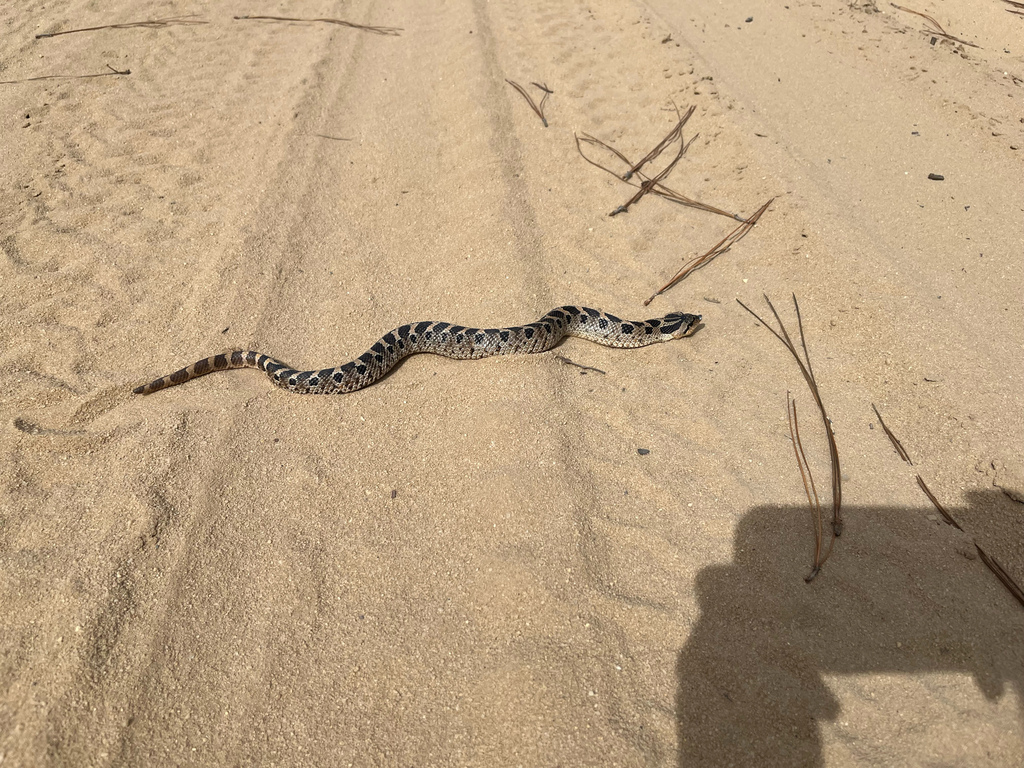
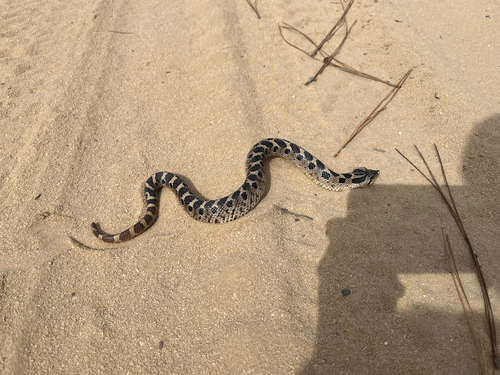
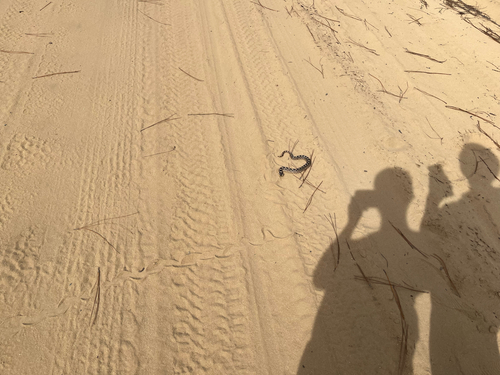
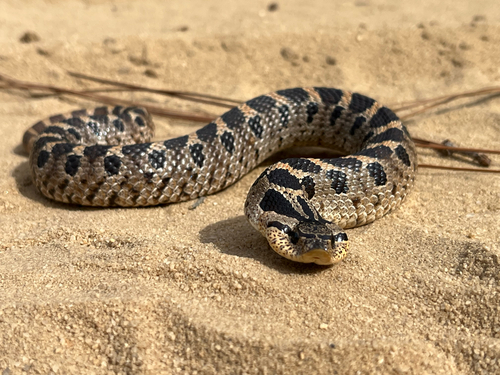
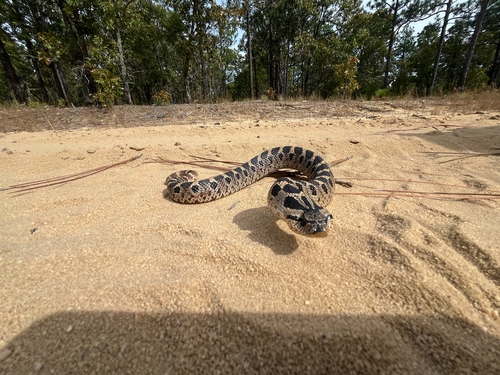
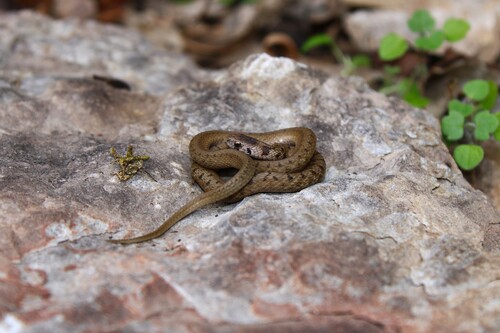
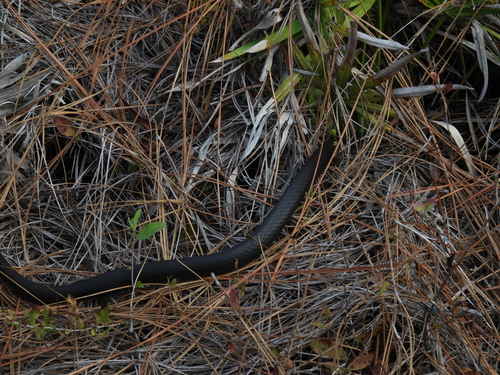
6 photographs of the Southern Hognose Snake. © Matthew.
The Southern Hognose Snake (Heterodon simus) is a non-venomous snake in the Colubridae family, recorded in 1 country.
- Also called
- Hognose snake
- Family
- Colubridae
- Size
- Stout, 1.5–3 ft.
- Habitat
- Sandy soils, fields, and open woodlands.
- Behavior
- Famous bluffers: flatten the neck like a cobra, hiss loudly, then play dead. Rear-fanged but harmless to people.
- Identify
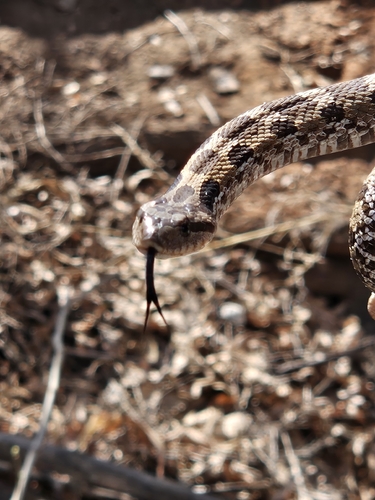
- Sharply upturned, shovel-like snout and a stout, blotched body.
About the Southern Hognose Snake
Heterodon simus, commonly known as the southern hog-nosed snake, is a harmless snake species endemic to the southeastern United States. No subspecies are currently recognized.
Description
Adults are 35.5–61 cm (14–24 inches) in total length. Stout with a wide neck and a sharply upturned snout, they usually have 25 rows of keeled dorsal scales at midbody.
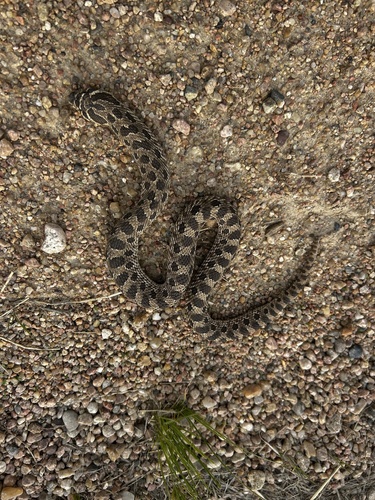
The dorsal color pattern consists of a light brown, yellowish, grayish, or reddish ground color, overlaid with a distinct row of dark blotches that alternate with smaller blotches on the flanks. The belly is distinctly darker in color than the underside of the tail in juveniles. As the snake ages, the underside usually becomes a pale white.
Habitat
The native habitats of Heterodon simus are xeric grasslands such as longleaf pine sandhill, upland pine forest, and scrubby flatwoods. In some areas, populations persist in mosaics of overgrown pastures, dry river floodplains, fields, and pine plantation.
Geographic range
The southern hognose snake is found on the coastal plain of the southeastern United States from North Carolina, south to Lake Okeechobee in Florida, and west to Mississippi.
Diet
Heterodon simus preys mainly upon spadefoot toads and true toads.
It also preys on salamanders, other frogs, lizards, small mammals, and rarely, large invertebrates.
Reproduction
This species is oviparous. mature adults mate from April through August. The thin-shelled, leathery, whitish eggs are laid in clutches of 6-14. After 55–60 days the eggs hatch. Each hatchling is 15–18 cm (6-7 inches) in total length.
Conservation status
This species is classified as Vulnerable (VU) on the IUCN Red List of Threatened Species with the following criteria: C1+2a(i) (v3.1, 2001). A species is listed as such when the best available evidence indicates that the population size is estimated to number fewer than 10,000 mature individuals, a decline of at least 10% is estimated to continue within 10 years or three generations, whichever is longer, (up to a maximum of 100 years in the future), and a continuing decline has been observed, projected, or inferred, in numbers of mature individuals and no subpopulation is estimated to contain more than 1,000 mature individuals. It is therefore considered to be facing a high risk of extinction in the wild. The population trend is down. Year assessed: 2007. The Alabama Department of Conservation and Natural Resources has listed the species as possibly extirpated within the state.
Adapted from Wikipedia, available under CC BY-SA.
Frequently asked: Southern Hognose Snake
- Is the Southern Hognose Snake venomous?
- No. The Southern Hognose Snake (Heterodon simus) is non-venomous and is not considered dangerous to humans. Like most snakes, it will retreat rather than bite when given the chance.
- Is the Southern Hognose Snake poisonous?
- Snakes are venomous, not poisonous. "Poisonous" means harmful to eat or touch; "venomous" means injecting toxins through a bite. The Southern Hognose Snake is neither poisonous nor venomous.
- Is the Southern Hognose Snake dangerous?
- The Southern Hognose Snake is not dangerous to humans. It has no medically significant venom and bites only defensively if cornered or handled.
- Where does the Southern Hognose Snake live?
- The Southern Hognose Snake has verified records in 1 country, including United States of America. See the distribution section below for its full range.
- How do I identify the Southern Hognose Snake?
- Sharply upturned, shovel-like snout and a stout, blotched body.
- How big does the Southern Hognose Snake get?
- Stout, 1.5–3 ft.
- What does the Southern Hognose Snake eat?
- Heterodon simus preys mainly upon spadefoot toads and true toads. It also preys on salamanders, other frogs, lizards, small mammals, and rarely, large invertebrates.
Where it is found
More Colubridae snakes
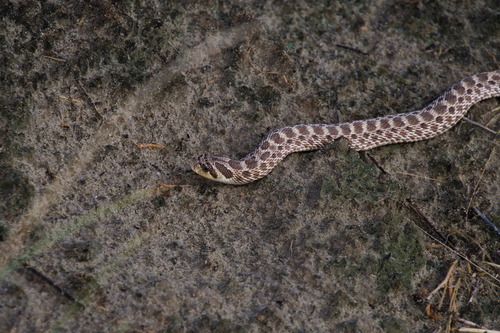
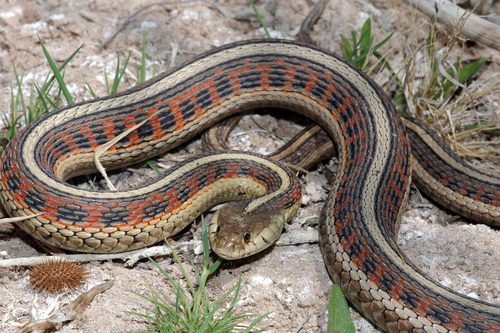
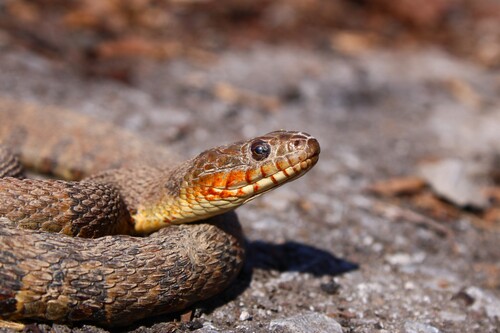
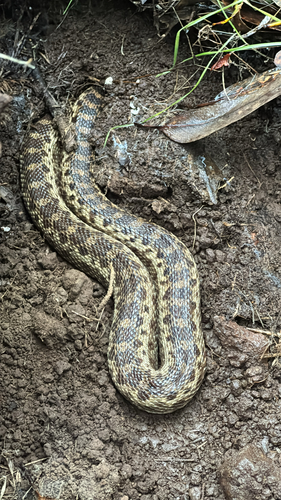
Classification
How scientists group this snake, from the broadest category down to the exact species. Each step narrows to its closest relatives.
- OrderThe broad group of scaled reptiles: all snakes and lizards
- Squamata
- FamilyA group of related snakes that share key traits
- Colubridae
- GenusA close-knit group of very similar species
- Heterodon
- SpeciesThis exact snake, named in the two-part scientific name
- Heterodon simus
Keep learning
- What to Do If You Find a SnakeFound a snake at home or on a trail? Here is how to stay calm, give it space, identify it safely, and know when to call a professional.
- Venomous vs Nonvenomous: How to Tell the DifferenceThe folk rules for telling venomous snakes apart, where each one fails, and why location-based identification beats guessing by sight.
- What Is a Snake? Anatomy and the BasicsA clear overview of what makes a snake a snake: limbless body plan, anatomy, evolution from lizards, species diversity, and why they are ectothermic.
- How to Keep Snakes Out of Your Yard and HomeA practical guide to keeping snakes out of your yard and home using habitat changes that work, plus what to skip and what to do if one shows up.
Distribution from GBIF & iNaturalist. Venom status per CDC. Background: Wikipedia. Informational only. Never handle a snake to identify it.