
Pythonidae
Oenpelli Rock Python
HarmlessNyctophilopython oenpelliensis
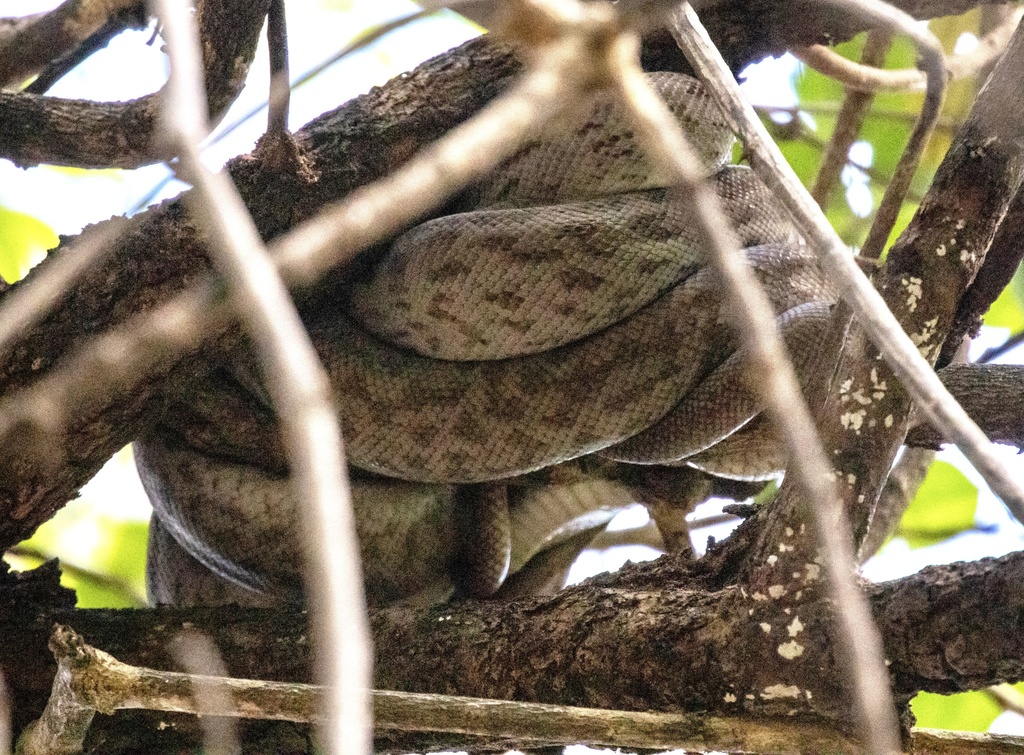
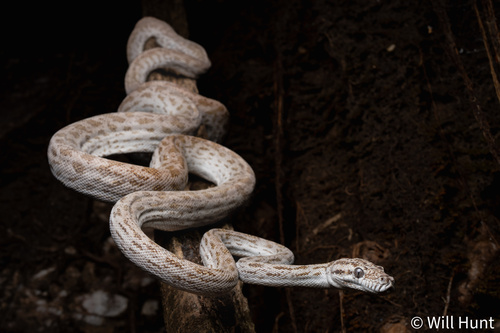
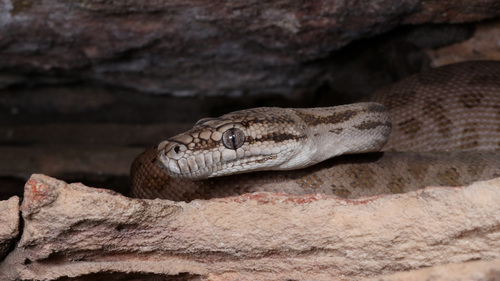
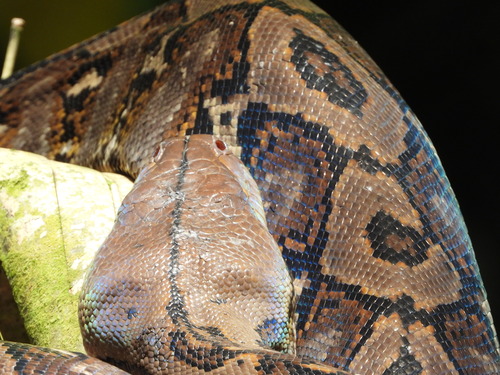
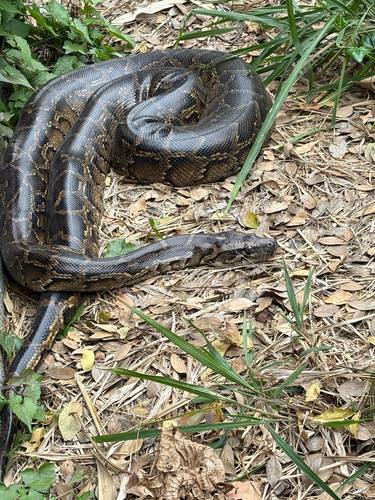
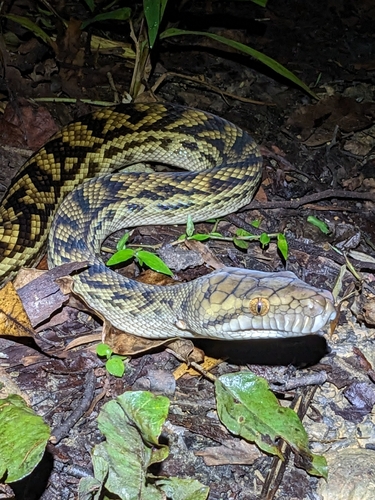
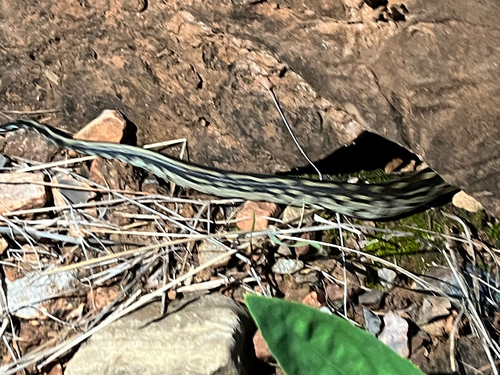
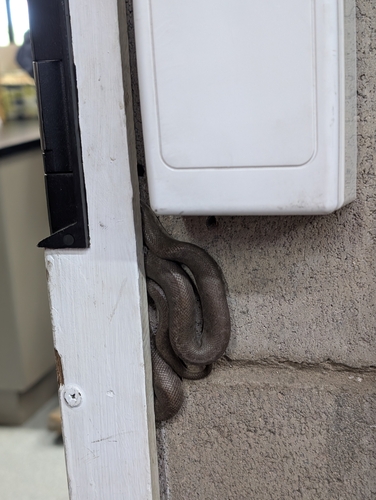
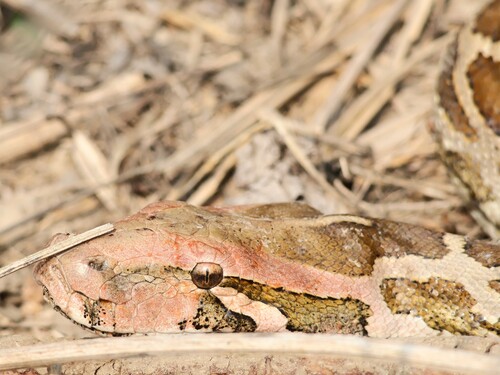
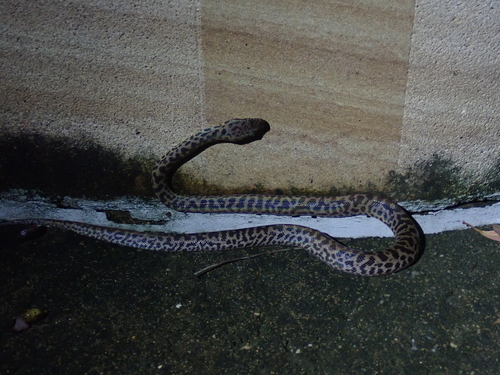
3 photographs of the Oenpelli Rock Python. (c) tanyahattingh, some rights reserved (CC BY-NC).
The Oenpelli Rock Python (Nyctophilopython oenpelliensis) is a non-venomous snake in the Pythonidae family, recorded in 1 country.
- Family
- Pythonidae
About the Oenpelli Rock Python
The Oenpelli python or Oenpelli rock python (Simalia oenpelliensis or Nyctophilopython oenpelliensis) is a species of large snake in the family Pythonidae. The species is endemic to the sandstone massif area of the western Arnhem Land region in the Northern Territory of Australia. There are no subspecies that are recognised as being valid. It has been called the rarest python in the world. Two notable characteristics of the species are the unusually large size of its eggs and its ability to change colour. It is the longest snake native to the Northern Territory.
Taxonomy and etymology
The Oenpelli python was assigned to a taxonomy in 1977 by Gow, who placed it in the genus Python. It was then categorised by Cogger and Cameron as a species of Morelia. In 1984, Wells and Wellington placed it into a new genus Nyctophilopython, and in 2014, a work by Reynolds, Niemiller, and Revell proposed to classify it as Simalia.
The specific name, oenpelliensis, is derived from the type locality, which is given as "6.5 km S.W. of Oenpelli, Northern Territory, Australia (12°21'S, 133°01'E)". In 2020, the name Nawaran was erected for the genus, overlooking the available name Nyctophilopython for the species which was immediately synonymised with the resurrected Nyctophilopython.
As of September 2024, ITIS and the IUCN Red List identify the Simalia classification as valid, while The Reptile Database uses Nyctophilopython.
Description
A large and rare species of the monotypic genus Nyctophilopython, the Oenpelli python may grow to more than 4 m (13 ft) in total length (including tail), and one specimen in captivity is reportedly more than 5 m (16 ft) in total length. The species is unusually thin in proportion to its length, relative to other pythons.
The dorsal colour pattern is dark olive-brown with darkened blotches. The belly is pale and dull, varying from cream to yellow.
The Oenpelli python is able to change its skin colouration, which tends to be lighter at night and darker in the daytime.
The eggs of the Oenpelli python have been described as "huge". At 110.5 by 60 mm (4.35 by 2.36 in), they are almost twice the size of those for the related amethystine python (Simalia amethystina), which are reported as 70–98 by 45–56 mm (2.8–3.9 by 1.8–2.2 in).
Behaviour
The Oenpelli python is nocturnal and inhabits rock crevices, trees, and caves.
It feeds on birds in fruiting trees, and has been speculated to specialise in eating birds. Adults prey on medium-to-large mammals, such as possum or large macropods. Captive specimens eat birds and rodents.
It is an ambush predator that remains motionless for long periods.
Distribution and habitat
The Oenpelli python occurs in a restricted range in the Northern Territory, in the sandstone outcrops of western Arnhem Land.
Adapted from Wikipedia, available under CC BY-SA.
Frequently asked: Oenpelli Rock Python
- Is the Oenpelli Rock Python venomous?
- No. The Oenpelli Rock Python (Nyctophilopython oenpelliensis) is non-venomous and is not considered dangerous to humans. Like most snakes, it will retreat rather than bite when given the chance.
- Is the Oenpelli Rock Python poisonous?
- Snakes are venomous, not poisonous. "Poisonous" means harmful to eat or touch; "venomous" means injecting toxins through a bite. The Oenpelli Rock Python is neither poisonous nor venomous.
- Is the Oenpelli Rock Python dangerous?
- The Oenpelli Rock Python is not dangerous to humans. It has no medically significant venom and bites only defensively if cornered or handled.
- Where does the Oenpelli Rock Python live?
- The Oenpelli Rock Python has verified records in 1 country, including Australia. See the distribution section below for its full range.
- Why is it called the Oenpelli Rock Python?
- The Oenpelli python was assigned to a taxonomy in 1977 by Gow, who placed it in the genus Python. It was then categorised by Cogger and Cameron as a species of Morelia. In 1984, Wells and Wellington placed it into a new genus Nyctophilopython, and in 2014, a work by Reynolds, Niemiller, and Revell proposed to classify it as Simalia. The specific name, oenpelliensis, is derived from the type locality, which is given as "6.5 km S.W. of Oenpelli, Northern Territory, Australia (12°21'S, 133°01'E)".
Where it is found
More Pythonidae snakes
Classification
How scientists group this snake, from the broadest category down to the exact species. Each step narrows to its closest relatives.
- OrderThe broad group of scaled reptiles: all snakes and lizards
- Squamata
- FamilyA group of related snakes that share key traits
- Pythonidae
- GenusA close-knit group of very similar species
- Nyctophilopython
- SpeciesThis exact snake, named in the two-part scientific name
- Nyctophilopython oenpelliensis
Keep learning
- What to Do If You Find a SnakeFound a snake at home or on a trail? Here is how to stay calm, give it space, identify it safely, and know when to call a professional.
- Venomous vs Nonvenomous: How to Tell the DifferenceThe folk rules for telling venomous snakes apart, where each one fails, and why location-based identification beats guessing by sight.
- What Is a Snake? Anatomy and the BasicsA clear overview of what makes a snake a snake: limbless body plan, anatomy, evolution from lizards, species diversity, and why they are ectothermic.
- How to Keep Snakes Out of Your Yard and HomeA practical guide to keeping snakes out of your yard and home using habitat changes that work, plus what to skip and what to do if one shows up.
Distribution from GBIF & iNaturalist. Venom status per CDC. Background: Wikipedia. Informational only. Never handle a snake to identify it.