
Viperidae
Malayan Pit Viper
VenomousCalloselasma rhodostoma
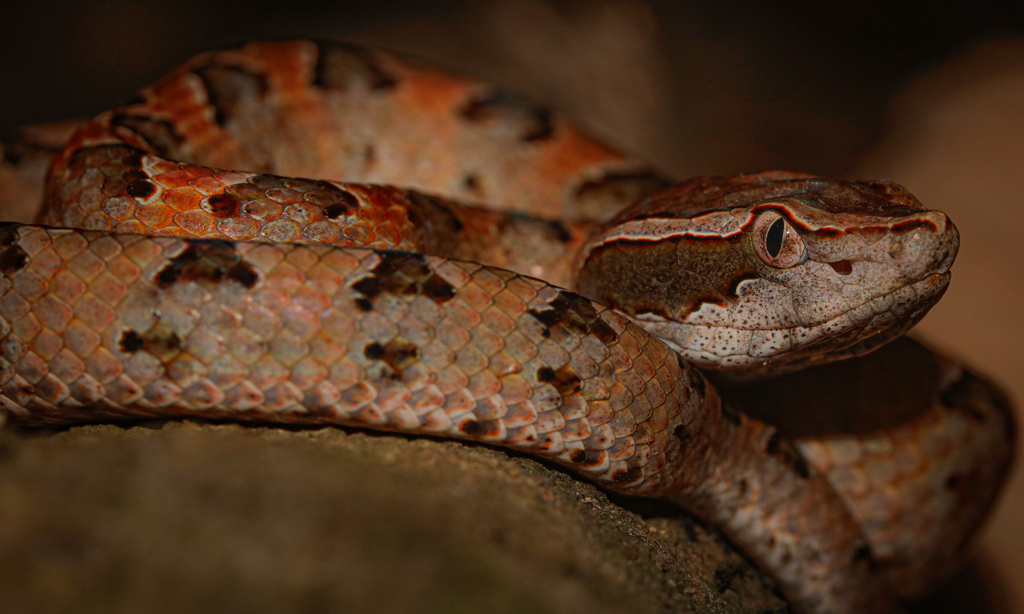
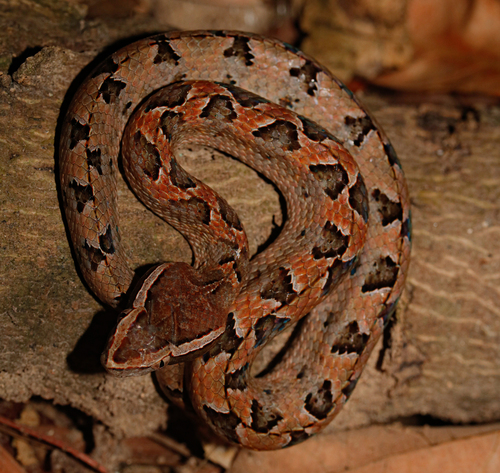
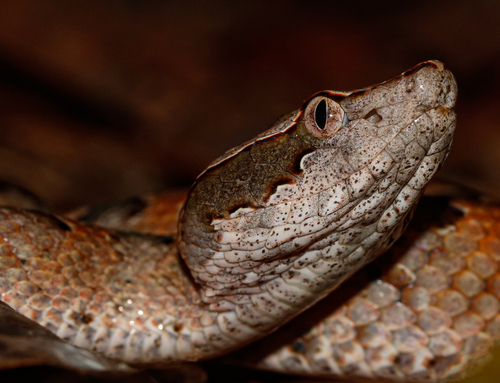
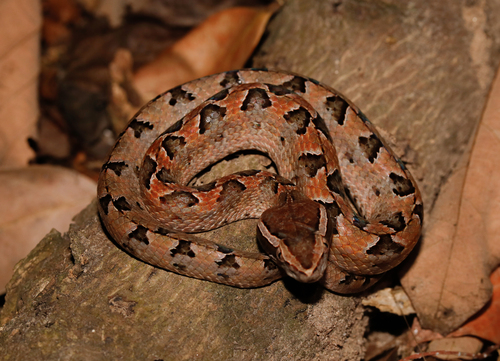
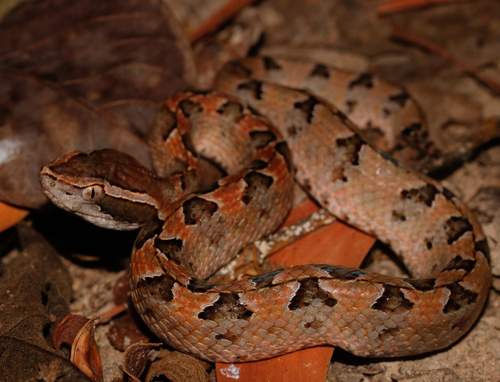
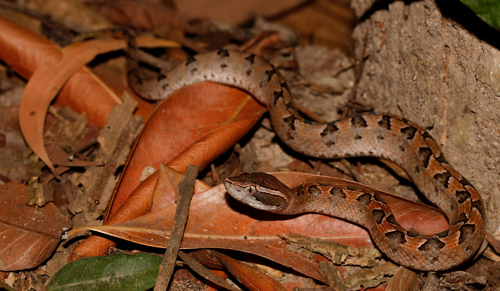
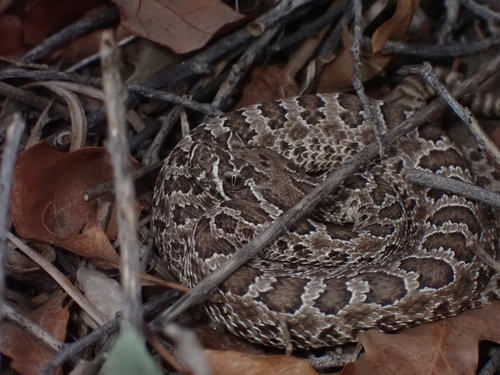
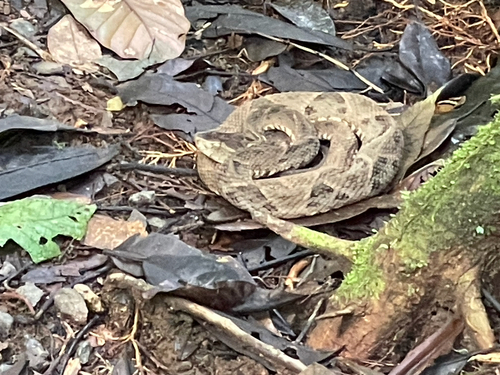
6 photographs of the Malayan Pit Viper. © Noah Kirkland.
The Malayan Pit Viper (Calloselasma rhodostoma) is a venomous snake in the Viperidae family, recorded in 8 countries.
If you are bitten
This is a venomous snake. Treat any bite as a medical emergency: stay calm, keep the bitten limb still and roughly level with the heart, remove rings and tight clothing, and get to emergency care immediately. Do not apply a tourniquet, cut the wound, apply ice, or try to suck out venom. Call your local emergency number or poison center.
- Family
- Viperidae
- Danger
- high
About the Malayan Pit Viper
Common names: Malayan ground pit viper, Malayan pit viper, Malayan ground snake, Malayan moccasin.
Calloselasma is a monotypic genus created for a pit viper species, Calloselasma rhodostoma, which is endemic to Southeast Asia from Thailand to northern Malaysia and on the island of Java. No subspecies are currently recognized.
Geographic range
Found in Nepal, Thailand, Cambodia, Laos, Vietnam, northern West Malaysia and on the Indonesian island of Java. The type locality is listed as "Java". There are unconfirmed, but credible reports from southern Myanmar (Burma), northern Sumatra and northern Borneo.
Description
Attains an average total length of 76 cm (30 in), with females being slightly longer than males. Occasionally, they may grow as long as 91 cm (36 in).
A specimen with a total length of 81 cm (32 in) has a tail 9 cm (3.5 in) long.
Dorsally it is reddish, grayish, or pale brown, with two series of large, dark brown, black-edged triangular blotches, which are alternating or opposite. There is also a thin dark brown vertebral stripe, which may be interrupted or indistinct in some specimens. The upper labials are pink or yellowish, and powdered with brown. There is a broad, dark brown, black-edged diagonal stripe from the eye to the corner of the mouth, with a narrower light-colored stripe above it. Ventrally it is yellowish, uniform or powdered or spotted with grayish brown.
The smooth dorsal scales are arranged in 21 rows at midbody. Ventrals 138-157; anal plate entire; subcaudals 34-54 pairs.
Snout pointed and upturned. Rostral as deep as broad. Two internasals and two prefrontals. Frontal as long as or slightly longer than its distance from tip of snout, as long as or slightly shorter than the parietals. 7-9 upper labials. Loreal pit not in contact with the upper labials.
This is the only Asian pit viper with large crown scales and smooth dorsal scales.
Habitat and diet
Prefers coastal forests, bamboo thickets, unused and overgrown farmland, orchards, plantations as well as forests around plantations, where it searches for rats and mice.
Reproduction
This species is oviparous and the eggs are guarded by the female after deposition.
Venom
This species has a reputation for being bad-tempered and quick to strike. In northern Malaysia it is responsible for some 700 incidents of snakebite annually with a mortality rate of about 2 percent. Remarkably sedentary, it has often been found in the same spot several hours after an incident involving humans. Its venom causes severe pain and local swelling and sometimes tissue necrosis, but deaths are not common. Many victims are left with dysfunctional or amputated limbs due to the lack of antivenom and early treatment. In a 2005 study of 225 Malayan pit viper (Calloselasma rhodostoma) bites in Thailand, most victims had mild to moderate symptoms, but 27 of 145 patients (18.6%) developed permanently swollen limbs. There were only two deaths (related to intracerebral hemorrhage) and no amputations. The antivenin manufactured in Thailand seemed effective in reversing the blood clotting caused by the venom. Most patients remained stable and did not require antivenin. The authors suggested that victims not use traditional healers and avoid overuse of tourniquets. In a prospective phase of the study, bites occurred throughout the year but mostly early in the monsoon season (May and June).
Adapted from Wikipedia, available under CC BY-SA.
Local and regional names
The Malayan Pit Viper is known by these names across the regions where it lives:
- Chinese
- 馬來蝮蛇
- Czech
- ploskolebec plantážní
- Danish
- Malayisk Mokkasinslange
- German
- Malaiische Mokassin-Grubenotter
- Hungarian
- maláj vörösszájú mokaszinkígyó
- Indonesian
- Bandotan Tanah
- Italian
- Vipera malese
- Japanese
- マレーマムシ
- Khmer
- ពស់ ពព្លាក់, ពស់ពព្លាក់ភ្នំខ្លួនខ្លី
- Thai
- ngu tüng chāng, ngu tüng kabā, งูกะปะ
- Vietnamese
- Rắn lục nưa
Frequently asked: Malayan Pit Viper
- Is the Malayan Pit Viper venomous?
- Yes. The Malayan Pit Viper (Calloselasma rhodostoma) is venomous and belongs to the Viperidae family (viper). Its bite is considered high risk to people. Treat any bite as a medical emergency.
- Is the Malayan Pit Viper poisonous?
- Snakes are venomous, not poisonous. "Poisonous" means harmful to eat or touch; "venomous" means injecting toxins through a bite. The Malayan Pit Viper is venomous, delivering venom through a bite.
- Is the Malayan Pit Viper dangerous?
- This is a venomous snake. Treat any bite as a medical emergency: stay calm, keep the bitten limb still and roughly level with the heart, remove rings and tight clothing, and get to emergency care immediately. Do not apply a tourniquet, cut the wound, apply ice, or try to suck out venom. Call your local emergency number or poison center.
- Where does the Malayan Pit Viper live?
- The Malayan Pit Viper has verified records in 8 countries, including Thailand, Indonesia, Viet Nam. See the distribution section below for its full range.
- What does the Malayan Pit Viper eat?
- Prefers coastal forests, bamboo thickets, unused and overgrown farmland, orchards, plantations as well as forests around plantations, where it searches for rats and mice.
If you are bitten by the Malayan Pit Viper
Do
- Get away from the snake and stay calm. Most bites worsen when people panic or try again to handle the snake.
- Call 911 or Poison Control (1-800-222-1222) right away. Antivenom works best when given early.
- Note the time of the bite and, from a safe distance, the snake's color and pattern, a phone photo is enough. Do not chase it.
- Keep the bitten limb still and at roughly heart level. Sit or lie down and limit movement.
- Remove rings, watches, and tight clothing near the bite before swelling starts.
- Gently wash the bite with soap and water and cover it with a clean, dry dressing.
Do not
- Do not cut the wound or try to suck out the venom.
- Do not apply a tourniquet or ice.
- Do not drink alcohol or caffeine.
- Do not take aspirin or ibuprofen, they can worsen bleeding. Acetaminophen is safer for pain.
- Do not try to catch or kill the snake. A dead snake can still bite by reflex.
First-aid guidance adapted from the U.S. Centers for Disease Control and Prevention (CDC NIOSH), Venomous Snakes. Educational only; always follow the instructions of emergency responders.
Where it is found
More Viperidae snakes
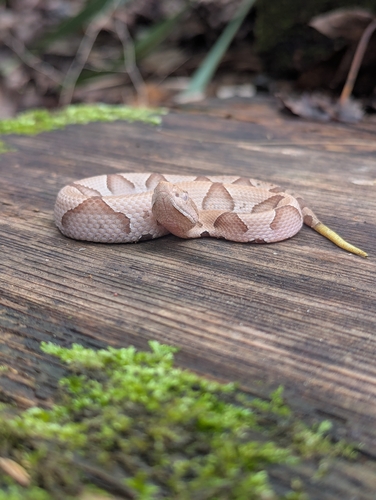
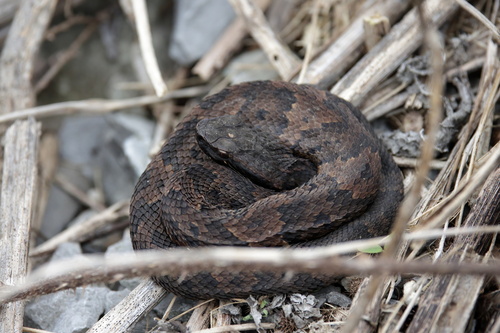
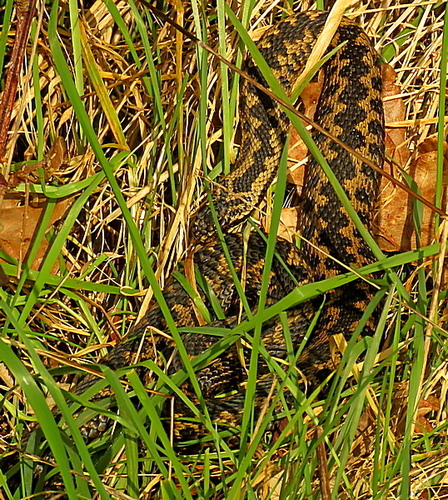
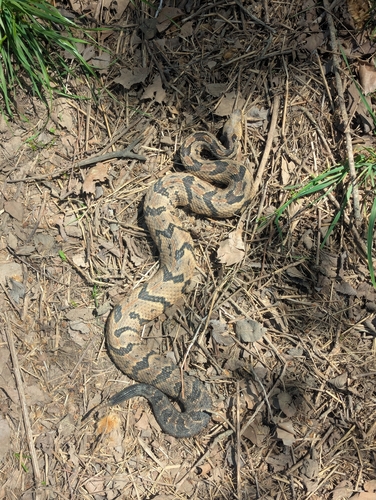
Classification
How scientists group this snake, from the broadest category down to the exact species. Each step narrows to its closest relatives.
- OrderThe broad group of scaled reptiles: all snakes and lizards
- Squamata
- FamilyA group of related snakes that share key traits
- Viperidae
- GenusA close-knit group of very similar species
- Calloselasma
- SpeciesThis exact snake, named in the two-part scientific name
- Calloselasma rhodostoma
Keep learning
- Are Snakes Dangerous? The Real Risk, in PerspectiveMost snakes are harmless and avoid people. Here is the honest picture of snakebite risk worldwide and how to lower your own.
- Snakebite First Aid: What to Do (and What Never to Do)A clear, CDC-based guide to snakebite first aid: the steps that help, the popular myths that hurt, and how to tell a serious bite from a minor one.
- Venomous vs Nonvenomous: How to Tell the DifferenceThe folk rules for telling venomous snakes apart, where each one fails, and why location-based identification beats guessing by sight.
- What to Do If You Find a SnakeFound a snake at home or on a trail? Here is how to stay calm, give it space, identify it safely, and know when to call a professional.
Distribution from GBIF & iNaturalist. Venom status per CDC. Background: Wikipedia. Informational only. Never handle a snake to identify it.