
Genus · Viperidae
Calloselasma
The genus Calloselasma contains a single species. It is venomous.
About Malayan pit viper
A heavy-bodied Southeast Asian pit viper with a dangerous bite, sitting in a genus all its own.
Calloselasma is a small genus in the viper family, Viperidae, and within it the pit viper subfamily Crotalinae. It contains a single living species, Calloselasma rhodostoma, the Malayan pit viper. As a pit viper it carries the defining feature of that group, a heat-sensing loreal pit set between the eye and the nostril on each side of the head, which detects the body warmth of prey. Calloselasma is considered a relatively primitive or basal pit viper and is closely related to the Asian genera Hypnale and Deinagkistrodon, sitting near the base of the Crotalinae rather than among the highly diverse tree and bamboo vipers.
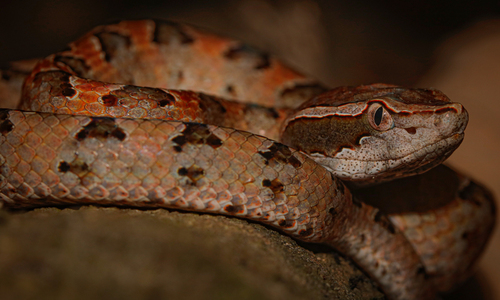
The genus ranges across mainland Southeast Asia, including Thailand, Cambodia, Laos, Vietnam, Malaysia, and the island of Java in Indonesia. Members favor lowland habitats such as forest edges, plantations, bamboo thickets, coastal scrub, and farmland, and they are often found in areas where people live and work. The Malayan pit viper is a stout, terrestrial, ground-dwelling snake with a broad triangular head, a pointed snout, and a strongly patterned body of brown to reddish or pinkish tones marked with a series of dark, pale-edged triangles along the back, which gives it effective camouflage among leaf litter. Vertical pupils and the facial pit are useful close-range identifiers, but identification should never require handling the snake.
The Malayan pit viper is venomous and medically significant, and a bite is a genuine emergency. Its venom is strongly hemotoxic, disrupting blood clotting and damaging tissue, and untreated bites can cause severe local destruction and serious systemic effects. The snake tends to hold its ground rather than flee, which raises the chance of accidental bites by people working barefoot or stepping nearby. Never handle, corner, or attempt to catch one. If a bite occurs, keep the person calm and still, remove rings and tight items, and get to emergency medical care immediately for evaluation and antivenom; in the United States contact Poison Control at 1-800-222-1222, and elsewhere call local emergency services. Ecologically the species is a sit-and-wait ambush predator that feeds mainly on rodents, frogs, and lizards, and it is notable among vipers for laying eggs and guarding the clutch rather than giving live birth, a trait shared with its close relatives in the group.
Calloselasma belongs to the Viperidae family (Vipers & pit vipers). Heavy-bodied venomous snakes with long, hinged, hollow fangs. Broad, triangular head distinct from a narrow neck, heavy body, and (usually) vertical, cat-like pupils. Pit vipers also have a heat-sensing pit; true vipers do not.
Danger: Every viper is venomous, and the family includes some of the world's most medically important snakes. Venom is typically hemotoxic, causing pain, swelling, tissue damage, and bleeding. Treat any viper bite as a medical emergency.
All species (1)
Keep learning
- Venomous vs Nonvenomous: How to Tell the DifferenceThe folk rules for telling venomous snakes apart, where each one fails, and why location-based identification beats guessing by sight.
- Are Snakes Dangerous? The Real Risk, in PerspectiveMost snakes are harmless and avoid people. Here is the honest picture of snakebite risk worldwide and how to lower your own.
- Snake Venom Explained: How It Works and WhyWhat snake venom actually is, why it evolved, the main venom types, fang delivery, how antivenom works, and why ranking the most venomous snake is hard.
- How Snakes Move, Hunt, and EatHow snakes move without legs, hunt as ambushers or active foragers, kill by constriction or venom, and swallow prey wider than their head.