
Elapidae
Indochinese Spitting Cobra
VenomousNaja siamensis
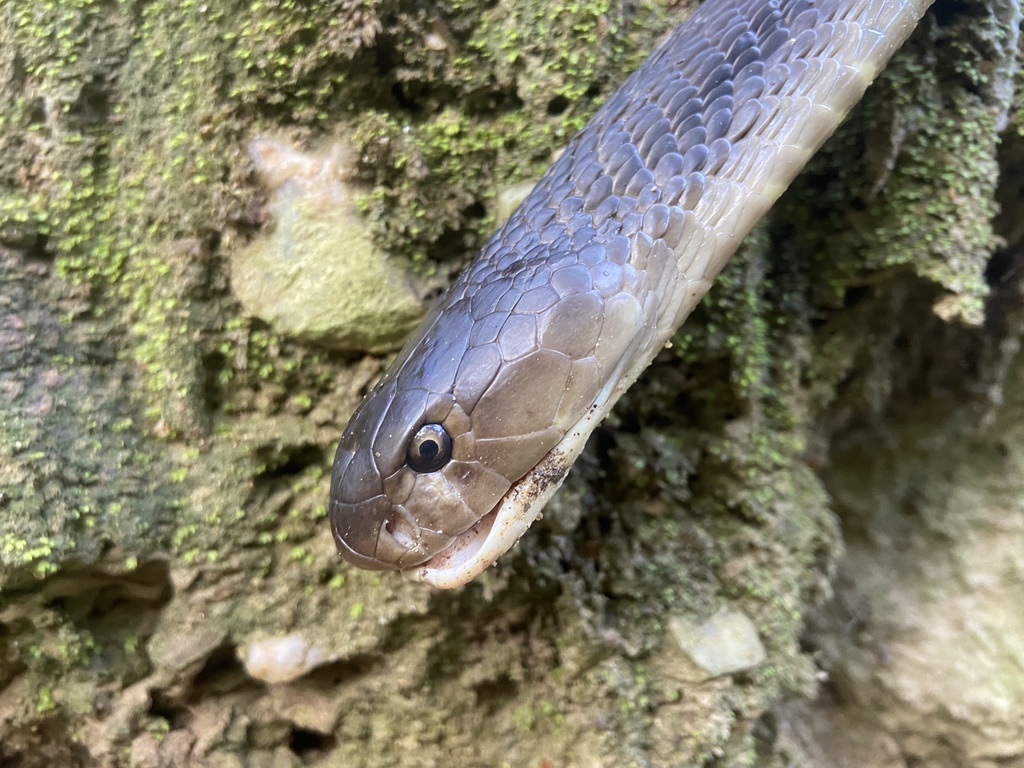
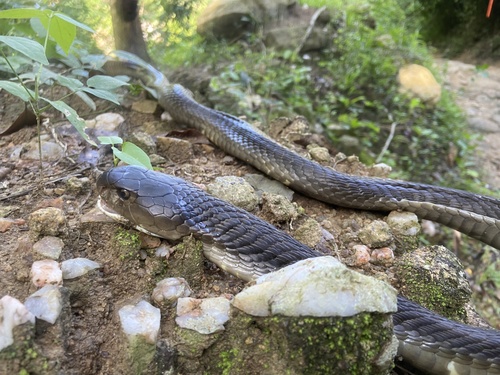
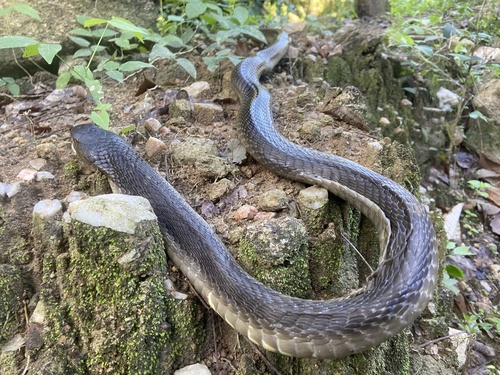
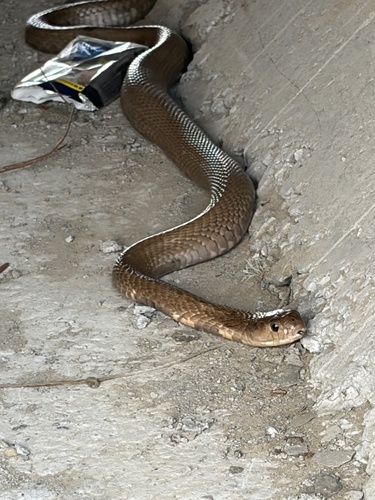
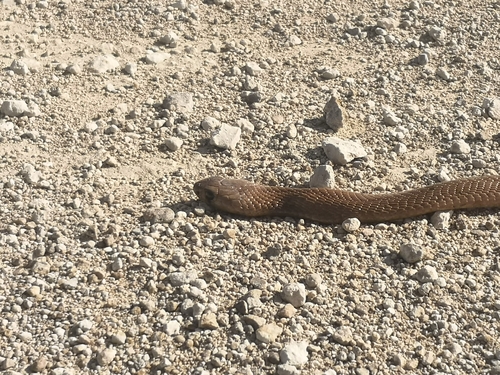
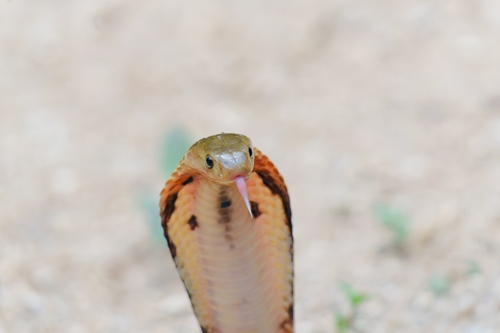
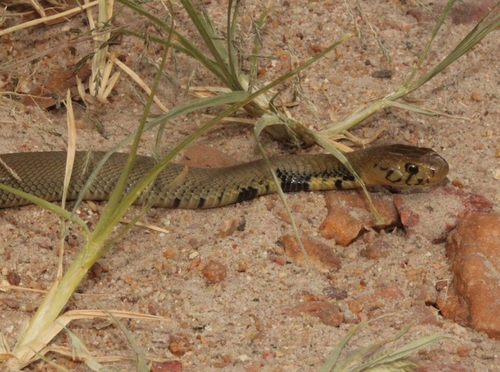
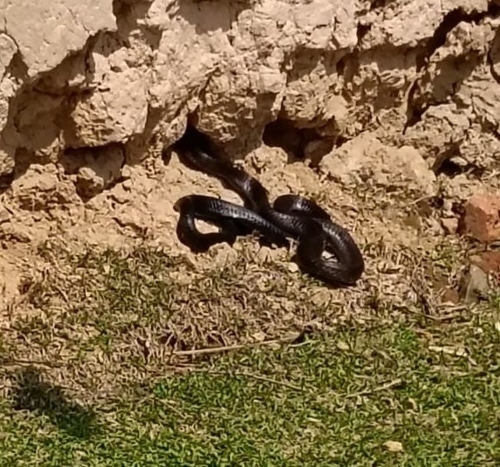
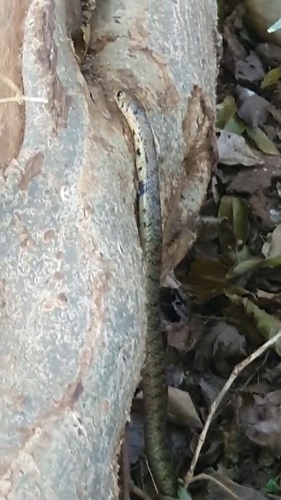
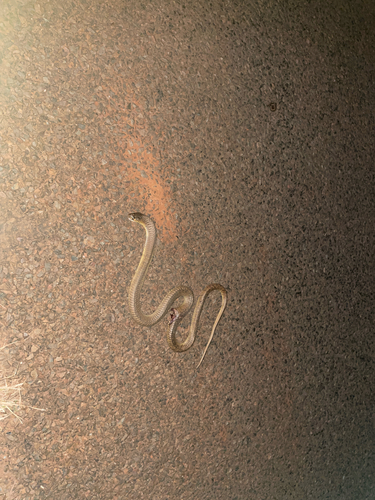
3 photographs of the Indochinese Spitting Cobra. © John Witton.
The Indochinese Spitting Cobra (Naja siamensis) is a venomous snake in the Elapidae family, recorded in 5 countries.
If you are bitten
This is a venomous snake. Treat any bite as a medical emergency: stay calm, keep the bitten limb still and roughly level with the heart, remove rings and tight clothing, and get to emergency care immediately. Do not apply a tourniquet, cut the wound, apply ice, or try to suck out venom. Call your local emergency number or poison center.
- Family
- Elapidae
- Danger
- high
About the Indochinese Spitting Cobra
The Siamese spitting cobra (Naja siamensis) (Thai: งูเห่า, pronounced: nguu hao) also called the Indochinese spitting cobra, Thai spitting cobra and black and white spitting cobra is a species of spitting cobra found in Southeast Asia.
Description
This is a medium-sized elapid, with a more slender build compared to most other cobras within the genus Naja. The body colour of this species is variable from grey to brown to black, with white spots or stripes. The white patterning can be so prolific that it covers the majority of the snake. The highly distinctive black and white colour phase is common in central Thailand, specimens from western Thailand are mostly black, whereas individuals from elsewhere are usually brown. The hood mark can be spectacle-shaped, irregular or missing altogether, especially in adults. Adults average between 0.9 to 1.2 metres (3.0 to 3.9 ft) in length, and can potentially reach lengths of 1.6 metres (5 ft), although this is considered rare. Body mass for adults can be tends to be around 1,600 grams.
This species should not be confused with the monocled cobra (Naja kaouthia), which has similar habitat, size and appearance. Another distinguishing feature is that this species is a "true spitter"; it readily spits venom, but rather than a stream of venom as seen with many other "spitting cobras", this species ejects a "mist" rather than a "stream". Further, the reported spitting range of this species is approximately 1 metre (3.3 ft), which is the lowest range of any of the spitting cobras. Although Wüster (unpublished) reports that N. siamensis readily spits and may have a longer range, closer to 2 metres (6.6 ft), which comes out in a stream.
Scalation
There are 25-31 scale rows around the hood, 19-21 just ahead of midbody; 153-174 ventral scales, 45-54 subcaudal scales, and basal pairs are sometimes undivided.
Taxonomy
Naja siamensis is classified under the genus Naja of the family Elapidae. It was first described by Austrian-born Italian zoologist Josephus Nicolaus Laurenti in 1768. The generic name Naja is a Latinisation of the Sanskrit word nāgá (नाग), meaning "cobra". The specific epithet siamensis is derived from the word Siam or Siamese, which means "relating to or characteristic of Thailand or its people and language". This species was long confused with the monocled cobra (Naja kaouthia) and the Chinese cobra (Naja atra), and extensive variation in pattern and scalation contributed to this confusion. Detailed morphological and molecular analyses revealed it to be a distinct species during the 1990s.
Distribution and habitat
It is found in Southeast Asia, including Thailand, Cambodia, Vietnam, and Laos. May occur in eastern Myanmar but no records are known. It has been reported from Taiwan where it was released to the wild based on folklore Buddhist practices. It occupies a range of habitats including lowlands, hills, plains, and woodland. It can also be found in jungle habitat and it is sometimes attracted to human settlements because of the abundant populations of rodents in and around these areas.
Behavior and diet
Adapted from Wikipedia, available under CC BY-SA.
Local and regional names
The Indochinese Spitting Cobra is known by these names across the regions where it lives:
- Arabic
- الناشر السيامي البصَّاق
- Chinese
- 泰國眼鏡蛇
- Czech
- kobra siamská
- English
- Black And White Spitting Cobra, Indo-Chinese Spitting Cobra, Siamese Cobra
- Finnish
- Sylkeväindokiinankobra
- French
- Cobra cracheur d'Indochine
- German
- Indochinesische Speikobra, Siamesische Speikobra
- Hungarian
- sziámi kobra
- Italian
- Cobra sputatore indo-cinese, Cobra sputatore indocinese
- Khmer
- ពស់ វែកដំបូក, ពស់វែកដំបូក
- Polish
- kobra syjamska
- Russian
- Сиамская Кобра
- Spanish
- Cobra del Sudeste asiático
- Thai
- งูเห่าพ่นพิษสยาม
- Vietnamese
- Ran Ho Mang Thai Lan, Ran Ho Mang Xien
Frequently asked: Indochinese Spitting Cobra
- Is the Indochinese Spitting Cobra venomous?
- Yes. The Indochinese Spitting Cobra (Naja siamensis) is venomous and belongs to the Elapidae family (cobra, mamba, coral or sea snake). Its bite is considered high risk to people. Treat any bite as a medical emergency.
- Is the Indochinese Spitting Cobra poisonous?
- Snakes are venomous, not poisonous. "Poisonous" means harmful to eat or touch; "venomous" means injecting toxins through a bite. The Indochinese Spitting Cobra is venomous, delivering venom through a bite.
- Is the Indochinese Spitting Cobra dangerous?
- This is a venomous snake. Treat any bite as a medical emergency: stay calm, keep the bitten limb still and roughly level with the heart, remove rings and tight clothing, and get to emergency care immediately. Do not apply a tourniquet, cut the wound, apply ice, or try to suck out venom. Call your local emergency number or poison center.
- Where does the Indochinese Spitting Cobra live?
- The Indochinese Spitting Cobra has verified records in 5 countries, including Thailand, Viet Nam, Cambodia. See the distribution section below for its full range.
- What does the Indochinese Spitting Cobra eat?
- It is a primarily nocturnal species. It shows variable temperament depending on the time of day it is encountered. When threatened during daylight hours, the snake is generally timid and seeks refuge in the nearest burrow. However, when the snake is threatened at night, it is more aggressive and is more likely to stand its ground, rear up and display its hood and spit out its venom. If spitting venom doesn't work, it will strike and bite as a last resort. When biting, this species tends to hold on and chew savagely. It usually feeds on rodents, toads, and other snakes.
If you are bitten by the Indochinese Spitting Cobra
Do
- Get away from the snake and stay calm. Most bites worsen when people panic or try again to handle the snake.
- Call 911 or Poison Control (1-800-222-1222) right away. Antivenom works best when given early.
- Note the time of the bite and, from a safe distance, the snake's color and pattern, a phone photo is enough. Do not chase it.
- Keep the bitten limb still and at roughly heart level. Sit or lie down and limit movement.
- Remove rings, watches, and tight clothing near the bite before swelling starts.
- Gently wash the bite with soap and water and cover it with a clean, dry dressing.
Do not
- Do not cut the wound or try to suck out the venom.
- Do not apply a tourniquet or ice.
- Do not drink alcohol or caffeine.
- Do not take aspirin or ibuprofen, they can worsen bleeding. Acetaminophen is safer for pain.
- Do not try to catch or kill the snake. A dead snake can still bite by reflex.
First-aid guidance adapted from the U.S. Centers for Disease Control and Prevention (CDC NIOSH), Venomous Snakes. Educational only; always follow the instructions of emergency responders.
Where it is found
More Elapidae snakes
Classification
How scientists group this snake, from the broadest category down to the exact species. Each step narrows to its closest relatives.
Keep learning
- Are Snakes Dangerous? The Real Risk, in PerspectiveMost snakes are harmless and avoid people. Here is the honest picture of snakebite risk worldwide and how to lower your own.
- Snakebite First Aid: What to Do (and What Never to Do)A clear, CDC-based guide to snakebite first aid: the steps that help, the popular myths that hurt, and how to tell a serious bite from a minor one.
- Venomous vs Nonvenomous: How to Tell the DifferenceThe folk rules for telling venomous snakes apart, where each one fails, and why location-based identification beats guessing by sight.
- What to Do If You Find a SnakeFound a snake at home or on a trail? Here is how to stay calm, give it space, identify it safely, and know when to call a professional.
Distribution from GBIF & iNaturalist. Venom status per CDC. Background: Wikipedia. Informational only. Never handle a snake to identify it.