
Viperidae
Horned Adder
VenomousBitis caudalis
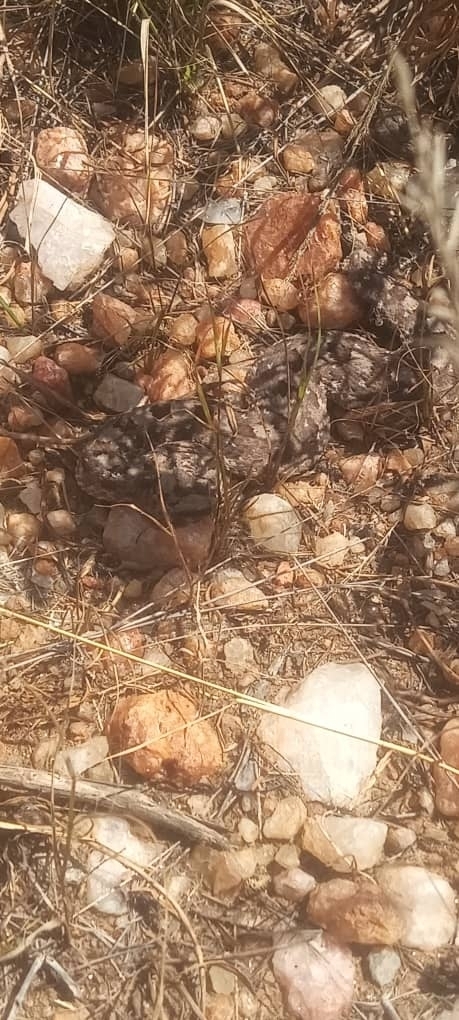
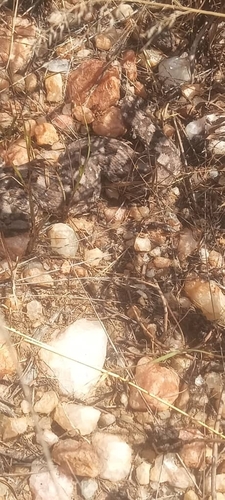
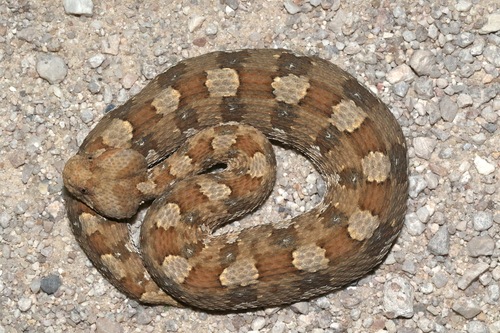
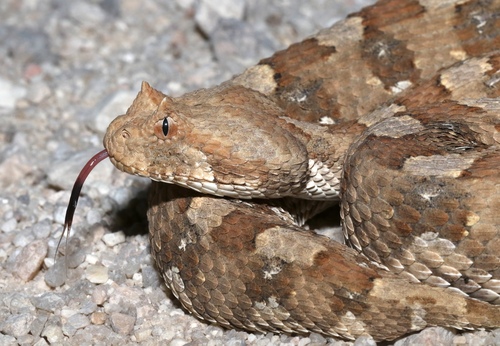
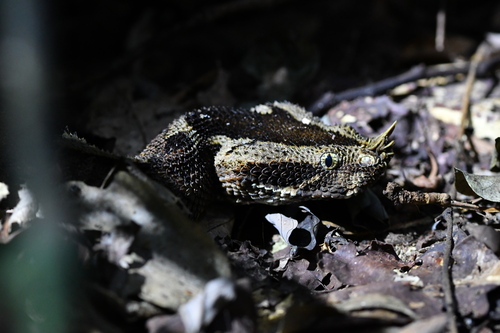
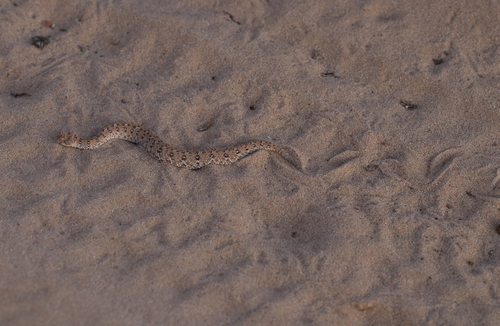
6 photographs of the Horned Adder. © le0p0ld_d.
The Horned Adder (Bitis caudalis) is a venomous snake in the Viperidae family, recorded in 6 countries.
If you are bitten
This is a venomous snake. Treat any bite as a medical emergency: stay calm, keep the bitten limb still and roughly level with the heart, remove rings and tight clothing, and get to emergency care immediately. Do not apply a tourniquet, cut the wound, apply ice, or try to suck out venom. Call your local emergency number or poison center.
- Family
- Viperidae
- Danger
- high
About the Horned Adder
The horned adder (Bitis caudalis) is a viper species. It is found in the arid region of southwest Africa, in Angola, Botswana, Namibia; South Africa, and Zimbabwe. It is easily distinguished by the presence of a single, large horn-like scale over each eye. No subspecies are currently recognized. Like all other vipers, it is venomous.
Common names
The species is commonly known as the horned adder, horned puff adder, or horned viper.
Description
A short, stout little viper, it usually averages 30–40 cm (12–15.5 in) in total length (body + tail). The largest specimen reported being seen is a female from southern Botswana measuring 51.5 cm (20.3 in) total length.
Geographic range
The snake is found in far arid regions of southwest Africa: southwest Angola, Namibia, across the Kalahari Desert of southern Botswana, into northern Transvaal and southwestern Zimbabwe. In South Africa, it is found from the Northern Cape province south to the Great Karoo.
Its type locality is given as "... the sandy districts north of the Cape Colony..." [South Africa].
Habitat
Horned adders are mostly found in sparsely vegetated desert and semiarid scrub country.
Venom
Bites are assumed to be rare and no epidemiological data is available.
Little information is available regarding the toxicity and amount of venom produced. Spawls and Branch (1995) reported an average yield of 85 mg of wet venom, while Christensen (1971) offered an LD50 value of 1.2 mg/kg IV.
Other research has found the LD50 to be between 0.15 and 0.22 mg/kg
Based on this LD50 value, Spawls and Branch (1995) estimated about 300 mg of this venom would be required to kill an adult. They regarded this venom as one of the weakest of the genus, although the tests are conducted solely on mice, which might have a different reaction from humans to the venom. On the other hand, an older report by the U.S. Navy (1965, 1991) suggested it is highly toxic and a number of deaths have occurred as a result. According to Broadley and Cock (1975), envenomation symptoms in humans include swelling, severe pain, nausea, vomiting and shock. Blisters and necrotic ulcers may form around the bite site.
The National Antivenom and Vaccine Production Centre in Riyadh, Saudi Arabia, produces a polyvalent antivenin that includes a paraspecific antibody that protects against bites from this species. According to the U.S. Navy (1965, 1991), polyvalent antivenins produced by SAIMR and the Pasteur Institute are said to be effective, while Mallow et al. (2003) reported currently available antivenins are of limited effectiveness.
Viljoen et al. (1982) isolated a protein, a neurotoxic phospholipase A2, from the venom, which they called "caudoxin". According to Lee et al. (1983), this is a presynaptic toxin similar to bungarotoxin, but with different binding sites.
Taxonomy
Adapted from Wikipedia, available under CC BY-SA.
Local and regional names
The Horned Adder is known by these names across the regions where it lives:
- German
- Gehörnte Puffotter
Frequently asked: Horned Adder
- Is the Horned Adder venomous?
- Yes. The Horned Adder (Bitis caudalis) is venomous and belongs to the Viperidae family (viper). Its bite is considered high risk to people. Treat any bite as a medical emergency.
- Is the Horned Adder poisonous?
- Snakes are venomous, not poisonous. "Poisonous" means harmful to eat or touch; "venomous" means injecting toxins through a bite. The Horned Adder is venomous, delivering venom through a bite.
- Is the Horned Adder dangerous?
- This is a venomous snake. Treat any bite as a medical emergency: stay calm, keep the bitten limb still and roughly level with the heart, remove rings and tight clothing, and get to emergency care immediately. Do not apply a tourniquet, cut the wound, apply ice, or try to suck out venom. Call your local emergency number or poison center.
- Where does the Horned Adder live?
- The Horned Adder has verified records in 6 countries, including South Africa, Namibia, Zimbabwe. See the distribution section below for its full range.
- Why is it called the Horned Adder?
- The species is commonly known as the horned adder, horned puff adder, or horned viper.
If you are bitten by the Horned Adder
Do
- Get away from the snake and stay calm. Most bites worsen when people panic or try again to handle the snake.
- Call 911 or Poison Control (1-800-222-1222) right away. Antivenom works best when given early.
- Note the time of the bite and, from a safe distance, the snake's color and pattern, a phone photo is enough. Do not chase it.
- Keep the bitten limb still and at roughly heart level. Sit or lie down and limit movement.
- Remove rings, watches, and tight clothing near the bite before swelling starts.
- Gently wash the bite with soap and water and cover it with a clean, dry dressing.
Do not
- Do not cut the wound or try to suck out the venom.
- Do not apply a tourniquet or ice.
- Do not drink alcohol or caffeine.
- Do not take aspirin or ibuprofen, they can worsen bleeding. Acetaminophen is safer for pain.
- Do not try to catch or kill the snake. A dead snake can still bite by reflex.
First-aid guidance adapted from the U.S. Centers for Disease Control and Prevention (CDC NIOSH), Venomous Snakes. Educational only; always follow the instructions of emergency responders.
Where it is found
More Viperidae snakes
Classification
How scientists group this snake, from the broadest category down to the exact species. Each step narrows to its closest relatives.
Keep learning
- Are Snakes Dangerous? The Real Risk, in PerspectiveMost snakes are harmless and avoid people. Here is the honest picture of snakebite risk worldwide and how to lower your own.
- Snakebite First Aid: What to Do (and What Never to Do)A clear, CDC-based guide to snakebite first aid: the steps that help, the popular myths that hurt, and how to tell a serious bite from a minor one.
- Venomous vs Nonvenomous: How to Tell the DifferenceThe folk rules for telling venomous snakes apart, where each one fails, and why location-based identification beats guessing by sight.
- What to Do If You Find a SnakeFound a snake at home or on a trail? Here is how to stay calm, give it space, identify it safely, and know when to call a professional.
Distribution from GBIF & iNaturalist. Venom status per CDC. Background: Wikipedia. Informational only. Never handle a snake to identify it.