
Genus · Viperidae
Types of adders
10+ species make up the genus Bitis, the snakes commonly called adders. All of them are venomous.
About African adders and vipers
Bitis is a genus of African true vipers that ranges from small desert adders to some of the heaviest, most spectacularly camouflaged snakes on the continent. It includes the puff adder, responsible for more serious snakebites in Africa than any other species, and the Gaboon viper, which carries the longest fangs of any snake.
Bitis belongs to the family Viperidae, the true vipers, and is found only in Africa. Our database lists 10+ species in the genus, and all 16 are venomous. The genus spans a remarkable range of body sizes and habitats. At one end are small, stout desert and mountain adders such as the horned adder (Bitis caudalis), Peringuey's adder (Bitis peringueyi) and the berg adder (Bitis atropos). At the other are massive forest and savanna giants, most famously the puff adder (Bitis arietans) and the Gaboon viper (Bitis gabonica). What unites them is a viper body plan built for ambush rather than pursuit: heavy, thick bodies, broad triangular heads set off from the neck, and intricate geometric patterns that break up their outline against soil, sand and leaf litter.
Two members stand out. The puff adder is a thick-bodied, wide-ranging snake found across much of sub-Saharan Africa in savanna and grassland. Its camouflage is so effective, and its habit of lying motionless on paths and trails so consistent, that people frequently step near or on it before they notice it is there. That combination is exactly why it causes more serious bites and deaths in Africa than any other species. The Gaboon viper, a rainforest specialist, is one of the heaviest vipers in the world and has the longest fangs of any snake, reaching roughly 5 centimeters. It also delivers one of the highest venom yields of any snake, and its leaf-pattern camouflage on the forest floor is among the most striking in the natural world.
These snakes live across sub-Saharan Africa and occupy a wide spread of habitats: open savanna and grassland, arid deserts and dunes, rocky mountain slopes, and dense tropical rainforest. In general terms they are recognized by their heavy bodies, broad and distinctly triangular heads, and bold, often geometric markings that serve as camouflage rather than warning. A key behavioral trait runs through the genus: when approached, most Bitis rely on stillness and concealment instead of fleeing. They tend to hold their ground and stay hidden, which is why encounters so often happen at close range.
Bitis venom is predominantly cytotoxic, meaning it acts strongly on tissue at the bite site. Bites typically cause severe pain, rapid and pronounced swelling, blistering and tissue damage, and in serious cases the damage can be extensive enough to require surgery. As ambush predators, Bitis species feed by waiting in concealment and striking prey that comes within range. The puff adder is well known for the loud hiss or puff it gives when it feels threatened, a deep warning sound that is the source of its common name. Across the genus, most species give live birth rather than laying eggs.
From a field-safety standpoint, the very traits that make Bitis successful predators also make them dangerous to people. Their camouflage and their habit of staying perfectly still mean that accidental bites are common, often because someone did not see the snake until they were already close. A bite from any Bitis species is a serious medical emergency. It requires antivenom and hospital care, and the right response is to get the bitten person to professional emergency medical treatment as quickly as possible. No wild venomous snake should ever be handled, and treatment should always be left to trained medical and emergency professionals.
Bitis belongs to the Viperidae family (Vipers & pit vipers). Heavy-bodied venomous snakes with long, hinged, hollow fangs. Broad, triangular head distinct from a narrow neck, heavy body, and (usually) vertical, cat-like pupils. Pit vipers also have a heat-sensing pit; true vipers do not.
Danger: Every viper is venomous, and the family includes some of the world's most medically important snakes. Venom is typically hemotoxic, causing pain, swelling, tissue damage, and bleeding. Treat any viper bite as a medical emergency.
All species (16)
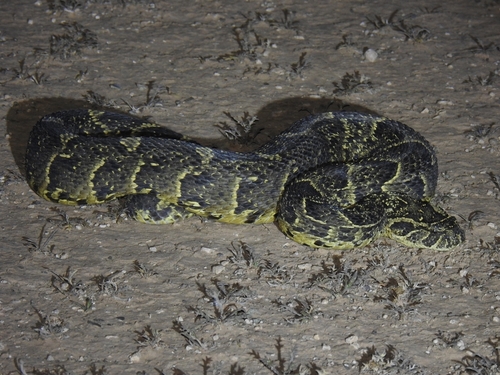 Puff AdderBitis arietansVenomous
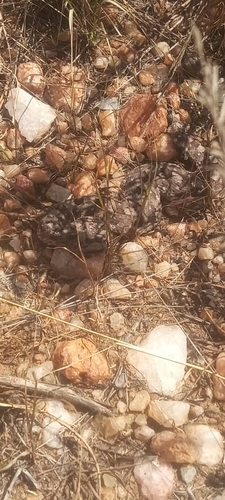 Horned AdderBitis caudalisVenomous
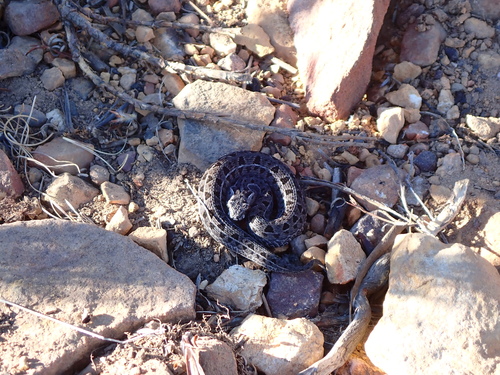 Berg AdderBitis atroposVenomous
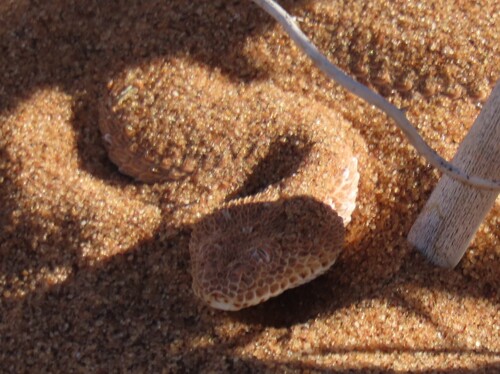 Peringuey's AdderBitis peringueyiVenomous
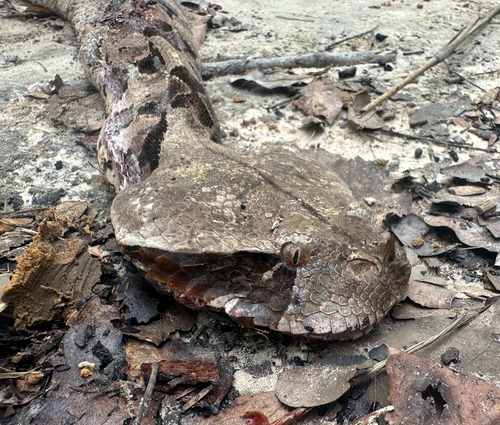 Gaboon ViperBitis gabonicaVenomous
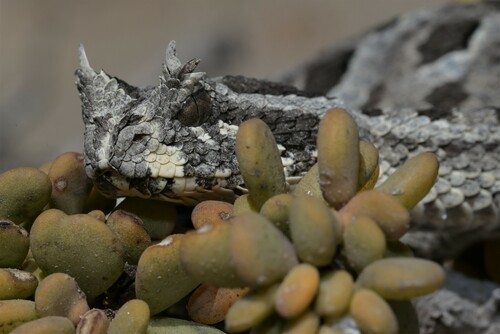 Many-horned AdderBitis cornutaVenomous
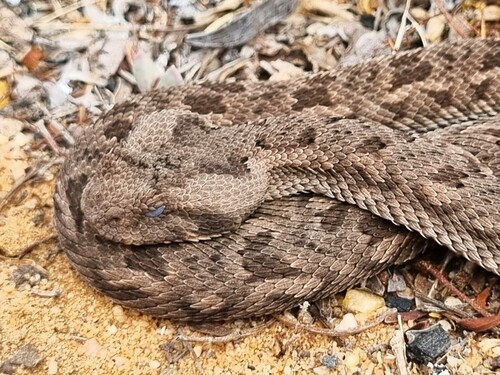 Red AdderBitis rubidaVenomous
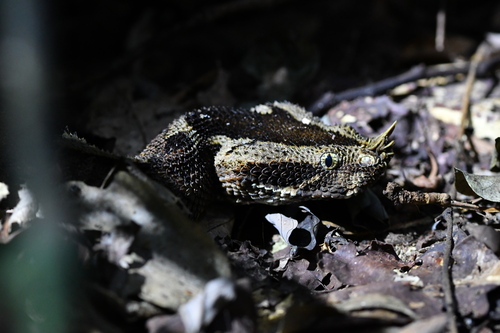 Rhinoceros ViperBitis nasicornisVenomous
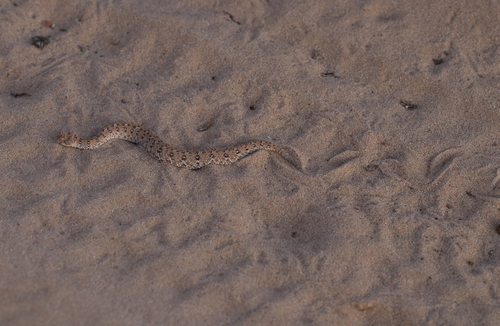 Namaqua Dwarf AdderBitis schneideriVenomous
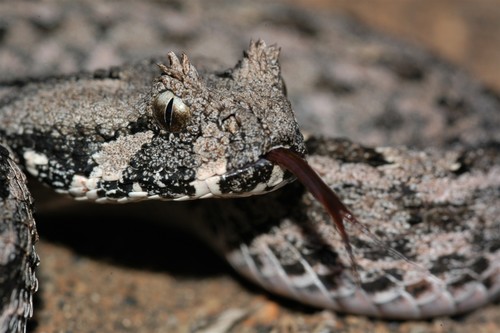 Southern AdderBitis armataVenomous
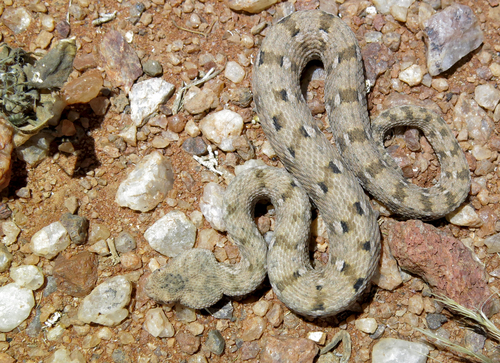 Desert Mountain AdderBitis xeropagaVenomous
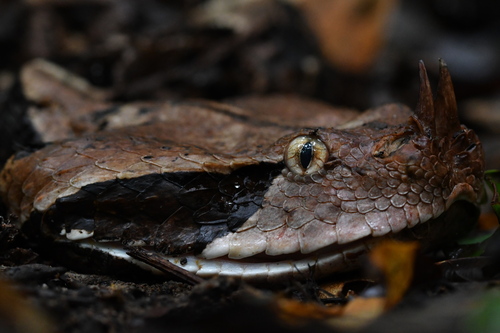 Western Gaboon ViperBitis rhinocerosVenomous
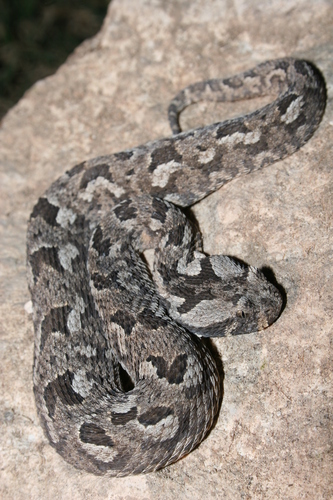 Albany AdderBitis albanicaVenomous
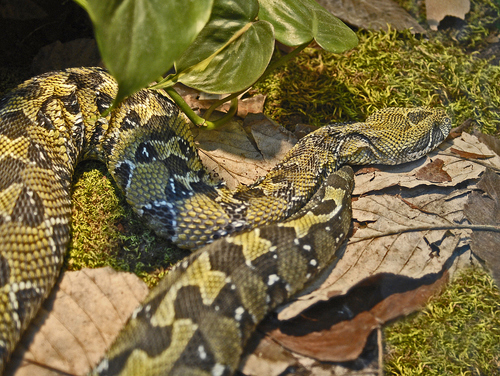 Ethiopia ViperBitis parvioculaVenomous
 Plain Mountain AdderBitis inornataVenomous
 Kenya Horned ViperBitis worthingtoniVenomous
Keep learning
- Venomous vs Nonvenomous: How to Tell the DifferenceThe folk rules for telling venomous snakes apart, where each one fails, and why location-based identification beats guessing by sight.
- Are Snakes Dangerous? The Real Risk, in PerspectiveMost snakes are harmless and avoid people. Here is the honest picture of snakebite risk worldwide and how to lower your own.
- Snake Venom Explained: How It Works and WhyWhat snake venom actually is, why it evolved, the main venom types, fang delivery, how antivenom works, and why ranking the most venomous snake is hard.
- How Snakes Move, Hunt, and EatHow snakes move without legs, hunt as ambushers or active foragers, kill by constriction or venom, and swallow prey wider than their head.