
Viperidae
Berg Adder
VenomousBitis atropos
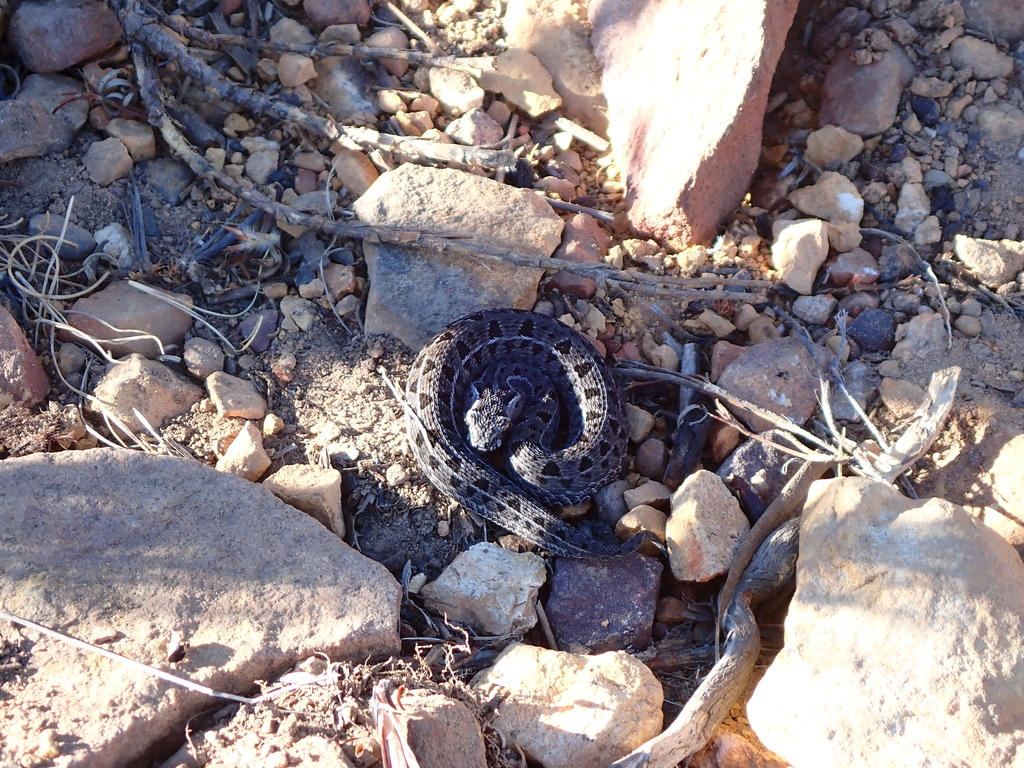
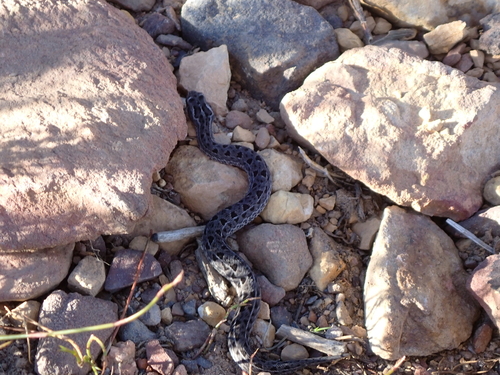
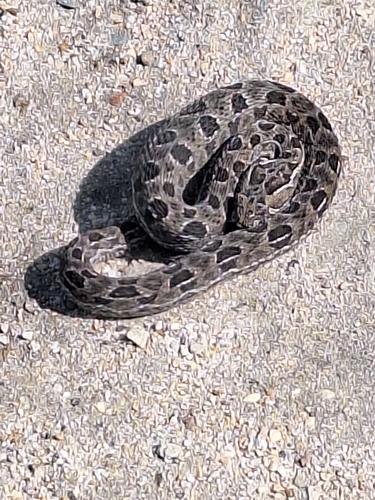
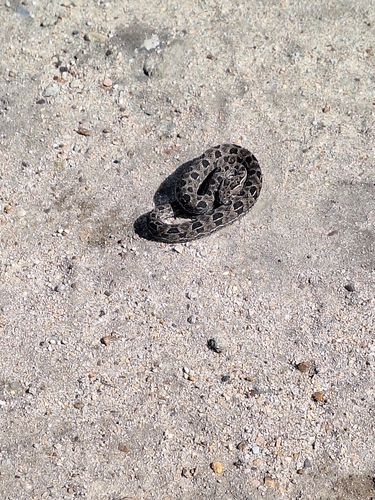
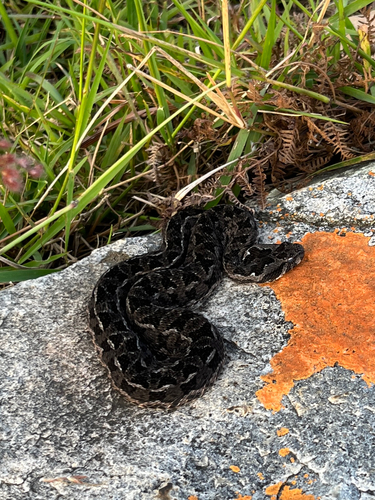
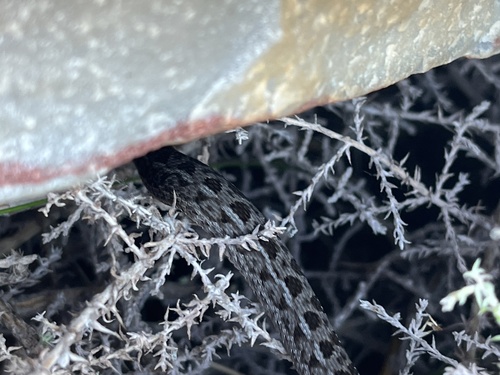
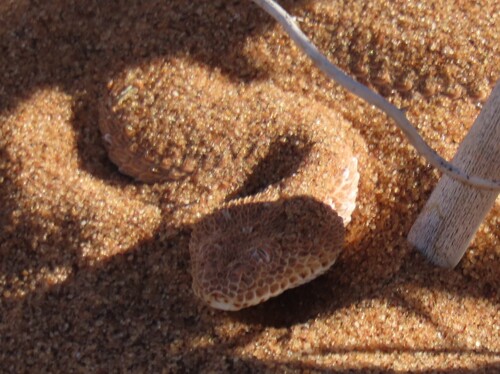
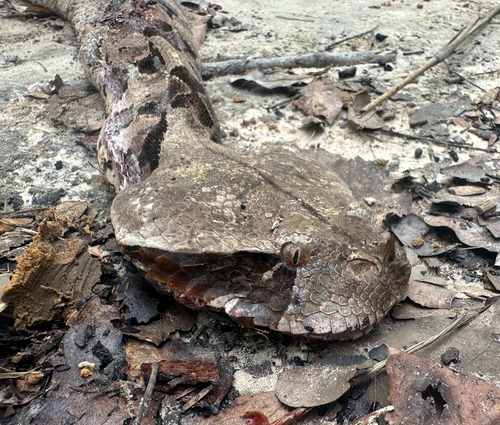
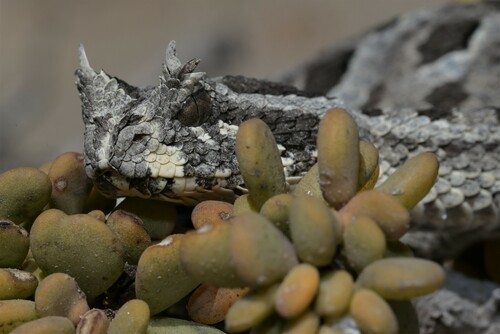
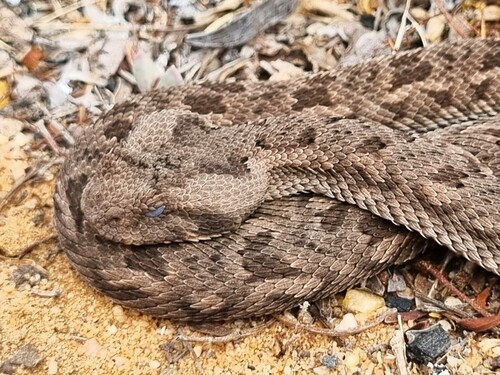
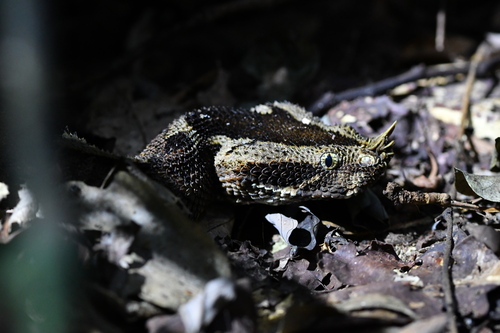
6 photographs of the Berg Adder. © Ren Hoekstra.
The Berg Adder (Bitis atropos) is a venomous snake in the Viperidae family, recorded in 5 countries.
If you are bitten
This is a venomous snake. Treat any bite as a medical emergency: stay calm, keep the bitten limb still and roughly level with the heart, remove rings and tight clothing, and get to emergency care immediately. Do not apply a tourniquet, cut the wound, apply ice, or try to suck out venom. Call your local emergency number or poison center.
- Family
- Viperidae
- Danger
- high
About the Berg Adder
The berg adder (Bitis atropos) is a viper species endemic to mountainous regions in southern Africa. No subspecies are currently recognized.
Taxonomy
The specific name, atropos, refers to the Greek mythological goddess Atropos, who was one of the Three Fates, the one who cut the thread of life. The type locality given is "America", but this is obviously a mistake. More likely, it is the Cape of Good Hope, according to FitzSimons (1962).
Its common names include berg adder, Cape mountain adder, and mountain adder.
Description
The typical adult size of B. atropos is 30–40 cm (about 12–16 in) in total length (body and tail), with some females reaching a maximum total length of 50 cm (20 in) in the wild and 60 cm (24 in) in captivity.
Distribution and habitat
B. atropos is found in isolated populations of the mountainous regions of southern Africa. In South Africa, the species is known to occur in the Transvaal, along the Drakensberg escarpment of the eastern and northern Transvaal. Elsewhere in South Africa, it occurs in western Natal, Lesotho, and eastern Free State, and in the southern coastal mountains of western and eastern Cape Province. Spawls and Branch (1995) also mentioned, in Cape Province, its range extends into the Cape Peninsula. It also occurs in Eswatini, in higher altitudes of eastern Zimbabwe such as the Inyanga Highlands and Chimanimani Mountains, and in nearby Mozambique.
B. atropos occupies a number of different habitats, but prefers relatively cool environments with high levels of precipitation. In the northern part of its range, where the winters are cold and dry and the summers warm and wet, it is restricted to higher elevations, up to 3,000 m (9,800 ft). In Zimbabwe, it is not found below 1,500 m (4,900 ft), usually associated with mountain slopes and rocky hillsides, but also montane grassland with patches of bushes and shrubs.
In the southern part of its range (Cape Province, South Africa), where the winters are cold and wet and the summers warm and dry, it can be found in coastal and mountain heathland, as well as small rock outcrops at sea level and grassy areas with clumps of bushes and shrubs west of the Cape Peninsula.
Venom and diet
The atropos adder is unusual among Bitis species in that its venom is predominantly neurotoxic, so much so that the effects of the bite seldom include necrosis or infection. The snake is described as "irascible", hissing violently and twisting convulsively if molested.
Presumably, the neurotoxic venom is an adaptation to the prey, which largely comprise rock lizards and small amphibians. It does, however, also eat other animals, such as small rodents and young of ground-nesting birds. The venom is not powerful enough for the dose injected at a single strike to kill an adult human, and no records of human fatalities have been found. Whether at threat or not, though, persons do not seem to respond usefully to antivenom, so treatment should be limited to symptomatic control. Such as the effects of the venom are, they take effect quickly. Symptoms of the bite have been compared to alcohol intoxication and are not permanent. Unlike the bites of elapid snakes, B. atropos bites, though neurotoxic, do not cause obvious effects on heart and respiratory functions, but they can be troublesome, and their effects sometimes persist for some days or even weeks, which suggests the venom causes nerve damage that does not mend quickly if it is severe. Obvious symptoms may include loss of smell or taste, drooping eyelids, and loss of vision.
Reproduction
Adapted from Wikipedia, available under CC BY-SA.
Local and regional names
The Berg Adder is known by these names across the regions where it lives:
- Chinese
- 山噝蝰
- English
- Cape Berg Adder, Mountain Adder
- German
- Berg-Puffotter, Bergotter
- Italian
- Vipera di montagna del Sudafrica, Vipera di montagna sudafricana
- Japanese
- ベルクアダー
- Russian
- Горная африканская гадюка, Южноафриканская горная гадюка
Frequently asked: Berg Adder
- Is the Berg Adder venomous?
- Yes. The Berg Adder (Bitis atropos) is venomous and belongs to the Viperidae family (viper). Its bite is considered high risk to people. Treat any bite as a medical emergency.
- Is the Berg Adder poisonous?
- Snakes are venomous, not poisonous. "Poisonous" means harmful to eat or touch; "venomous" means injecting toxins through a bite. The Berg Adder is venomous, delivering venom through a bite.
- Is the Berg Adder dangerous?
- This is a venomous snake. Treat any bite as a medical emergency: stay calm, keep the bitten limb still and roughly level with the heart, remove rings and tight clothing, and get to emergency care immediately. Do not apply a tourniquet, cut the wound, apply ice, or try to suck out venom. Call your local emergency number or poison center.
- Where does the Berg Adder live?
- The Berg Adder has verified records in 5 countries, including South Africa, Zimbabwe, Eswatini. See the distribution section below for its full range.
- What does the Berg Adder eat?
- The atropos adder is unusual among Bitis species in that its venom is predominantly neurotoxic, so much so that the effects of the bite seldom include necrosis or infection. The snake is described as "irascible", hissing violently and twisting convulsively if molested. Presumably, the neurotoxic venom is an adaptation to the prey, which largely comprise rock lizards and small amphibians. It does, however, also eat other animals, such as small rodents and young of ground-nesting birds.
If you are bitten by the Berg Adder
Do
- Get away from the snake and stay calm. Most bites worsen when people panic or try again to handle the snake.
- Call 911 or Poison Control (1-800-222-1222) right away. Antivenom works best when given early.
- Note the time of the bite and, from a safe distance, the snake's color and pattern, a phone photo is enough. Do not chase it.
- Keep the bitten limb still and at roughly heart level. Sit or lie down and limit movement.
- Remove rings, watches, and tight clothing near the bite before swelling starts.
- Gently wash the bite with soap and water and cover it with a clean, dry dressing.
Do not
- Do not cut the wound or try to suck out the venom.
- Do not apply a tourniquet or ice.
- Do not drink alcohol or caffeine.
- Do not take aspirin or ibuprofen, they can worsen bleeding. Acetaminophen is safer for pain.
- Do not try to catch or kill the snake. A dead snake can still bite by reflex.
First-aid guidance adapted from the U.S. Centers for Disease Control and Prevention (CDC NIOSH), Venomous Snakes. Educational only; always follow the instructions of emergency responders.
Where it is found
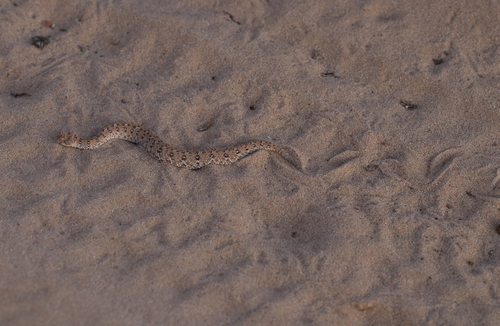
More Viperidae snakes
Classification
How scientists group this snake, from the broadest category down to the exact species. Each step narrows to its closest relatives.
Keep learning
- Are Snakes Dangerous? The Real Risk, in PerspectiveMost snakes are harmless and avoid people. Here is the honest picture of snakebite risk worldwide and how to lower your own.
- Snakebite First Aid: What to Do (and What Never to Do)A clear, CDC-based guide to snakebite first aid: the steps that help, the popular myths that hurt, and how to tell a serious bite from a minor one.
- Venomous vs Nonvenomous: How to Tell the DifferenceThe folk rules for telling venomous snakes apart, where each one fails, and why location-based identification beats guessing by sight.
- What to Do If You Find a SnakeFound a snake at home or on a trail? Here is how to stay calm, give it space, identify it safely, and know when to call a professional.
Distribution from GBIF & iNaturalist. Venom status per CDC. Background: Wikipedia. Informational only. Never handle a snake to identify it.