
Boidae
Dumeril's Boa
HarmlessAcrantophis dumerili
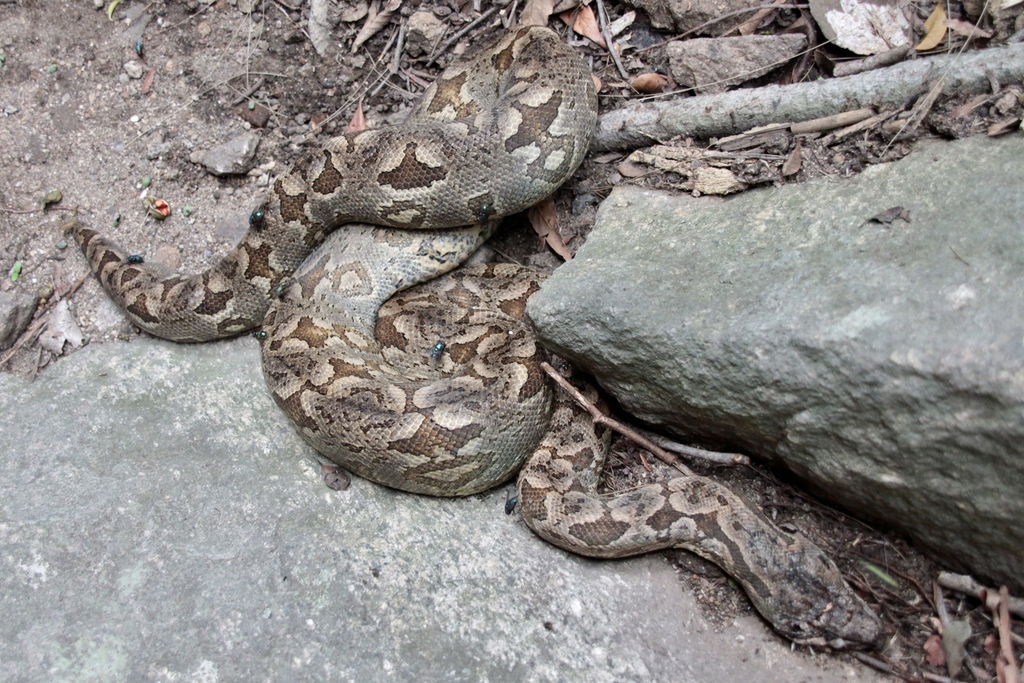
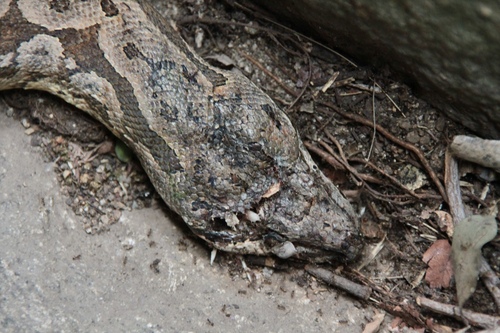
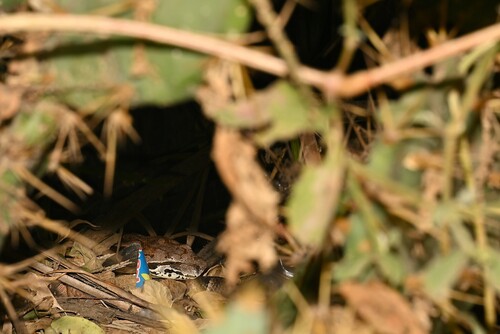
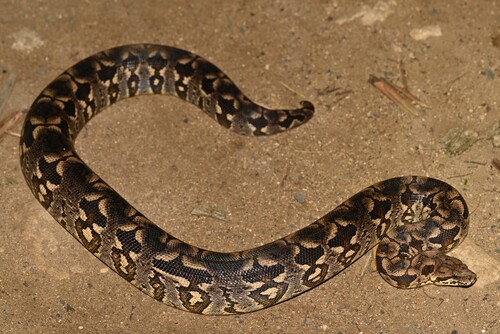
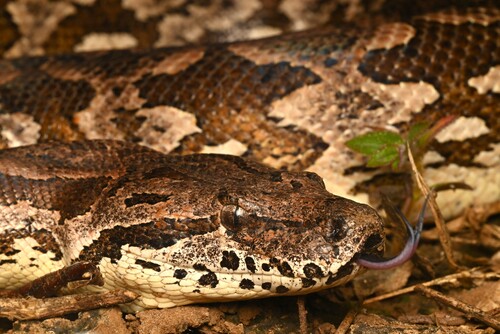
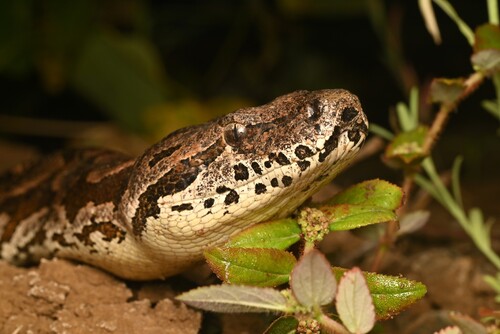
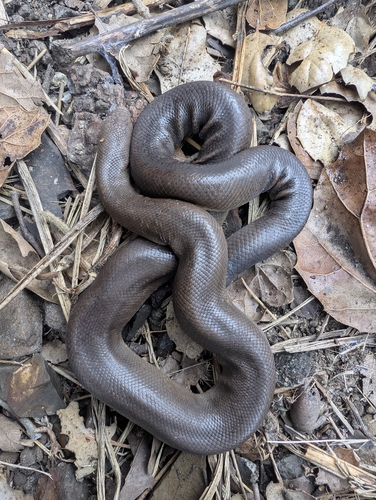
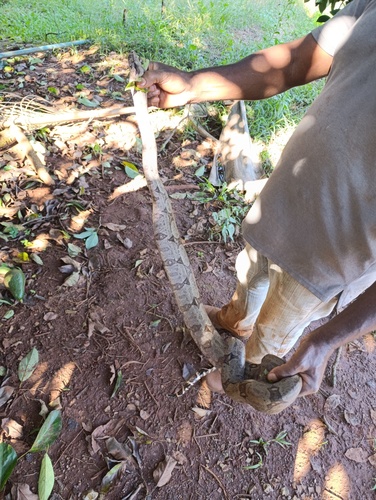
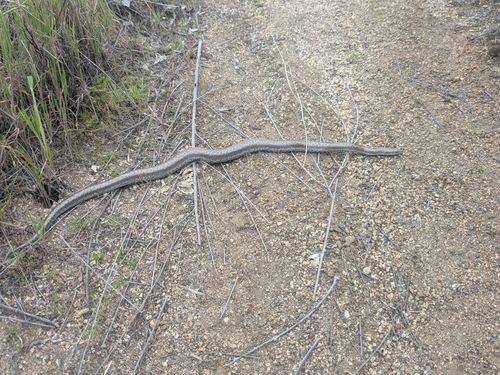
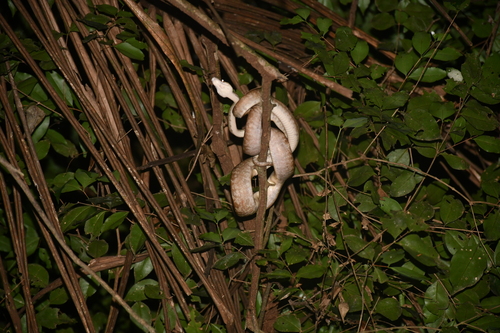
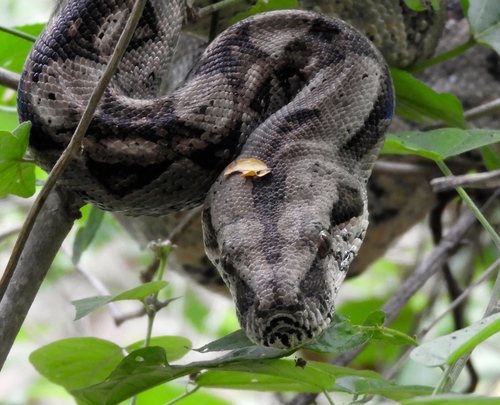
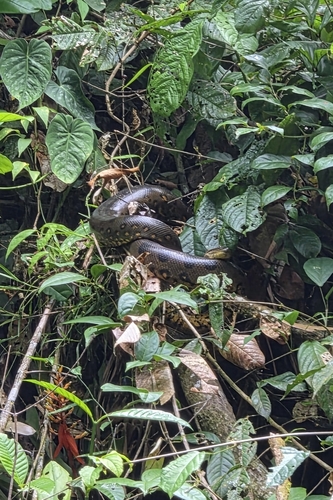
6 photographs of the Dumeril's Boa. © Matteo Bellucci.
The Dumeril's Boa (Acrantophis dumerili) is a non-venomous snake in the Boidae family, recorded in 2 countries.
- Family
- Boidae
About the Dumeril's Boa
Acrantophis dumerili, commonly known as Dumeril's boa, is a species of non-venomous snake in the family Boidae. The species is endemic to Madagascar. No subspecies are currently recognized.
Etymology
The specific name, dumerili, is in honor of French herpetologist André Marie Constant Duméril.
Description
Adults of A. dumerili usually grow to 6.5 feet (2 m) in total length (including tail) with the maximum reported to be 8 feet, 6 inches (259 cm). Males usually have longer skinnier tails, while females tend to be larger overall.
The color pattern consists of a gray-brown ground color with darker patches, forming an effective camouflage against the leaf litter of the forest floor of their native habitat.
Distribution and habitat
A. dumerili is found on Madagascar. The type locality given in the original description is "Amérique mérid. ?", which is later given as "?" by Jan (1863).
Along the western coast and southwestern regions of Madagascar, it is found in a semi-arid habitat that gets fairly low amounts of precipitation.
Durmeril Ground Boa's live in semi-arid forest along the western to southwestern parts of Madagascar. Their habitats consist of leaf litter, loose dirt, and rocky terrain for camouflage. When needed, these snakes will use burrows made by other animals as a shelter.
Feeding
The diet of A. dumerili consists of small animals, such as birds, lizards, and small mammals, including juvenile lemurs. It is also known to prey on other snakes. These snakes are opportunistic feeders that may hunt during the day or at night. They can also be found on the ground floor or in trees when hunting (Raxworthy 2003; Vences and Glaw 2003; Gardner et al. 2017). They have been found to have toads, insects, and indigestible plants, as well as detritus in their stomach. These were all either eaten in the process of hunting another animal or were in the stomach of the animal that they consumed (Pendlebury 1974). They will use their muscular body type to constrict their prey prior to consumption. Although they can reach up to 6-8 feet in length, they typically are more docile creatures and will continue to eat smaller animals and amphibians.
Reproduction
In A. dumerili sexual maturity is reached within 3 to 5 years of age. Males have anal spurs, which are used in courtship.
The mating season is March through May, and the young are born some 6 to 8 months later. Ovoviviparous, females give birth to a litters of 6-28. Neonates are 12-18 inches (30–46 cm) long.
Conservation status
The species A. dumerili is classified as Least Concern (LC) on the IUCN Red List for the following criteria: A1cd (v2.3, 1994). This means that a population reduction of at least 20% has been observed, estimated, inferred or suspected over the last 10 years or three generations, whichever is the longer, based on a decline in area of occupancy, extent of occurrence and/or quality of habitat, and based on actual or potential levels of exploitation. The species was last assessed in 2011.
Adapted from Wikipedia, available under CC BY-SA.
Frequently asked: Dumeril's Boa
- Is the Dumeril's Boa venomous?
- No. The Dumeril's Boa (Acrantophis dumerili) is non-venomous and is not considered dangerous to humans. Like most snakes, it will retreat rather than bite when given the chance.
- Is the Dumeril's Boa poisonous?
- Snakes are venomous, not poisonous. "Poisonous" means harmful to eat or touch; "venomous" means injecting toxins through a bite. The Dumeril's Boa is neither poisonous nor venomous.
- Is the Dumeril's Boa dangerous?
- The Dumeril's Boa is not dangerous to humans. It has no medically significant venom and bites only defensively if cornered or handled.
- Where does the Dumeril's Boa live?
- The Dumeril's Boa has verified records in 2 countries, including Madagascar, United States of America. See the distribution section below for its full range.
- What does the Dumeril's Boa eat?
- The diet of A. dumerili consists of small animals, such as birds, lizards, and small mammals, including juvenile lemurs. It is also known to prey on other snakes. These snakes are opportunistic feeders that may hunt during the day or at night. They can also be found on the ground floor or in trees when hunting (Raxworthy 2003; Vences and Glaw 2003; Gardner et al. 2017). They have been found to have toads, insects, and indigestible plants, as well as detritus in their stomach.
- Why is it called the Dumeril's Boa?
- The specific name, dumerili, is in honor of French herpetologist André Marie Constant Duméril.
Where it is found
More Boidae snakes
Classification
How scientists group this snake, from the broadest category down to the exact species. Each step narrows to its closest relatives.
- OrderThe broad group of scaled reptiles: all snakes and lizards
- Squamata
- FamilyA group of related snakes that share key traits
- Boidae
- GenusA close-knit group of very similar species
- Acrantophis
- SpeciesThis exact snake, named in the two-part scientific name
- Acrantophis dumerili
Keep learning
- What to Do If You Find a SnakeFound a snake at home or on a trail? Here is how to stay calm, give it space, identify it safely, and know when to call a professional.
- Venomous vs Nonvenomous: How to Tell the DifferenceThe folk rules for telling venomous snakes apart, where each one fails, and why location-based identification beats guessing by sight.
- What Is a Snake? Anatomy and the BasicsA clear overview of what makes a snake a snake: limbless body plan, anatomy, evolution from lizards, species diversity, and why they are ectothermic.
- How to Keep Snakes Out of Your Yard and HomeA practical guide to keeping snakes out of your yard and home using habitat changes that work, plus what to skip and what to do if one shows up.
Distribution from GBIF & iNaturalist. Venom status per CDC. Background: Wikipedia. Informational only. Never handle a snake to identify it.