
Genus · Boidae
Types of boas
2 species make up the genus Acrantophis, the snakes commonly called boas. None are considered dangerous to humans.
About Madagascar ground boas
Madagascar's large, ground-dwelling boas that kill by constriction and pose no venom risk to people.
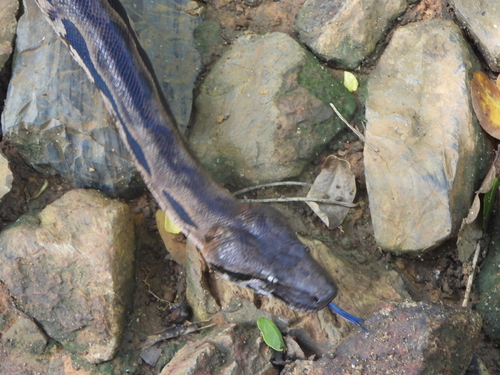
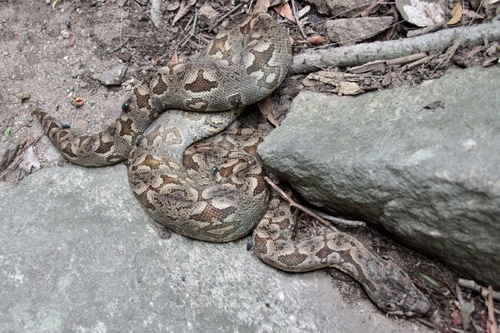
Acrantophis is a small genus of boas in the family Boidae, found only on Madagascar and a few nearby islands. It holds two species: the Madagascar ground boa (Acrantophis madagascariensis) and Dumeril's boa (Acrantophis dumerili). As true boas, they are heavy-bodied, non-venomous snakes that overpower prey with their muscular coils rather than with toxins. They sit among the Old World boas, an island lineage that reflects Madagascar's long isolation, and they are some of the largest snakes on the island.
These are terrestrial, slow-moving ambush predators of dry forests, scrub, and forest edges, where their blotched brown, tan, and gray patterning blends into leaf litter and shaded ground. In general terms you recognize them as thick, blunt-tailed snakes with a clear pattern of dark saddles or diamonds along the back, smooth scales, and the small heat-sensing labial pits typical of boas. They are ground-based rather than tree climbers, and adults are large enough that the two species are among Madagascar's most noticeable snakes. Diet is mainly small mammals and birds, taken by ambush and dispatched by constriction. Like other boas they are live-bearing, giving birth to fully formed young rather than laying eggs.
Acrantophis boas are non-venomous and not dangerous to people in any medical sense. They have no venom and are not rear-fanged, so a bite from a large individual is a mechanical wound, not an envenomation, and the real conservation concern runs the other way, since habitat loss and collection pressure threaten them. Wild snakes can still bite and constrict defensively, so observe them without handling and leave wild animals alone. If any snakebite causes a wound that will not stop bleeding, shows signs of infection, or worries you, seek medical care, and in the US you can reach Poison Control at 1-800-222-1222 or contact local emergency services.
Acrantophis belongs to the Boidae family (Boas). Powerful non-venomous constrictors that give birth to live young. Heavy body, smooth scales, and (in many species) heat-sensing pits along the lips. No rattle and no fangs.
Danger: Non-venomous and not dangerous to people. Large individuals are strong and can bite defensively, but they are not a venom threat.
All species (2)
Keep learning
- What Is a Snake? Anatomy and the BasicsA clear overview of what makes a snake a snake: limbless body plan, anatomy, evolution from lizards, species diversity, and why they are ectothermic.
- How Snakes Move, Hunt, and EatHow snakes move without legs, hunt as ambushers or active foragers, kill by constriction or venom, and swallow prey wider than their head.
- What Do Snakes Eat?All snakes are carnivores. Learn what snakes eat, how diet changes with size and age, how often they feed, and how they hunt and swallow prey.
- Venomous vs Nonvenomous: How to Tell the DifferenceThe folk rules for telling venomous snakes apart, where each one fails, and why location-based identification beats guessing by sight.