
Genus · Boidae
Types of boas
2 species make up the genus Lichanura, the snakes commonly called boas. None are considered dangerous to humans.
About rosy boas
Small, gentle, slow-moving boas of the American Southwest that constrict their prey and give birth to live young.
Lichanura is a genus of small boas in the family Boidae, the same family that includes the much larger boa constrictors and anacondas. The genus contains just a couple of recognized species, the rosy boas, with familiar forms such as the Coastal Rosy Boa and the Desert Rosy Boa. As true boas they share the family hallmarks: a heavy, muscular body that kills prey by constriction, vestigial pelvic spurs near the vent, and the live-bearing reproduction that sets boas and pythons apart from most other snakes. Rosy boas are among the smallest boas in the world, which makes them stand out within a family known for giants.
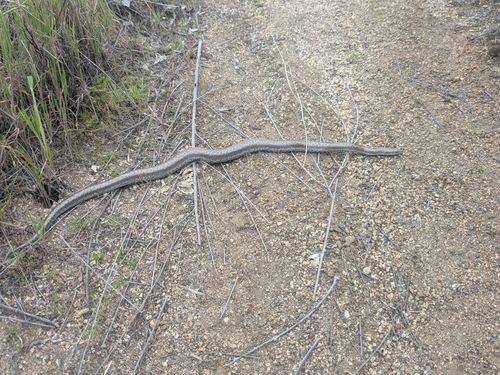
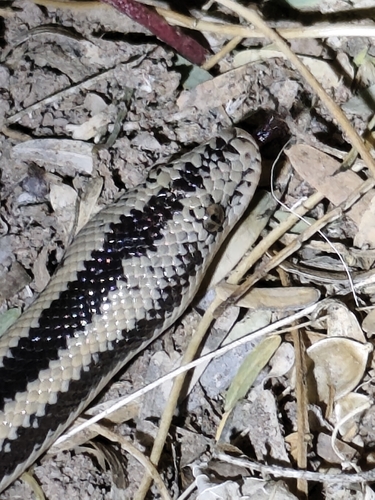
Rosy boas live in the arid and semi-arid country of the American Southwest and adjacent northwestern Mexico, including parts of California, Arizona, and Baja California. They favor rocky deserts, scrubland, canyons, and brushy slopes where boulders and crevices give them shelter from heat and predators. Recognizing one is usually straightforward: a thick, smooth-bodied snake rarely longer than about two to three feet, with small eyes, a blunt tail, and three lengthwise stripes running down a tan, gray, or cream background. The stripe color and crispness vary by population, which is part of why these snakes are popular with naturalists and keepers.
Rosy boas are nonvenomous and harmless to people. They are slow, docile, and rely on constriction rather than any toxin, so they pose no medical threat from a bite. They are mostly active at dusk and night, hunting small mammals, birds, and lizards that they seize and squeeze. Like other boas they bear live young rather than laying eggs, producing small litters. As with any wild animal, the responsible approach is to observe and not disturb them; wild snakes should be left alone in their habitat. If anyone is ever bitten by a snake they cannot confidently identify, treat it as a medical matter and contact US Poison Control at 1-800-222-1222 or local emergency services.
Lichanura belongs to the Boidae family (Boas). Powerful non-venomous constrictors that give birth to live young. Heavy body, smooth scales, and (in many species) heat-sensing pits along the lips. No rattle and no fangs.
Danger: Non-venomous and not dangerous to people. Large individuals are strong and can bite defensively, but they are not a venom threat.
All species (2)
Keep learning
- What Is a Snake? Anatomy and the BasicsA clear overview of what makes a snake a snake: limbless body plan, anatomy, evolution from lizards, species diversity, and why they are ectothermic.
- How Snakes Move, Hunt, and EatHow snakes move without legs, hunt as ambushers or active foragers, kill by constriction or venom, and swallow prey wider than their head.
- What Do Snakes Eat?All snakes are carnivores. Learn what snakes eat, how diet changes with size and age, how often they feed, and how they hunt and swallow prey.
- Venomous vs Nonvenomous: How to Tell the DifferenceThe folk rules for telling venomous snakes apart, where each one fails, and why location-based identification beats guessing by sight.