
Colubridae
Baron's Green Racer
HarmlessPhilodryas baroni

The Baron's Green Racer (Philodryas baroni) is a rear-fanged, mildly venomous snake in the Colubridae family, recorded in 6 countries.
- Family
- Colubridae
About the Baron's Green Racer
Philodryas baroni, common name Baron's green racer, is a species of rear-fanged venomous snake in the family Colubridae. The species is endemic to South America.
Etymology
The Latin specific name, baroni, honors Manuel Barón Morlat, who collected the first specimens.
Description
P. baroni can reach a total length (including tail) of about 150–180 centimetres (59–71 in).
The males are smaller than the females. The length of the tail is about 30% of the total body length. This species is the longest known in the genus Philodryas. The head is small and elongated, with an extension of the rostral scale, forming a small flexible nasal protuberance more developed in males. The coloration of the body is rather variable. Usually it is green, but there are found specimens tending to blue or brown. The pattern can be uniform or with black longitudinal stripes on the back and on the sides, on the anterior third of the body. The ventral area under the black lateral lines can be white or yellowish-white, sometimes with shades of green or blue.
Behavior
P. baroni is a strictly arboreal snake, with an intense activity during the day. It is generally non-aggressive. If it is frightened, it emits a foul-smelling substance from the cloaca.
Diet
P. baroni feeds on small rodents, small lizards, birds, and amphibians (such as arboreal frogs). Cannibalism of immature individuals by larger members of the species has also been reported.
Venom
P. baroni is opisthoglyphous, i.e., equipped with rear fangs. It is venomous and should be treated with caution. A recent characterization of the venom of this species has shown that it has proteolytic activity, being able to inhibit platelet aggregation induced by collagen and thrombin formation. An intradermal injection in mice results in hemorrhage. When injected by the intramuscular route, it induces local effects such as hemorrhage, myonecrosis, edema and leukocyte infiltration, with a minimum hemorrhagic dose of 13.9 μg. Therefore, P. baroni must be considered dangerous to the human.
Geographic range
P. baroni can be found in Argentina, Bolivia, and Paraguay.
Habitat
P. baroni lives in forests and savannah woodlands.
Reproduction
P. baroni is oviparous.
Adapted from Wikipedia, available under CC BY-SA.
Frequently asked: Baron's Green Racer
- Is the Baron's Green Racer venomous?
- The Baron's Green Racer (Philodryas baroni) is rear-fanged and only mildly venomous. It is not considered dangerous to humans (its venom is weak and its fangs sit at the back of the mouth) but a bite can cause local swelling or irritation, so it should not be handled.
- Is the Baron's Green Racer poisonous?
- Snakes are venomous, not poisonous. "Poisonous" means harmful to eat or touch; "venomous" means injecting toxins through a bite. The Baron's Green Racer is neither poisonous nor venomous.
- Is the Baron's Green Racer dangerous?
- The Baron's Green Racer is not dangerous to humans. It has no medically significant venom and bites only defensively if cornered or handled.
- Where does the Baron's Green Racer live?
- The Baron's Green Racer has verified records in 6 countries, including Argentina, Paraguay, Brazil. See the distribution section below for its full range.
- What does the Baron's Green Racer eat?
- P. baroni feeds on small rodents, small lizards, birds, and amphibians (such as arboreal frogs). Cannibalism of immature individuals by larger members of the species has also been reported.
- Why is it called the Baron's Green Racer?
- The Latin specific name, baroni, honors Manuel Barón Morlat, who collected the first specimens.
Where it is found
More Colubridae snakes
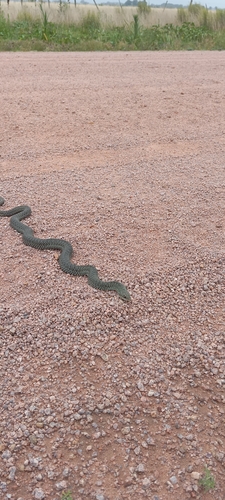 Patagonian RacerPhilodryas patagoniensis
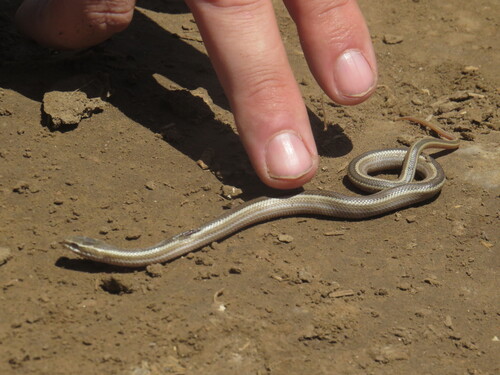 Chilean Green RacerPhilodryas chamissonis
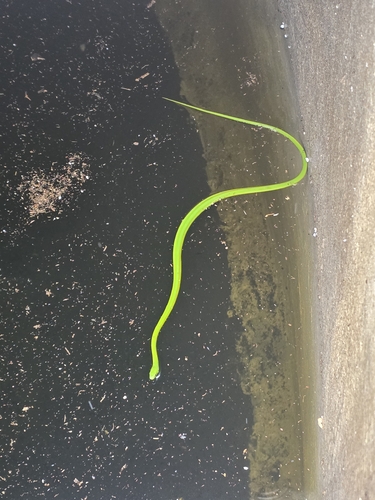 Lichtenstein's Green RacerPhilodryas olfersii
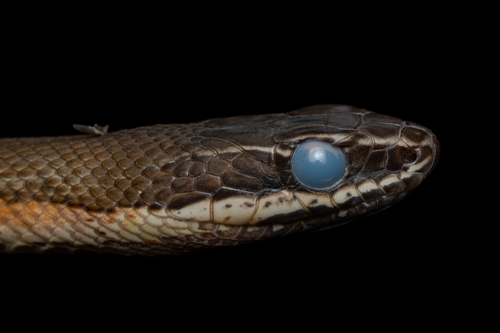 Paraguay Green RacerPhilodryas nattereri
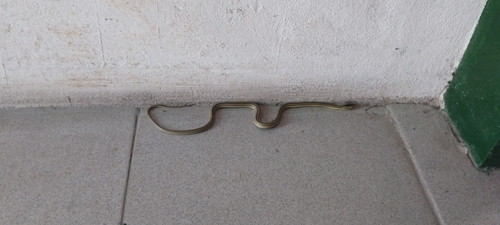 Mousehole SnakePhilodryas trilineata
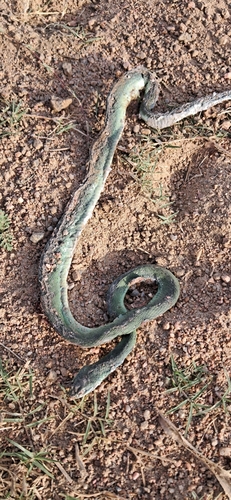 Brazilian Green RacerPhilodryas aestiva
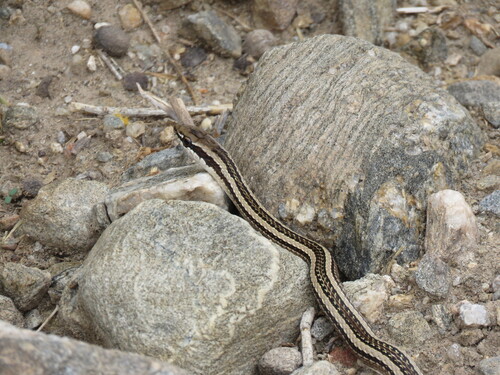 Günther's Green RacerPhilodryas psammophidea
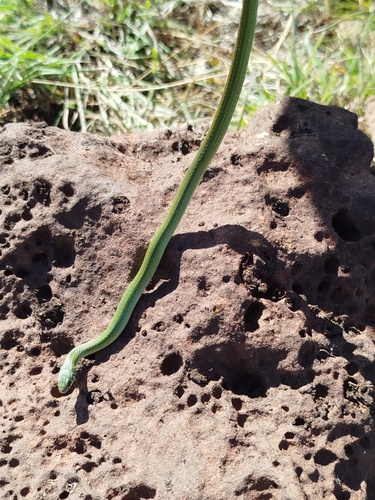 Scorpion SnakePhilodryas agassizii
Classification
How scientists group this snake, from the broadest category down to the exact species. Each step narrows to its closest relatives.
- OrderThe broad group of scaled reptiles: all snakes and lizards
- Squamata
- FamilyA group of related snakes that share key traits
- Colubridae
- GenusA close-knit group of very similar species
- Philodryas
- SpeciesThis exact snake, named in the two-part scientific name
- Philodryas baroni
Keep learning
- What to Do If You Find a SnakeFound a snake at home or on a trail? Here is how to stay calm, give it space, identify it safely, and know when to call a professional.
- Venomous vs Nonvenomous: How to Tell the DifferenceThe folk rules for telling venomous snakes apart, where each one fails, and why location-based identification beats guessing by sight.
- What Is a Snake? Anatomy and the BasicsA clear overview of what makes a snake a snake: limbless body plan, anatomy, evolution from lizards, species diversity, and why they are ectothermic.
- How to Keep Snakes Out of Your Yard and HomeA practical guide to keeping snakes out of your yard and home using habitat changes that work, plus what to skip and what to do if one shows up.
Distribution from GBIF & iNaturalist. Venom status per CDC. Background: Wikipedia. Informational only. Never handle a snake to identify it.