
Colubridae
Western Leaf-nosed Snake
HarmlessPhyllorhynchus decurtatus
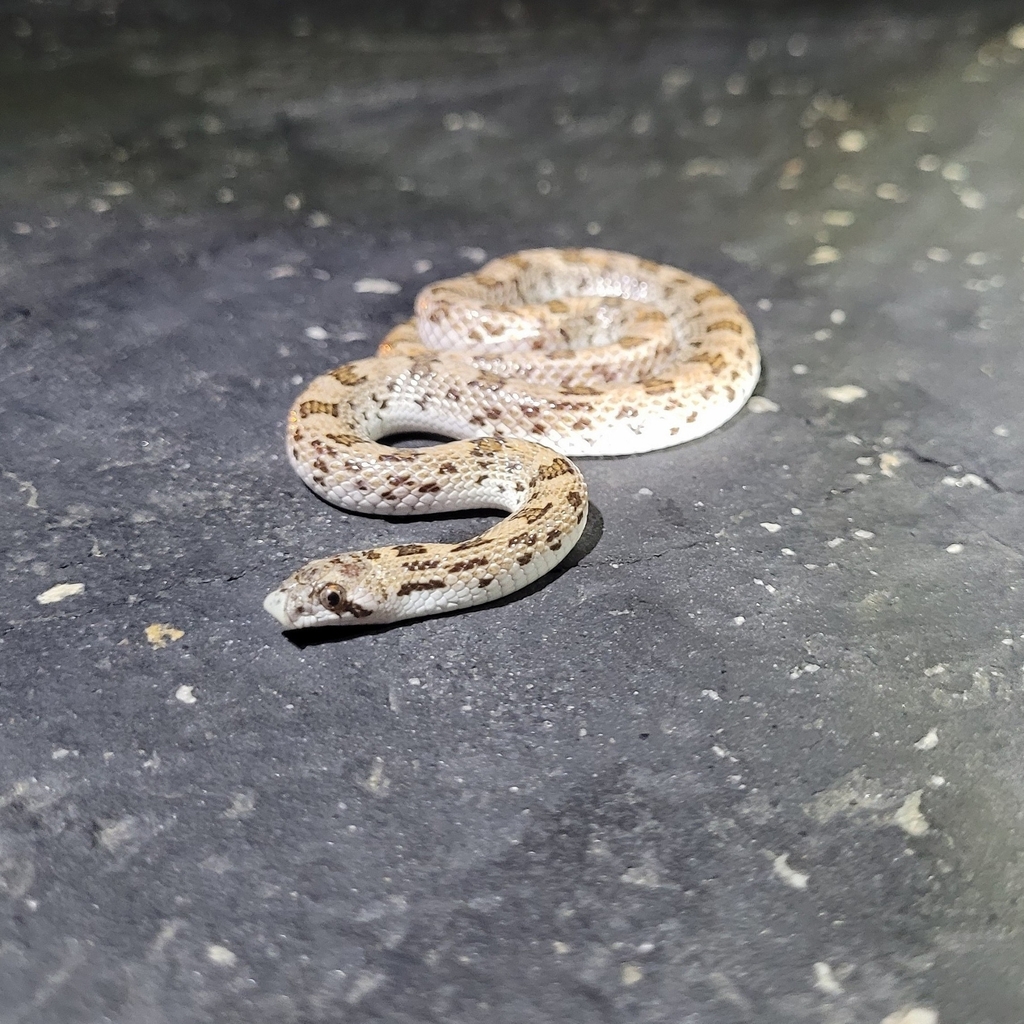
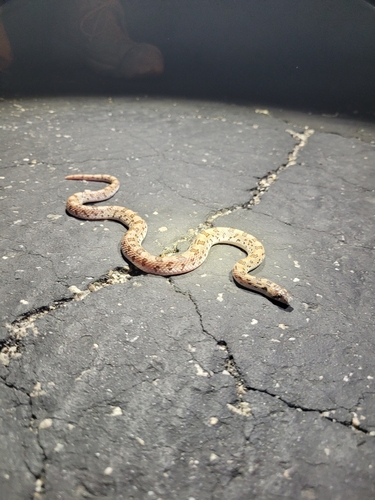
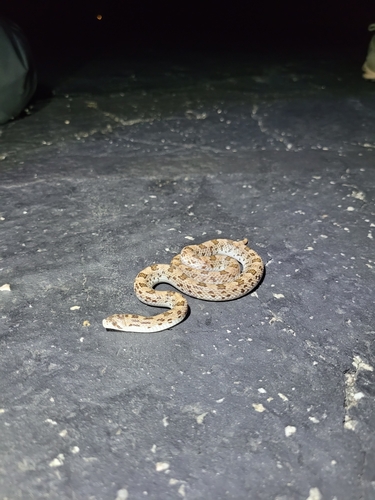
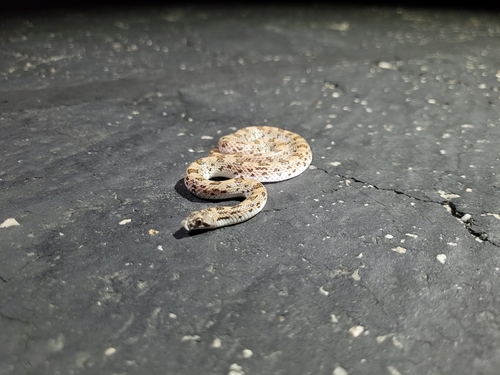
4 photographs of the Western Leaf-nosed Snake. © Guillermo Roque.
The Western Leaf-nosed Snake (Phyllorhynchus decurtatus) is a non-venomous snake in the Colubridae family, recorded in 2 countries.
- Family
- Colubridae
About the Western Leaf-nosed Snake
Phyllorhynchus decurtatus, the spotted leafnose snake, is a species of snake in the family Colubridae. The snake is found in the United States and Mexico.
Description
Phyllorhynchus decurtatus is a small snake ranging from around 150–450 mm (5.9–17.7 in) in length. The dorsal half of its body varies in color but is generally light brown, with some individuals appearing more cream, pink, or grey colored. Its patterning consists of dark, irregular blotches down the length of its back, and the amount of spots varies between individuals and populations. Markings come in various shades of brown, and are darker along their borders. The amount of blotches on the body range from 18 to 60, and the amount on the tail ranges from 2-15. This species has a dark band running across both of the eyes, which have vertical pupils. It also has a large rostral scale, hence the common name leafnose snake.
Distribution and habitat
The range of Phyllorhynchus decurtatus extends throughout the southwestern United States in the states of California, Nevada, and Arizona, with a single specimen having been spotted in southern Utah. In Mexico it can be found along the coastline of the Gulf of California. Its range overlaps with much of the Sonoran and Mojave deserts.
This species can be found in desert flatlands dominated by the creosote bush.
Behavior
Phyllorhynchus decurtatus is a nocturnal snake, and can be easily spotted near roadways after dark. During the day it has been known to hide underneath rocks or in the burrows of other animals. This species is most active at temperatures of 28–30 °C (82–86 °F), and is unable to survive blood temperatures of 39.3 °C (102.7 °F). This species is reported to be non-aggressive and tends to flee or mock-strike when approached. It also has the ability to secrete musk as a deterrent, and often does so when captured.
Diet
The diet of P. decurtatus is believed to consist predominantly of lizard eggs, with the tails of banded geckos making up a small portion of their diet.
Predators
Phyllorhynchus decurtatus are preyed upon by other snakes, they are also frequently killed by vehicle strikes.
Reproduction
The reproductive period takes place from June to July, although specific breeding behaviors are unknown. During this period, it is suspected that males will travel in search of females, as they are often spotted more abundantly during that time. Female snakes generally lay a small clutch of three to four eggs. Hatchlings are patterned the same as adults.
Subspecies
Phyllorhynchus decurtatus has five recognized subspecies:
The Baja California leaf-nosed snake, P. d. decurtatus (Cope, 1868).
The Monserrate leaf-nosed snake, P. d. arenicola (Savage and Cliff, 1954).
Adapted from Wikipedia, available under CC BY-SA.
Frequently asked: Western Leaf-nosed Snake
- Is the Western Leaf-nosed Snake venomous?
- No. The Western Leaf-nosed Snake (Phyllorhynchus decurtatus) is non-venomous and is not considered dangerous to humans. Like most snakes, it will retreat rather than bite when given the chance.
- Is the Western Leaf-nosed Snake poisonous?
- Snakes are venomous, not poisonous. "Poisonous" means harmful to eat or touch; "venomous" means injecting toxins through a bite. The Western Leaf-nosed Snake is neither poisonous nor venomous.
- Is the Western Leaf-nosed Snake dangerous?
- The Western Leaf-nosed Snake is not dangerous to humans. It has no medically significant venom and bites only defensively if cornered or handled.
- Where does the Western Leaf-nosed Snake live?
- The Western Leaf-nosed Snake has verified records in 2 countries, including United States of America, Mexico. See the distribution section below for its full range.
- What does the Western Leaf-nosed Snake eat?
- The diet of P. decurtatus is believed to consist predominantly of lizard eggs, with the tails of banded geckos making up a small portion of their diet.
Where it is found
By U.S. state
More Colubridae snakes
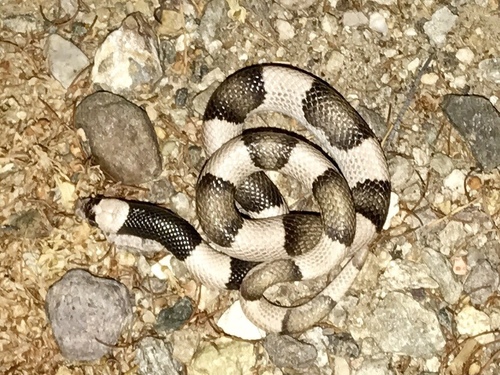 Saddled Leafnose SnakePhyllorhynchus browni
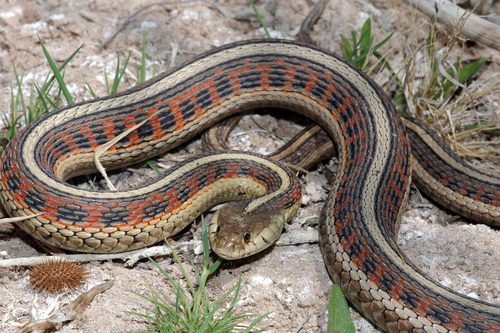 Common Garter SnakeThamnophis sirtalis
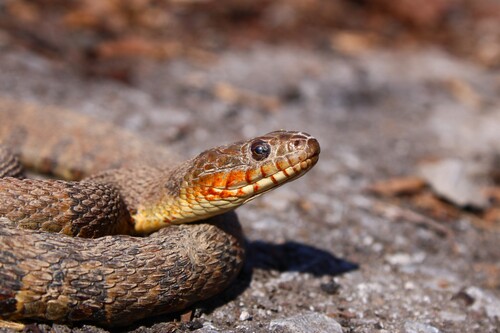 Common WatersnakeNerodia sipedon
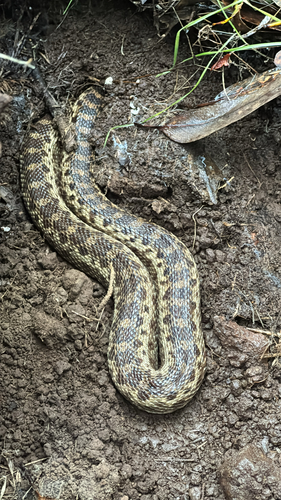 Gopher SnakePituophis catenifer
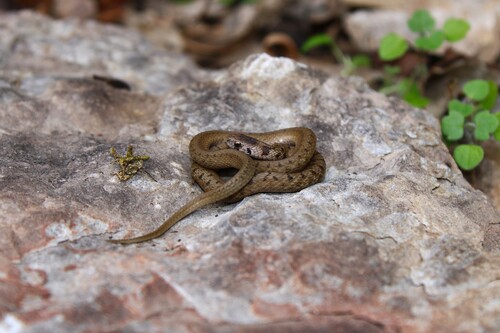 DeKay's BrownsnakeStoreria dekayi
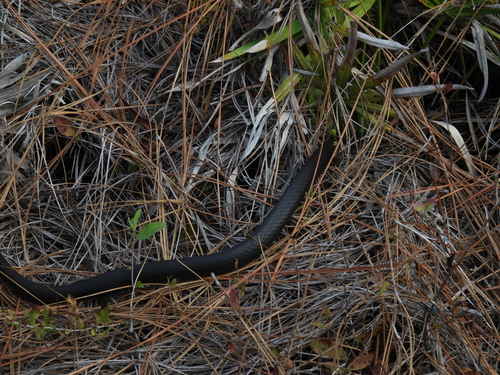 North American RacerColuber constrictor
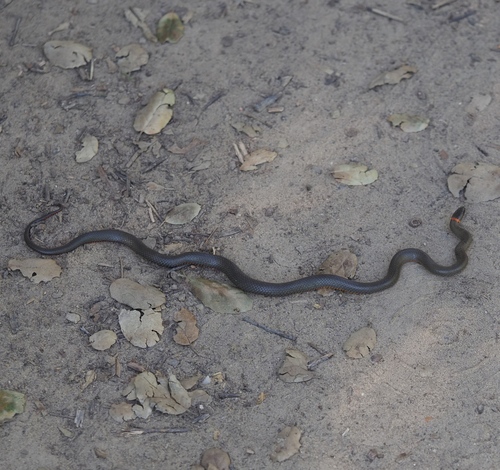 Ring-necked SnakeDiadophis punctatus
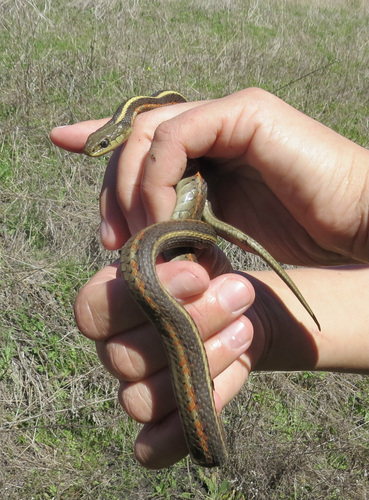 Western Terrestrial Garter SnakeThamnophis elegans
Classification
How scientists group this snake, from the broadest category down to the exact species. Each step narrows to its closest relatives.
- OrderThe broad group of scaled reptiles: all snakes and lizards
- Squamata
- FamilyA group of related snakes that share key traits
- Colubridae
- GenusA close-knit group of very similar species
- Phyllorhynchus
- SpeciesThis exact snake, named in the two-part scientific name
- Phyllorhynchus decurtatus
Keep learning
- What to Do If You Find a SnakeFound a snake at home or on a trail? Here is how to stay calm, give it space, identify it safely, and know when to call a professional.
- Venomous vs Nonvenomous: How to Tell the DifferenceThe folk rules for telling venomous snakes apart, where each one fails, and why location-based identification beats guessing by sight.
- What Is a Snake? Anatomy and the BasicsA clear overview of what makes a snake a snake: limbless body plan, anatomy, evolution from lizards, species diversity, and why they are ectothermic.
- How to Keep Snakes Out of Your Yard and HomeA practical guide to keeping snakes out of your yard and home using habitat changes that work, plus what to skip and what to do if one shows up.
Distribution from GBIF & iNaturalist. Venom status per CDC. Background: Wikipedia. Informational only. Never handle a snake to identify it.