
Genus · Colubridae
Types of leaf-nosed snakes
2 species make up the genus Phyllorhynchus, the snakes commonly called leaf-nosed snakes. None are considered dangerous to humans.
About leaf-nosed snakes
Small, secretive desert snakes named for the enlarged scale that caps the snout like a leaf.
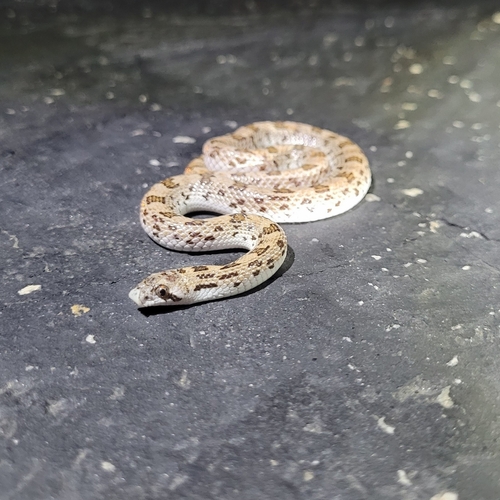
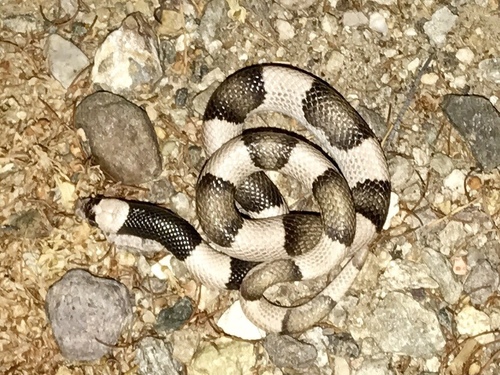
Phyllorhynchus is a small genus of colubrid snakes native to the arid lands of the American Southwest and northwestern Mexico. The genus holds two species: the Western Leaf-nosed Snake (Phyllorhynchus decurtatus) and the Saddled Leaf-nosed Snake (Phyllorhynchus browni). Both are members of the large, mostly harmless family Colubridae. The name comes from the distinctive enlarged, leaf-shaped rostral scale that covers the tip of the snout, the feature that sets these snakes apart from their relatives at a glance.
These are small snakes, generally well under two feet long, with a blunt leaf-capped snout, vertical cat-like pupils, and a pale ground color marked by darker brown or gray blotches or saddles along the back. They live in the Sonoran and Mojave deserts and adjacent dry scrub, favoring sandy or gravelly soils where they spend the day hidden underground or under cover. They are nocturnal and are most often seen crossing desert roads on warm nights. The enlarged rostral scale is thought to help with burrowing and pushing through loose soil.
Leaf-nosed snakes are technically rear-fanged colubrids, but they are harmless to people. Their mild saliva is adapted to subduing small prey such as lizards and lizard eggs, not defending against large animals, and they have no medically significant venom. They are non-aggressive and rely on hiding rather than biting. As with any wild snake, the sensible practice is to observe and not handle it. If anyone is ever bitten by a snake they cannot confidently identify, treat it as a medical matter and contact US Poison Control at 1-800-222-1222 or local emergency services. These snakes lay small clutches of eggs and feed largely on small lizards and their eggs, filling a quiet predator role in the desert night.
Phyllorhynchus belongs to the Colubridae family (Colubrids). The largest snake family, and the one most snakes you meet belong to. Typically round pupils, a head only slightly wider than the neck, and no heat-sensing facial pit or rattle. Scales may be smooth and glossy or keeled and matte depending on the species.
Danger: Almost all colubrids are harmless. A small number are rear-fanged with medically significant venom, the boomslang and the twig (vine) snakes of Africa being the dangerous exceptions. Most colubrids will flee or bluff rather than bite.
All species (2)
Keep learning
- What Is a Snake? Anatomy and the BasicsA clear overview of what makes a snake a snake: limbless body plan, anatomy, evolution from lizards, species diversity, and why they are ectothermic.
- How Snakes Move, Hunt, and EatHow snakes move without legs, hunt as ambushers or active foragers, kill by constriction or venom, and swallow prey wider than their head.
- What Do Snakes Eat?All snakes are carnivores. Learn what snakes eat, how diet changes with size and age, how often they feed, and how they hunt and swallow prey.
- Venomous vs Nonvenomous: How to Tell the DifferenceThe folk rules for telling venomous snakes apart, where each one fails, and why location-based identification beats guessing by sight.