
Colubridae
Striped Keelback
HarmlessXenochrophis vittatus
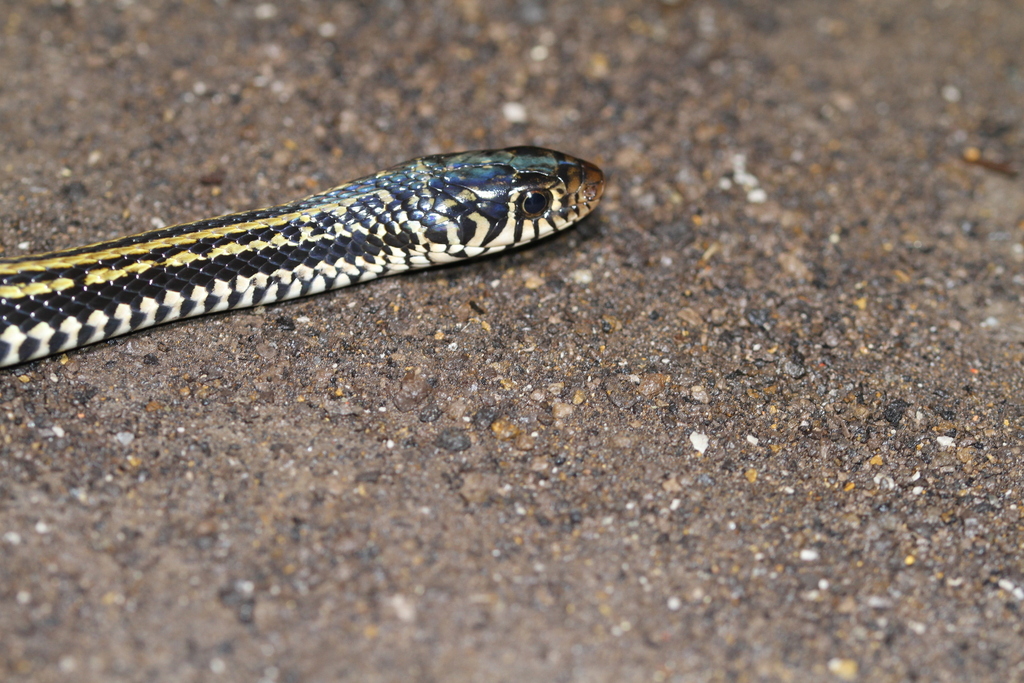
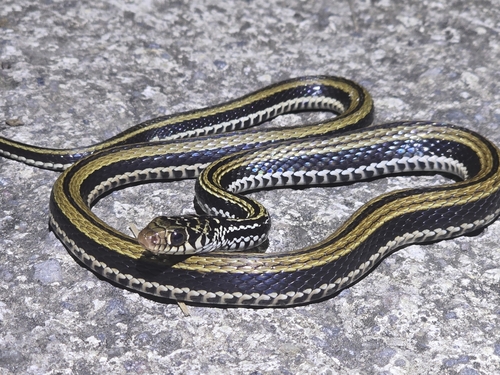
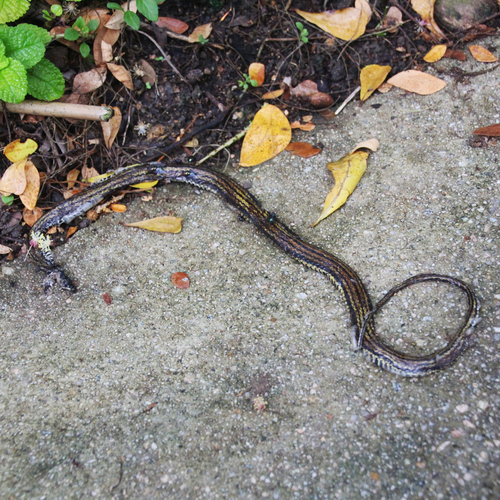
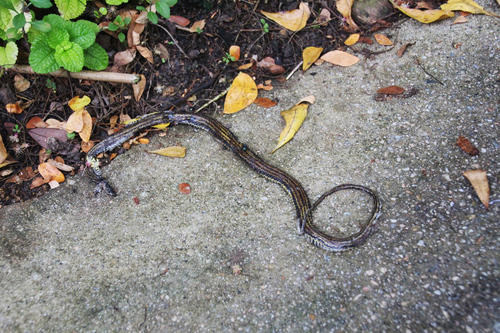
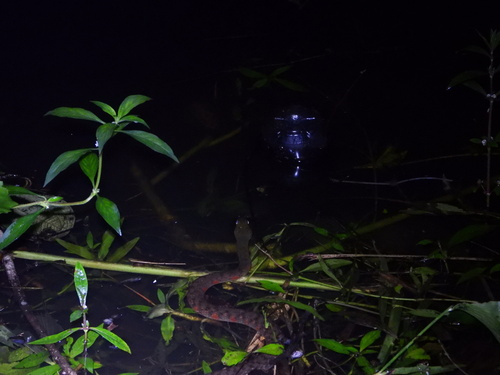
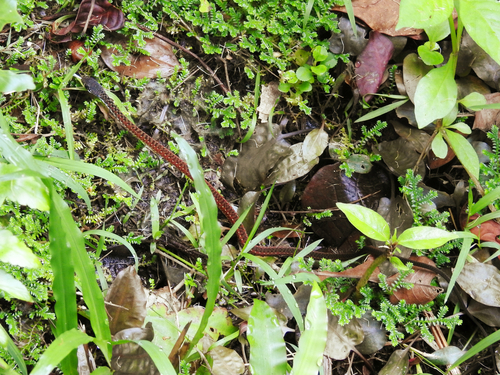
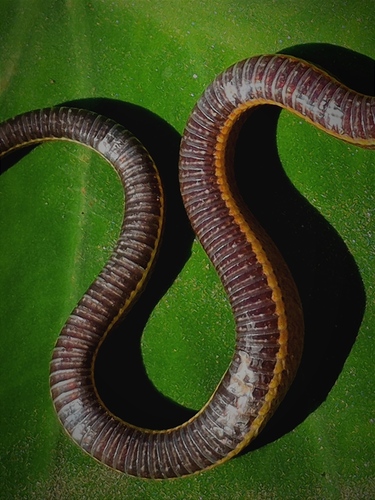
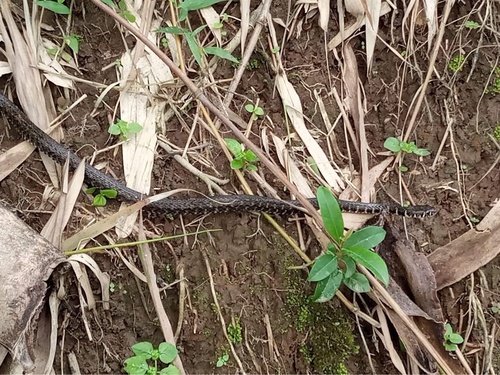
4 photographs of the Striped Keelback. © Samuel GUIRAUDOU.
The Striped Keelback (Xenochrophis vittatus) is a non-venomous snake in the Colubridae family, recorded in 6 countries.
- Family
- Colubridae
About the Striped Keelback
The striped keelback (Xenochrophis vittatus) is a species of colubrid snake native to Indonesia. It has also been introduced to Singapore and Puerto Rico.
Description
The striped keelback is a medium sized snake, with females growing to about 70 cm in length and males reaching 50 cm. They are noticeably thin and are colored bronze with black stripes running down the top and sides of the body. The chin and ventral areas of this snake is barred black and white.
Distribution
The native range of this snake is the western parts of Indonesia, mostly Sumatra and Java. Boulenger reported this species in Sulawesi, but as this was in 1897 and no other records have been made it is likely this snake is not found there.
They have been introduced to Singapore, with the first record in July 1982 at Pandan Gardens. It was first recorded in western Singapore, but has since spread to the eastern parts of the island where it can be found around beaches and mangrove swamps. The white-throated kingfisher has been observed to eat these snakes in Singapore.
This species was first documented from Puerto Rico in 2011 when two adult snakes were found under a steel panel in Toa Baja. It has since been sighted many times in the northeastern part of the island in lowland grassy fields and wetlands. Several specimens had their stomachs examined and were found to have eaten coquis and white-lipped frogs.
Ecology
This is a diurnal snake that is found in and around aquatic habitats such as ponds, wetlands, and paddies. They also live in open habitats such as fields and meadows. The striped keelback is rear-fanged and mildly venomous, but is considered harmless to humans.
Their diet consists of small animals such as fish, amphibians, and lizards. It is oviparous and lays 5 to 12 eggs in a clutch. Hatchlings are about 13 cm in length. They live for approximately 10 years.
Adapted from Wikipedia, available under CC BY-SA.
Frequently asked: Striped Keelback
- Is the Striped Keelback venomous?
- No. The Striped Keelback (Xenochrophis vittatus) is non-venomous and is not considered dangerous to humans. Like most snakes, it will retreat rather than bite when given the chance.
- Is the Striped Keelback poisonous?
- Snakes are venomous, not poisonous. "Poisonous" means harmful to eat or touch; "venomous" means injecting toxins through a bite. The Striped Keelback is neither poisonous nor venomous.
- Is the Striped Keelback dangerous?
- The Striped Keelback is not dangerous to humans. It has no medically significant venom and bites only defensively if cornered or handled.
- Where does the Striped Keelback live?
- The Striped Keelback has verified records in 6 countries, including Indonesia, Singapore, Puerto Rico. See the distribution section below for its full range.
Where it is found
By U.S. state
More Colubridae snakes
 Triangle KeelbackXenochrophis trianguligerus
 Spotted KeelbackXenochrophis maculatus
 Painted KeelbackXenochrophis cerasogaster
 Burmese white-barred keelbackXenochrophis bellulus
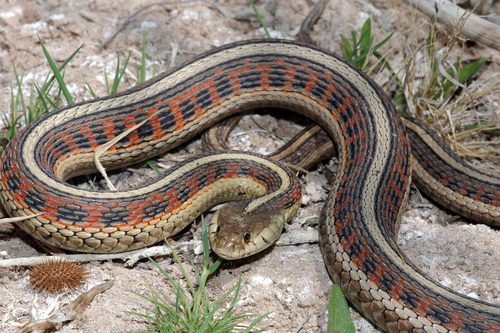 Common Garter SnakeThamnophis sirtalis
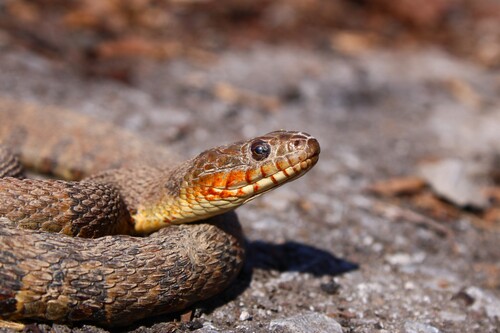 Common WatersnakeNerodia sipedon
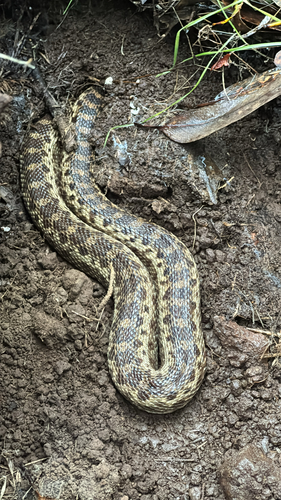 Gopher SnakePituophis catenifer
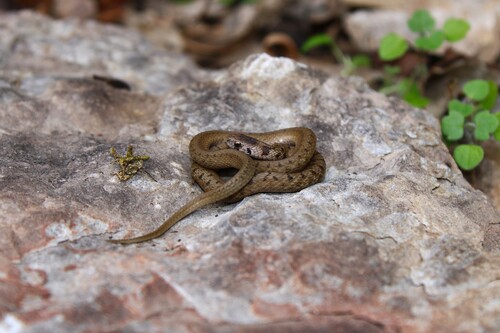 DeKay's BrownsnakeStoreria dekayi
Classification
How scientists group this snake, from the broadest category down to the exact species. Each step narrows to its closest relatives.
- OrderThe broad group of scaled reptiles: all snakes and lizards
- Squamata
- FamilyA group of related snakes that share key traits
- Colubridae
- GenusA close-knit group of very similar species
- Xenochrophis
- SpeciesThis exact snake, named in the two-part scientific name
- Xenochrophis vittatus
Keep learning
- What to Do If You Find a SnakeFound a snake at home or on a trail? Here is how to stay calm, give it space, identify it safely, and know when to call a professional.
- Venomous vs Nonvenomous: How to Tell the DifferenceThe folk rules for telling venomous snakes apart, where each one fails, and why location-based identification beats guessing by sight.
- What Is a Snake? Anatomy and the BasicsA clear overview of what makes a snake a snake: limbless body plan, anatomy, evolution from lizards, species diversity, and why they are ectothermic.
- How to Keep Snakes Out of Your Yard and HomeA practical guide to keeping snakes out of your yard and home using habitat changes that work, plus what to skip and what to do if one shows up.
Distribution from GBIF & iNaturalist. Venom status per CDC. Background: Wikipedia. Informational only. Never handle a snake to identify it.