
Genus · Colubridae
Types of keelbacks
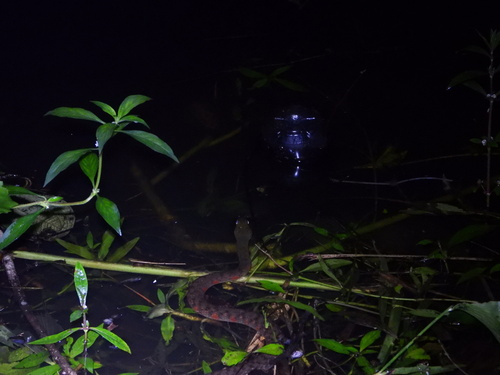
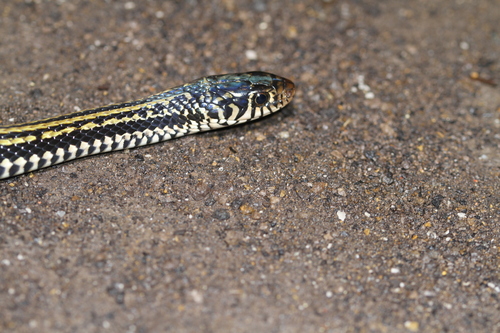
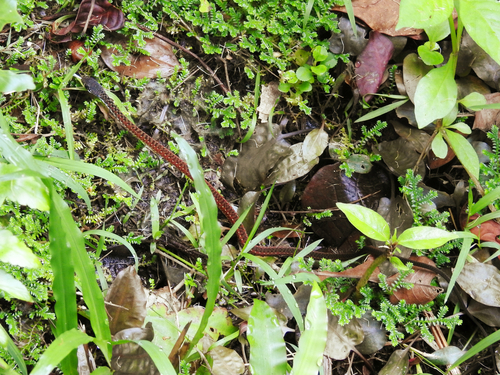
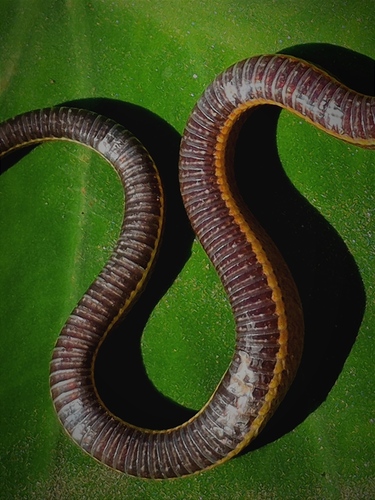
5 species make up the genus Xenochrophis, the snakes commonly called keelbacks. None are considered dangerous to humans.
About Asian keelbacks
Asian keelbacks are semi-aquatic water snakes found near ponds, paddies, and slow streams across South and Southeast Asia.
Xenochrophis is a genus of keelback snakes in the family Colubridae, part of the natricine group of water and grass snakes. The name keelback refers to the raised ridge, or keel, running down the center of many of the dorsal scales, which gives these snakes a slightly rough, matte appearance rather than a glossy one. They are closely tied to fresh water and are among the most commonly encountered snakes in wetland and farmland habitats throughout their range.
The genus is centered on South and Southeast Asia, including the Indian subcontinent and mainland Southeast Asia, with members reaching into nearby islands. Typical habitat is shallow, slow, or still fresh water: rice paddies, irrigation ditches, ponds, marshes, lake margins, and the edges of slow rivers. Because these wet, productive habitats often sit right alongside villages and farms, people cross paths with keelbacks frequently, and the snakes adapt well to human-modified landscapes.
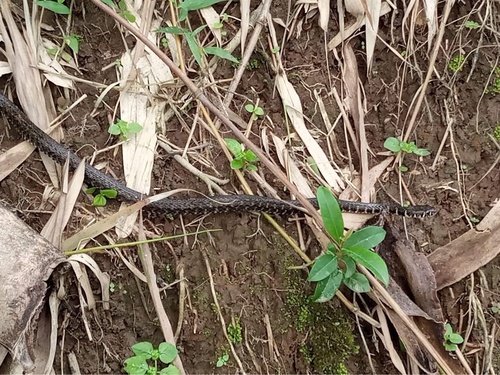
In general terms, members are slender to moderately built snakes, usually under about one meter in length, with the keeled dorsal scales that name the group. Color and pattern vary by species and can include stripes, spots, or a checkered look, and many show contrasting markings on the lips or neck. Because pattern is so variable and overlaps with other harmless water snakes, exact species identification is best confirmed by an experienced herpetologist or a regional field guide rather than color alone.
These are not front-fanged venomous snakes and are not considered dangerous to humans. As with many colubrids, some natricine snakes have Duvernoy's gland secretions and can be loosely described as mildly rear-fanged, but Xenochrophis keelbacks are regarded as harmless in practical terms, with no medically significant venom. They are non-constricting hunters that rely on speed and on simply swallowing prey. Even so, no wild snake should be handled, and a bite from any animal should be washed and watched for infection. If you are ever bitten and unsure of the snake's identity, or symptoms develop, contact emergency services or US Poison Control at 1-800-222-1222 or your local equivalent.
Ecologically, keelbacks are tied to the water they live near. Their diet is dominated by frogs, toads, tadpoles, and fish, with some taking other small aquatic prey. They are active foragers, often hunting at the water's edge by day or at dusk, and they swim readily and dive to escape threats. When cornered they may flatten the neck, hiss, or strike defensively before fleeing. Like other natricines, they are egg-laying, with females depositing clutches in moist, sheltered ground, and they play a useful role in wetland food webs as both predator and prey.
Xenochrophis belongs to the Colubridae family (Colubrids). The largest snake family, and the one most snakes you meet belong to. Typically round pupils, a head only slightly wider than the neck, and no heat-sensing facial pit or rattle. Scales may be smooth and glossy or keeled and matte depending on the species.
Danger: Almost all colubrids are harmless. A small number are rear-fanged with medically significant venom, the boomslang and the twig (vine) snakes of Africa being the dangerous exceptions. Most colubrids will flee or bluff rather than bite.
All species (5)
Keep learning
- What Is a Snake? Anatomy and the BasicsA clear overview of what makes a snake a snake: limbless body plan, anatomy, evolution from lizards, species diversity, and why they are ectothermic.
- How Snakes Move, Hunt, and EatHow snakes move without legs, hunt as ambushers or active foragers, kill by constriction or venom, and swallow prey wider than their head.
- What Do Snakes Eat?All snakes are carnivores. Learn what snakes eat, how diet changes with size and age, how often they feed, and how they hunt and swallow prey.
- Venomous vs Nonvenomous: How to Tell the DifferenceThe folk rules for telling venomous snakes apart, where each one fails, and why location-based identification beats guessing by sight.