
Earthsnake
Smooth Earthsnake
HarmlessVirginia valeriae
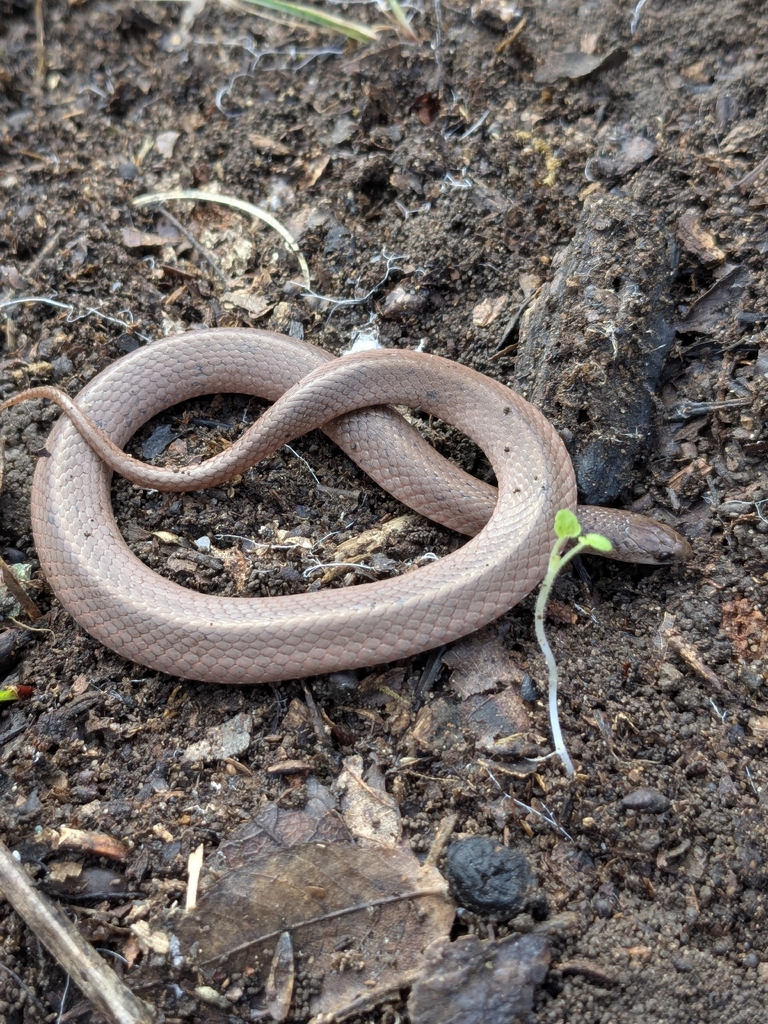
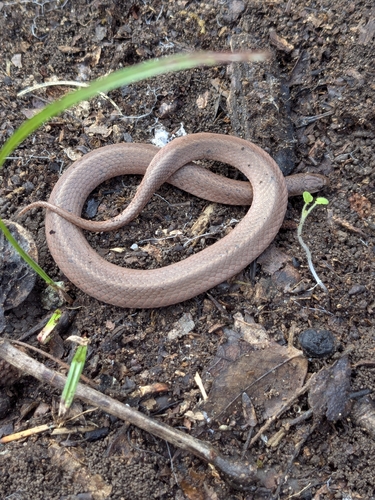
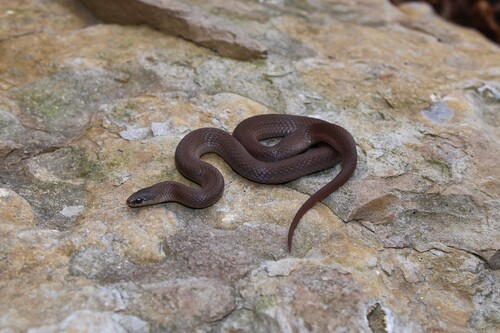
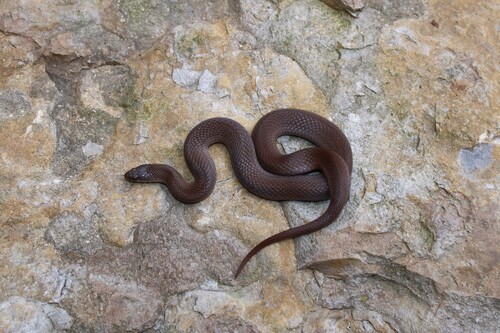
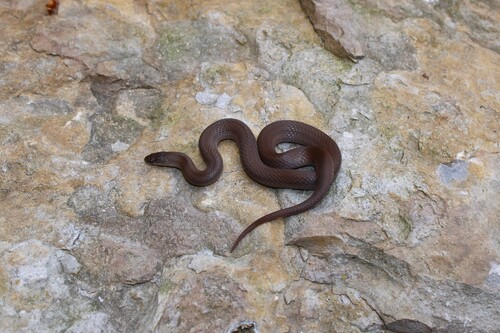
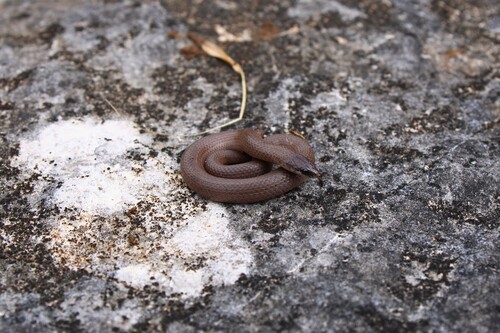
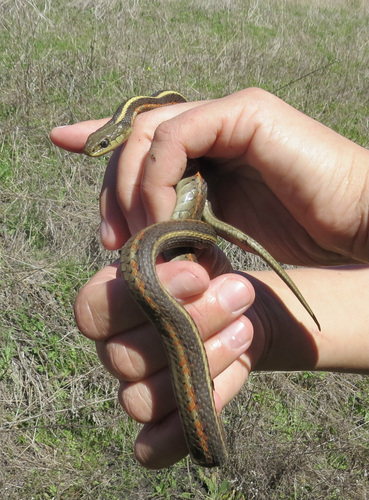
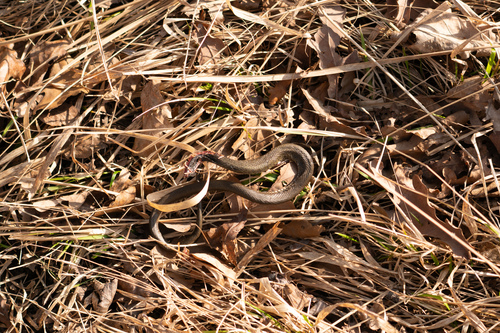
6 photographs of the Smooth Earthsnake. © Briggs Armstrong.
The Smooth Earthsnake (Virginia valeriae) is a non-venomous snake in the Colubridae family, recorded in 2 countries.
- Also called
- Earthsnake
- Family
- Colubridae
- Size
- Tiny, 7–13 in.
- Habitat
- Forest leaf litter and loose soil.
- Behavior
- Secretive burrowers that eat earthworms.
- Identify
- Small, plain brown, with smooth or faintly keeled scales.
About the Smooth Earthsnake
The smooth earth snake (Virginia valeriae) is a species of nonvenomous natricine colubrid snake native to the eastern half of the United States.
Etymology
The specific name or epithet, valeriae, is in honor of Valeria Biddle Blaney (1828–1900), who collected the first specimen in Kent County, Maryland, and was a first cousin of Spencer Fullerton Baird.
Geographic range
The smooth earth snake is found from Texas and Iowa to New Jersey and Florida.
Description
The following is a description of the scalation of Virginia valeriae. Rostral nearly as deep as broad, visible from above; internasals much shorter than the prefrontals; frontal longer than broad, shorter than the parietals; loreal one and a half to two and a half times as long as deep; two or three postoculars; temporals 1+2; six upper labials, third and fourth entering the eye; four lower labials in contact with the anterior chin shields, which are as long as or shorter than the posterior. Dorsal scales in 15 or 17 rows. Anal divided. Ventrals 111–135; subcaudals 24–37.
The following description of coloration of a live specimen (not in alcohol) uses Robert Ridgway's Color Standards and Color Nomenclature (1912). Dorsally V. valeriae is benzo brown, deep brownish drab, mars brown, or light brownish drab. The first row of dorsal scales is colored like the adjacent ventrals, which are light vinaceous-fawn, pale vinaceous-fawn, pale grayish vinaceous, or pale vinaceous-pink. The top of the head is hair brown or like the dorsum, with many dark spots on the plates. The upper labials are ecru-drab or lighter, some with drab-gray spots. There is a small black ring around the eye. The ventral surface of the head is white.
Sometimes a faint median light line is present. Also, there may be tiny black spots on the back and sides, especially in the nominate race (Virginia valeriae valeriae).
Adults are usually 18–25 cm (7.1–9.8 in) in total length (including tail); record 33.7 cm (13+1⁄4 in).
Habitat
The smooth earth snake is a small, fossorial species which spends most of its time buried in loose soil or leaf litter.
Diet
The smooth earth snake eats primarily earthworms and soft-bodied arthropods.
Behavior
Given its lack of sufficient defense mechanisms against larger animals, the smooth earth snake is generally not aggressive towards humans and is harmless if encountered. While it does have teeth, the size of the mouth and teeth make any strikes against humans superficial at worst. It may defecate as a defense mechanism to make itself less palatable to would-be predators. If necessary, it can be safely picked up by hand and relocated.
Subspecies
Including the nominotypical subspecies, three subspecies of Virginia valeriae are recognized as being valid. These subspecies have been considered full species.
Adapted from Wikipedia, available under CC BY-SA.
Frequently asked: Smooth Earthsnake
- Is the Smooth Earthsnake venomous?
- No. The Smooth Earthsnake (Virginia valeriae) is non-venomous and is not considered dangerous to humans. Like most snakes, it will retreat rather than bite when given the chance.
- Is the Smooth Earthsnake poisonous?
- Snakes are venomous, not poisonous. "Poisonous" means harmful to eat or touch; "venomous" means injecting toxins through a bite. The Smooth Earthsnake is neither poisonous nor venomous.
- Is the Smooth Earthsnake dangerous?
- The Smooth Earthsnake is not dangerous to humans. It has no medically significant venom and bites only defensively if cornered or handled.
- Where does the Smooth Earthsnake live?
- The Smooth Earthsnake has verified records in 2 countries, including United States of America, Mexico. See the distribution section below for its full range.
- How do I identify the Smooth Earthsnake?
- Small, plain brown, with smooth or faintly keeled scales.
- How big does the Smooth Earthsnake get?
- Tiny, 7–13 in.
- What does the Smooth Earthsnake eat?
- The smooth earth snake eats primarily earthworms and soft-bodied arthropods.
- Why is it called the Smooth Earthsnake?
- The specific name or epithet, valeriae, is in honor of Valeria Biddle Blaney (1828–1900), who collected the first specimen in Kent County, Maryland, and was a first cousin of Spencer Fullerton Baird.
Where it is found
More Colubridae snakes
Classification
How scientists group this snake, from the broadest category down to the exact species. Each step narrows to its closest relatives.
- OrderThe broad group of scaled reptiles: all snakes and lizards
- Squamata
- FamilyA group of related snakes that share key traits
- Colubridae
- GenusA close-knit group of very similar species
- Virginia
- SpeciesThis exact snake, named in the two-part scientific name
- Virginia valeriae
Keep learning
- What to Do If You Find a SnakeFound a snake at home or on a trail? Here is how to stay calm, give it space, identify it safely, and know when to call a professional.
- Venomous vs Nonvenomous: How to Tell the DifferenceThe folk rules for telling venomous snakes apart, where each one fails, and why location-based identification beats guessing by sight.
- What Is a Snake? Anatomy and the BasicsA clear overview of what makes a snake a snake: limbless body plan, anatomy, evolution from lizards, species diversity, and why they are ectothermic.
- How to Keep Snakes Out of Your Yard and HomeA practical guide to keeping snakes out of your yard and home using habitat changes that work, plus what to skip and what to do if one shows up.
Distribution from GBIF & iNaturalist. Venom status per CDC. Background: Wikipedia. Informational only. Never handle a snake to identify it.