
Genus · Colubridae
Virginia
The genus Virginia contains a single species. It is not considered dangerous to humans.
About earthsnakes
Small, secretive burrowers of the eastern United States that spend most of their lives hidden underground.
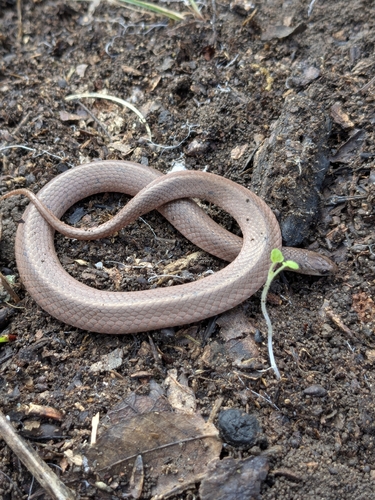
Virginia is a North American genus in the family Colubridae, the largest and most varied snake family. The genus holds a small number of species commonly called earthsnakes, including the Smooth Earthsnake represented in our database. These are diminutive, plain-colored snakes built for a life spent under leaf litter, logs, and loose soil rather than out in the open. They are part of the broad assemblage of harmless ground-dwelling colubrids native to the eastern and central United States.
Earthsnakes are easy to overlook. They are short and slender, usually well under a foot long, with smooth or weakly keeled scales, a narrow head barely distinct from the neck, and a uniform brown, gray, or reddish coloring with few or no markings. Their small eyes and pointed snouts suit a burrowing lifestyle. Typical habitats are moist woodlands, forest edges, and gardens where there is plenty of cover and soft ground to hide and forage in. Because they stay buried so much of the time, they are far more common than most people realize.
Members of Virginia are nonvenomous and harmless to people. They have no venom and are not dangerous; their tiny mouths and gentle nature mean they pose no threat. Their diet is centered on earthworms and other soft-bodied soil invertebrates, which they hunt in the underground spaces they favor. Like many small colubrids, they give birth to live young rather than laying eggs, and they are shy, nonaggressive animals that rely on hiding rather than biting. As a general rule, leave any wild snake alone and observe it from a distance, and if anyone is ever bitten by a snake they cannot confidently identify, contact emergency services or US Poison Control at 1-800-222-1222.
Virginia belongs to the Colubridae family (Colubrids). The largest snake family, and the one most snakes you meet belong to. Typically round pupils, a head only slightly wider than the neck, and no heat-sensing facial pit or rattle. Scales may be smooth and glossy or keeled and matte depending on the species.
Danger: Almost all colubrids are harmless. A small number are rear-fanged with medically significant venom, the boomslang and the twig (vine) snakes of Africa being the dangerous exceptions. Most colubrids will flee or bluff rather than bite.
All species (1)
Keep learning
- What Is a Snake? Anatomy and the BasicsA clear overview of what makes a snake a snake: limbless body plan, anatomy, evolution from lizards, species diversity, and why they are ectothermic.
- How Snakes Move, Hunt, and EatHow snakes move without legs, hunt as ambushers or active foragers, kill by constriction or venom, and swallow prey wider than their head.
- What Do Snakes Eat?All snakes are carnivores. Learn what snakes eat, how diet changes with size and age, how often they feed, and how they hunt and swallow prey.
- Venomous vs Nonvenomous: How to Tell the DifferenceThe folk rules for telling venomous snakes apart, where each one fails, and why location-based identification beats guessing by sight.