
Colubridae
Rough Earthsnake
HarmlessVirginia striatula
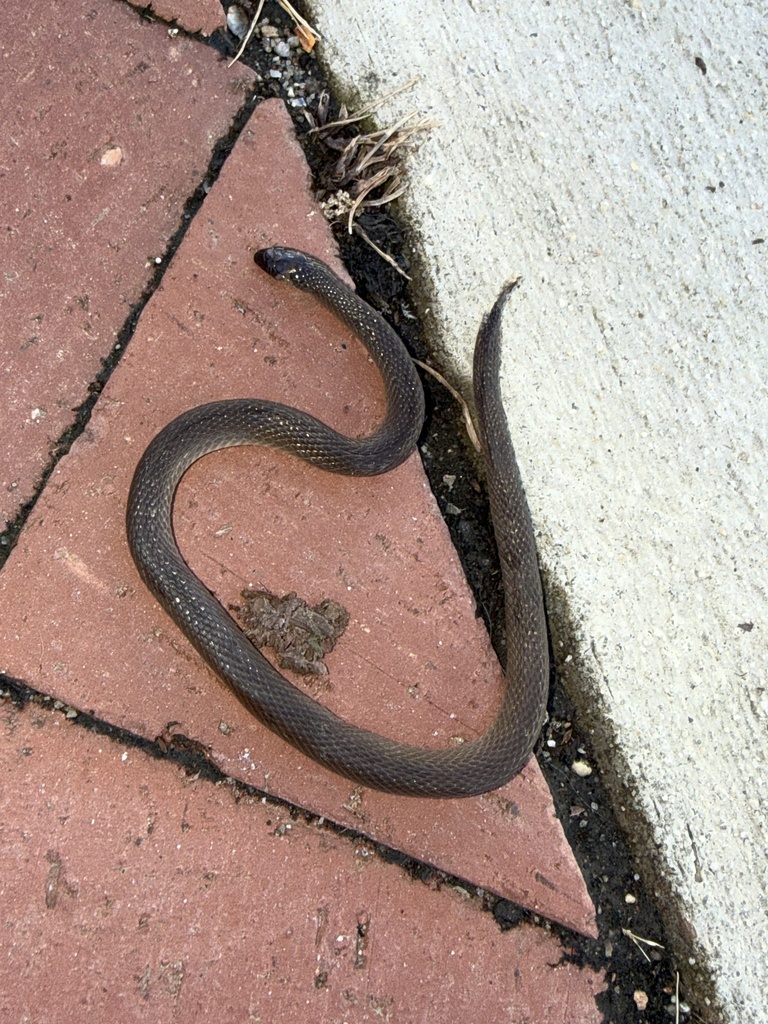
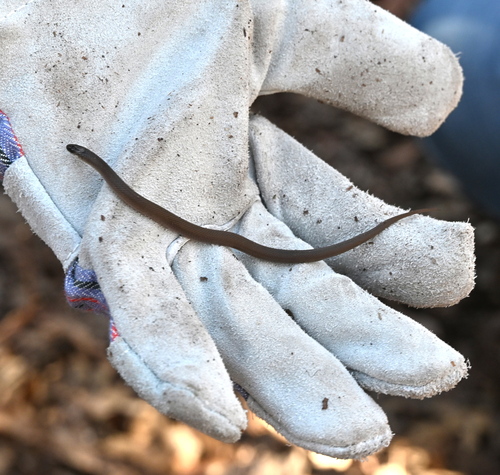
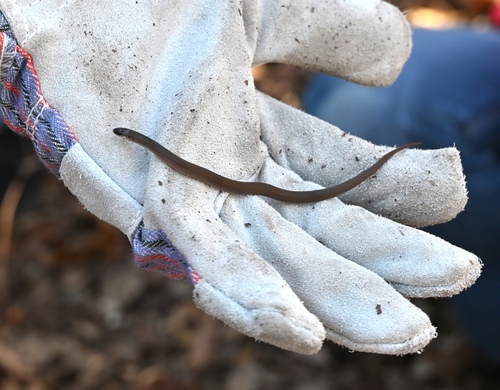
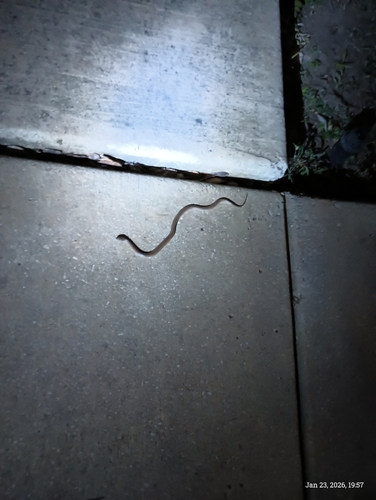
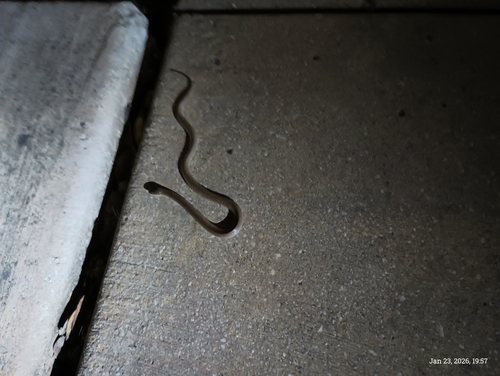
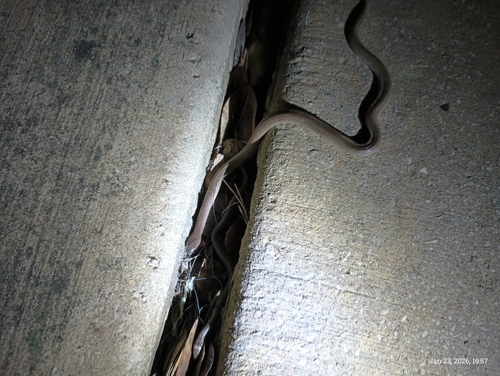
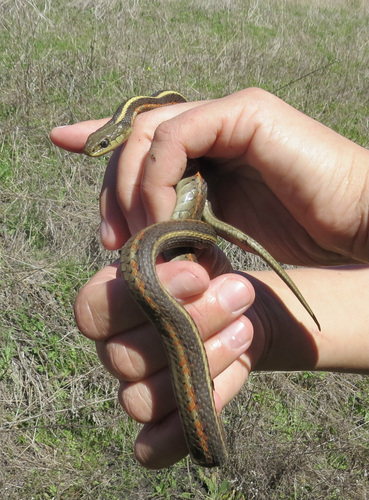
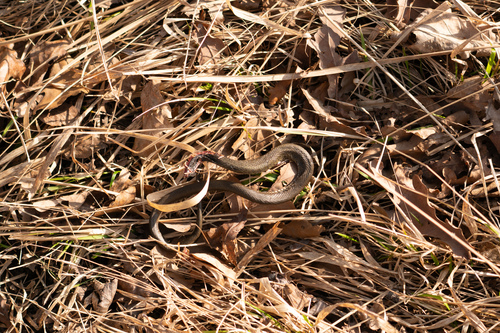
6 photographs of the Rough Earthsnake. © AG Sweany.
The Rough Earthsnake (Virginia striatula) is a non-venomous snake in the Colubridae family, recorded in 2 countries.
- Family
- Colubridae
About the Rough Earthsnake
Virginia striatula (formerly Haldea striatula), commonly called the rough earth snake, is a species of nonvenomous natricine colubrid snake native to the Southeastern United States.
Taxonomy
The species was first described by Carl Linnaeus in 1766, as Coluber striatulus. Over the next two and a half centuries its scientific name has been changed several times (see synonyms). Most recently, the generic name was changed back again from Haldea to Virginia in 2023.
Common names
Other common names for Virginia striatula include: brown ground snake, brown snake, ground snake, little brown snake, little striped snake, small brown viper, small-eyed brown snake, southern ground snake, striated viper, and worm snake.
Geographic range
The rough earth snake is found from southern Virginia to northern Florida, west along the Gulf Coast to southern Texas, and north into south-central Missouri and southeastern Kansas. It is also present in northern parts of Oklahoma.
Description
Virginia striatula is a small, harmless, secretive, fairly slender snake, 7–10 inches (18–25 cm) in total length (including tail). It has a round pupil, weakly keeled dorsal scales, and usually a divided anal plate. Dorsally, it is brown, gray, or reddish, and essentially has no pattern. Females are a little longer and heavier than males, with relatively shorter tails. Young individuals often have a light band on the neck, which is normally lost as they mature. The belly is tan to whitish and is not sharply defined in color from the back, unlike in the wormsnake (Carphophis amoenus) or the red-bellied snake (Storeria occipitomaculata). Keeled scales differentiate the rough earth snake from the similar smooth earth snake (Virginia valeriae), as well as from the wormsnake. V. striatula is most likely to be confused with De Kay's brown snake (Storeria dekayi), which is a little larger and is light brown with dark markings on the back and neck. Unlike the rough earth snake, De Kay's brown snake retains these markings into adulthood. Also, S. dekayi has a rounder snout than V. striatula.
Habitat
The rough earth snake is fossorial, hiding beneath logs, rocks, or ornamental stones, in leaf litter, or in compost piles and gardens. The species is found in a variety of forested habitats with plenty of ground cover, as well as in many urban areas. It can reach very high densities in urban gardens, parks, and vacant lots.
Reproduction
Virginia striatula is gonochoric. It is also viviparous, giving birth to 3 to 8 live young in mid-summer. Newborns are about 10 cm (4 inches) in total length. The young somewhat resemble the ring-necked snake (Diadophis punctatus) with a light-colored neck collar, but they are much drabber and lack a brightly-colored belly.
Adapted from Wikipedia, available under CC BY-SA.
Frequently asked: Rough Earthsnake
- Is the Rough Earthsnake venomous?
- No. The Rough Earthsnake (Virginia striatula) is non-venomous and is not considered dangerous to humans. Like most snakes, it will retreat rather than bite when given the chance.
- Is the Rough Earthsnake poisonous?
- Snakes are venomous, not poisonous. "Poisonous" means harmful to eat or touch; "venomous" means injecting toxins through a bite. The Rough Earthsnake is neither poisonous nor venomous.
- Is the Rough Earthsnake dangerous?
- The Rough Earthsnake is not dangerous to humans. It has no medically significant venom and bites only defensively if cornered or handled.
- Where does the Rough Earthsnake live?
- The Rough Earthsnake has verified records in 2 countries, including United States of America, Mexico. See the distribution section below for its full range.
- What does the Rough Earthsnake eat?
- Virginia striatula eats invertebrates. It feeds almost exclusively on earthworms, although slugs, snails, sow bugs, insect eggs and larvae have also been found in the stomach. V. striatula is not venomous and does not constrict prey; rather, it swallows prey without subduing it. The pointed snout of the rough earth snake helps in burrowing in moist soil where prey are found.
- Why is it called the Rough Earthsnake?
- Other common names for Virginia striatula include: brown ground snake, brown snake, ground snake, little brown snake, little striped snake, small brown viper, small-eyed brown snake, southern ground snake, striated viper, and worm snake.
Where it is found
More Colubridae snakes
Classification
How scientists group this snake, from the broadest category down to the exact species. Each step narrows to its closest relatives.
- OrderThe broad group of scaled reptiles: all snakes and lizards
- Squamata
- FamilyA group of related snakes that share key traits
- Colubridae
- GenusA close-knit group of very similar species
- Haldea
- SpeciesThis exact snake, named in the two-part scientific name
- Virginia striatula
Keep learning
- What to Do If You Find a SnakeFound a snake at home or on a trail? Here is how to stay calm, give it space, identify it safely, and know when to call a professional.
- Venomous vs Nonvenomous: How to Tell the DifferenceThe folk rules for telling venomous snakes apart, where each one fails, and why location-based identification beats guessing by sight.
- What Is a Snake? Anatomy and the BasicsA clear overview of what makes a snake a snake: limbless body plan, anatomy, evolution from lizards, species diversity, and why they are ectothermic.
- How to Keep Snakes Out of Your Yard and HomeA practical guide to keeping snakes out of your yard and home using habitat changes that work, plus what to skip and what to do if one shows up.
Distribution from GBIF & iNaturalist. Venom status per CDC. Background: Wikipedia. Informational only. Never handle a snake to identify it.