
Genus · Colubridae
Haldea
The genus Haldea contains a single species. It is not considered dangerous to humans.
About earthsnakes
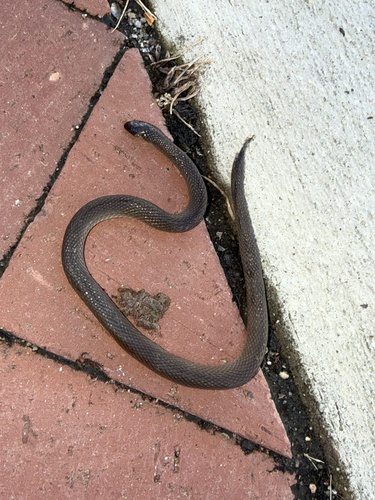
Haldea is a tiny, secretive North American earthsnake that spends most of its life hidden under leaf litter and soil.
Haldea is a small genus in the family Colubridae, the largest snake family on Earth. In most current treatments it holds a single species, the Rough Earthsnake (Haldea striatula), a slender, drab snake of the eastern and south-central United States. It was long grouped with the related smooth earthsnakes in the genus Virginia, and you will still see it listed that way in older field guides. It belongs to the natricine group of colubrids, the same broad lineage as the North American watersnakes and gartersnakes, but it is a fossorial, leaf-litter specialist rather than a water snake.
Earthsnakes are easy to overlook. Adults are typically only about 7 to 10 inches long, with a uniform plain brown, gray, or reddish-brown body, a slightly pointed snout adapted for burrowing, and weakly keeled scales that give the Rough Earthsnake its name. They lack the bold patterns of many colubrids, which is part of why they are so often mistaken for juveniles of other species or for worms. They live in forests, wooded suburbs, gardens, and grassy areas with loose soil, where they stay under logs, rocks, mulch, and leaf litter. Their range centers on the southeastern and south-central US.
Haldea is harmless to people. It is non-venomous, has no medically significant bite, and is not dangerous; its tiny mouth and gentle nature mean it rarely even attempts to bite. These snakes are beneficial backyard residents that feed mostly on earthworms and soft-bodied invertebrates, hunting them in moist soil and leaf litter. The Rough Earthsnake gives live birth, producing small litters of young in late summer rather than laying eggs. If you find one while gardening, the kind thing is to leave it be or gently move it to nearby cover. As a general safety note that applies to any snake you cannot confidently identify, do not handle it, and for a bite from an unknown or venomous snake, seek emergency care or contact US Poison Control at 1-800-222-1222 or local emergency services.
Haldea belongs to the Colubridae family (Colubrids). The largest snake family, and the one most snakes you meet belong to. Typically round pupils, a head only slightly wider than the neck, and no heat-sensing facial pit or rattle. Scales may be smooth and glossy or keeled and matte depending on the species.
Danger: Almost all colubrids are harmless. A small number are rear-fanged with medically significant venom, the boomslang and the twig (vine) snakes of Africa being the dangerous exceptions. Most colubrids will flee or bluff rather than bite.
All species (1)
Keep learning
- What Is a Snake? Anatomy and the BasicsA clear overview of what makes a snake a snake: limbless body plan, anatomy, evolution from lizards, species diversity, and why they are ectothermic.
- How Snakes Move, Hunt, and EatHow snakes move without legs, hunt as ambushers or active foragers, kill by constriction or venom, and swallow prey wider than their head.
- What Do Snakes Eat?All snakes are carnivores. Learn what snakes eat, how diet changes with size and age, how often they feed, and how they hunt and swallow prey.
- Venomous vs Nonvenomous: How to Tell the DifferenceThe folk rules for telling venomous snakes apart, where each one fails, and why location-based identification beats guessing by sight.