
Colubridae
Queensnake
HarmlessRegina septemvittata
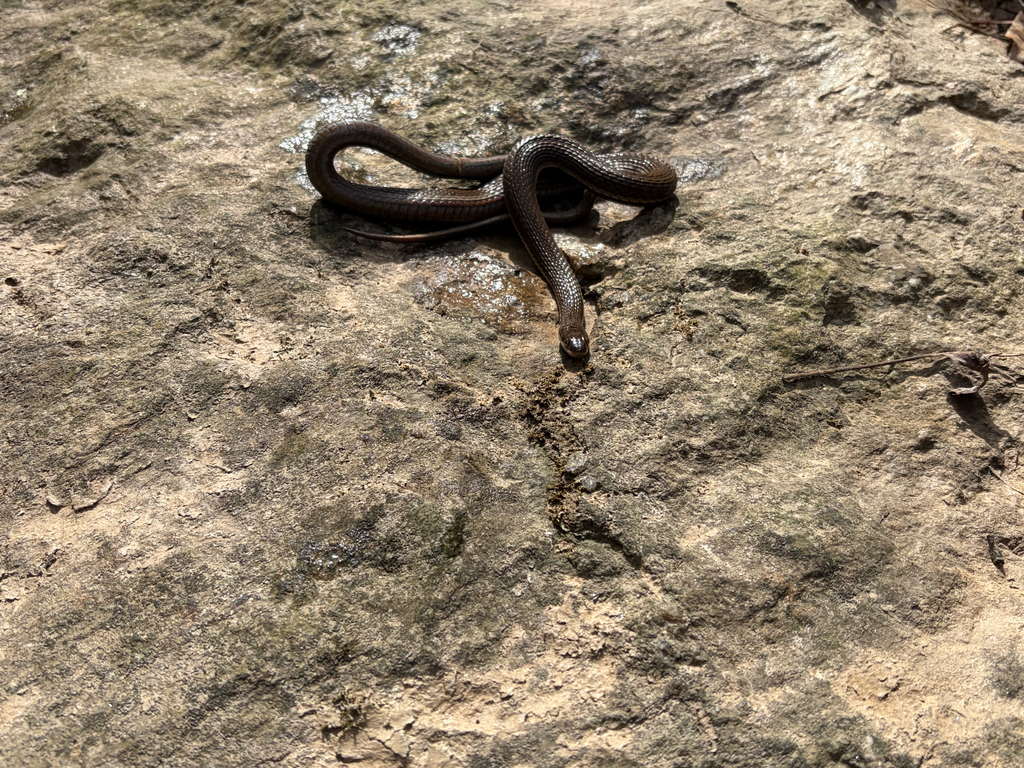
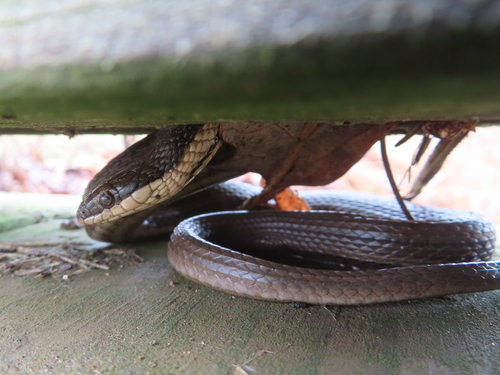
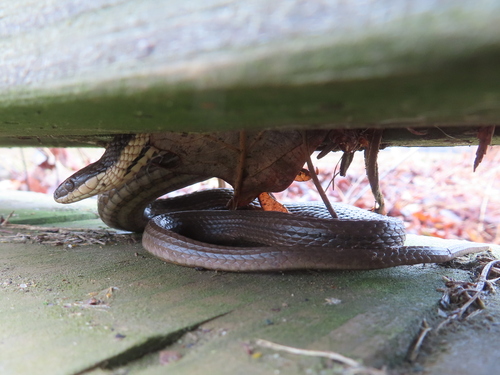
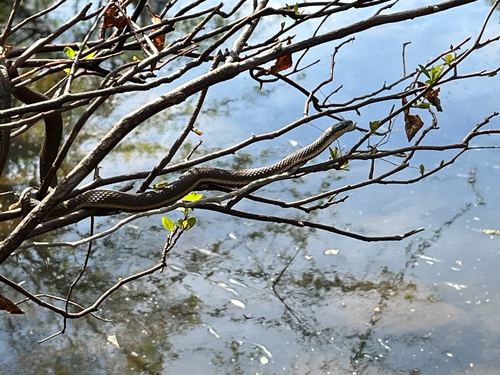
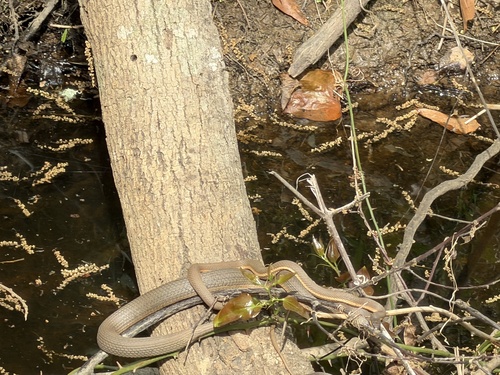
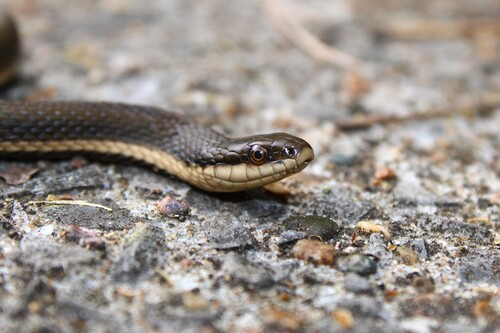
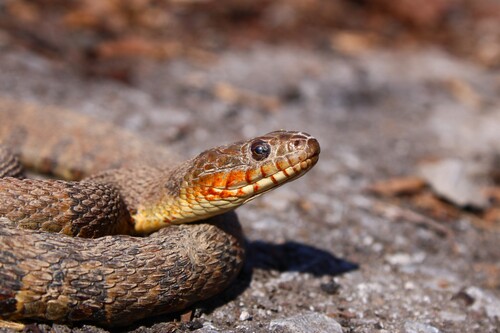
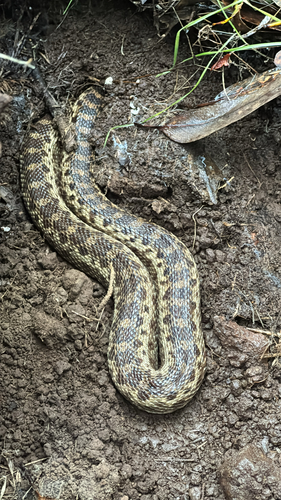
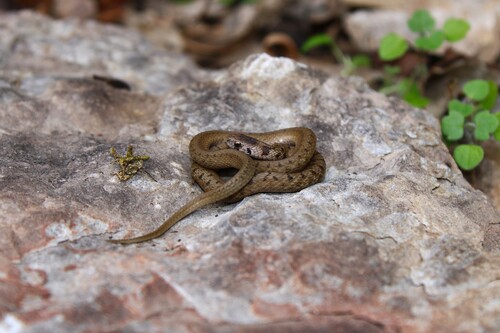
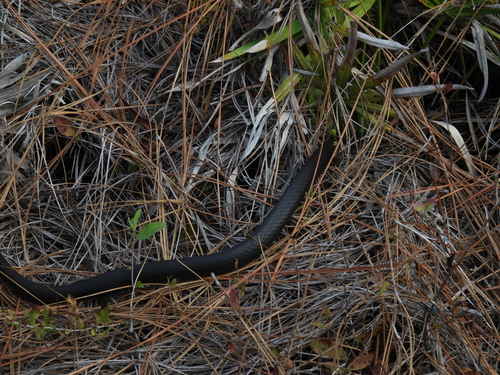
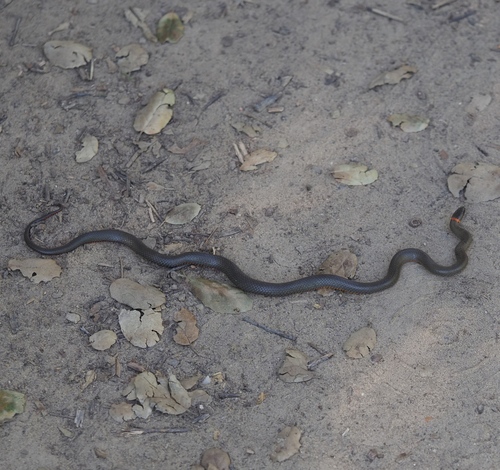
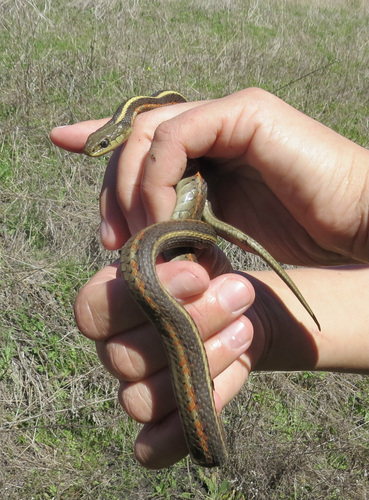
6 photographs of the Queensnake. © Steven Wang.
The Queensnake (Regina septemvittata) is a non-venomous snake in the Colubridae family, recorded in 2 countries.
- Family
- Colubridae
About the Queensnake
The queen snake (Regina septemvittata) is a species of nonvenomous semiaquatic snake, a member of the subfamily Natricinae of the family Colubridae. The species is endemic to North America.
Common names
Regina septemvittata is known by many common names, including the following: banded water snake, brown queen snake, diamond-back water snake, leather snake, moon snake, North American seven-banded snake, olive water snake, pale snake, queen water snake, seven-striped water snake, striped water snake, three-striped water snake, willow snake, and yellow-bellied snake.
Geographic range
Regina septemvittata ranges through the temperate region of North America east of the Mississippi River from western New York state to Wisconsin and south to Alabama and northern Florida. There is also an isolated population in Arkansas that was discovered in 1894 and is thought to be an effect of climate change during the Pleiostene era. It is also found in the southwestern parts of Ontario.
Decreases in queen snake populations can be most attributed to a loss of food sources through stream channelization, bank erosion, and water pollution.
Appearance
The queen snake is similar in appearance to a garter snake, genus Thamnophis, so is often confused with that group. The queen snake is olive to gray or dark brown in overall coloration, with peach or yellow stripes that run down its length at the first scale row. There are also four prominent ventral stripes of a darker color, and as no other similar species has stripes running down the length of its belly, this is an important feature in identifying this snake. In the young and juvenile snakes there are three extra stripes: one stripe that runs along the vertebral dorsal scales, and two stripes (one on each side) that run down the length of the body at scale rows five and six. These extra stripes tend to fade as the snake matures, but when young the snake will have a total of seven stripes, three on the back and four on the belly, which gives cause for its taxonomical reference name, Regina (queen) septemvittata (seven-striped). The belly of the snake is a cream to yellow color.
The head of the queen snake is narrow and has nine large plate-like scales on the top, and the chin has several rows of thicker scales. This is a protective adaptation, for the snake's feeding habit of chasing its prey under rocks. The pupil of the eye is round, a feature shared with most other colubrids. There are 19 rows of keeled dorsal scales at midbody, and the anal plate is divided. The sexes are often difficult to distinguish based on external characteristics. Male queen snakes have relatively longer tails than females. Males have from 65 to 89 subcaudal scutes (average 76), with the tail from 23% to 34% of the snake's total length. Females have 54 to 87 subcaudals (average 69), with tails equal to 19% to 27% of total length.
Adapted from Wikipedia, available under CC BY-SA.
Frequently asked: Queensnake
- Is the Queensnake venomous?
- No. The Queensnake (Regina septemvittata) is non-venomous and is not considered dangerous to humans. Like most snakes, it will retreat rather than bite when given the chance.
- Is the Queensnake poisonous?
- Snakes are venomous, not poisonous. "Poisonous" means harmful to eat or touch; "venomous" means injecting toxins through a bite. The Queensnake is neither poisonous nor venomous.
- Is the Queensnake dangerous?
- The Queensnake is not dangerous to humans. It has no medically significant venom and bites only defensively if cornered or handled.
- Where does the Queensnake live?
- The Queensnake has verified records in 2 countries, including United States of America, Canada. See the distribution section below for its full range.
- What does the Queensnake eat?
- Queen snakes actively forage during the daytime. Queen snakes are described as extreme dietary specialists, feeding primarily on crayfish. They have been documented favoring crayfish that are freshly molted. Regina septemvittata are especially sensitive to a chemical compound called ecdysone that is produced by crayfish during their molting cycle which help them find that prey easier. It is assumed they use a vomeronasal organ to detect the chemical. One study done offered crayfish during their molting cycle and crayfish not on their molting cycle to queen snakes to see which they preferred.
- Why is it called the Queensnake?
- Regina septemvittata is known by many common names, including the following: banded water snake, brown queen snake, diamond-back water snake, leather snake, moon snake, North American seven-banded snake, olive water snake, pale snake, queen water snake, seven-striped water snake, striped water snake, three-striped water snake, willow snake, and yellow-bellied snake.
Where it is found
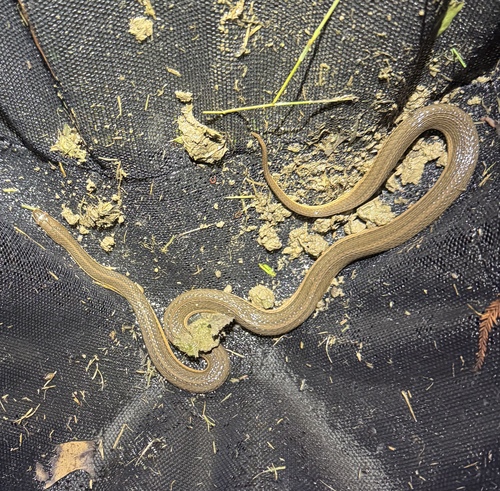
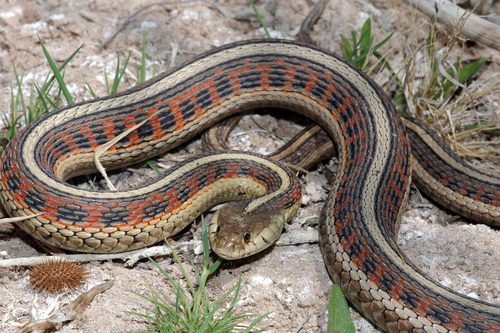
More Colubridae snakes
Classification
How scientists group this snake, from the broadest category down to the exact species. Each step narrows to its closest relatives.
- OrderThe broad group of scaled reptiles: all snakes and lizards
- Squamata
- FamilyA group of related snakes that share key traits
- Colubridae
- GenusA close-knit group of very similar species
- Regina
- SpeciesThis exact snake, named in the two-part scientific name
- Regina septemvittata
Keep learning
- What to Do If You Find a SnakeFound a snake at home or on a trail? Here is how to stay calm, give it space, identify it safely, and know when to call a professional.
- Venomous vs Nonvenomous: How to Tell the DifferenceThe folk rules for telling venomous snakes apart, where each one fails, and why location-based identification beats guessing by sight.
- What Is a Snake? Anatomy and the BasicsA clear overview of what makes a snake a snake: limbless body plan, anatomy, evolution from lizards, species diversity, and why they are ectothermic.
- How to Keep Snakes Out of Your Yard and HomeA practical guide to keeping snakes out of your yard and home using habitat changes that work, plus what to skip and what to do if one shows up.
Distribution from GBIF & iNaturalist. Venom status per CDC. Background: Wikipedia. Informational only. Never handle a snake to identify it.