
Colubridae
Graham's Crawfish Snake
HarmlessRegina grahamii
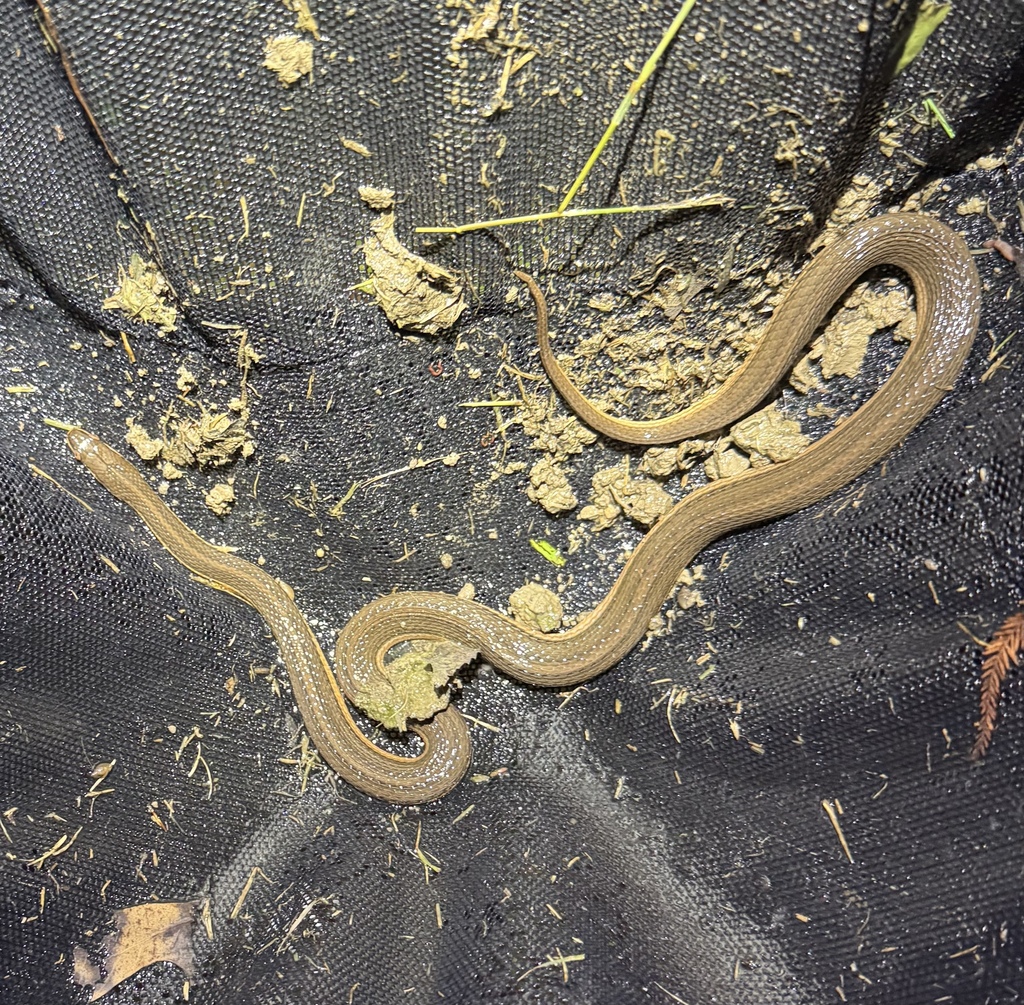
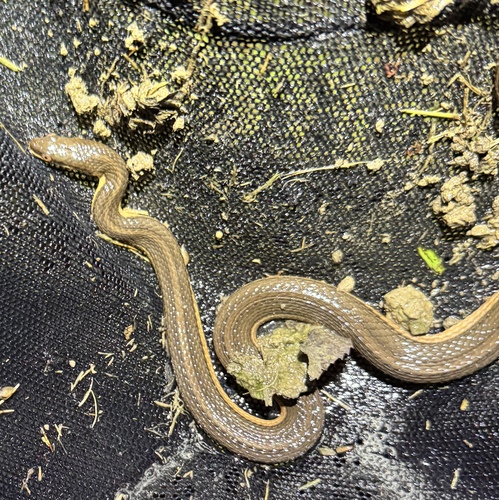
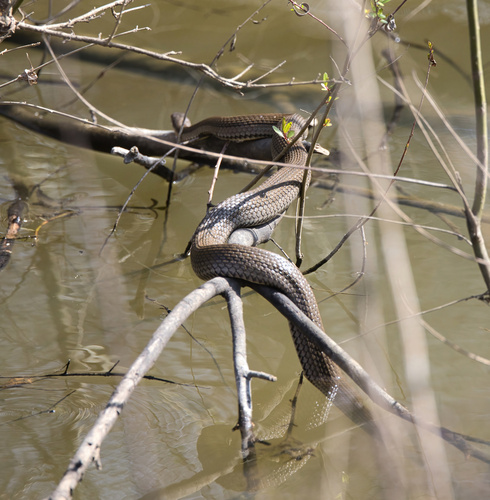
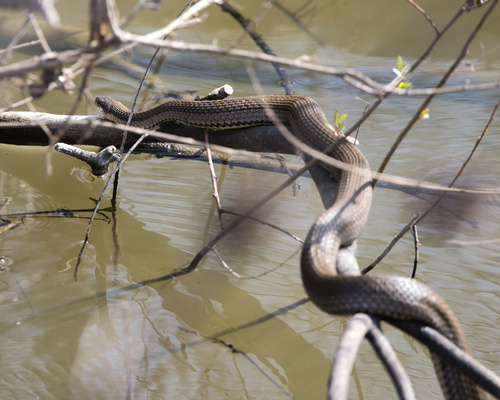
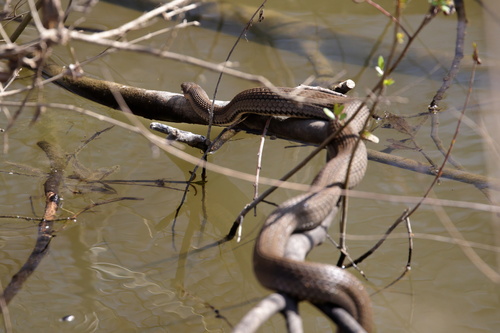
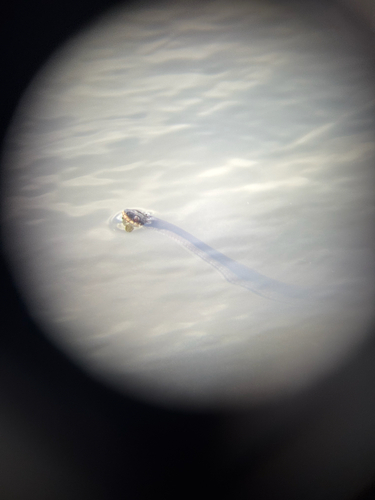
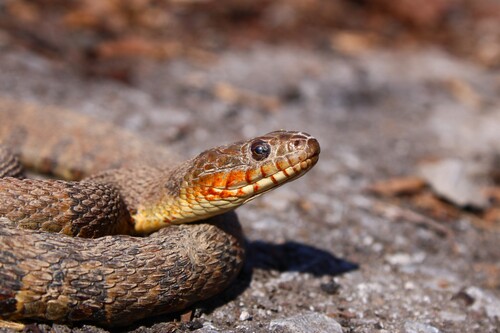
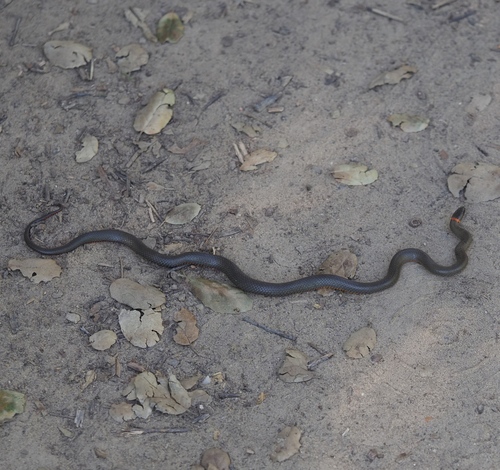
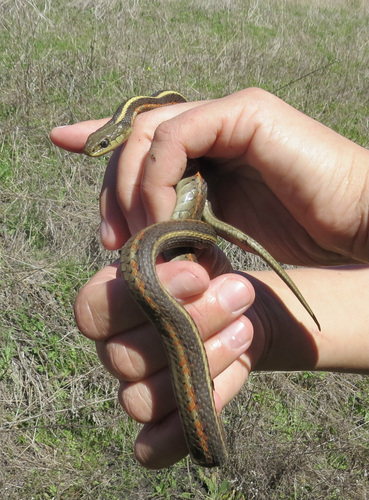
6 photographs of the Graham's Crawfish Snake. © Dan Johnson.
The Graham's Crawfish Snake (Regina grahamii) is a non-venomous snake in the Colubridae family, recorded in 2 countries.
- Family
- Colubridae
About the Graham's Crawfish Snake
Regina grahamii, commonly known as Graham's Crayfish Snake, is a species of nonvenomous semiaquatic snake in the subfamily Natricinae of the family Colubridae. The species is endemic to the central United States.
Etymology
The specific name, grahamii, is in honor of Lt. Col. James Duncan Graham, U.S. Topographical Engineers, who collected the type specimen.
Common names
Additional common names for R. grahamii include Graham's Crayfish Snake, Arkansas water snake, Graham's leather snake, Graham's queen snake, Graham's snake, Graham's water snake, prairie water adder, prairie water snake, and striped moccasin.
Description
R. grahamii is a medium-sized snake, measuring an average of 18–28 inches (46–71 cm) in total length (including tail), but can grow up to almost 4 feet long in some cases. The maximum recorded total length is 47 inches (119 cm).
It is usually a brown or gray color with an occasional faint mid-dorsal stripe. Its lateral stripes are typically cream, white tan, or light yellow and located from the belly up to the fourth scale row. The belly is typically the same color as the lateral stripes and is unmarked, with the exception of a row of dark dots down the center (rare in specimens).
Subspecies
There are no subspecies of Graham's crayfish snake, Regina grahamii, which are recognized as being valid.
Habitat
R. grahamii occurs along the margins of mud-bottom marshes, oxbow lakes, rivers and streams. It particularly likes roadside ditches abundant with crayfish. Graham's crayfish snake typically hides under rocks, logs, and other debris at the waters edge and also spends much time in crayfish burrows.
Diet
Graham's crayfish snake feeds chiefly upon crayfish, especially recently molted crayfish. It is also reported to eat fish and amphibians.
Temperament and defense
The primary defenses for this species, Regina grahamii, are camouflage and nocturnal behavior. When alarmed, especially while basking, it will make a quick escape into the water and hide. This species is relatively docile, but it may flatten out and musk if captured.
Reproduction
Adult females of R. grahamii bear live young in broods of 10–15. Each newborn is about 8 inches (about 20 cm) in total length (including tail).
In captivity
R. grahamii is difficult to keep in captivity, usually refusing all food and developing skin lesions easily. Only experienced snake owners should attempt to raise this species.
Geographic range
R. grahamii is found in Arkansas, Illinois, Iowa, Kansas, Louisiana, Mississippi, Missouri, Nebraska, Oklahoma, and Texas.
Adapted from Wikipedia, available under CC BY-SA.
Frequently asked: Graham's Crawfish Snake
- Is the Graham's Crawfish Snake venomous?
- No. The Graham's Crawfish Snake (Regina grahamii) is non-venomous and is not considered dangerous to humans. Like most snakes, it will retreat rather than bite when given the chance.
- Is the Graham's Crawfish Snake poisonous?
- Snakes are venomous, not poisonous. "Poisonous" means harmful to eat or touch; "venomous" means injecting toxins through a bite. The Graham's Crawfish Snake is neither poisonous nor venomous.
- Is the Graham's Crawfish Snake dangerous?
- The Graham's Crawfish Snake is not dangerous to humans. It has no medically significant venom and bites only defensively if cornered or handled.
- Where does the Graham's Crawfish Snake live?
- The Graham's Crawfish Snake has verified records in 2 countries, including United States of America, Mexico. See the distribution section below for its full range.
- What does the Graham's Crawfish Snake eat?
- Graham's crayfish snake feeds chiefly upon crayfish, especially recently molted crayfish. It is also reported to eat fish and amphibians.
- Why is it called the Graham's Crawfish Snake?
- The specific name, grahamii, is in honor of Lt. Col. James Duncan Graham, U.S. Topographical Engineers, who collected the type specimen.
Where it is found
More Colubridae snakes
Classification
How scientists group this snake, from the broadest category down to the exact species. Each step narrows to its closest relatives.
- OrderThe broad group of scaled reptiles: all snakes and lizards
- Squamata
- FamilyA group of related snakes that share key traits
- Colubridae
- GenusA close-knit group of very similar species
- Regina
- SpeciesThis exact snake, named in the two-part scientific name
- Regina grahamii
Keep learning
- What to Do If You Find a SnakeFound a snake at home or on a trail? Here is how to stay calm, give it space, identify it safely, and know when to call a professional.
- Venomous vs Nonvenomous: How to Tell the DifferenceThe folk rules for telling venomous snakes apart, where each one fails, and why location-based identification beats guessing by sight.
- What Is a Snake? Anatomy and the BasicsA clear overview of what makes a snake a snake: limbless body plan, anatomy, evolution from lizards, species diversity, and why they are ectothermic.
- How to Keep Snakes Out of Your Yard and HomeA practical guide to keeping snakes out of your yard and home using habitat changes that work, plus what to skip and what to do if one shows up.
Distribution from GBIF & iNaturalist. Venom status per CDC. Background: Wikipedia. Informational only. Never handle a snake to identify it.