
Elapidae
Olive Sea Snake
VenomousAipysurus laevis
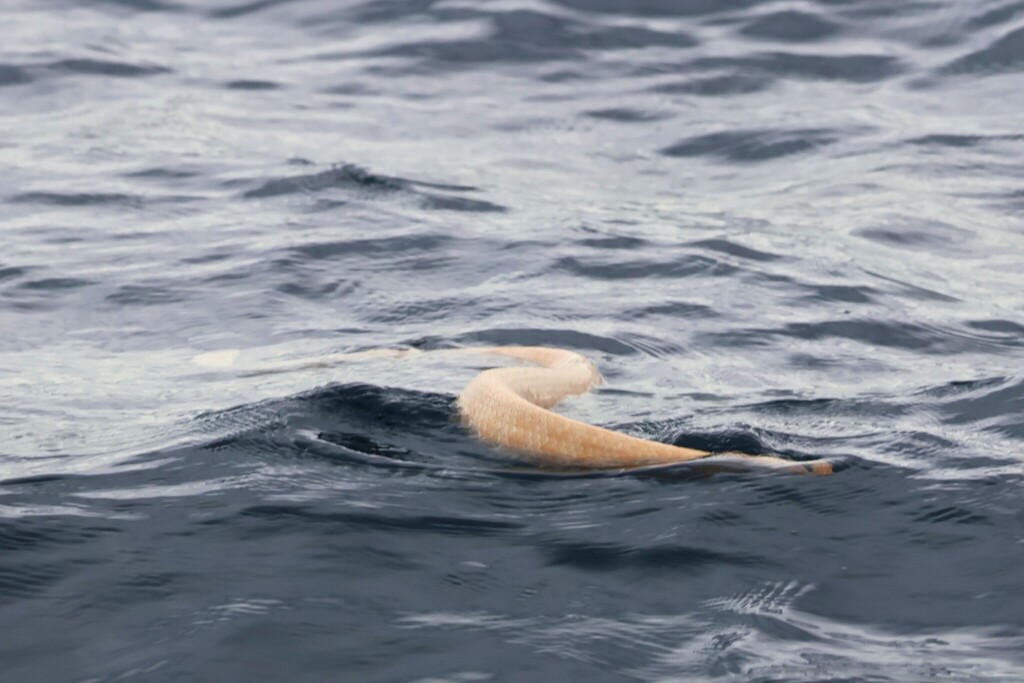
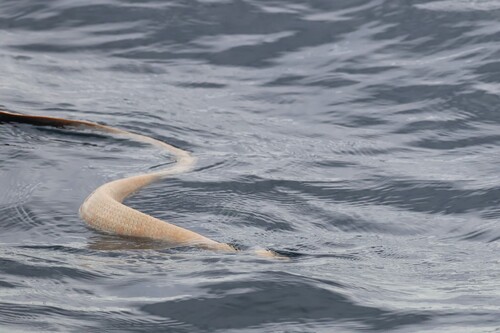
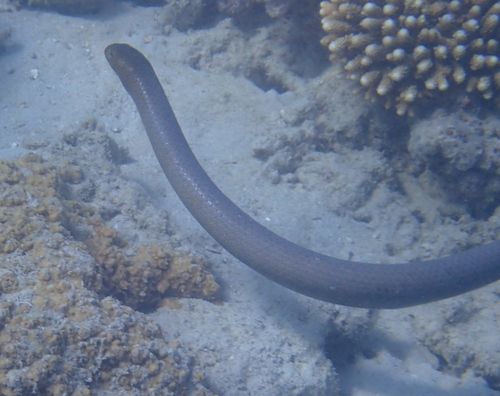
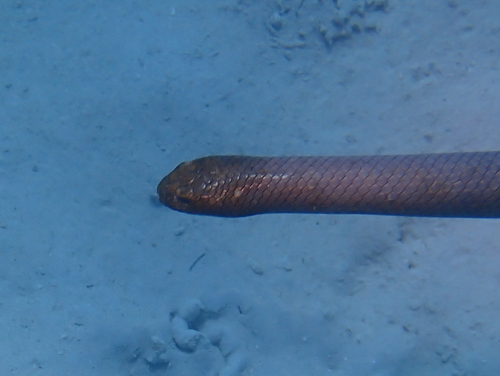
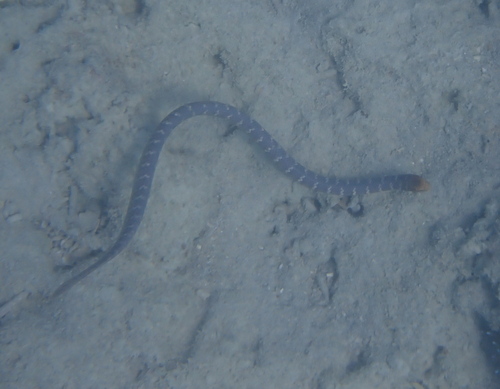
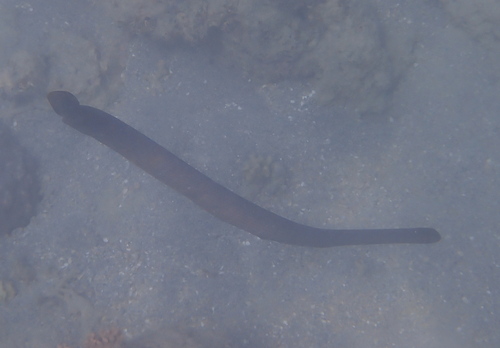
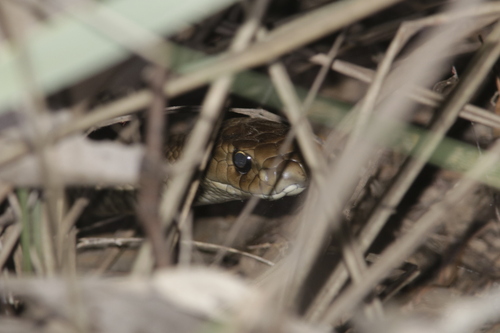
6 photographs of the Olive Sea Snake. © Astrid Osborne.
The Olive Sea Snake (Aipysurus laevis) is a venomous snake in the Elapidae family, recorded in 5 countries.
If you are bitten
This is a venomous snake. Treat any bite as a medical emergency: stay calm, keep the bitten limb still and roughly level with the heart, remove rings and tight clothing, and get to emergency care immediately. Do not apply a tourniquet, cut the wound, apply ice, or try to suck out venom. Call your local emergency number or poison center.
- Family
- Elapidae
- Danger
- high
About the Olive Sea Snake
Aipysurus laevis is a species of venomous sea snake found in the Indo-Pacific. Its common names include golden sea snake, olive sea snake, and olive-brown sea snake.
Taxonomy
A species was first described by Bernard Germain de Lacépède in 1804, assigning it to a new genus Aipysurus.
A name published by John Edward Gray, Aipysurus jukesii, is regarded as a synonym for this species.
Currently, two subspecies are recognized, including the nominotypical subspecies described below. The subspecies A. l. pooleorum has been elevated to full species status as A. pooleorum.
Etymology
Aipysurus derives from the Greek aipys "high and steep" and oura "tail"; the term loosely meaning "high tail" was coined to denote "the laterally compressed tail that is higher than the depth of the body". Laevis, a variant form of Latin levis, means "smooth". The specific name, pooleorum (masculine, genitive plural), is in honor of Australian fishermen "W. and W. Poole" who collected the holotype.
Distribution and habitat
It is a common, widespread species that lives on coral reefs, including the Great Barrier Reef. It can be found in the tropical eastern Indian Ocean and the western Pacific Ocean, from Indonesia to New Caledonia.
The snake hides in small coves or protective coral areas if not hunting or surfacing to breathe.
Description
The olive sea snake swims using a paddle-like tail. It has brownish and purple scales along the top of its body whilst its underside is a white color. It can grow up to a meter in length, and in some cases up to two meters.
Behavior
The snake feeds on crustaceans (such as crabs and prawns), fish, and fish eggs. It uses venom to incapacitate its prey. This venom is rich in enzymes that facilitate the internal breakdown of the prey, simplifying the digestion process. The venom also affects both the muscles and nerves of the prey. The snake usually hunts in coral reef areas, searching for food by poking its head into crevices. The creature usually stays away from open water as a hunting ground.
Aipysurus laevis has been found to have photoreceptors in the skin of its tail, allowing it to detect light and presumably ensuring it is completely hidden, including its tail, inside coral holes during the day. While other species have not been tested, A. laevis possibly is not unique among sea snakes in this respect. Dermal light sensitivity is found in all the major animal phyla.
While it can be aggressive towards prey, attacks on divers or larger animals are rare, though if provoked it will engage the attacker. The snake's main predators are sharks and ospreys.
Reproduction
Males can reach sexual maturity in their third year, while females do not until their fourth or fifth year. Courtship usually involves a group of males vying for one female, which occurs in open water. At times, divers are approached by male sea snakes, possibly due to male sea snakes mistaking divers for female sea snakes.
Adapted from Wikipedia, available under CC BY-SA.
Local and regional names
The Olive Sea Snake is known by these names across the regions where it lives:
- Chinese
- 欖綠劍尾海蛇
- Czech
- vlnožil hladký
- Danish
- Almindelig Oliven-havslange
- English
- Olive Sea Snake, Olive-Brown Sea Snake, Olive-brown Sea Snake, Olive-brown Seasnake
- French
- Aipysure lisse, Hydrophide lisse , Serpent marin Olive, Serpent beige, Aipysure lisse, Serpent beige, Serpent marin olive
- German
- Olive Seeschlange, Olivfarbene Seeschlange
- Hungarian
- nagy tengerikígyó
- Italian
- Serpente di mare bruno, Serpente di mare bruno oliva, Serpente di mare oliva
- Japanese
- オリーブミナミウミヘビ
- Polish
- krępacz olbrzymi
- Portuguese
- Serpente-marinha-oliva
- Russian
- Гладкая морская змея
- Spanish
- Serpiente Marina Dorada
Frequently asked: Olive Sea Snake
- Is the Olive Sea Snake venomous?
- Yes. The Olive Sea Snake (Aipysurus laevis) is venomous and belongs to the Elapidae family (cobra, mamba, coral or sea snake). Its bite is considered high risk to people. Treat any bite as a medical emergency.
- Is the Olive Sea Snake poisonous?
- Snakes are venomous, not poisonous. "Poisonous" means harmful to eat or touch; "venomous" means injecting toxins through a bite. The Olive Sea Snake is venomous, delivering venom through a bite.
- Is the Olive Sea Snake dangerous?
- This is a venomous snake. Treat any bite as a medical emergency: stay calm, keep the bitten limb still and roughly level with the heart, remove rings and tight clothing, and get to emergency care immediately. Do not apply a tourniquet, cut the wound, apply ice, or try to suck out venom. Call your local emergency number or poison center.
- Where does the Olive Sea Snake live?
- The Olive Sea Snake has verified records in 5 countries, including Australia, New Caledonia, Papua New Guinea. See the distribution section below for its full range.
- Why is it called the Olive Sea Snake?
- Aipysurus derives from the Greek aipys "high and steep" and oura "tail"; the term loosely meaning "high tail" was coined to denote "the laterally compressed tail that is higher than the depth of the body". Laevis, a variant form of Latin levis, means "smooth". The specific name, pooleorum (masculine, genitive plural), is in honor of Australian fishermen "W. and W. Poole" who collected the holotype.
If you are bitten by the Olive Sea Snake
Do
- Get away from the snake and stay calm. Most bites worsen when people panic or try again to handle the snake.
- Call 911 or Poison Control (1-800-222-1222) right away. Antivenom works best when given early.
- Note the time of the bite and, from a safe distance, the snake's color and pattern, a phone photo is enough. Do not chase it.
- Keep the bitten limb still and at roughly heart level. Sit or lie down and limit movement.
- Remove rings, watches, and tight clothing near the bite before swelling starts.
- Gently wash the bite with soap and water and cover it with a clean, dry dressing.
Do not
- Do not cut the wound or try to suck out the venom.
- Do not apply a tourniquet or ice.
- Do not drink alcohol or caffeine.
- Do not take aspirin or ibuprofen, they can worsen bleeding. Acetaminophen is safer for pain.
- Do not try to catch or kill the snake. A dead snake can still bite by reflex.
First-aid guidance adapted from the U.S. Centers for Disease Control and Prevention (CDC NIOSH), Venomous Snakes. Educational only; always follow the instructions of emergency responders.
Where it is found
More Elapidae snakes
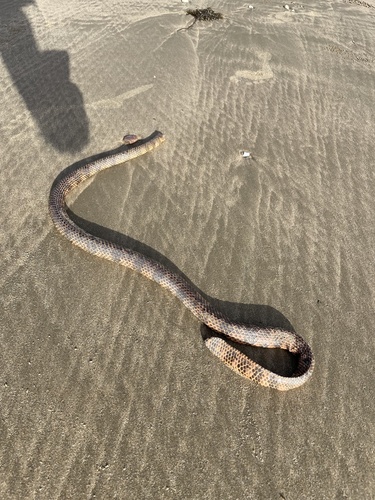 Reef Shallows Sea SnakeAipysurus duboisii
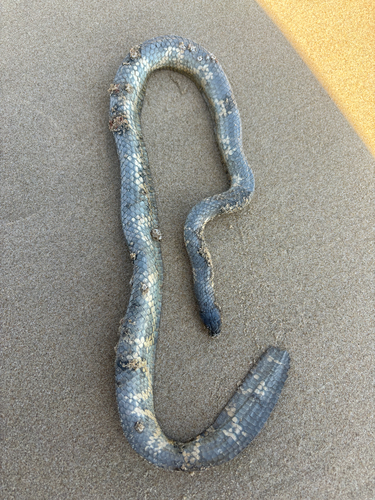 Mosaic Sea SnakeAipysurus mosaicus
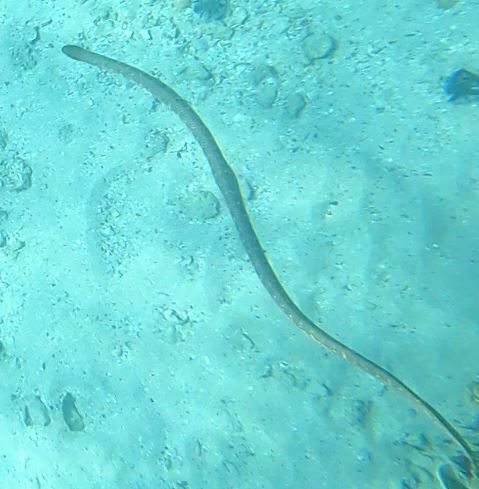 Shark Bay Sea SnakeAipysurus pooleorum
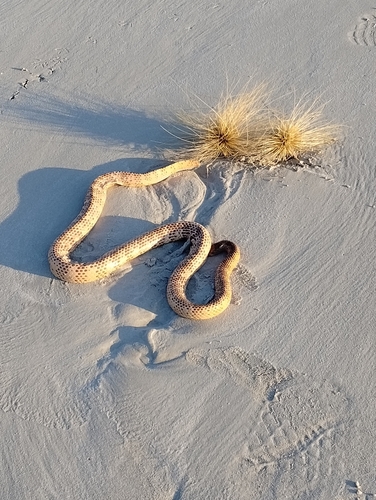 Brown-lined Sea SnakeAipysurus tenuis
 Stagger-banded Sea SnakeAipysurus eydouxii
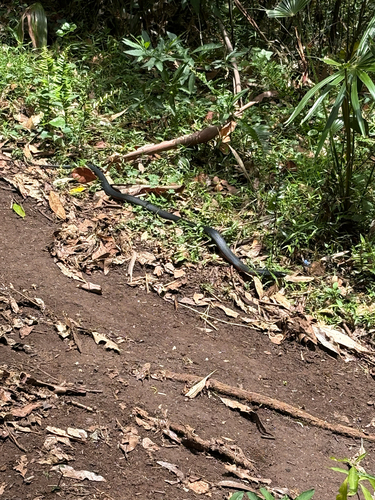 Red-bellied Black SnakePseudechis porphyriacus
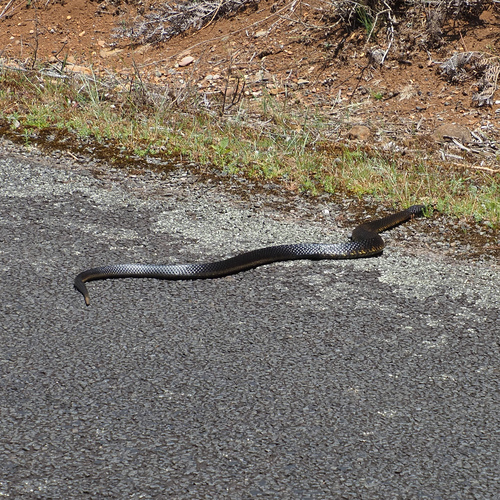 Tiger SnakeNotechis scutatus
 Eastern Brown SnakePseudonaja textilis
Classification
How scientists group this snake, from the broadest category down to the exact species. Each step narrows to its closest relatives.
Keep learning
- Are Snakes Dangerous? The Real Risk, in PerspectiveMost snakes are harmless and avoid people. Here is the honest picture of snakebite risk worldwide and how to lower your own.
- Snakebite First Aid: What to Do (and What Never to Do)A clear, CDC-based guide to snakebite first aid: the steps that help, the popular myths that hurt, and how to tell a serious bite from a minor one.
- Venomous vs Nonvenomous: How to Tell the DifferenceThe folk rules for telling venomous snakes apart, where each one fails, and why location-based identification beats guessing by sight.
- What to Do If You Find a SnakeFound a snake at home or on a trail? Here is how to stay calm, give it space, identify it safely, and know when to call a professional.
Distribution from GBIF & iNaturalist. Venom status per CDC. Background: Wikipedia. Informational only. Never handle a snake to identify it.