
Elapidae
Reef Shallows Sea Snake
VenomousAipysurus duboisii
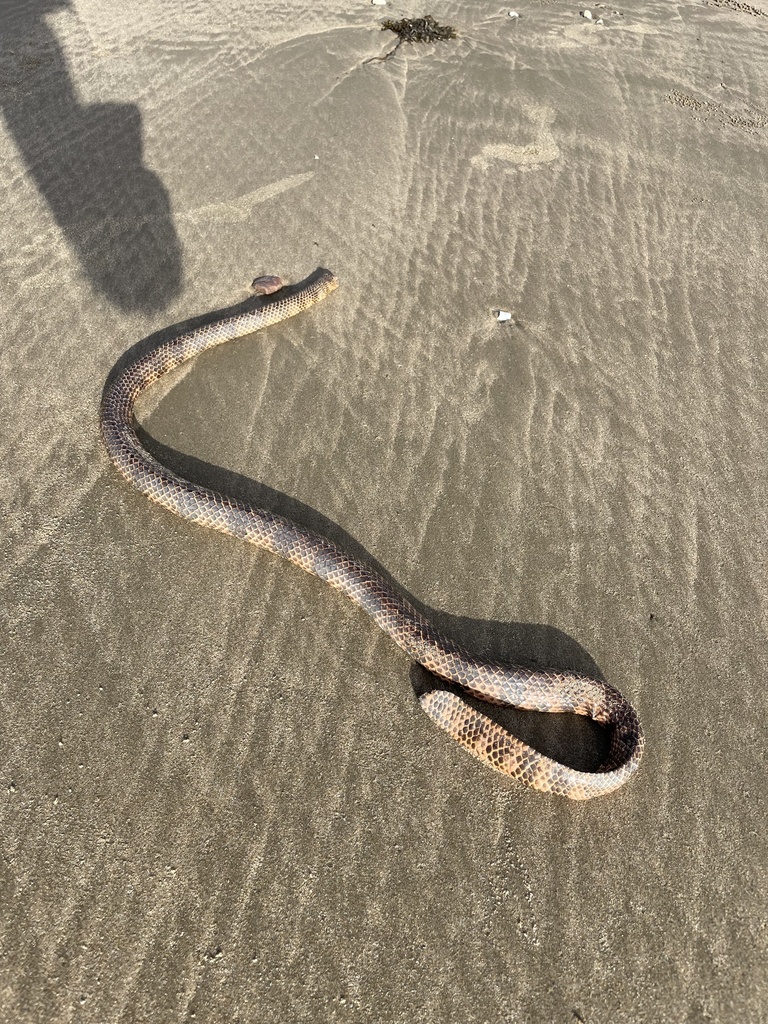
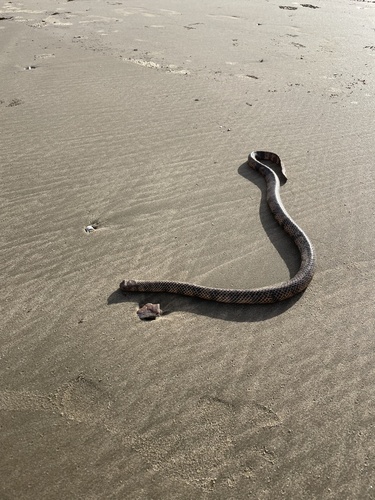
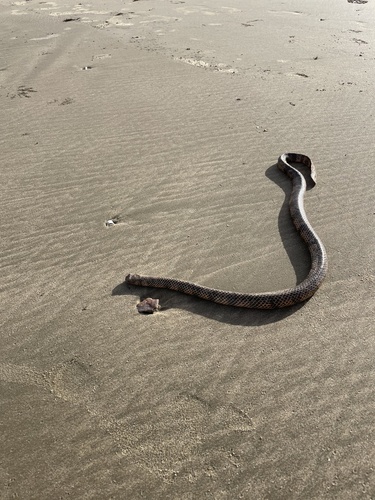
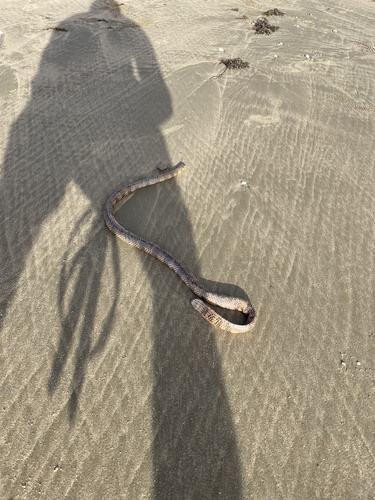
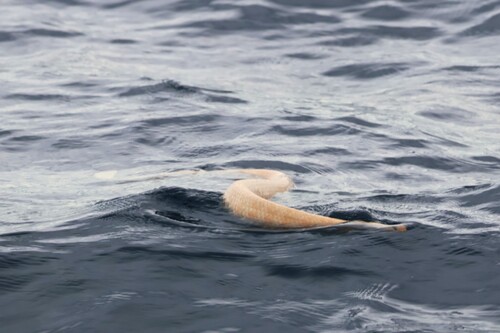
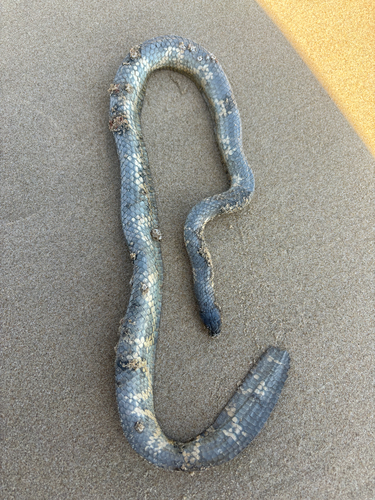
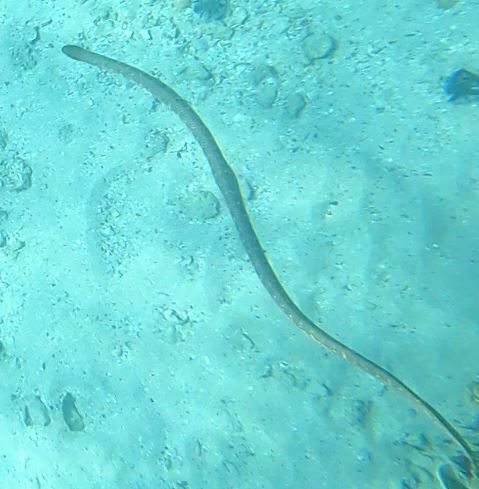
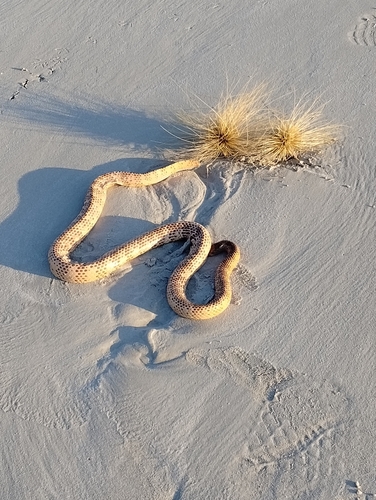
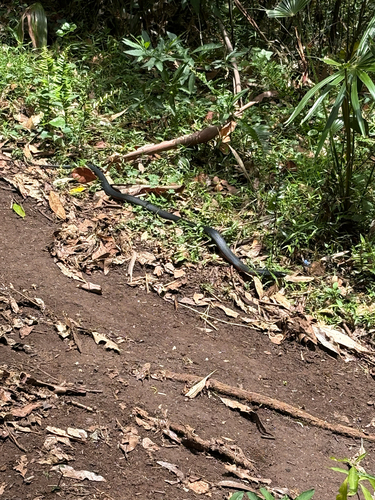
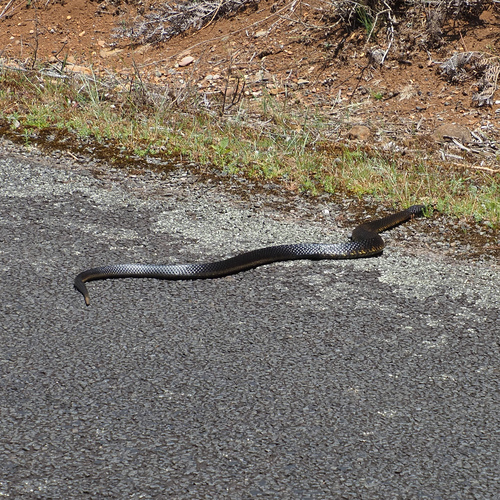
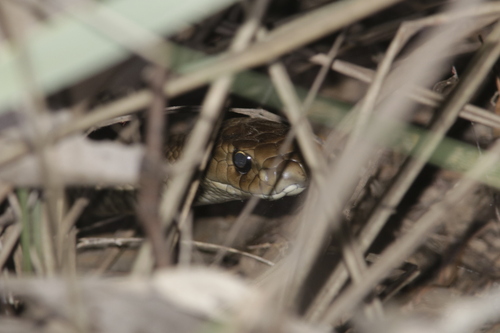
4 photographs of the Reef Shallows Sea Snake. © rcrofts.
The Reef Shallows Sea Snake (Aipysurus duboisii) is a venomous snake in the Elapidae family, recorded in 2 countries.
If you are bitten
This is a venomous snake. Treat any bite as a medical emergency: stay calm, keep the bitten limb still and roughly level with the heart, remove rings and tight clothing, and get to emergency care immediately. Do not apply a tourniquet, cut the wound, apply ice, or try to suck out venom. Call your local emergency number or poison center.
- Family
- Elapidae
- Danger
- high
About the Reef Shallows Sea Snake
Aipysurus duboisii, also known commonly as Dubois' sea snake and the reef shallows sea snake, is a species of extremely venomous snake in the subfamily Hydrophiinae of the family Elapidae. Its geographic range includes Papua New Guinea, New Caledonia, and the northern, eastern, and western coastal areas of Australia, that is the Coral Sea, Arafura Sea, Timor Sea, and Indian Ocean. It lives to depths of 80 m (262 ft) in coral reef flats, sandy and silty sediments, which contain seaweed, invertebrates and corals or sponges that can serve as shelter. It preys upon moray eels and various fish that live on the seafloor, up to 110 cm (3.6 ft) in size. A. duboisii is viviparous, giving birth to live young rather than laying eggs. It displays medium aggressiveness, i.e., will bite if provoked, but not spontaneously. The fangs are 1.8 mm long, which are relatively short for a snake, and the venom yield is 0.43 mg. Aipysurus duboisii is a crepuscular species, meaning that it is most active at dawn and dusk.
It is the most venomous sea snake, and one of the top three most venomous snakes in the world.
Etymology
The specific name, duboisii, is in honor of Belgian naturalist Charles Frédéric Dubois.
Description
Adults of A. duboisii grow up to 148 cm (4.86 ft) in total length (including tail), but usually to around 80 cm (2.6 ft). The head is slightly wider than the neck with nostrils on its upper part and nasals contacting each other. Eyes are separated from supralabial scales by a row of large subocular scales. Dorsal scales are usually smooth, but sometimes have a small keel or small knobs. Individuals vary significantly in color and body pattern. The tail is relatively long; the chin and throat have lighter color than rest of the body.
Venom
The acute toxicity of snake venom is conventionally tested on laboratory animals and is evaluated in terms of the median lethal dose (LD50), that is, the dose required to kill half the members of a tested population divided by the weight of the tested animal. The LD50 depends on the animal. Rabbits are about twice as sensitive to sea snake venom as mice, and fish and frogs are even more susceptible. The LD50 for subcutaneous injection of A. duboisii venom into mice is 0.044 mg/kg of body weight. This makes A. duboisii the most venomous sea snake tested, and the third-most venomous snake overall, behind the inland taipan (Oxyuranus microlepidotus, LD50=0.025 mg/kg) and the eastern brown snake (Pseudonaja textilis, LD50=0.036 mg/kg).
Adapted from Wikipedia, available under CC BY-SA.
Local and regional names
The Reef Shallows Sea Snake is known by these names across the regions where it lives:
- Chinese
- 杜氏劍尾海蛇
- English
- Dubois' Sea Snake, Dubois's Sea Snake, Reef Shallows Sea Snake, Reef Shallows Seasnake
- French
- Aipysure de Dubois, Hydrophide de Dubois , Serpent marin de Dubois, Aipysure de Dubois, Serpent marin de Dubois
- German
- Dubois’ Seeschlange
- Italian
- Serpente di mare di Dubois
- Portuguese
- Serpente-marinha-recifal
- Russian
- Оливковая морская змея Бавая
Frequently asked: Reef Shallows Sea Snake
- Is the Reef Shallows Sea Snake venomous?
- Yes. The Reef Shallows Sea Snake (Aipysurus duboisii) is venomous and belongs to the Elapidae family (cobra, mamba, coral or sea snake). Its bite is considered high risk to people. Treat any bite as a medical emergency.
- Is the Reef Shallows Sea Snake poisonous?
- Snakes are venomous, not poisonous. "Poisonous" means harmful to eat or touch; "venomous" means injecting toxins through a bite. The Reef Shallows Sea Snake is venomous, delivering venom through a bite.
- Is the Reef Shallows Sea Snake dangerous?
- This is a venomous snake. Treat any bite as a medical emergency: stay calm, keep the bitten limb still and roughly level with the heart, remove rings and tight clothing, and get to emergency care immediately. Do not apply a tourniquet, cut the wound, apply ice, or try to suck out venom. Call your local emergency number or poison center.
- Where does the Reef Shallows Sea Snake live?
- The Reef Shallows Sea Snake has verified records in 2 countries, including Australia, New Caledonia. See the distribution section below for its full range.
- Why is it called the Reef Shallows Sea Snake?
- The specific name, duboisii, is in honor of Belgian naturalist Charles Frédéric Dubois.
If you are bitten by the Reef Shallows Sea Snake
Do
- Get away from the snake and stay calm. Most bites worsen when people panic or try again to handle the snake.
- Call 911 or Poison Control (1-800-222-1222) right away. Antivenom works best when given early.
- Note the time of the bite and, from a safe distance, the snake's color and pattern, a phone photo is enough. Do not chase it.
- Keep the bitten limb still and at roughly heart level. Sit or lie down and limit movement.
- Remove rings, watches, and tight clothing near the bite before swelling starts.
- Gently wash the bite with soap and water and cover it with a clean, dry dressing.
Do not
- Do not cut the wound or try to suck out the venom.
- Do not apply a tourniquet or ice.
- Do not drink alcohol or caffeine.
- Do not take aspirin or ibuprofen, they can worsen bleeding. Acetaminophen is safer for pain.
- Do not try to catch or kill the snake. A dead snake can still bite by reflex.
First-aid guidance adapted from the U.S. Centers for Disease Control and Prevention (CDC NIOSH), Venomous Snakes. Educational only; always follow the instructions of emergency responders.
Where it is found
More Elapidae snakes

Classification
How scientists group this snake, from the broadest category down to the exact species. Each step narrows to its closest relatives.
Keep learning
- Are Snakes Dangerous? The Real Risk, in PerspectiveMost snakes are harmless and avoid people. Here is the honest picture of snakebite risk worldwide and how to lower your own.
- Snakebite First Aid: What to Do (and What Never to Do)A clear, CDC-based guide to snakebite first aid: the steps that help, the popular myths that hurt, and how to tell a serious bite from a minor one.
- Venomous vs Nonvenomous: How to Tell the DifferenceThe folk rules for telling venomous snakes apart, where each one fails, and why location-based identification beats guessing by sight.
- What to Do If You Find a SnakeFound a snake at home or on a trail? Here is how to stay calm, give it space, identify it safely, and know when to call a professional.
Distribution from GBIF & iNaturalist. Venom status per CDC. Background: Wikipedia. Informational only. Never handle a snake to identify it.