
Kingsnake / Milksnake
Gray-banded Kingsnake
HarmlessLampropeltis alterna
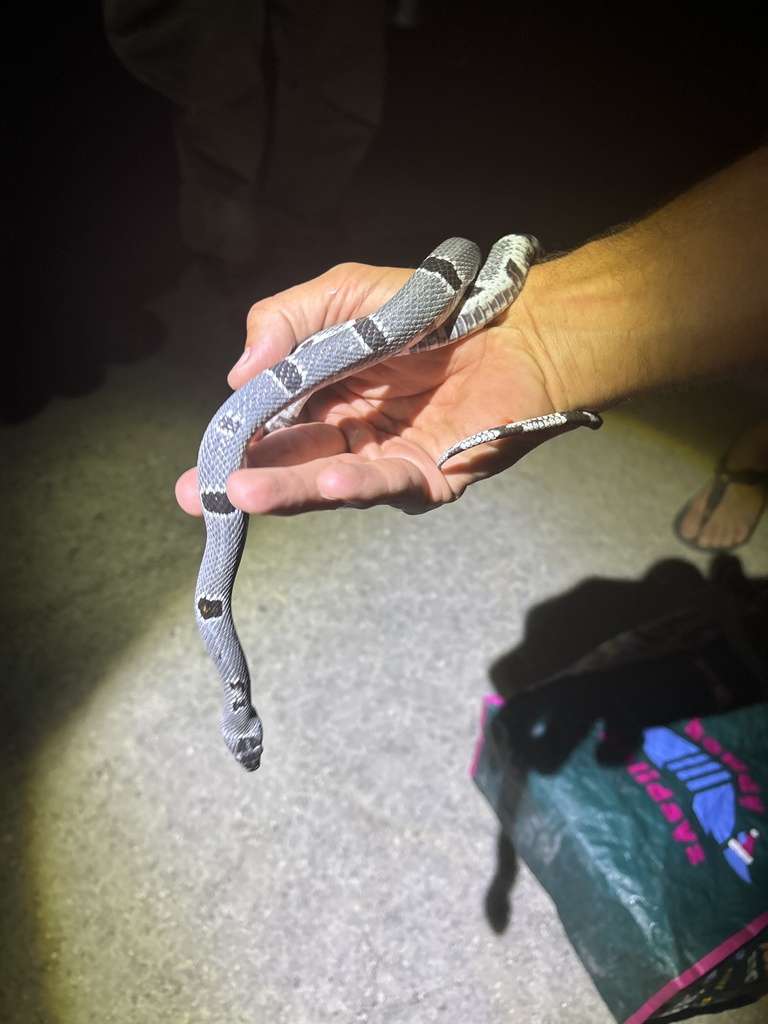
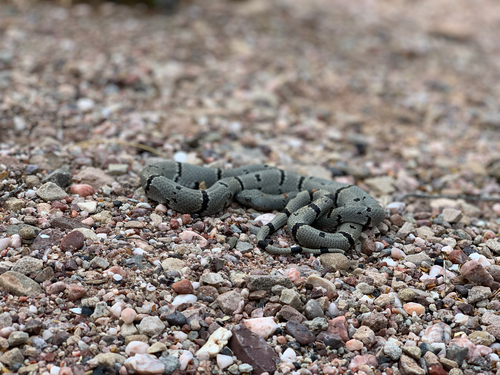
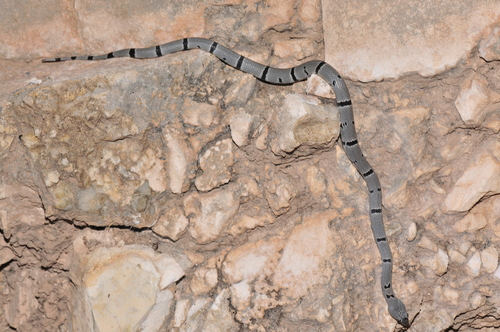
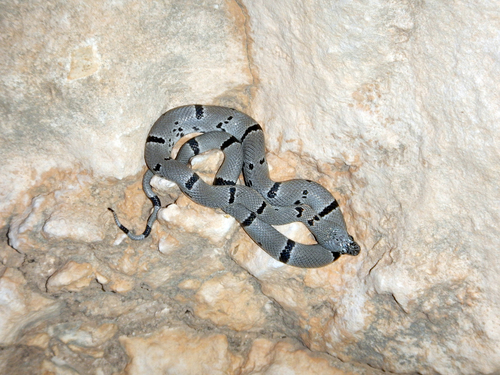
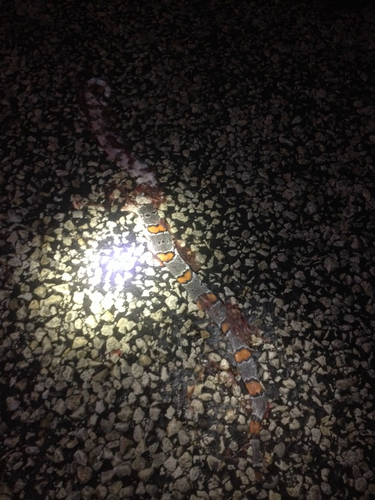
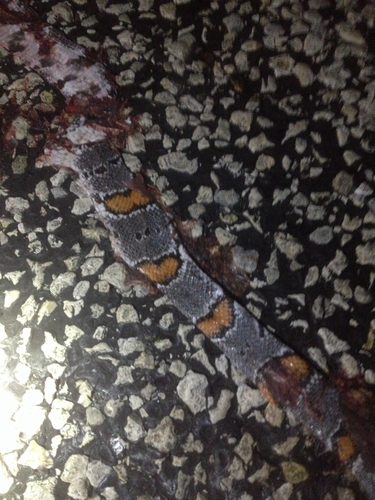
6 photographs of the Gray-banded Kingsnake. © Wendy A.
The Gray-banded Kingsnake (Lampropeltis alterna) is a non-venomous snake in the Colubridae family, recorded in 2 countries.
- Also called
- Kingsnake / Milksnake
- Family
- Colubridae
- Size
- 2–5 ft.
- Habitat
- Forests, farmland, grasslands, and suburbs.
- Behavior
- Powerful constrictors that eat other snakes — including venomous ones; gentle but may musk or vibrate the tail.
- Identify
- Smooth, glossy scales with bold bands or chain-like patterns. Milksnakes mimic coral snakes, but red touches black.
About the Gray-banded Kingsnake
The gray-banded kingsnake (Lampropeltis alterna), sometimes referred to as the alterna or the Davis Mountain king snake, is a species of nonvenomous snake in the family Colubridae. The species is endemic to the southwestern United States and adjacent Mexico. Some sources list two distinct subspecies of Lampropeltis alterna, as L. a. alterna and L. a. blairi differentiated by patterning and locale, but research has shown them to be color morphs of the same species.
Taxonomy
Arthur Erwin Brown described the species in 1901.
The color morph "blairi", formerly specific name or subspecific name blairi, is named in honor of American zoologist William Franklin Blair.
Description
A moderately sized snake, the gray-banded kingsnake can grow up to 4 ft (120 cm) in total length (including tail), with the average total length being 3 ft (91 cm). It has a relatively wide head (when compared to other kingsnake species), and has large eyes with round pupils.
L. alterna coloration and patterning vary greatly, but there are two main color morphs, which were once considered separate subspecies: the "blairi" which has wide red/orange banding, and the "alterna" which has thinner orange/red banding. Both are generally on a gray background with white and/or black accenting. There are many variations on this basic morphology found in the wild and captive bred, with some specimens even lacking orange or red banding entirely.
Distribution and habitat
Lampropeltis alterna is found in the Trans-Pecos/Chihuahuan Desert region of southwestern Texas, southern New Mexico, and northern Mexico. The species is closely associated with limestone and volcanic substrates, with steep slopes and standard desert scrub.
Behavior
In the wild, the gray-banded kingsnake, is not often encountered. It is a common species, but nocturnal and quite secretive. Its natural range is sparsely populated with humans, and many regions are virtually impassable due to the mountainous terrain. In the field herpetologist community, finding this snake in the wild is often considered to be a laudable feat. Most that are located are found along the roadways that transect their habitat in the Trans Pecos region. L. alterna generally has a calm disposition and is not prone to defensive reactions, like biting. They are non venomous and have an immunity to rattlesnake venom.
Diet
The gray-banded kingsnake feeds primarily on lizards. It will occasionally feed on small rodents, frogs, and the eggs of ground nesting birds, lizards, and other snakes.
Reproduction
L. alterna is oviparous, laying clutches of 3–13 eggs in early summer, which hatch in approximately 9 weeks. Each hatchling is around 10 in (25 cm) in total length.
Conservation
Adapted from Wikipedia, available under CC BY-SA.
Frequently asked: Gray-banded Kingsnake
- Is the Gray-banded Kingsnake venomous?
- No. The Gray-banded Kingsnake (Lampropeltis alterna) is non-venomous and is not considered dangerous to humans. Like most snakes, it will retreat rather than bite when given the chance.
- Is the Gray-banded Kingsnake poisonous?
- Snakes are venomous, not poisonous. "Poisonous" means harmful to eat or touch; "venomous" means injecting toxins through a bite. The Gray-banded Kingsnake is neither poisonous nor venomous.
- Is the Gray-banded Kingsnake dangerous?
- The Gray-banded Kingsnake is not dangerous to humans. It has no medically significant venom and bites only defensively if cornered or handled.
- Where does the Gray-banded Kingsnake live?
- The Gray-banded Kingsnake has verified records in 2 countries, including United States of America, Mexico. See the distribution section below for its full range.
- How do I identify the Gray-banded Kingsnake?
- Smooth, glossy scales with bold bands or chain-like patterns. Milksnakes mimic coral snakes, but red touches black.
- How big does the Gray-banded Kingsnake get?
- 2–5 ft.
- What does the Gray-banded Kingsnake eat?
- The gray-banded kingsnake feeds primarily on lizards. It will occasionally feed on small rodents, frogs, and the eggs of ground nesting birds, lizards, and other snakes.
Where it is found
By U.S. state
More Colubridae snakes
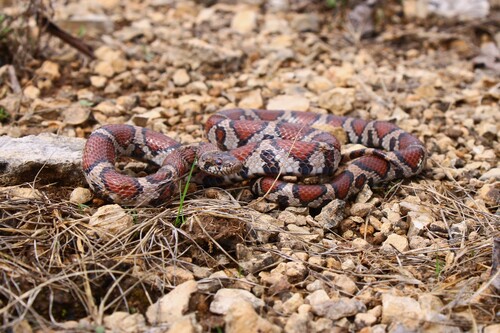 Eastern MilksnakeLampropeltis triangulum
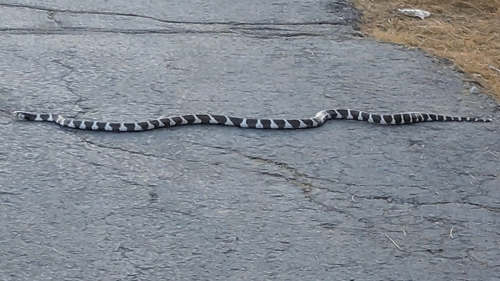 California King SnakeLampropeltis californiae
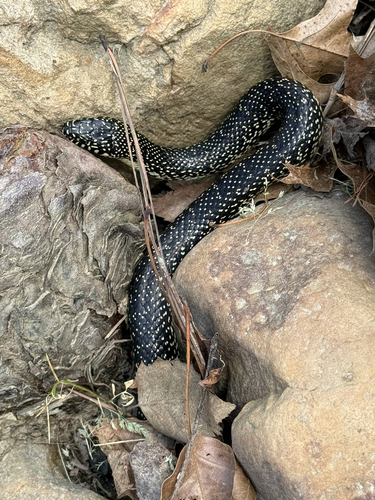 Speckled KingsnakeLampropeltis holbrooki
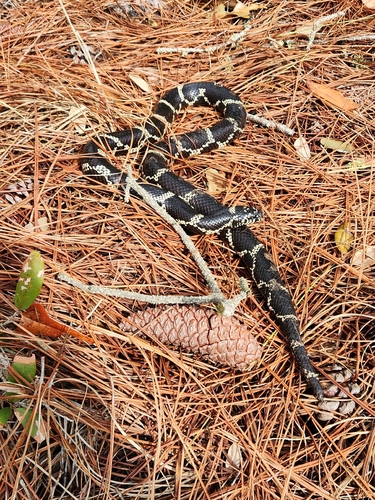 Eastern KingsnakeLampropeltis getula
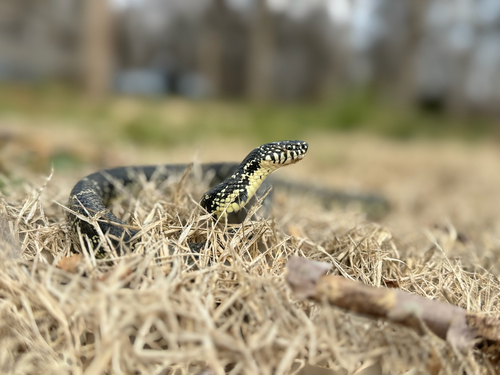 Black KingsnakeLampropeltis nigra
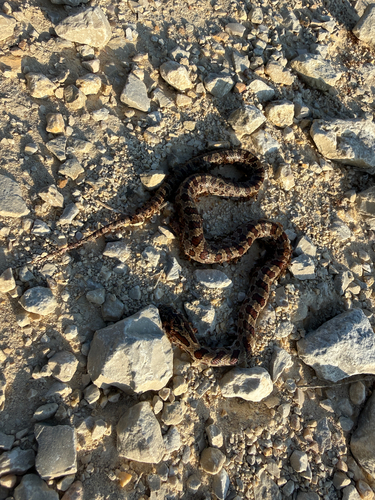 Prairie KingsnakeLampropeltis calligaster
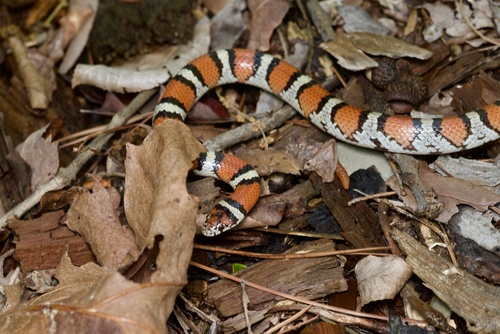 Western MilksnakeLampropeltis gentilis
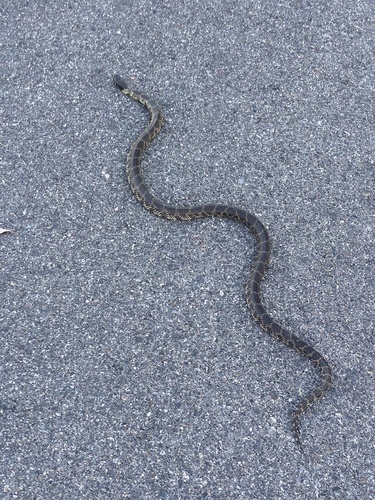 Desert KingsnakeLampropeltis splendida
Classification
How scientists group this snake, from the broadest category down to the exact species. Each step narrows to its closest relatives.
- OrderThe broad group of scaled reptiles: all snakes and lizards
- Squamata
- FamilyA group of related snakes that share key traits
- Colubridae
- GenusA close-knit group of very similar species
- Lampropeltis
- SpeciesThis exact snake, named in the two-part scientific name
- Lampropeltis alterna
Keep learning
- What to Do If You Find a SnakeFound a snake at home or on a trail? Here is how to stay calm, give it space, identify it safely, and know when to call a professional.
- Venomous vs Nonvenomous: How to Tell the DifferenceThe folk rules for telling venomous snakes apart, where each one fails, and why location-based identification beats guessing by sight.
- What Is a Snake? Anatomy and the BasicsA clear overview of what makes a snake a snake: limbless body plan, anatomy, evolution from lizards, species diversity, and why they are ectothermic.
- How to Keep Snakes Out of Your Yard and HomeA practical guide to keeping snakes out of your yard and home using habitat changes that work, plus what to skip and what to do if one shows up.
Distribution from GBIF & iNaturalist. Venom status per CDC. Background: Wikipedia. Informational only. Never handle a snake to identify it.