
Elapidae
Eastern Turtle-headed Sea Snake
VenomousEmydocephalus annulatus
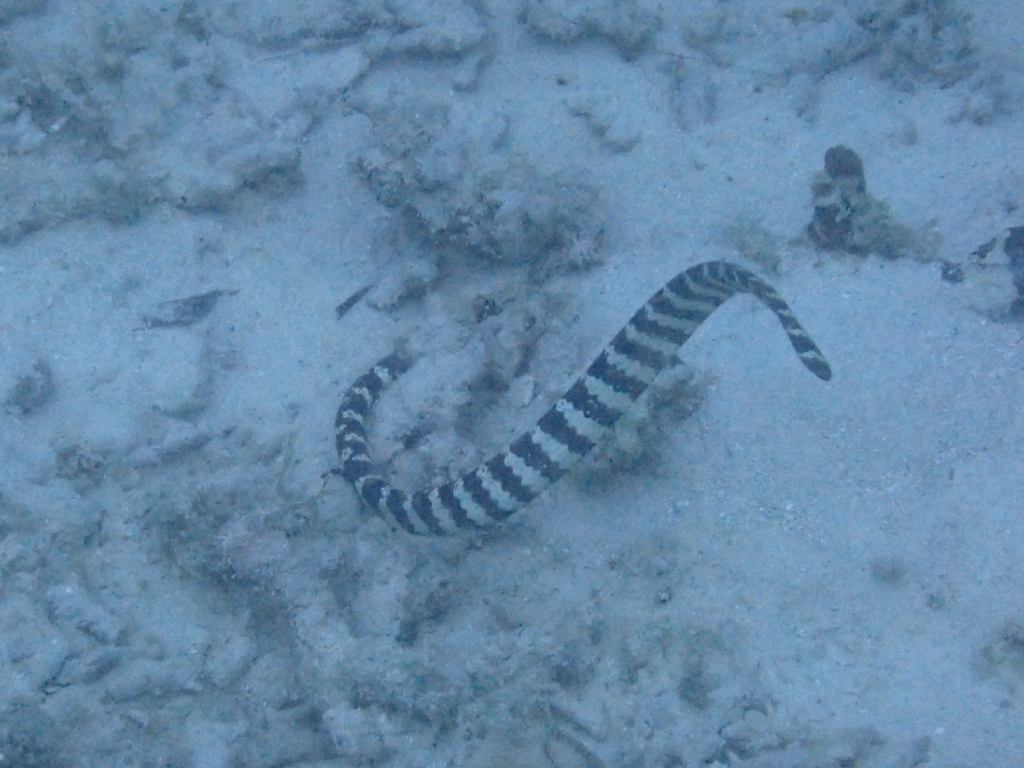
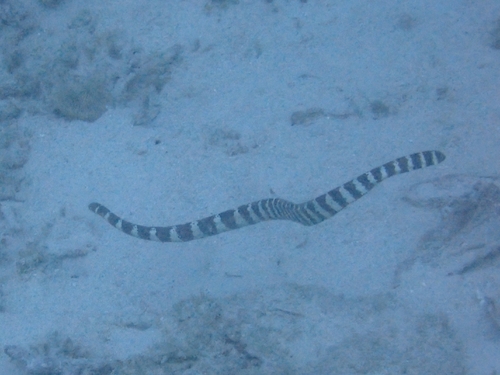
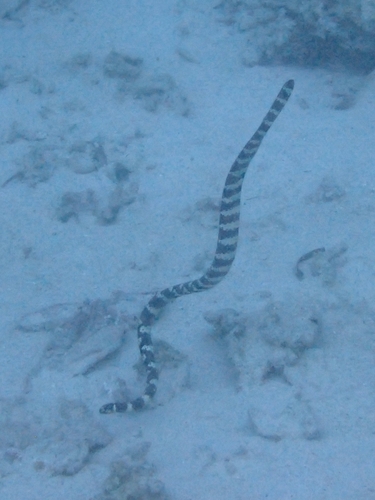
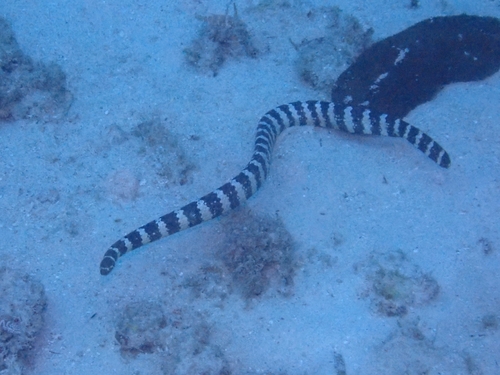
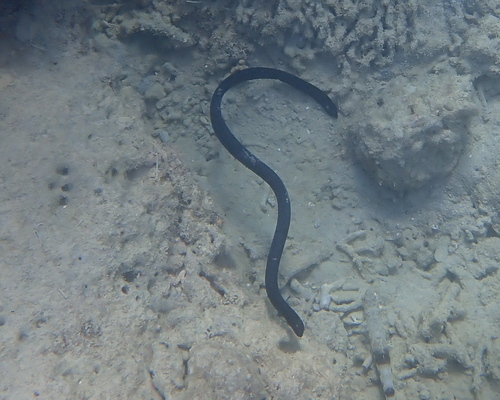
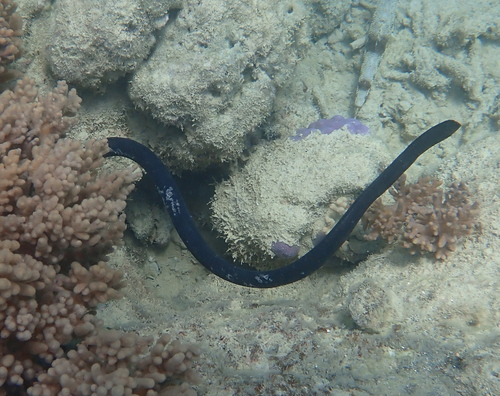
6 photographs of the Eastern Turtle-headed Sea Snake. © Ben Costamagna.
The Eastern Turtle-headed Sea Snake (Emydocephalus annulatus) is a venomous snake in the Elapidae family, recorded in 4 countries.
If you are bitten
This is a venomous snake. Treat any bite as a medical emergency: stay calm, keep the bitten limb still and roughly level with the heart, remove rings and tight clothing, and get to emergency care immediately. Do not apply a tourniquet, cut the wound, apply ice, or try to suck out venom. Call your local emergency number or poison center.
- Family
- Elapidae
- Danger
- high
About the Eastern Turtle-headed Sea Snake
Emydocephalus annulatus, commonly known as the turtleheaded sea snake or egg-eating sea snake, is a species of sea snake that can be found in waters of Oceania near Australia and some Pacific Islands such as the Philippines and the Loyalty Islands of New Caledonia. The geographic range is sporadic, for example, with populations distributed near the eastern and western coasts of Australia in the Great Barrier Reef and the Timor Sea reefs, respectively. They do not, however, occur in the Gulf of Carpentaria along the north coast.
Description
Named for its short, blunt head, this medium-sized snake has a slender build and varies in color. A single snake may exhibit only one color or may have banded patterns of white or yellow with dark rings. The scales on top of the head are large, regular, and entire. The rostral scale on the tip of the snout is conical in shape, and the second of three supralabial scales is the largest. The body has 15–17 rows of smooth, overlapping scales. It has 125–145 ventral scales, a single anal scale, and 20–33 single subcaudal scales. It may grow to 103 cm (41 in) in length.
An individual snake's color affects the amount of algal fouling that accumulates on its body. A snake of a darker, more monotonous color has a higher level of algae build-up than one of a paler, patterned variety. The added weight of algae affects an individual's speed, reducing it by up to 20%. Those whose locomotive skills were affected had a tendency to be more inactive and choose to hide among the coral, while those with little to no algal fouling were found actively foraging. The inactivity, however, did not affect their survival rates; lighter-colored snakes were not more likely to survive than their darker-colored counterparts.
Dietary habits
Curiously, Emydocephalus is the only sea snake that does not possess palatal teeth. Contrary to the foraging habits of other snakes, the turtle-head tends to eat smaller, more frequent meals rather than larger, infrequent prey: this sea snake feeds solely on fish eggs; specifically, the eggs of demersal fish that attach to the substrate, such as those of damselfish, blennies, and gobies. The larger the snake, the more likely it is to feed on damselfish eggs, which lie in exposed areas, rather than blennies' and gobies', whose eggs are located in narrow crevices.
E. annulatus populations tend to stay where they are and rarely move between territories; they tend to be sedentary. This could possibly be related to the spatial memory of snakes and their ability to remember where nests are located. If they stay in the same area, then the snakes are able to feed regularly on the same sites.
Adapted from Wikipedia, available under CC BY-SA.
Local and regional names
The Eastern Turtle-headed Sea Snake is known by these names across the regions where it lives:
- Czech
- želvohlavec kroužkovaný
- Danish
- Båndet Skildpaddehovedet Havslange
- English
- Egg-eating Sea Snake, Ringed Turtlehead Sea Snake, Turtle-headed Seasnake, Turtleheaded Sea Snake, turtle-headed sea snake
- French
- Emydocephale Annele, Emydocéphale Annelé, Hydrophide annelé , Serpent marin annelé à tête de tortue, Serpent bleu, Emydocéphale annelé, Serpent marin à tête de tortue, Serpent à tête de tortue
- German
- Eierfressende Seeschlange, Schildkrötenköpfige Seeschlange
- Italian
- Serpente di mare testa di tartaruga orientale
- Japanese
- カメガシラウミヘビ
- Portuguese
- Serpente-marinha-cabeça-de-tartaruga
- Russian
- Кольчатый черепахоголов, Кольчатый эмидоцефал
- Spanish
- Serpiente Marina Cabeza de Tortuga
Frequently asked: Eastern Turtle-headed Sea Snake
- Is the Eastern Turtle-headed Sea Snake venomous?
- Yes. The Eastern Turtle-headed Sea Snake (Emydocephalus annulatus) is venomous and belongs to the Elapidae family (cobra, mamba, coral or sea snake). Its bite is considered high risk to people. Treat any bite as a medical emergency.
- Is the Eastern Turtle-headed Sea Snake poisonous?
- Snakes are venomous, not poisonous. "Poisonous" means harmful to eat or touch; "venomous" means injecting toxins through a bite. The Eastern Turtle-headed Sea Snake is venomous, delivering venom through a bite.
- Is the Eastern Turtle-headed Sea Snake dangerous?
- This is a venomous snake. Treat any bite as a medical emergency: stay calm, keep the bitten limb still and roughly level with the heart, remove rings and tight clothing, and get to emergency care immediately. Do not apply a tourniquet, cut the wound, apply ice, or try to suck out venom. Call your local emergency number or poison center.
- Where does the Eastern Turtle-headed Sea Snake live?
- The Eastern Turtle-headed Sea Snake has verified records in 4 countries, including New Caledonia, Australia, Philippines. See the distribution section below for its full range.
- What does the Eastern Turtle-headed Sea Snake eat?
- Curiously, Emydocephalus is the only sea snake that does not possess palatal teeth. Contrary to the foraging habits of other snakes, the turtle-head tends to eat smaller, more frequent meals rather than larger, infrequent prey: this sea snake feeds solely on fish eggs; specifically, the eggs of demersal fish that attach to the substrate, such as those of damselfish, blennies, and gobies. The larger the snake, the more likely it is to feed on damselfish eggs, which lie in exposed areas, rather than blennies' and gobies', whose eggs are located in narrow crevices.
If you are bitten by the Eastern Turtle-headed Sea Snake
Do
- Get away from the snake and stay calm. Most bites worsen when people panic or try again to handle the snake.
- Call 911 or Poison Control (1-800-222-1222) right away. Antivenom works best when given early.
- Note the time of the bite and, from a safe distance, the snake's color and pattern, a phone photo is enough. Do not chase it.
- Keep the bitten limb still and at roughly heart level. Sit or lie down and limit movement.
- Remove rings, watches, and tight clothing near the bite before swelling starts.
- Gently wash the bite with soap and water and cover it with a clean, dry dressing.
Do not
- Do not cut the wound or try to suck out the venom.
- Do not apply a tourniquet or ice.
- Do not drink alcohol or caffeine.
- Do not take aspirin or ibuprofen, they can worsen bleeding. Acetaminophen is safer for pain.
- Do not try to catch or kill the snake. A dead snake can still bite by reflex.
First-aid guidance adapted from the U.S. Centers for Disease Control and Prevention (CDC NIOSH), Venomous Snakes. Educational only; always follow the instructions of emergency responders.
Where it is found
More Elapidae snakes
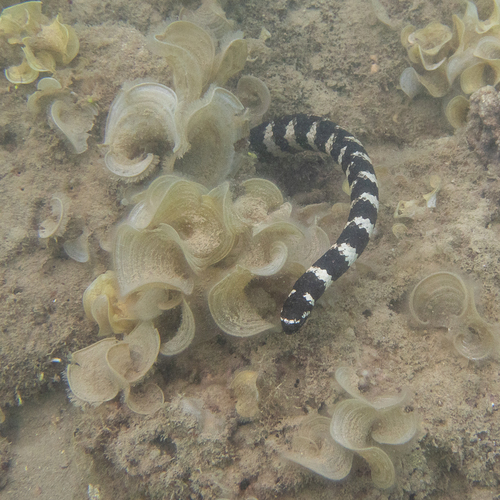 Ijima's Turtle-headed Sea SnakeEmydocephalus ijimae
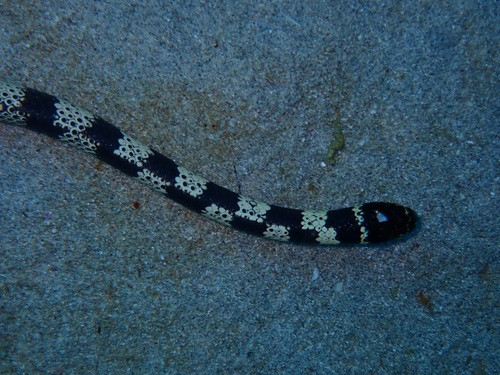 Western Turtle-headed Sea SnakeEmydocephalus orarius
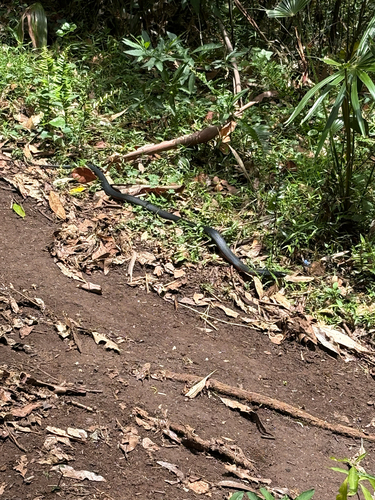 Red-bellied Black SnakePseudechis porphyriacus
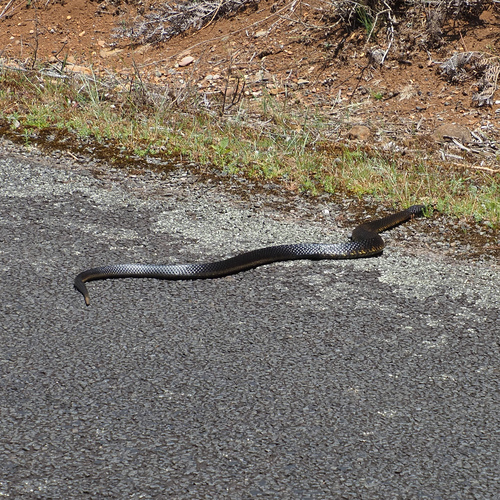 Tiger SnakeNotechis scutatus
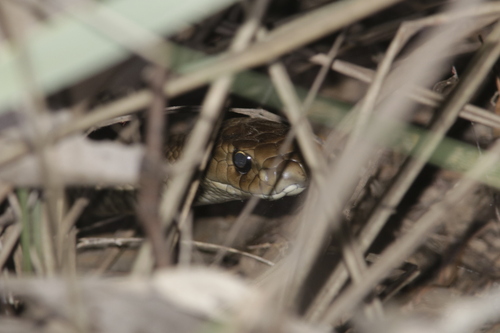 Eastern Brown SnakePseudonaja textilis
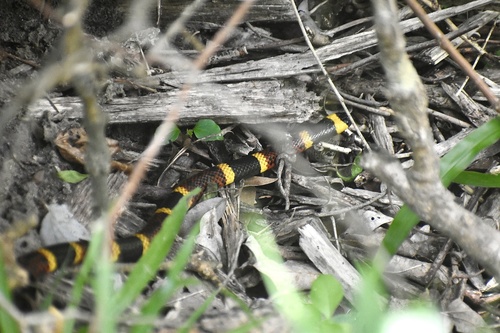 Texas CoralsnakeMicrurus tener
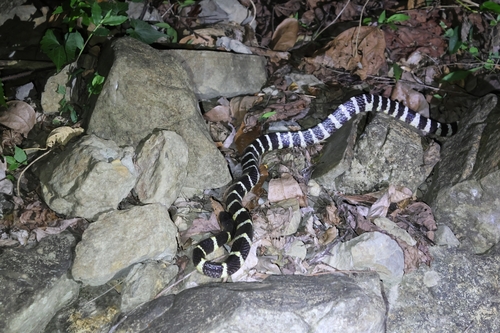 Many-banded KraitBungarus multicinctus
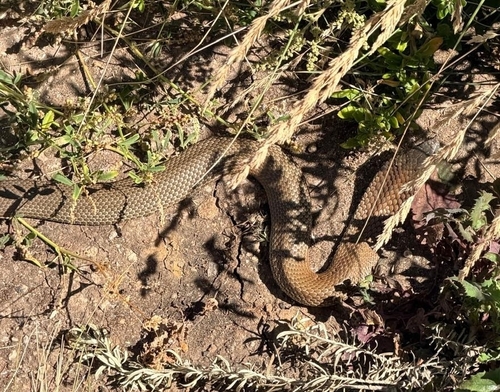 Lowlands CopperheadAustrelaps superbus
Classification
How scientists group this snake, from the broadest category down to the exact species. Each step narrows to its closest relatives.
- OrderThe broad group of scaled reptiles: all snakes and lizards
- Squamata
- FamilyA group of related snakes that share key traits
- Elapidae
- GenusA close-knit group of very similar species
- Emydocephalus
- SpeciesThis exact snake, named in the two-part scientific name
- Emydocephalus annulatus
Keep learning
- Are Snakes Dangerous? The Real Risk, in PerspectiveMost snakes are harmless and avoid people. Here is the honest picture of snakebite risk worldwide and how to lower your own.
- Snakebite First Aid: What to Do (and What Never to Do)A clear, CDC-based guide to snakebite first aid: the steps that help, the popular myths that hurt, and how to tell a serious bite from a minor one.
- Venomous vs Nonvenomous: How to Tell the DifferenceThe folk rules for telling venomous snakes apart, where each one fails, and why location-based identification beats guessing by sight.
- What to Do If You Find a SnakeFound a snake at home or on a trail? Here is how to stay calm, give it space, identify it safely, and know when to call a professional.
Distribution from GBIF & iNaturalist. Venom status per CDC. Background: Wikipedia. Informational only. Never handle a snake to identify it.