
Genus · Elapidae
Types of sea snakes
3 species make up the genus Emydocephalus, the snakes commonly called sea snakes. All of them are venomous.
About turtle-headed sea snakes
Turtle-headed sea snakes are reef-dwelling elapids that gave up hunting fish to graze almost entirely on fish eggs.
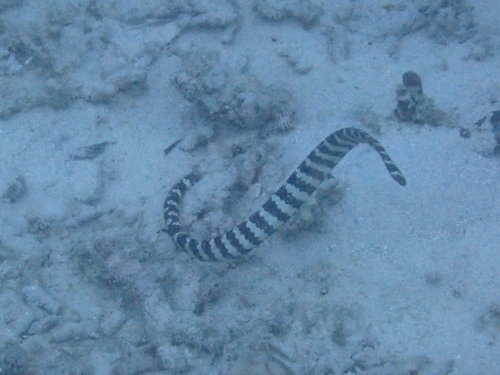
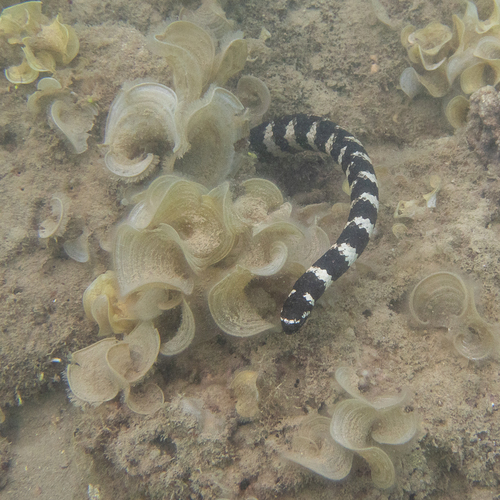
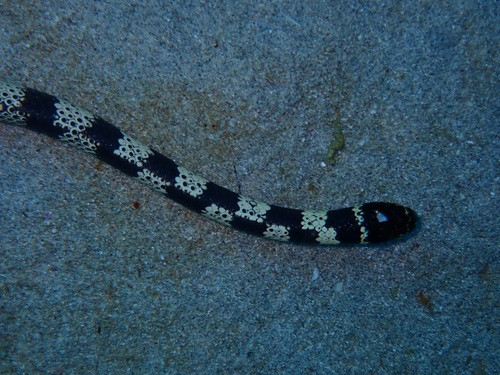
Emydocephalus is a small genus of fully marine snakes in the family Elapidae, the same front-fanged family that includes cobras, mambas, taipans, and the true sea snakes. The genus belongs to the sea snake group, and our database holds three species: the Eastern Turtle-headed Sea Snake, Ijima's Turtle-headed Sea Snake, and the Western Turtle-headed Sea Snake. The common name comes from the short, blunt, rounded snout that gives the head a turtle-like profile.
These snakes live in warm coastal waters of the Indo-Pacific, concentrated around coral reefs, rocky flats, and other shallow marine habitats. Like other sea snakes, they are adapted for life in the water with a paddle-shaped, flattened tail for swimming and valved nostrils that close during dives. They surface to breathe air, so they tend to stay over reefs and shallows rather than open ocean.
In general terms, members are recognized by the stout, short head with that distinctive blunt snout, a moderate body length usually around 1 meter or so, and the flattened oar-like tail shared by sea snakes. Color and banding vary between species and individuals. Reliable species-level identification depends on scale details and range, so location is an important clue.
Their most unusual trait is diet. Unlike most elapids and most sea snakes that take fish, Emydocephalus specializes on the eggs of fishes, scraping egg masses from the reef. Because they eat eggs rather than struggling prey, their fangs and venom apparatus are strongly reduced compared with other sea snakes. They give birth to live young in the water, as is typical for this sea snake lineage.
Emydocephalus is part of the venomous Elapidae family, so members should be treated as venomous and never handled, even though their venom system is reduced for an egg-only diet and they are not considered aggressive toward people. Do not attempt to catch, handle, or harass any wild sea snake. If a bite from any sea snake or unknown snake occurs, treat it as a medical emergency: keep the person calm and still and seek emergency care immediately. In the United States contact Poison Control at 1-800-222-1222 or call local emergency services; elsewhere contact your local emergency number.
Emydocephalus belongs to the Elapidae family (Cobras, mambas, coral & sea snakes). Front-fanged venomous snakes, many with potent neurotoxic venom. Usually slender with a head barely wider than the neck and fixed front fangs (not the folding fangs of vipers). Coral snakes are boldly ringed; sea snakes have a flattened, paddle-like tail.
Danger: All elapids are venomous and the family is responsible for a large share of fatal snakebites worldwide. Many are shy, but bites can be life-threatening. Treat any bite as a medical emergency.
All species (3)
Keep learning
- Venomous vs Nonvenomous: How to Tell the DifferenceThe folk rules for telling venomous snakes apart, where each one fails, and why location-based identification beats guessing by sight.
- Are Snakes Dangerous? The Real Risk, in PerspectiveMost snakes are harmless and avoid people. Here is the honest picture of snakebite risk worldwide and how to lower your own.
- Snake Venom Explained: How It Works and WhyWhat snake venom actually is, why it evolved, the main venom types, fang delivery, how antivenom works, and why ranking the most venomous snake is hard.
- How Snakes Move, Hunt, and EatHow snakes move without legs, hunt as ambushers or active foragers, kill by constriction or venom, and swallow prey wider than their head.