
Elapidae
Ijima's Turtle-headed Sea Snake
VenomousEmydocephalus ijimae
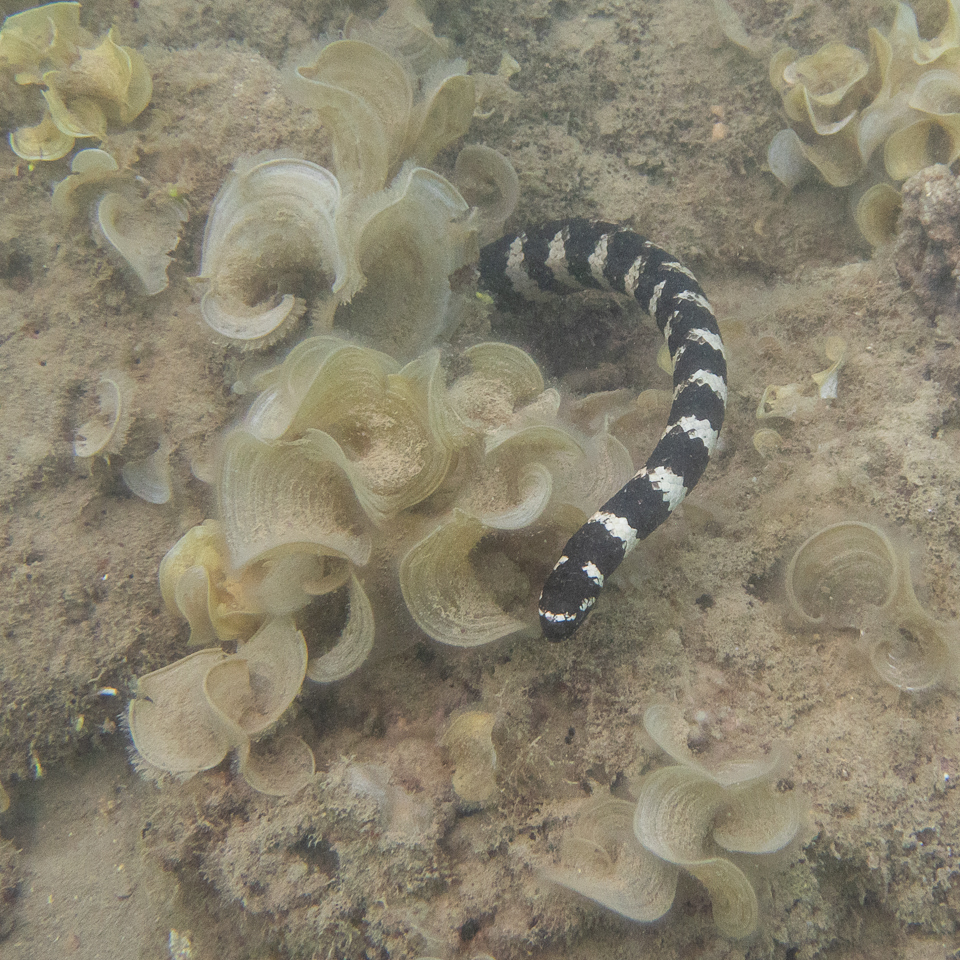
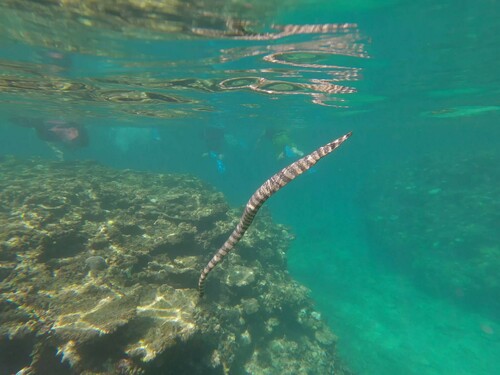
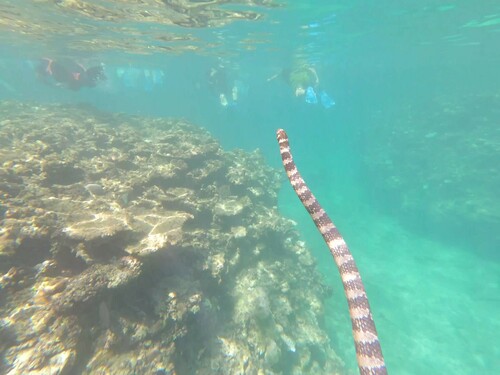
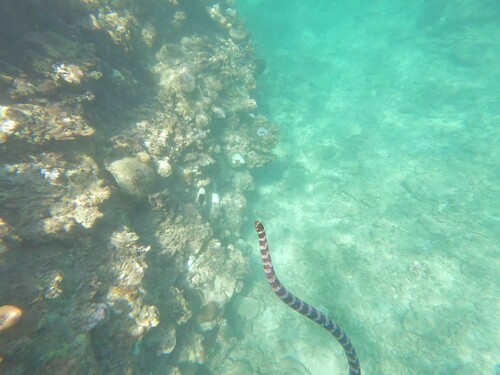
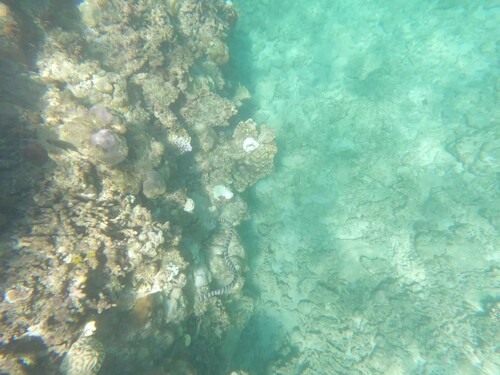
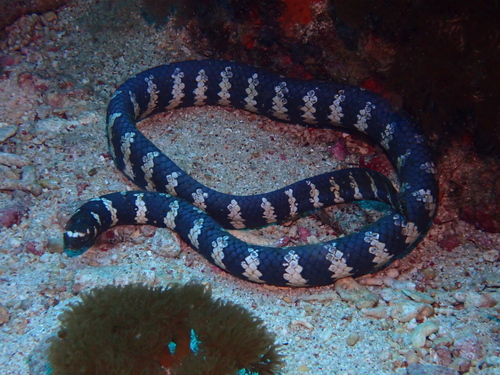
6 photographs of the Ijima's Turtle-headed Sea Snake. © Piotr Lukasik.
The Ijima's Turtle-headed Sea Snake (Emydocephalus ijimae) is a venomous snake in the Elapidae family.
If you are bitten
This is a venomous snake. Treat any bite as a medical emergency: stay calm, keep the bitten limb still and roughly level with the heart, remove rings and tight clothing, and get to emergency care immediately. Do not apply a tourniquet, cut the wound, apply ice, or try to suck out venom. Call your local emergency number or poison center.
- Family
- Elapidae
- Danger
- high
About the Ijima's Turtle-headed Sea Snake
Emydocephalus ijimae, commonly known as Ijima's sea snake and turtlehead sea snake, is a species of snake in the family Elapidae. The species occurs in East Asia, in the shallow coastal waters of the north-western Pacific Ocean. E. ijimae feeds exclusively on the eggs of coral reef fishes, which makes it an important predator for maintaining a healthy coral reef ecosystem.
Etymology
The specific name, ijimae, is in honor of Japanese zoologist Isao Ijima (1861–1921).
Geographic range
E. ijimae is found off the coasts of China, Japan (including the Ryukyu Islands), and Taiwan.
Sex and growth
E. ijimae exhibits sexual size dimorphism with males reaching a snout-to-vent length (SVL) typically less than 75 cm (30 in) and females sometimes exceeding 80 cm (31 in). Females also have a larger body weight (BW) of 170–600 g (6.0–21.2 oz) compared to the males which weigh 70–350 g (2.5–12.3 oz). The female BW also experiences greater fluctuations than the male BW. Adult males typically see an increase in BW from early spring to late summer and females occasionally undergo a rapid BW decrease from late autumn to early spring followed by a steady weight regain.
SVL in newborn E. ilijmae is 266–342 mm (10.5–13.5 in). Neonate males have been reported to grow 0.27 mm/day while neonate females grow 0.36 mm/day. The snakes reach maturity around the same age: Between 19 and 28 months for males and between 19 and 26 months for females.
Reproduction
E. ijimae is viviparous. Neonates begin reproductive activity in the second or third summer and third spring after birth. Studies have suggested that E. ijimae is an income breeder that relies on temporal energy intake to produce offspring.
Adapted from Wikipedia, available under CC BY-SA.
Local and regional names
The Ijima's Turtle-headed Sea Snake is known by these names across the regions where it lives:
- Chinese
- 飯島氏海蛇, 飯島氏龜頭海蛇, 龟头海蛇
- English
- Ijima's sea snake, Turtlehead Sea Snake
- Italian
- Serpente di mare di Ijima, Serpente di mare testa di tartaruga di Ijima
- Japanese
- イイジマウミヘビ
- Portuguese
- Serpente-marinha-japonesa
- Russian
- Азиатский черепахоголов
- Spanish
- Serpiente de mar de Ijima
Frequently asked: Ijima's Turtle-headed Sea Snake
- Is the Ijima's Turtle-headed Sea Snake venomous?
- Yes. The Ijima's Turtle-headed Sea Snake (Emydocephalus ijimae) is venomous and belongs to the Elapidae family (cobra, mamba, coral or sea snake). Its bite is considered high risk to people. Treat any bite as a medical emergency.
- Is the Ijima's Turtle-headed Sea Snake poisonous?
- Snakes are venomous, not poisonous. "Poisonous" means harmful to eat or touch; "venomous" means injecting toxins through a bite. The Ijima's Turtle-headed Sea Snake is venomous, delivering venom through a bite.
- Is the Ijima's Turtle-headed Sea Snake dangerous?
- This is a venomous snake. Treat any bite as a medical emergency: stay calm, keep the bitten limb still and roughly level with the heart, remove rings and tight clothing, and get to emergency care immediately. Do not apply a tourniquet, cut the wound, apply ice, or try to suck out venom. Call your local emergency number or poison center.
- Why is it called the Ijima's Turtle-headed Sea Snake?
- The specific name, ijimae, is in honor of Japanese zoologist Isao Ijima (1861–1921).
If you are bitten by the Ijima's Turtle-headed Sea Snake
Do
- Get away from the snake and stay calm. Most bites worsen when people panic or try again to handle the snake.
- Call 911 or Poison Control (1-800-222-1222) right away. Antivenom works best when given early.
- Note the time of the bite and, from a safe distance, the snake's color and pattern, a phone photo is enough. Do not chase it.
- Keep the bitten limb still and at roughly heart level. Sit or lie down and limit movement.
- Remove rings, watches, and tight clothing near the bite before swelling starts.
- Gently wash the bite with soap and water and cover it with a clean, dry dressing.
Do not
- Do not cut the wound or try to suck out the venom.
- Do not apply a tourniquet or ice.
- Do not drink alcohol or caffeine.
- Do not take aspirin or ibuprofen, they can worsen bleeding. Acetaminophen is safer for pain.
- Do not try to catch or kill the snake. A dead snake can still bite by reflex.
First-aid guidance adapted from the U.S. Centers for Disease Control and Prevention (CDC NIOSH), Venomous Snakes. Educational only; always follow the instructions of emergency responders.
More Elapidae snakes
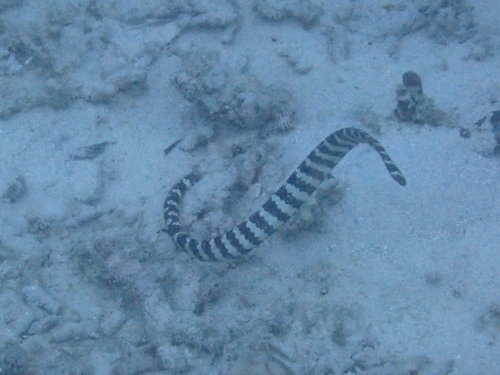 Eastern Turtle-headed Sea SnakeEmydocephalus annulatus
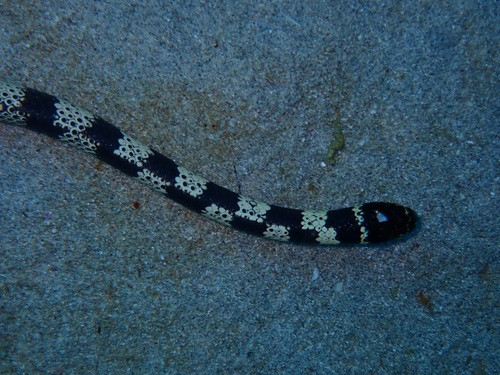 Western Turtle-headed Sea SnakeEmydocephalus orarius
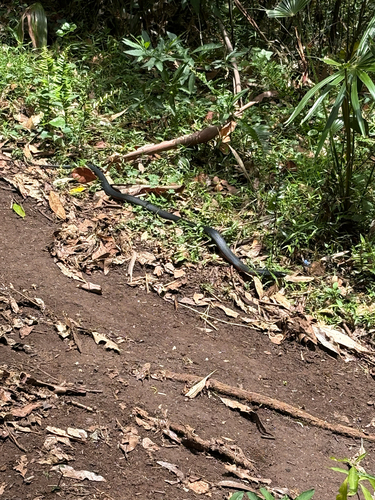 Red-bellied Black SnakePseudechis porphyriacus
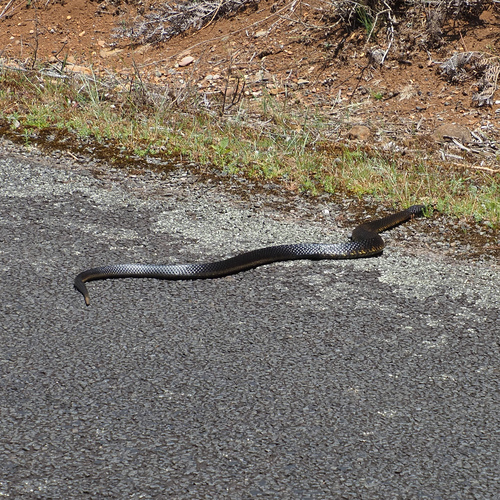 Tiger SnakeNotechis scutatus
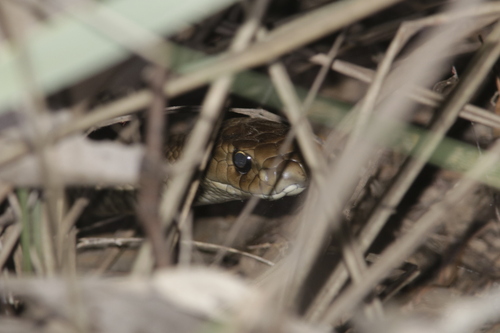 Eastern Brown SnakePseudonaja textilis
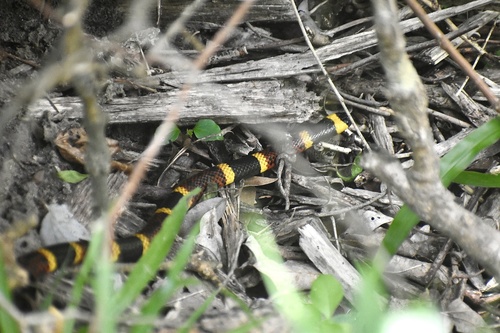 Texas CoralsnakeMicrurus tener
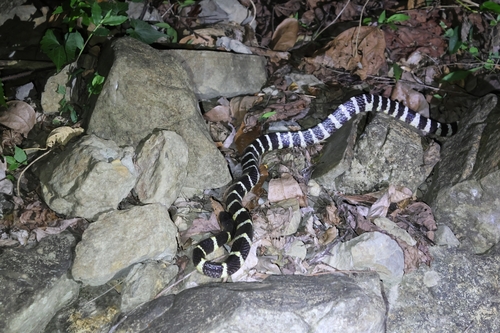 Many-banded KraitBungarus multicinctus
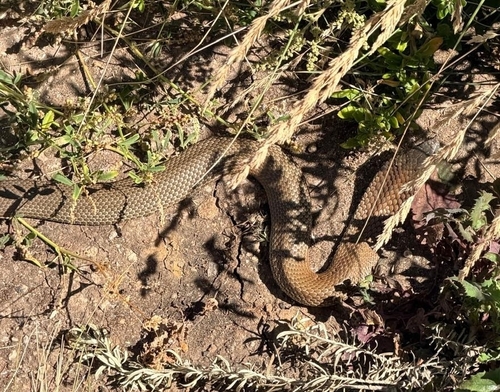 Lowlands CopperheadAustrelaps superbus
Classification
How scientists group this snake, from the broadest category down to the exact species. Each step narrows to its closest relatives.
- OrderThe broad group of scaled reptiles: all snakes and lizards
- Squamata
- FamilyA group of related snakes that share key traits
- Elapidae
- GenusA close-knit group of very similar species
- Emydocephalus
- SpeciesThis exact snake, named in the two-part scientific name
- Emydocephalus ijimae
Keep learning
- Are Snakes Dangerous? The Real Risk, in PerspectiveMost snakes are harmless and avoid people. Here is the honest picture of snakebite risk worldwide and how to lower your own.
- Snakebite First Aid: What to Do (and What Never to Do)A clear, CDC-based guide to snakebite first aid: the steps that help, the popular myths that hurt, and how to tell a serious bite from a minor one.
- Venomous vs Nonvenomous: How to Tell the DifferenceThe folk rules for telling venomous snakes apart, where each one fails, and why location-based identification beats guessing by sight.
- What to Do If You Find a SnakeFound a snake at home or on a trail? Here is how to stay calm, give it space, identify it safely, and know when to call a professional.
Distribution from GBIF & iNaturalist. Venom status per CDC. Background: Wikipedia. Informational only. Never handle a snake to identify it.