
Wormsnake
Common Wormsnake
HarmlessCarphophis amoenus
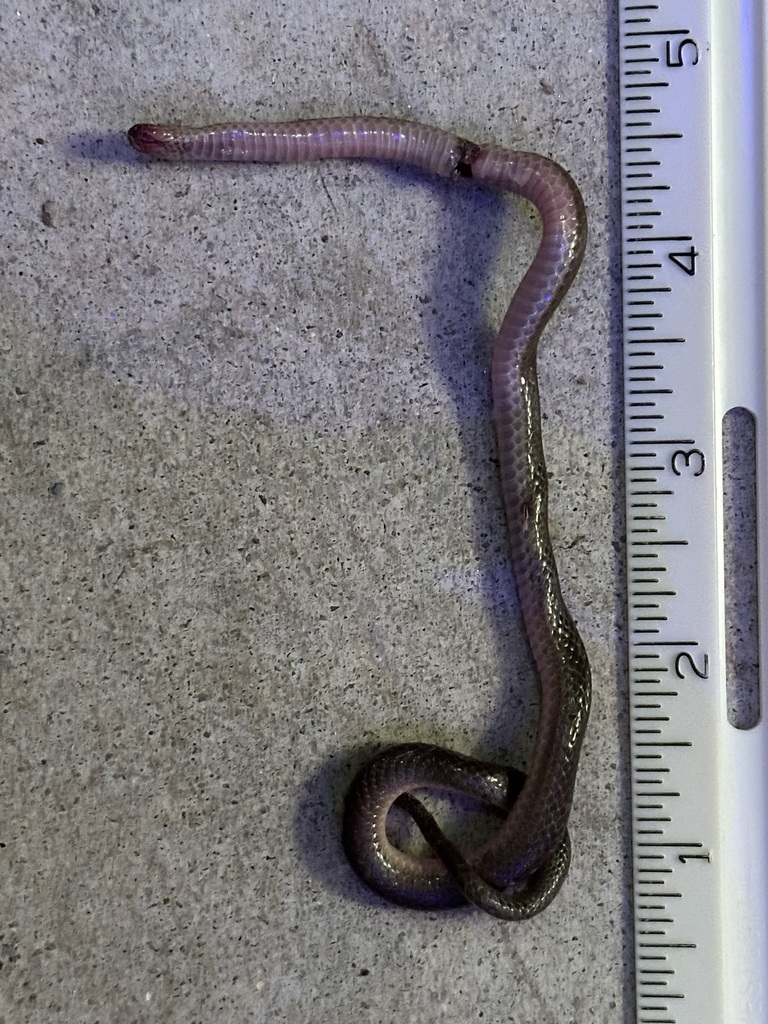
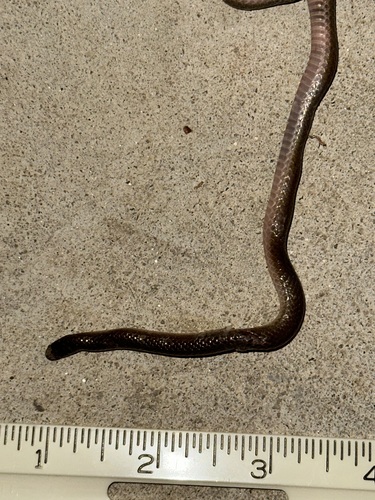
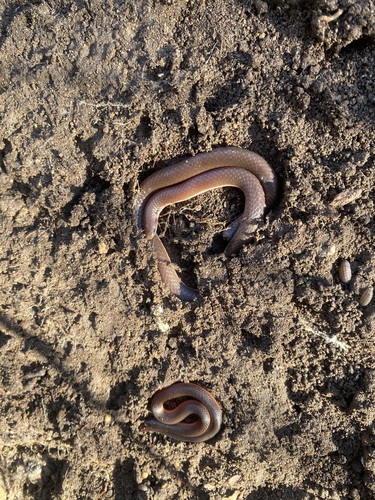
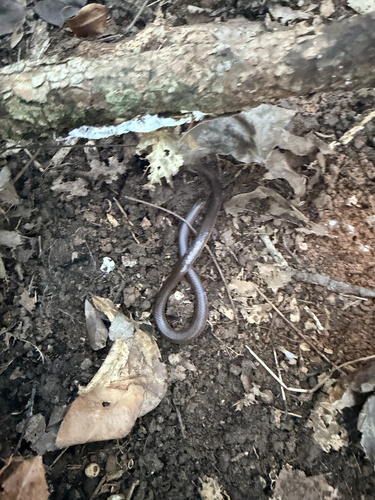
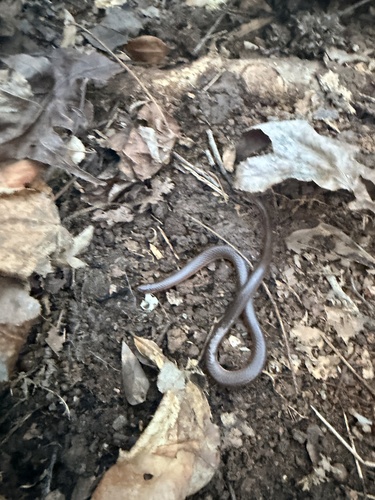
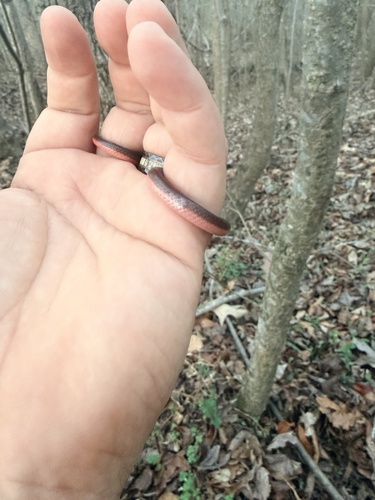
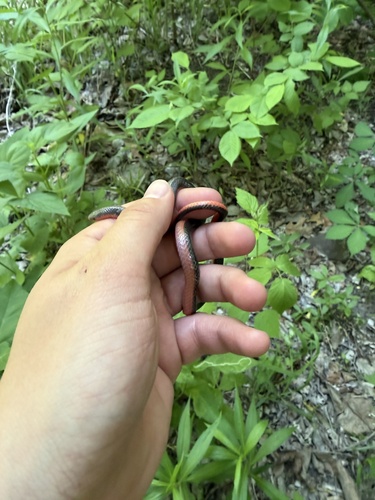
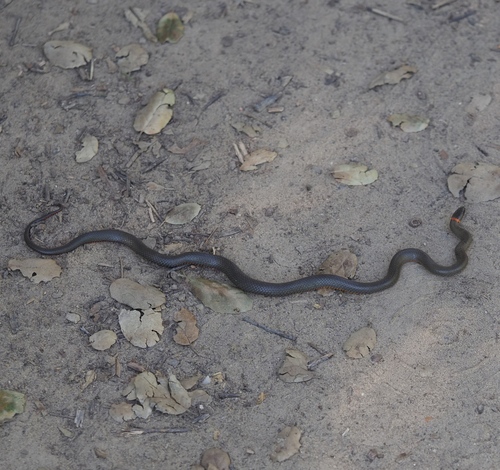
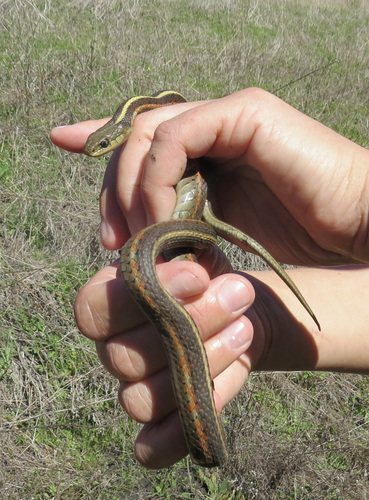
6 photographs of the Common Wormsnake. © Linda Watson.
The Common Wormsnake (Carphophis amoenus) is a non-venomous snake in the Colubridae family, recorded in 1 country.
The Common Wormsnake is a small, nonvenomous burrowing snake of the eastern United States, found from southern New England south to Alabama and west to Louisiana and Illinois. It is harmless to people and rarely even tries to bite.
- Also called
- Wormsnake
- Family
- Colubridae
- Size
- Tiny, 7 to 11 in.
- Habitat
- Moist woodland soil.
- Behavior
- Burrowers that feed on earthworms.
- Identify
- Glossy brown above with a pink belly; looks like a small worm.
How to identify the Common Wormsnake
Look for a tiny, glossy, unpatterned brown snake with a bright pink belly, a pointed head no wider than its neck, and a short tail that ends in a small spine. At a glance it looks more like an earthworm than a snake.
- Size
- Adults are usually 7.5 to 11 inches long, with a record of about 13 inches.
- Back
- Plain tan to dark brown with no pattern, covered in smooth, glossy scales in 13 rows.
- Belly
- Bright pink, and the pink reaches up onto the lowest one or two rows of side scales.
- Head
- Small, pointed and conical, no wider than the neck, which helps it push through soil.
- Eyes
- Small and black.
- Tail
- Short, ending in an abrupt, spine-like scale that it may press against your skin, though it cannot hurt you.
- Young
- Juveniles are noticeably darker than adults, often dark gray, and turn brown in their second year.
Have a photo? Identify it from your photo and location.
Is the Common Wormsnake dangerous?
Not venomous
The Common Wormsnake is nonvenomous and poses no real risk to people. It is too small to bite effectively and rarely tries; its main defense is a smelly musk.
If you find one
- Leave it where it is or let it crawl back under cover on its own.
- Put logs, rocks and boards back the way you found them, since they are its shelter.
- Keep pets away and do not use insecticides near leaf litter or garden beds where it hunts.
Habitat and behavior
- Habitat
- It lives in moist woodland soil, especially in rocky woods with deep leaf litter and good canopy cover. Look under rotting logs, stumps, rocks and leaf litter, often along woodland edges, near wetlands, and in grassy areas next to woods. It needs damp soil to avoid drying out.
- Behavior
- It is a burrower that spends most of its life underground or inside rotting wood, so it is seldom seen even where it is common. When disturbed it is shy and mild, twisting, trying to wriggle away, probing with its tail spine, and releasing a foul-smelling musk from its vent. It almost never bites.
- Diet
- It eats mostly earthworms, and sometimes other soft-bodied prey such as slugs and insect larvae.
- When active
- It is most active above ground in spring and again in fall, usually in the late afternoon and early evening, and is often found after heavy rains.
Further reading: Common Wormsnake on Wikipedia.
Frequently asked: Common Wormsnake
- Is a wormsnake a worm or a snake?
- It is a true snake, despite its worm-like look. Unlike an earthworm, it has scales, small black eyes, a pointed head and a pink belly. It moves with the smooth side-to-side motion of a snake, not by stretching and contracting like a worm.
- Is the Common Wormsnake venomous?
- No. It is a nonvenomous colubrid and is harmless to people. It rarely even attempts to bite.
- Why does a wormsnake smell bad when disturbed?
- When grabbed it releases a strong-smelling liquid from its vent as a defense. This is meant to make predators let go and is not harmful, though the odor can linger.
- Why do I find wormsnakes after it rains?
- Heavy rain soaks the soil and brings earthworms, their main food, close to the surface. The damp conditions also let wormsnakes move above ground without drying out, so this is when people see them most.
- Is the Common Wormsnake poisonous?
- Snakes are venomous, not poisonous. "Poisonous" means harmful to eat or touch; "venomous" means injecting toxins through a bite. The Common Wormsnake is neither poisonous nor venomous.
- Is the Common Wormsnake dangerous?
- The Common Wormsnake is not dangerous to humans. It has no medically significant venom and bites only defensively if cornered or handled.
- Where does the Common Wormsnake live?
- The Common Wormsnake has verified records in 1 country, including United States of America. See the distribution section below for its full range.
Where it is found
More Colubridae snakes
Classification
How scientists group this snake, from the broadest category down to the exact species. Each step narrows to its closest relatives.
- OrderThe broad group of scaled reptiles: all snakes and lizards
- Squamata
- FamilyA group of related snakes that share key traits
- Colubridae
- GenusA close-knit group of very similar species
- Carphophis
- SpeciesThis exact snake, named in the two-part scientific name
- Carphophis amoenus
Keep learning
- What to Do If You Find a SnakeFound a snake at home or on a trail? Here is how to stay calm, give it space, identify it safely, and know when to call a professional.
- Venomous vs Nonvenomous: How to Tell the DifferenceThe folk rules for telling venomous snakes apart, where each one fails, and why location-based identification beats guessing by sight.
- What Is a Snake? Snake Facts, Body Plan and How They Differ From LizardsA clear overview of what makes a snake a snake: limbless body plan, anatomy, evolution from lizards, species diversity, and why they are ectothermic.
- How to Keep Snakes Out of Your Yard and HomeA practical guide to keeping snakes out of your yard and home using habitat changes that work, plus what to skip and what to do if one shows up.
Distribution from GBIF & iNaturalist. Venom status per CDC. Background: Wikipedia. Informational only. Never handle a snake to identify it.