
Genus · Colubridae
Types of wormsnakes
2 species make up the genus Carphophis, the snakes commonly called wormsnakes. None are considered dangerous to humans.
About worm snakes
Tiny, glossy burrowers of the eastern United States that look more like an earthworm than a snake.
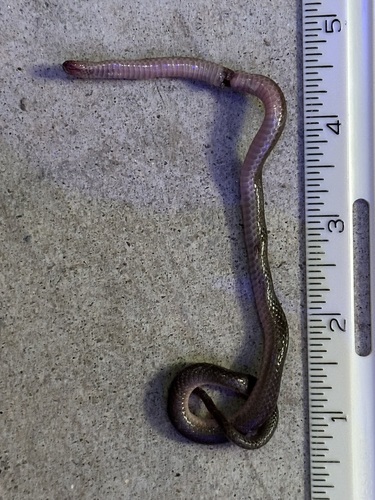
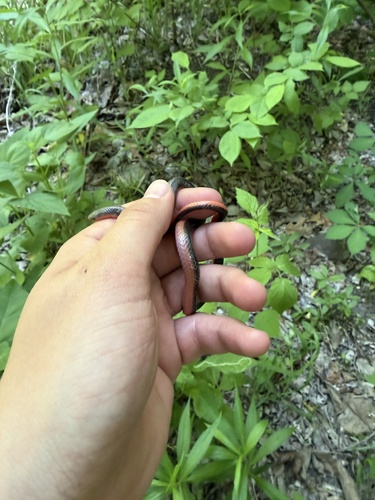
Carphophis is a small genus in the family Colubridae, the largest and most diverse snake family in the world. It contains just two species, the Common Wormsnake (Carphophis amoenus) and the Western Worm Snake (Carphophis vermis). Both are native to the central and eastern United States, where they live in moist woodlands, fields, and the loose soil along forest edges. As their name suggests, these snakes spend most of their lives underground or hidden under logs, leaf litter, and rocks, which is why most people never see one.
Worm snakes are easy to recognize as a group. They are small and slender, usually about 7 to 13 inches long, with smooth, shiny scales that give them a wet, polished look. The back is plain brown to dark gray, the belly is pink to salmon, and the head is small and barely wider than the neck, ending in a pointed snout built for pushing through soil. They have a small, spine-tipped tail that the snake may press against your skin when held, though it cannot actually sting or hurt.
These snakes are harmless to people. They are not venomous, they do not bite in any meaningful way, and they pose no danger. They eat mostly earthworms along with soft-bodied insects and other small invertebrates, hunting them in the damp soil where they live. They lay small clutches of eggs in summer and are secretive, slow-moving, and gentle. If you find one while gardening or turning over a log, the kindest thing is to leave it in place or gently set it back under cover so it can return to the moist ground it depends on.
Carphophis belongs to the Colubridae family (Colubrids). The largest snake family, and the one most snakes you meet belong to. Typically round pupils, a head only slightly wider than the neck, and no heat-sensing facial pit or rattle. Scales may be smooth and glossy or keeled and matte depending on the species.
Danger: Almost all colubrids are harmless. A small number are rear-fanged with medically significant venom, the boomslang and the twig (vine) snakes of Africa being the dangerous exceptions. Most colubrids will flee or bluff rather than bite.
All species (2)
Keep learning
- What Is a Snake? Anatomy and the BasicsA clear overview of what makes a snake a snake: limbless body plan, anatomy, evolution from lizards, species diversity, and why they are ectothermic.
- How Snakes Move, Hunt, and EatHow snakes move without legs, hunt as ambushers or active foragers, kill by constriction or venom, and swallow prey wider than their head.
- What Do Snakes Eat?All snakes are carnivores. Learn what snakes eat, how diet changes with size and age, how often they feed, and how they hunt and swallow prey.
- Venomous vs Nonvenomous: How to Tell the DifferenceThe folk rules for telling venomous snakes apart, where each one fails, and why location-based identification beats guessing by sight.