
Colubridae
Chihuahuan Hook-nosed Snake
HarmlessGyalopion canum
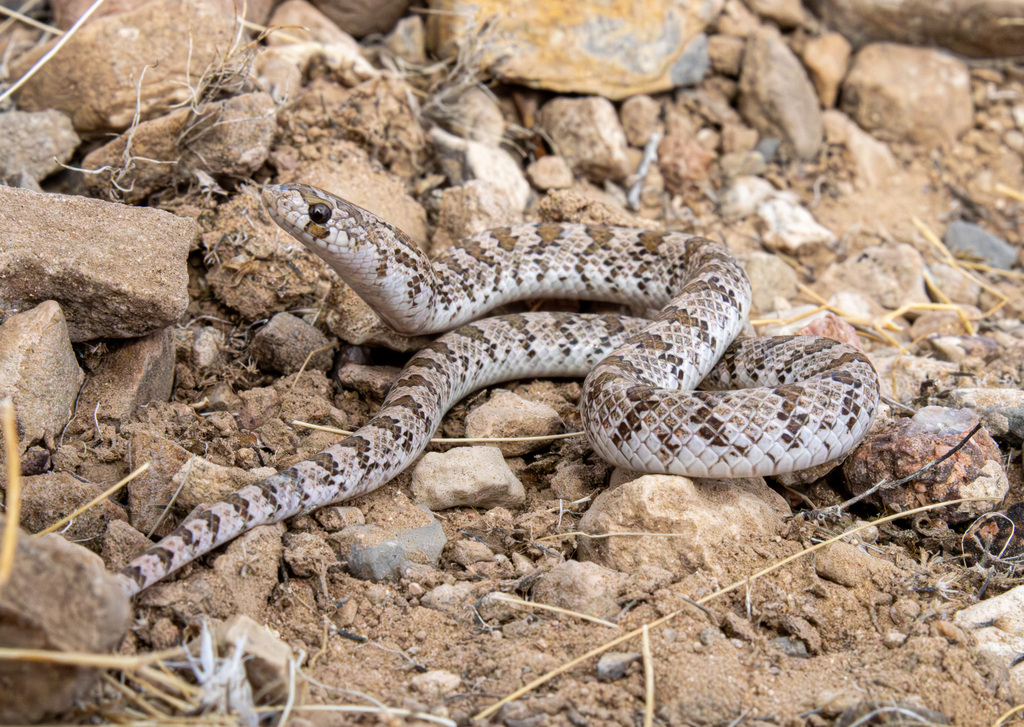
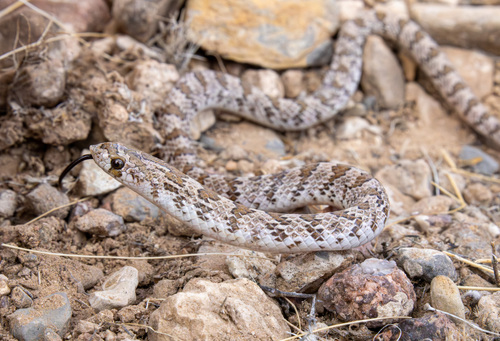
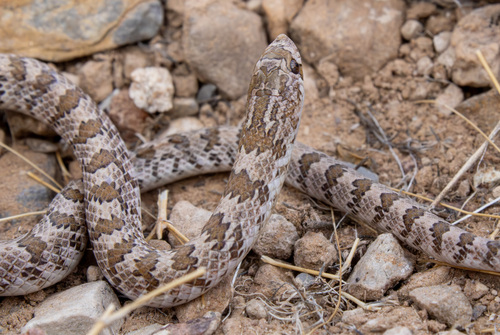
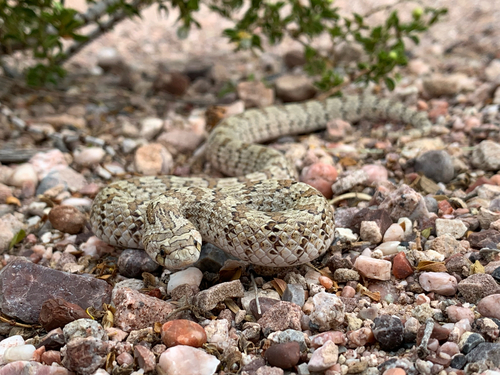
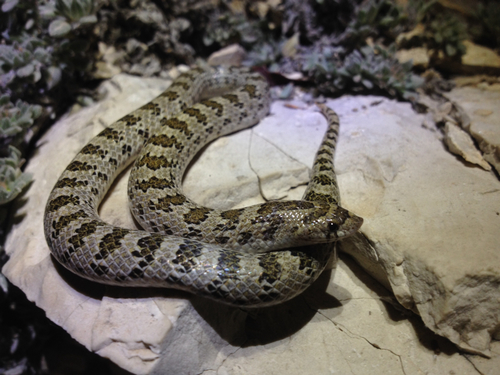
5 photographs of the Chihuahuan Hook-nosed Snake. © highsinger.
The Chihuahuan Hook-nosed Snake (Gyalopion canum) is a non-venomous snake in the Colubridae family, recorded in 2 countries.
- Family
- Colubridae
About the Chihuahuan Hook-nosed Snake
Gyalopion canum, commonly known as the Western hooknose snake, is a species of small colubrid snake endemic to the deserts of the United States and Mexico. It is sometimes referred to as the Chihuahuan hook-nosed snake because it is commonly found in the Chihuahuan Desert.
Taxonomy
The Western hooknose snake was originally described as a species new to science in 1860 by Edward Drinker Cope, who at that time named it Gyalopion canum. However, in 1883 Samuel Garman reassigned this species to the genus Ficimia, changing its scientific name to Ficimia cana. (Because Gyalopion is neuter, and Ficimia is feminine, the ending of the specific name had to be changed from "-um " to "-a "). After slightly more than 100 years, Robert C. Stebbins in 1985 returned this species to the genus Gyalopion, as Gyalopion canum, due to distinct morphological characteristics.
Geographic range
G. canum is found in the United States, from western Texas to southeastern Arizona, and into northern and central Mexico.
Description
The Western hooknose snake is a small species, growing to 36.5 cm (14+3⁄8 in) in total length (including tail). It is gray or grayish brown in color, with 25-48 dark brown or black blotches down the back, and a cream-colored underside. It has a slightly upturned snout, to which the common name, "hooknose", refers.
The smooth dorsal scales are arranged in 17 rows at midbody.
Behavior
G. canum is a nocturnal burrower, most often found under rocks.
Habitat
The Western hooknose snake prefers slightly sandy habitats, near a permanent water source.
Diet
The diet of G. canum consists primarily of spiders and centipedes, but it will also eat small snakes and scorpions.
Reproduction
The Western hooknose snake is oviparous. Sexually mature females may lay up to 5 eggs in June.
Defense
One of the primary defensive behaviors of G. canum is to make a popping noise with its cloaca, i.e., farting. According to an article in the August, 2000 issue of Discover magazine, during a laboratory experiment carried out by Bruce Young, a morphologist at Lafayette College, the snakes only farted when they felt threatened, and some farted so energetically that they lifted themselves off the ground.
Speed
Gyalopion canum is quick in short bursts or spurts.
Adapted from Wikipedia, available under CC BY-SA.
Frequently asked: Chihuahuan Hook-nosed Snake
- Is the Chihuahuan Hook-nosed Snake venomous?
- No. The Chihuahuan Hook-nosed Snake (Gyalopion canum) is non-venomous and is not considered dangerous to humans. Like most snakes, it will retreat rather than bite when given the chance.
- Is the Chihuahuan Hook-nosed Snake poisonous?
- Snakes are venomous, not poisonous. "Poisonous" means harmful to eat or touch; "venomous" means injecting toxins through a bite. The Chihuahuan Hook-nosed Snake is neither poisonous nor venomous.
- Is the Chihuahuan Hook-nosed Snake dangerous?
- The Chihuahuan Hook-nosed Snake is not dangerous to humans. It has no medically significant venom and bites only defensively if cornered or handled.
- Where does the Chihuahuan Hook-nosed Snake live?
- The Chihuahuan Hook-nosed Snake has verified records in 2 countries, including United States of America, Mexico. See the distribution section below for its full range.
- What does the Chihuahuan Hook-nosed Snake eat?
- The diet of G. canum consists primarily of spiders and centipedes, but it will also eat small snakes and scorpions.
Where it is found
By U.S. state
More Colubridae snakes
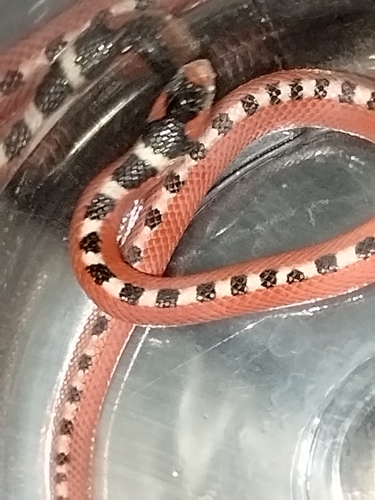 Thornscrub Hook-nosed SnakeGyalopion quadrangulare
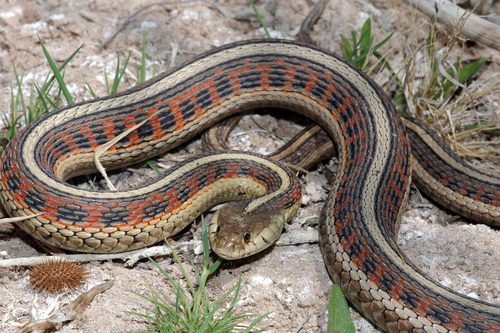 Common Garter SnakeThamnophis sirtalis
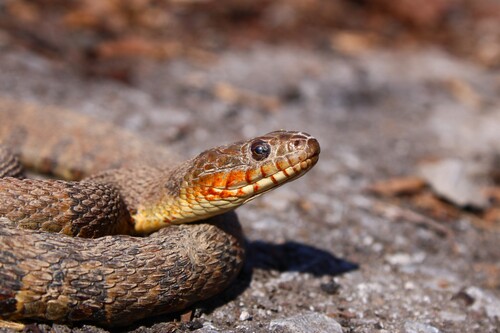 Common WatersnakeNerodia sipedon
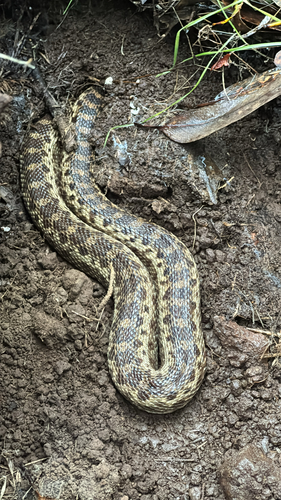 Gopher SnakePituophis catenifer
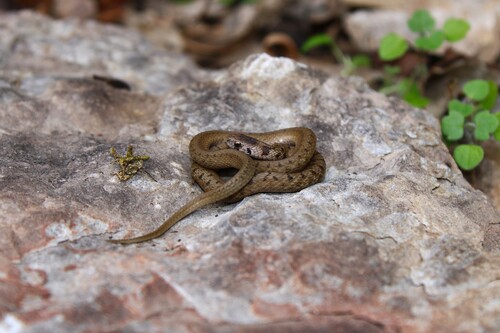 DeKay's BrownsnakeStoreria dekayi
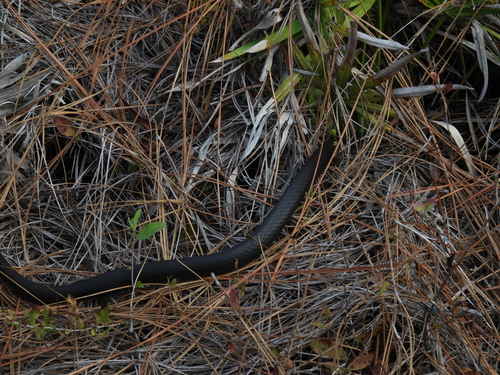 North American RacerColuber constrictor
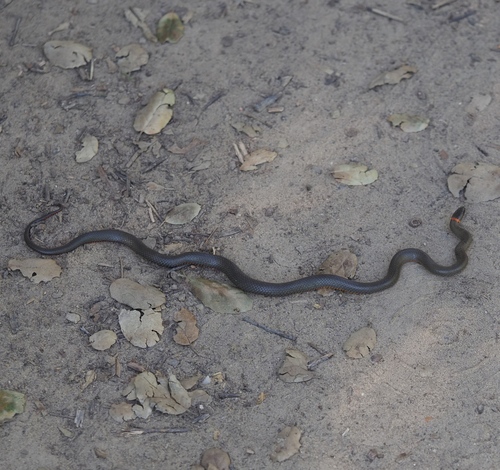 Ring-necked SnakeDiadophis punctatus
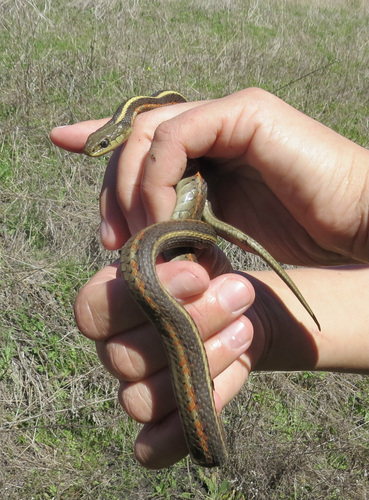 Western Terrestrial Garter SnakeThamnophis elegans
Classification
How scientists group this snake, from the broadest category down to the exact species. Each step narrows to its closest relatives.
- OrderThe broad group of scaled reptiles: all snakes and lizards
- Squamata
- FamilyA group of related snakes that share key traits
- Colubridae
- GenusA close-knit group of very similar species
- Gyalopion
- SpeciesThis exact snake, named in the two-part scientific name
- Gyalopion canum
Keep learning
- What to Do If You Find a SnakeFound a snake at home or on a trail? Here is how to stay calm, give it space, identify it safely, and know when to call a professional.
- Venomous vs Nonvenomous: How to Tell the DifferenceThe folk rules for telling venomous snakes apart, where each one fails, and why location-based identification beats guessing by sight.
- What Is a Snake? Anatomy and the BasicsA clear overview of what makes a snake a snake: limbless body plan, anatomy, evolution from lizards, species diversity, and why they are ectothermic.
- How to Keep Snakes Out of Your Yard and HomeA practical guide to keeping snakes out of your yard and home using habitat changes that work, plus what to skip and what to do if one shows up.
Distribution from GBIF & iNaturalist. Venom status per CDC. Background: Wikipedia. Informational only. Never handle a snake to identify it.