
Elapidae
Central Whipsnake
VenomousDemansia cyanochasma
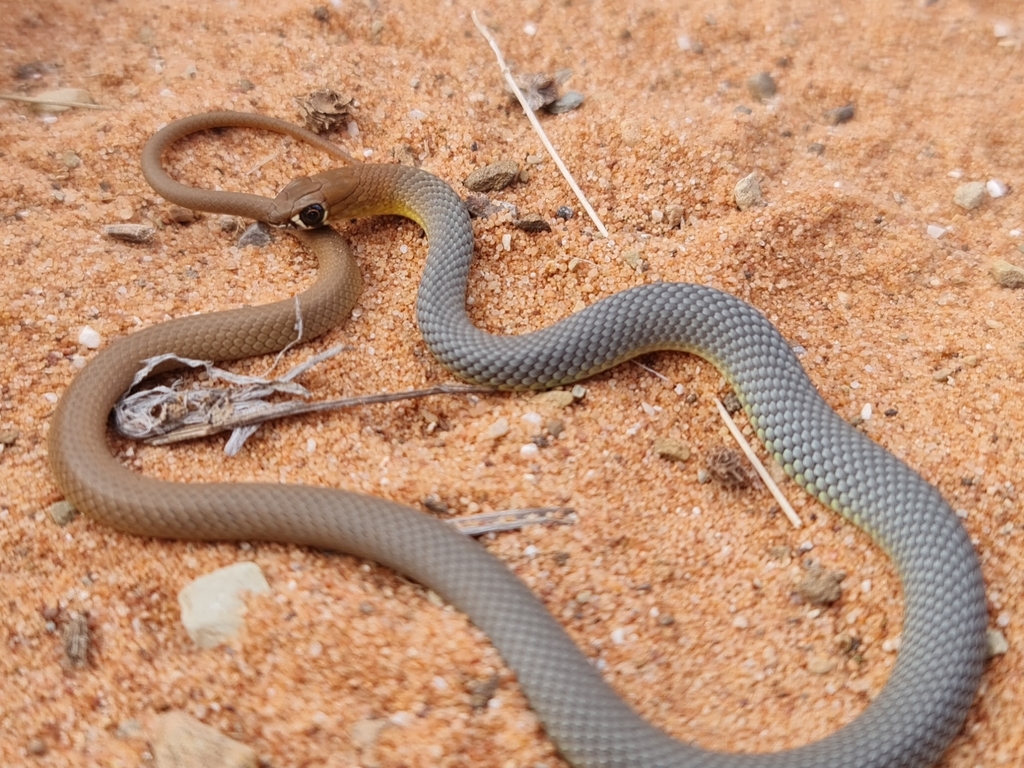
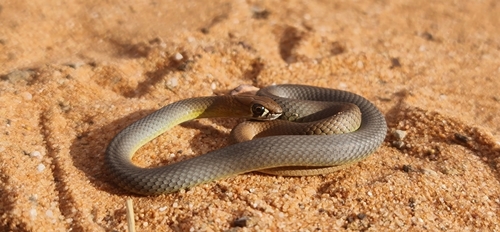
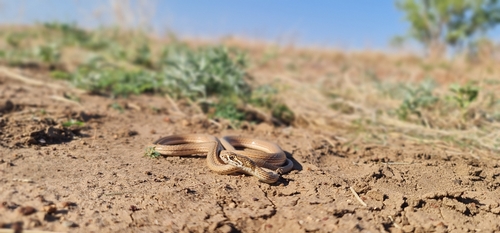
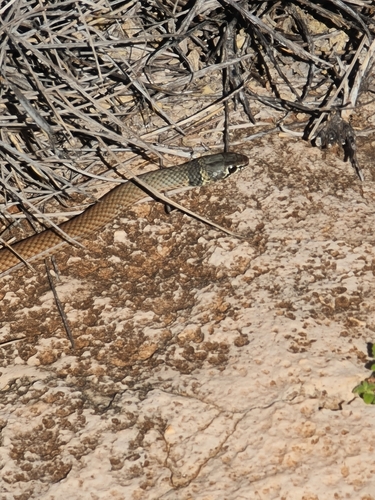
2 photographs of the Central Whipsnake. no rights reserved, uploaded by Max Tibby.
The Central Whipsnake (Demansia cyanochasma) is a venomous snake in the Elapidae family, recorded in 7 countries.
If you are bitten
This is a venomous snake. Treat any bite as a medical emergency: stay calm, keep the bitten limb still and roughly level with the heart, remove rings and tight clothing, and get to emergency care immediately. Do not apply a tourniquet, cut the wound, apply ice, or try to suck out venom. Call your local emergency number or poison center.
- Family
- Elapidae
- Danger
- high
About the Central Whipsnake
The desert whip snake (Demansia cyanochasma) is a species of venomous snake in the family Elapidae, identified as a new species in 2023. The species is endemic to Australia. Its venom is mild and not deadly for humans.
Etymology
The specific name cyanochasma means "blue gap", modified from the Greek words kyanós (κυανός), meaning "blue", and khásma (χάσμα), meaning "gap", referring to the distinctive blue-colored anterior body which separates the copper-colored head from the copper-colored posterior body.
Description
D. cyanochasma is characterized by its total length (including tail) of 70–90 cm (28–35 in) and slender physique, which gives it a comparatively small head and short fangs. Unlike other species of whip snakes of the genus Demansia, this species stands out with its bluish-grey body accompanied by a copper head and tail. Additionally, it displays less black on its dorsal scales compared to its closest relative.
Geographic distribution and habitat
The geographic range of D. cyanochasma extends from the Western Australian Eastern Goldfields to southwest Queensland, through Central Australia, South Australia and the eastern parts of the Northern Territory. Whip snakes of the genus Demansia, including the desert whip snake, are commonly found in the Outback region, and there is no significant concern regarding the risk of extinction for this species.
Behaviour
The species D. cyanochasma is known for its timid nature and has a tendency to flee at the first sign of danger. The desert whip snake is primarily diurnal, meaning it is most active during the day. Adults engage in annual reproduction, typically occurring between mid to late spring and early summer.
Predation and venom
D. cyanochasma particularly preys on small and fast desert lizards, as it acts as a pursuit predator. The venom of the desert whip snake is primarily adapted to target smaller animals; so the zootoxin doesn't pose a significant danger to humans. However, a bite from this snake can result in pain and swelling in humans. It is capable of biting when provoked or handled, but there have been no notable instances of life-threatening snake bites. However, it is still advisable to exercise caution when coming across this species.
Discovery
In the past, the desert whip snake has been misidentified as the yellow-faced whip snake (D. psammophis) and the reticulated whip snake (D. reticulata) due to its common characteristics, but researchers have studied tissue specimens and discovered distinct characteristics by genetic evidence that differentiates it from its close relatives. The distinctiveness of D. cyanochasma was not immediately confirmed due to the challenges involved in collecting samples from remote locations, despite its widespread geographic range across the desert regions of Australia. The species has been differentiated from other species through genetic research carried out by James Nankivell, a geneticist from the University of Adelaide and South Australian Museum honorary researcher Mark Hutchinson, in collaboration with herpetologists Brad Maryan and Brian Bush from the Western Australian Museum in Perth.
Adapted from Wikipedia, available under CC BY-SA.
Local and regional names
The Central Whipsnake is known by these names across the regions where it lives:
- Chinese
- 澳蛇屬
- English
- Venomous Whip Snakes, Whip Snakes
- Italian
- Serpente a frusta
- Japanese
- ムチコブラ属
- Russian
- Демансии, Коричневые змеи
Frequently asked: Central Whipsnake
- Is the Central Whipsnake venomous?
- Yes. The Central Whipsnake (Demansia cyanochasma) is venomous and belongs to the Elapidae family (cobra, mamba, coral or sea snake). Its bite is considered high risk to people. Treat any bite as a medical emergency.
- Is the Central Whipsnake poisonous?
- Snakes are venomous, not poisonous. "Poisonous" means harmful to eat or touch; "venomous" means injecting toxins through a bite. The Central Whipsnake is venomous, delivering venom through a bite.
- Is the Central Whipsnake dangerous?
- This is a venomous snake. Treat any bite as a medical emergency: stay calm, keep the bitten limb still and roughly level with the heart, remove rings and tight clothing, and get to emergency care immediately. Do not apply a tourniquet, cut the wound, apply ice, or try to suck out venom. Call your local emergency number or poison center.
- Where does the Central Whipsnake live?
- The Central Whipsnake has verified records in 7 countries, including Australia, Papua New Guinea, Indonesia. See the distribution section below for its full range.
- Why is it called the Central Whipsnake?
- The specific name cyanochasma means "blue gap", modified from the Greek words kyanós (κυανός), meaning "blue", and khásma (χάσμα), meaning "gap", referring to the distinctive blue-colored anterior body which separates the copper-colored head from the copper-colored posterior body.
If you are bitten by the Central Whipsnake
Do
- Get away from the snake and stay calm. Most bites worsen when people panic or try again to handle the snake.
- Call 911 or Poison Control (1-800-222-1222) right away. Antivenom works best when given early.
- Note the time of the bite and, from a safe distance, the snake's color and pattern, a phone photo is enough. Do not chase it.
- Keep the bitten limb still and at roughly heart level. Sit or lie down and limit movement.
- Remove rings, watches, and tight clothing near the bite before swelling starts.
- Gently wash the bite with soap and water and cover it with a clean, dry dressing.
Do not
- Do not cut the wound or try to suck out the venom.
- Do not apply a tourniquet or ice.
- Do not drink alcohol or caffeine.
- Do not take aspirin or ibuprofen, they can worsen bleeding. Acetaminophen is safer for pain.
- Do not try to catch or kill the snake. A dead snake can still bite by reflex.
First-aid guidance adapted from the U.S. Centers for Disease Control and Prevention (CDC NIOSH), Venomous Snakes. Educational only; always follow the instructions of emergency responders.
Where it is found
More Elapidae snakes
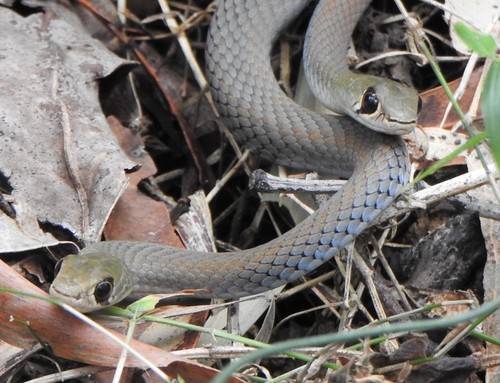 Yellow-faced WhipsnakeDemansia psammophis
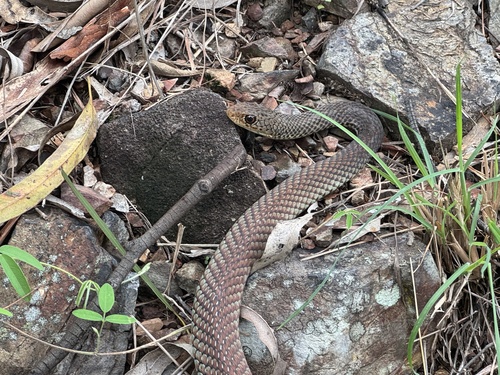 Lesser Black WhipsnakeDemansia vestigiata
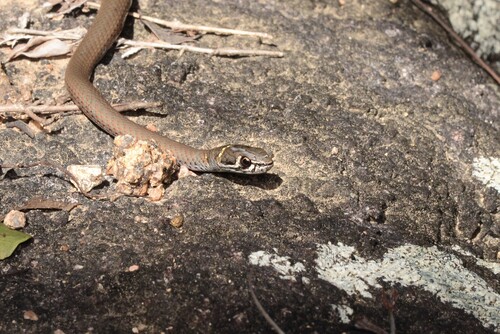 Collared WhipsnakeDemansia torquata
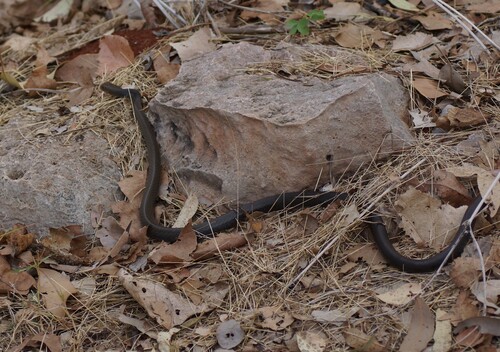 Greater Black WhipsnakeDemansia papuensis
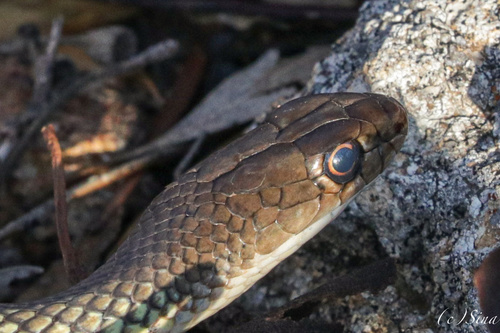 Reticulated WhipsnakeDemansia reticulata
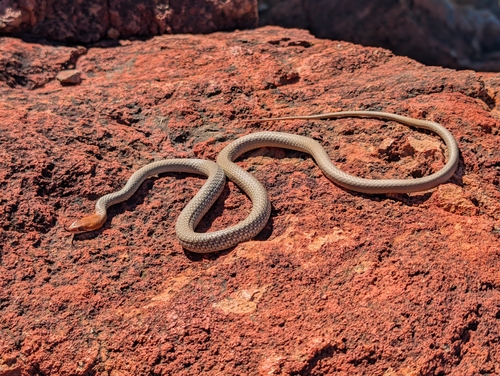 Sombre WhipsnakeDemansia quaesitor
 Crack-dwelling WhipsnakeDemansia rimicola
 Black-necked WhipsnakeDemansia calodera
Classification
How scientists group this snake, from the broadest category down to the exact species. Each step narrows to its closest relatives.
Keep learning
- Are Snakes Dangerous? The Real Risk, in PerspectiveMost snakes are harmless and avoid people. Here is the honest picture of snakebite risk worldwide and how to lower your own.
- Snakebite First Aid: What to Do (and What Never to Do)A clear, CDC-based guide to snakebite first aid: the steps that help, the popular myths that hurt, and how to tell a serious bite from a minor one.
- Venomous vs Nonvenomous: How to Tell the DifferenceThe folk rules for telling venomous snakes apart, where each one fails, and why location-based identification beats guessing by sight.
- What to Do If You Find a SnakeFound a snake at home or on a trail? Here is how to stay calm, give it space, identify it safely, and know when to call a professional.
Distribution from GBIF & iNaturalist. Venom status per CDC. Background: Wikipedia. Informational only. Never handle a snake to identify it.