
Genus · Elapidae
Types of whipsnakes
10+ species make up the genus Demansia, the snakes commonly called whipsnakes. All of them are venomous.
About whipsnakes
Demansia are the fast, slender, day-hunting whipsnakes of Australia and New Guinea, members of the venomous elapid family that rely on speed and eyesight rather than ambush.
Demansia is a genus of snakes in the family Elapidae, the front-fanged group that also includes cobras, mambas, taipans, and the Australian brown snakes. Like all elapids, Demansia species carry a pair of short, fixed fangs at the front of the upper jaw and deliver venom through them. The genus holds 10+ species in our database, all commonly called whipsnakes for their long, thin, fast-moving build. Australia is the center of their diversity, with a smaller presence in southern New Guinea.
These are built for speed. A typical whipsnake is slender and lightly proportioned with a long, tapering tail, and most species are modest in length, often around 0.7 to 1.5 meters depending on the species. The head is narrow and distinct from the neck, and the eyes are notably large, a clue to how they live. Several species show a pale or dark line through and around the eye, and many have a comma-shaped dark mark near the eye. The Yellow-faced Whipsnake is named for this facial coloring, while the Greater Black Whipsnake, Lesser Black Whipsnake, and Collared Whipsnake show the range of patterning across the genus.
Whipsnakes are diurnal, meaning they are active by day, and they hunt by sight in open and lightly vegetated country: grasslands, woodlands, rocky slopes, and scrub. The large eyes support a visual, pursuit-style hunting strategy. They are alert, nervous, and extremely quick to flee, which is the behavior most people will actually encounter. Their diet is dominated by lizards, especially small skinks and dragons, and they will also take frogs and reptile eggs. They are egg-laying snakes, with females depositing clutches of eggs rather than giving live birth.
Demansia are venomous, as expected for elapids, but they are generally regarded as much less dangerous to people than the large Australian elapids such as taipans, tiger snakes, and brown snakes. Bites from whipsnakes are uncommon because the animals are so quick to escape, and recorded effects from a bite tend to be local: pain, swelling, and inflammation around the bite site. They are not harmless, however, and they are not a rear-fanged group; the fangs are at the front of the mouth.
Because Demansia are genuinely venomous front-fanged snakes, never handle a wild whipsnake and never assume a bite is trivial. Snake identification in the field is unreliable, and lookalikes include far more dangerous species. If anyone is bitten, treat it as a medical emergency, keep the person calm and still, and get professional care immediately. In the United States contact Poison Control at 1-800-222-1222 or call local emergency services; in Australia and elsewhere call your local emergency number and follow regional snakebite first-aid guidance from medical authorities.
Demansia belongs to the Elapidae family (Cobras, mambas, coral & sea snakes). Front-fanged venomous snakes, many with potent neurotoxic venom. Usually slender with a head barely wider than the neck and fixed front fangs (not the folding fangs of vipers). Coral snakes are boldly ringed; sea snakes have a flattened, paddle-like tail.
Danger: All elapids are venomous and the family is responsible for a large share of fatal snakebites worldwide. Many are shy, but bites can be life-threatening. Treat any bite as a medical emergency.
All species (15)
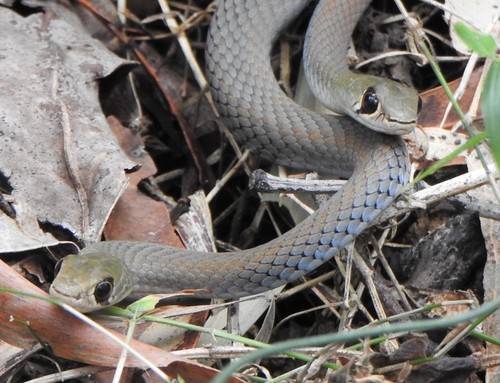 Yellow-faced WhipsnakeDemansia psammophisVenomous
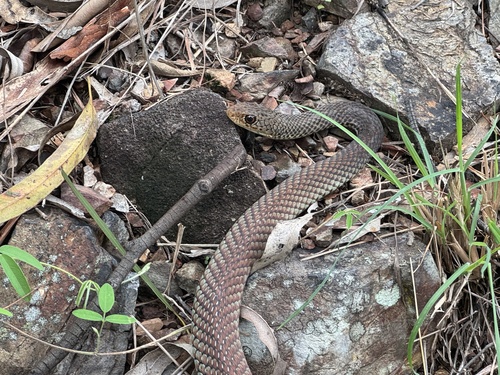 Lesser Black WhipsnakeDemansia vestigiataVenomous
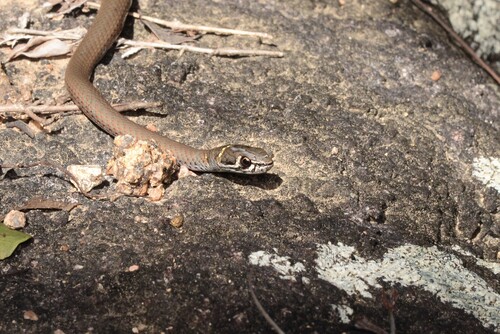 Collared WhipsnakeDemansia torquataVenomous
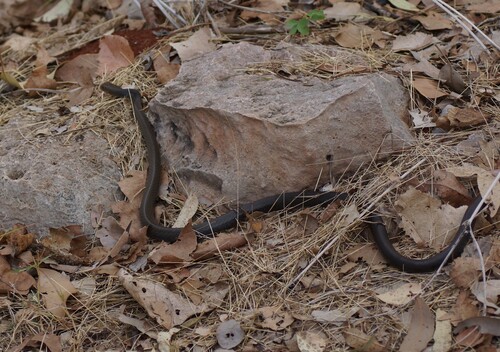 Greater Black WhipsnakeDemansia papuensisVenomous
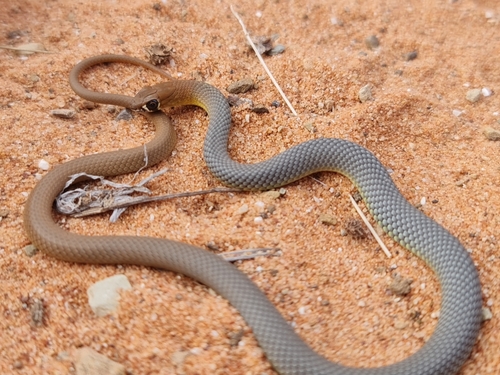 Central WhipsnakeDemansia cyanochasmaVenomous
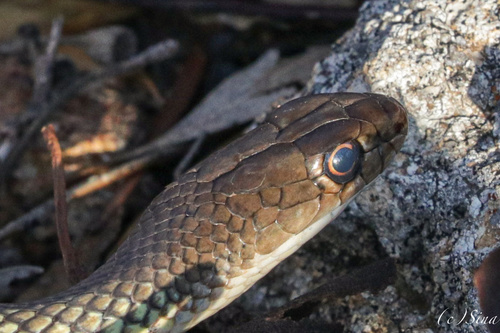 Reticulated WhipsnakeDemansia reticulataVenomous
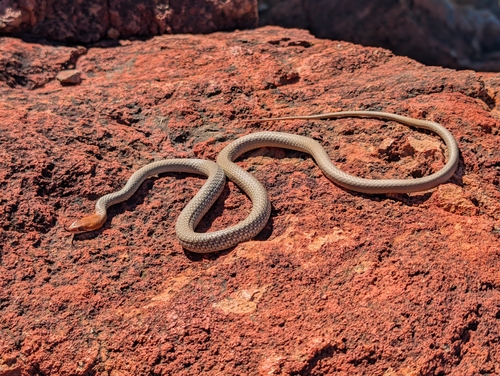 Sombre WhipsnakeDemansia quaesitorVenomous
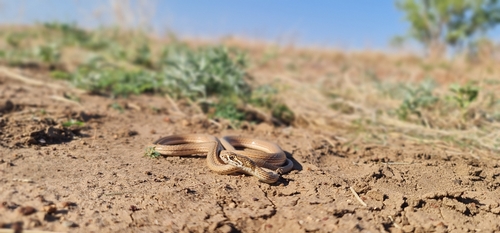 Crack-dwelling WhipsnakeDemansia rimicolaVenomous
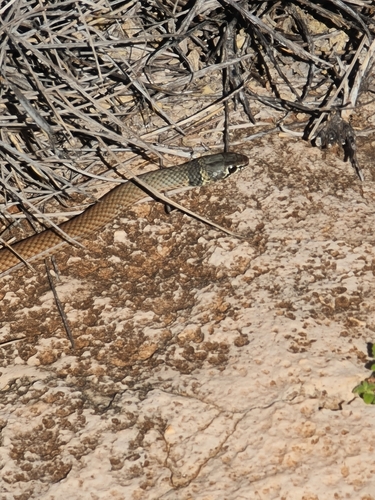 Black-necked WhipsnakeDemansia caloderaVenomous
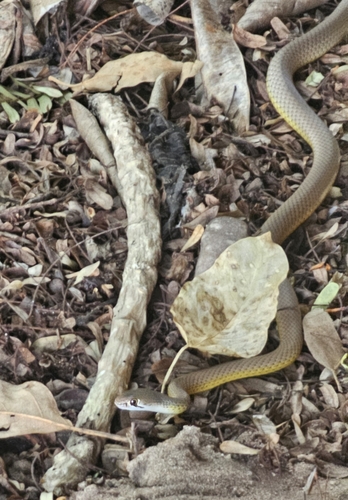 Narrow-headed WhipsnakeDemansia angusticepsVenomous
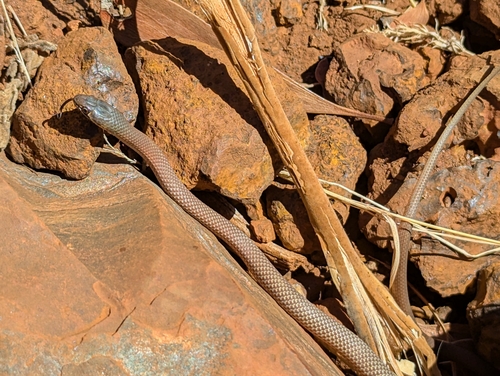 Rufous WhipsnakeDemansia rufescensVenomous
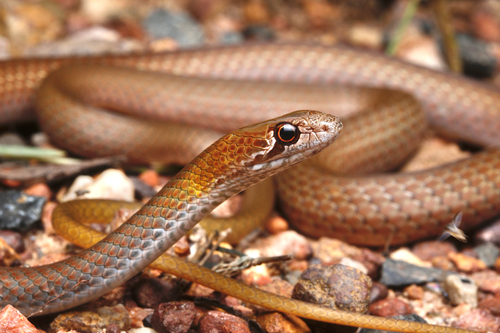 Olive WhipsnakeDemansia olivaceaVenomous
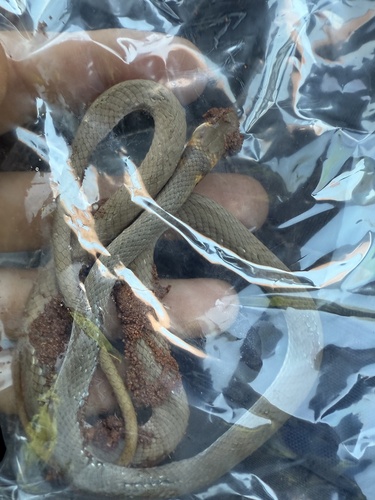 Shine's WhipsnakeDemansia shineiVenomous
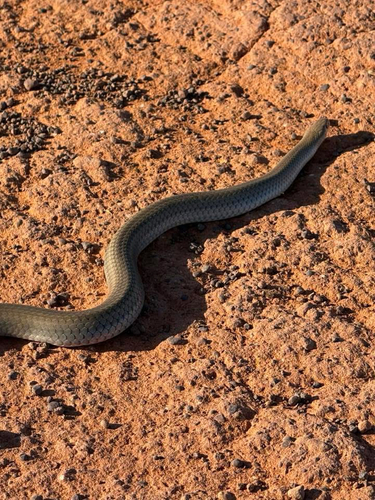 Grey WhipsnakeDemansia simplexVenomous
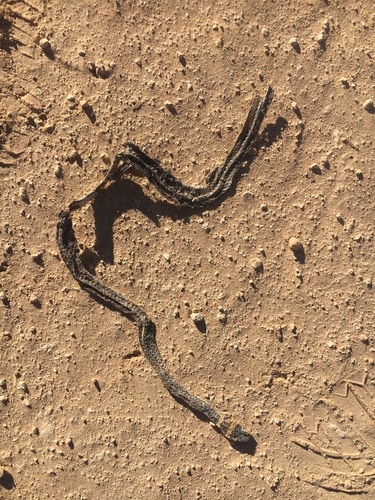 Carpentarian WhipsnakeDemansia flagellatioVenomous
Keep learning
- Venomous vs Nonvenomous: How to Tell the DifferenceThe folk rules for telling venomous snakes apart, where each one fails, and why location-based identification beats guessing by sight.
- Are Snakes Dangerous? The Real Risk, in PerspectiveMost snakes are harmless and avoid people. Here is the honest picture of snakebite risk worldwide and how to lower your own.
- Snake Venom Explained: How It Works and WhyWhat snake venom actually is, why it evolved, the main venom types, fang delivery, how antivenom works, and why ranking the most venomous snake is hard.
- How Snakes Move, Hunt, and EatHow snakes move without legs, hunt as ambushers or active foragers, kill by constriction or venom, and swallow prey wider than their head.