
Elapidae
Crack-dwelling Whipsnake
VenomousDemansia rimicola
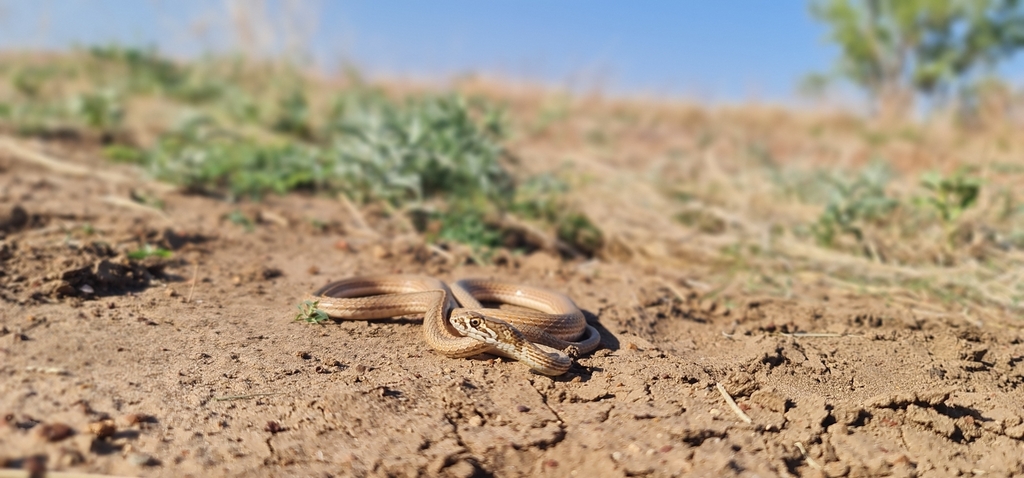
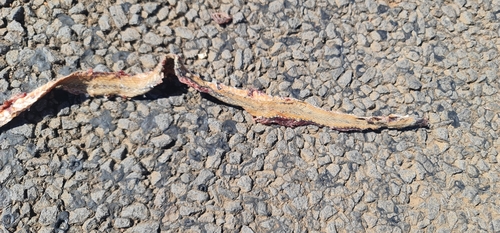
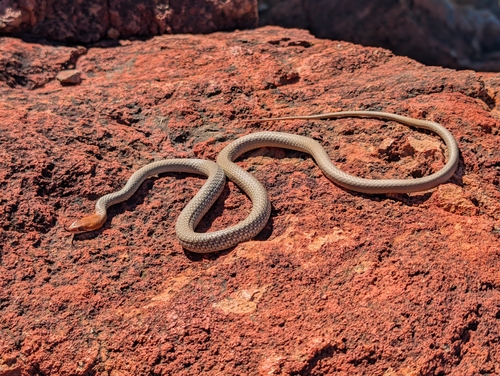
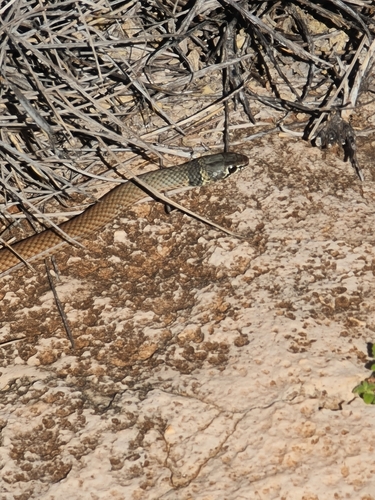
2 photographs of the Crack-dwelling Whipsnake. no rights reserved.
The Crack-dwelling Whipsnake (Demansia rimicola) is a venomous snake in the Elapidae family, recorded in 1 country.
If you are bitten
This is a venomous snake. Treat any bite as a medical emergency: stay calm, keep the bitten limb still and roughly level with the heart, remove rings and tight clothing, and get to emergency care immediately. Do not apply a tourniquet, cut the wound, apply ice, or try to suck out venom. Call your local emergency number or poison center.
- Family
- Elapidae
- Danger
- high
About the Crack-dwelling Whipsnake
The soil-crack whip snake or crack-dwelling whipsnake (Demansia rimicola) is a species of venomous snake in the family Elapidae. It is only mildly venomous.
Taxonomy
Australia's venomous land snakes, also known as Elapidae, are a monophyletic group consisting of almost 100 species, and comprise almost 70% of all snake fauna throughout Australia.
The soil-crack whip snake was initially named the 'collared whipsnake' (Demansia torquate) in 1862. It was not until 2007 that it was discovered that there were 2 species, one located in coastal Queensland, and the other in central Australia which we now know as the soil-crack whip snake (Demansia rimicola).
The year of 2007, it was Scanlon who taxonomically identified the soil-crack ship snake. The word 'Demansia' meaning whipsnakes of Australia and New Guinea were a specific group of medium-long snakes which were large eyed and fast moving. It was described to have a moderately large snout, with a dark collar on the nape which was often less distinct in adults. It was described as darker than other Demansia and therefore was one of the reasons it was able to be differentiated.
Description
The soil-crack whipsnake is front fanged and average about 49 cm in length. They are a slender grey to olive brown, presenting a dark band behind the head and a belly that is bright orange-red.
They have been identified as having moderately large stouts up to 740mm compared to other Demansia, and will often have dark spots on their heads. This is identified via a thin piece of tissue located near another teardrop marking., creating the illusion of 2 pale, merging blobs. This differentiates the soil-crack whip snake from other species as well as the nature of the head markings. In particular the markings on their head appear sharply angulated as 2 prominent diverging rows on their anterior ventral's. It once again becomes further differentiated from other species such as D. angusticeps and D. olivaea as its broad and dark nape band is edged with cream making it more prominent and consequently greater in size.
The body has been described as mid-brown, yellow pigment on the scales which often have been concentrated centrally to give broad dark, and narrow pale stripes along the edge of the snake. They have also been found to have a throat which is strongly marbled with dark brown which dissipates posteriorly along the lateral ventral's.
Distribution
Soil-crack whipsnakes can be found around Tibooburra and the Sturt National Park in far northwestern New South Wales.
Habitat and ecology
This snake is mostly diurnal, using flat rocks, fallen timber, debris, rock crevices, deep soil crack, grass clumps and animal burrows for shelter. they prefer biomes of open forests, woodlands or shrubland that have plenty of grass and shrubs to live amongst. they're main food source is small lizards and snakes which they chase and hunt.
Adapted from Wikipedia, available under CC BY-SA.
Local and regional names
The Crack-dwelling Whipsnake is known by these names across the regions where it lives:
- English
- Black Soil Whipsnake, Soil-crack Whipsnake
- Italian
- Serpente a frusta nero del suolo
Frequently asked: Crack-dwelling Whipsnake
- Is the Crack-dwelling Whipsnake venomous?
- Yes. The Crack-dwelling Whipsnake (Demansia rimicola) is venomous and belongs to the Elapidae family (cobra, mamba, coral or sea snake). Its bite is considered high risk to people. Treat any bite as a medical emergency.
- Is the Crack-dwelling Whipsnake poisonous?
- Snakes are venomous, not poisonous. "Poisonous" means harmful to eat or touch; "venomous" means injecting toxins through a bite. The Crack-dwelling Whipsnake is venomous, delivering venom through a bite.
- Is the Crack-dwelling Whipsnake dangerous?
- This is a venomous snake. Treat any bite as a medical emergency: stay calm, keep the bitten limb still and roughly level with the heart, remove rings and tight clothing, and get to emergency care immediately. Do not apply a tourniquet, cut the wound, apply ice, or try to suck out venom. Call your local emergency number or poison center.
- Where does the Crack-dwelling Whipsnake live?
- The Crack-dwelling Whipsnake has verified records in 1 country, including Australia. See the distribution section below for its full range.
If you are bitten by the Crack-dwelling Whipsnake
Do
- Get away from the snake and stay calm. Most bites worsen when people panic or try again to handle the snake.
- Call 911 or Poison Control (1-800-222-1222) right away. Antivenom works best when given early.
- Note the time of the bite and, from a safe distance, the snake's color and pattern, a phone photo is enough. Do not chase it.
- Keep the bitten limb still and at roughly heart level. Sit or lie down and limit movement.
- Remove rings, watches, and tight clothing near the bite before swelling starts.
- Gently wash the bite with soap and water and cover it with a clean, dry dressing.
Do not
- Do not cut the wound or try to suck out the venom.
- Do not apply a tourniquet or ice.
- Do not drink alcohol or caffeine.
- Do not take aspirin or ibuprofen, they can worsen bleeding. Acetaminophen is safer for pain.
- Do not try to catch or kill the snake. A dead snake can still bite by reflex.
First-aid guidance adapted from the U.S. Centers for Disease Control and Prevention (CDC NIOSH), Venomous Snakes. Educational only; always follow the instructions of emergency responders.
Where it is found
More Elapidae snakes
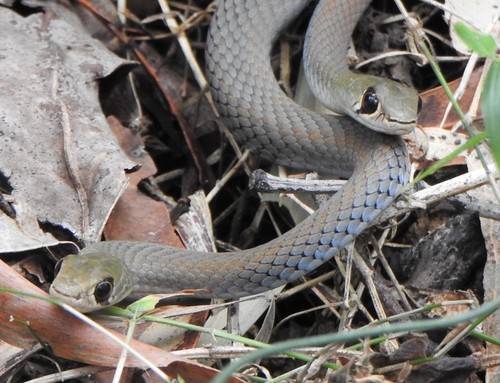 Yellow-faced WhipsnakeDemansia psammophis
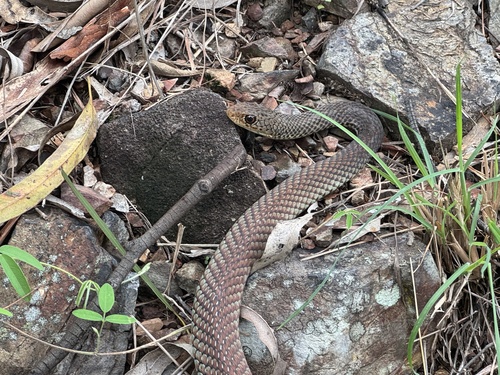 Lesser Black WhipsnakeDemansia vestigiata
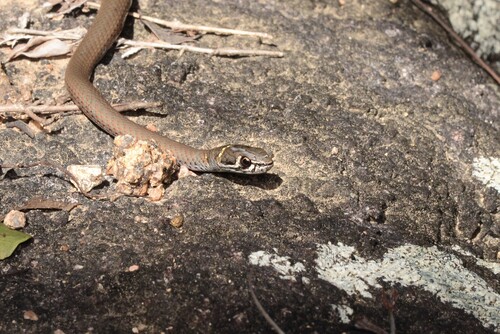 Collared WhipsnakeDemansia torquata
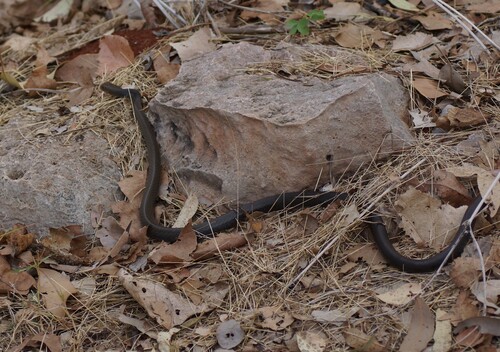 Greater Black WhipsnakeDemansia papuensis
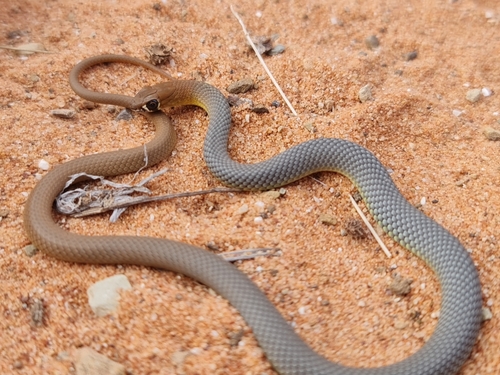 Central WhipsnakeDemansia cyanochasma
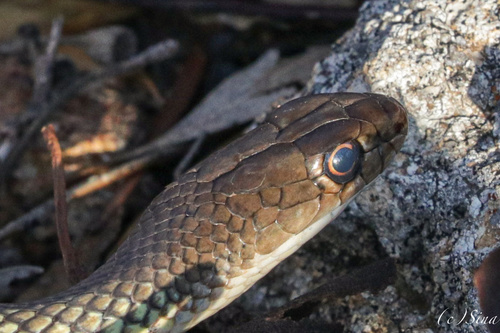 Reticulated WhipsnakeDemansia reticulata
 Sombre WhipsnakeDemansia quaesitor
 Black-necked WhipsnakeDemansia calodera
Classification
How scientists group this snake, from the broadest category down to the exact species. Each step narrows to its closest relatives.
Keep learning
- Are Snakes Dangerous? The Real Risk, in PerspectiveMost snakes are harmless and avoid people. Here is the honest picture of snakebite risk worldwide and how to lower your own.
- Snakebite First Aid: What to Do (and What Never to Do)A clear, CDC-based guide to snakebite first aid: the steps that help, the popular myths that hurt, and how to tell a serious bite from a minor one.
- Venomous vs Nonvenomous: How to Tell the DifferenceThe folk rules for telling venomous snakes apart, where each one fails, and why location-based identification beats guessing by sight.
- What to Do If You Find a SnakeFound a snake at home or on a trail? Here is how to stay calm, give it space, identify it safely, and know when to call a professional.
Distribution from GBIF & iNaturalist. Venom status per CDC. Background: Wikipedia. Informational only. Never handle a snake to identify it.