
Colubridae
Anguilla Bank Racer
HarmlessAlsophis rijgersmaei
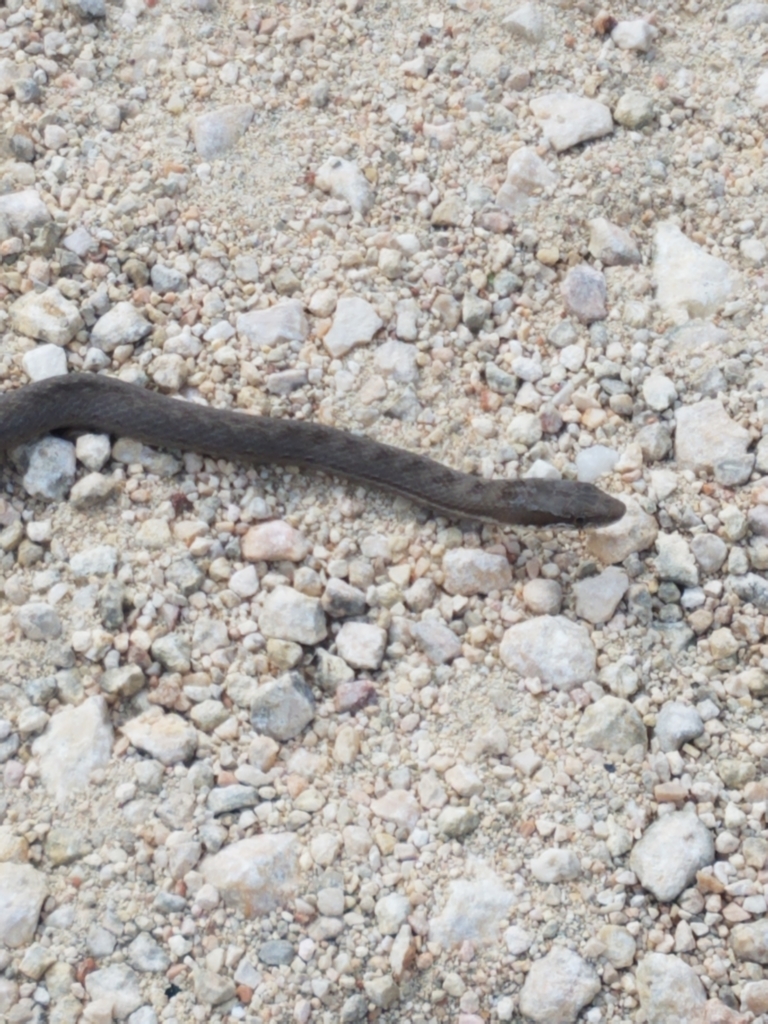
The Anguilla Bank Racer (Alsophis rijgersmaei) is a non-venomous snake in the Colubridae family, recorded in 6 countries.
- Family
- Colubridae
About the Anguilla Bank Racer
The Leeward Island racer
(Alsophis rijgersmaei), also known as the Anguilla Bank racer, is a species of snake in the family Colubridae. The species is known to inhabit Anguilla, Scrub Island, Saint Barthélemy, Île Bonhomme and Île Tortue, with it being unknown whether or not the species is still extant on Saint Martin.
Taxonomy
The species was named by Edward Drinker Cope in 1869, the specific name honouring the amateur naturalist and Dutch government physician in Sint Maarten, Hendrik Elingsz van Rijgersma.
Distribution and habitat
The racers are known to inhabit Anguilla, Scrub Island, Saint Barthélemy, Île Bonhomme and Île Tortue, and was last seen in 1996 on Saint Martin, from which it may since have been extirpated. There have also been unconfirmed reports of the racer being present on Île Fourchue. The racer's habitat primarily consists of areas with mostly xerophytic plants. It can be found in areas ranging from sea level to the 286-metre (938 ft) peak of Morne de Vitet, Saint Barthélemy.
Description
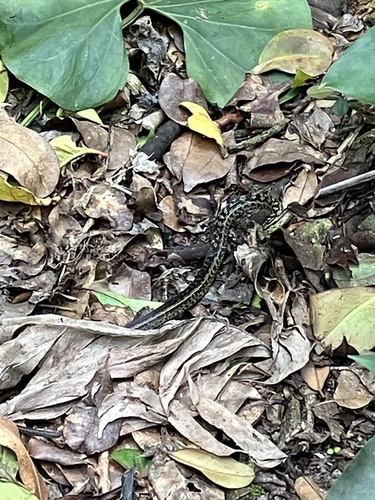
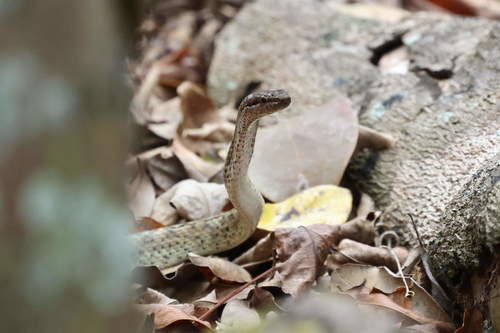
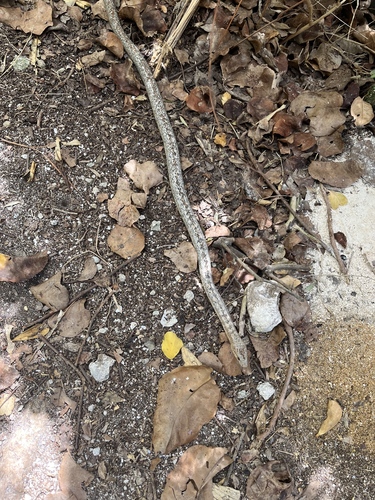
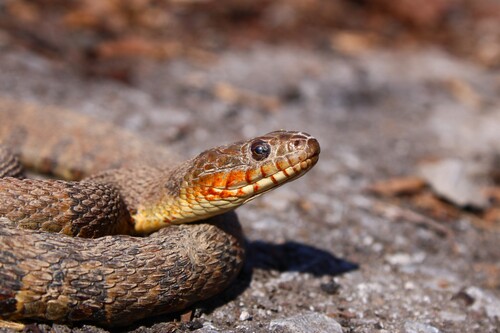
The Leeward Island racer is a slender and fast-moving species of snake. Its body is wider than its head, and its "muzzle is rather pointed". The racers usually have around 200 ventral scales and 100 sub-caudal scales, with females generally having more than males, and 21 dorsal scales at the midbody. It's colouration varies from being light grey to dark brown approaching black. Freshly hatched racers on average weigh 3.9 grams (0.14 oz) and are 23.7 centimetres (9.3 in) long, and adults can reach up to lengths of 108 cm (43 in) from snout to vent, and 138 cm (54 in) from snout to tail.
Behaviour
Racers spend most of their time on the ground, concealed by the underbrush, but they can and do also spend time in trees, bushes and on rock faces. They are primarily diurnal.
Racer's diets consist primarily of lizards of the genus Anolis, a common prey for snakes in the Leeward Islands, supplemented by bird chicks, rodents and amphibians, including the Cuban tree frog on Anguilla, where the frog is an introduced species. There has also been one observed case of cannibalism. The racer varies the method it uses to hunt depending on the size of its prey, with smaller creatures being immediately ingested while larger creatures are first killed by venom or constriction. Animals that predate on the racers include American kestrels, great egrets and mongooses, the latter of which has been a significant threat to the other Alsophis species of the Lesser Antilles.
Adapted from Wikipedia, available under CC BY-SA.
Frequently asked: Anguilla Bank Racer
- Is the Anguilla Bank Racer venomous?
- No. The Anguilla Bank Racer (Alsophis rijgersmaei) is non-venomous and is not considered dangerous to humans. Like most snakes, it will retreat rather than bite when given the chance.
- Is the Anguilla Bank Racer poisonous?
- Snakes are venomous, not poisonous. "Poisonous" means harmful to eat or touch; "venomous" means injecting toxins through a bite. The Anguilla Bank Racer is neither poisonous nor venomous.
- Is the Anguilla Bank Racer dangerous?
- The Anguilla Bank Racer is not dangerous to humans. It has no medically significant venom and bites only defensively if cornered or handled.
- Where does the Anguilla Bank Racer live?
- The Anguilla Bank Racer has verified records in 6 countries, including Anguilla, Saint Barthélemy, Guadeloupe. See the distribution section below for its full range.
Where it is found
More Colubridae snakes
Classification
How scientists group this snake, from the broadest category down to the exact species. Each step narrows to its closest relatives.
- OrderThe broad group of scaled reptiles: all snakes and lizards
- Squamata
- FamilyA group of related snakes that share key traits
- Colubridae
- GenusA close-knit group of very similar species
- Alsophis
- SpeciesThis exact snake, named in the two-part scientific name
- Alsophis rijgersmaei
Keep learning
- What to Do If You Find a SnakeFound a snake at home or on a trail? Here is how to stay calm, give it space, identify it safely, and know when to call a professional.
- Venomous vs Nonvenomous: How to Tell the DifferenceThe folk rules for telling venomous snakes apart, where each one fails, and why location-based identification beats guessing by sight.
- What Is a Snake? Anatomy and the BasicsA clear overview of what makes a snake a snake: limbless body plan, anatomy, evolution from lizards, species diversity, and why they are ectothermic.
- How to Keep Snakes Out of Your Yard and HomeA practical guide to keeping snakes out of your yard and home using habitat changes that work, plus what to skip and what to do if one shows up.
Distribution from GBIF & iNaturalist. Venom status per CDC. Background: Wikipedia. Informational only. Never handle a snake to identify it.